HD-OPM Archive
Topics › Protein

Total protein looks mortality-neutral because plant protein helps and animal protein harms

Louis Nervegna · Aug 04, 2026 · ♥ 15 reactions · 7 comments · original Facebook post
ProteinMeat, eggs & dairy
AI summary & key facts

Louis agrees with Stuart Phillips that Harvard cohorts show little relation between total protein and mortality, but adds that the benefits of plant protein cancel the harm of excess animal protein when separated.

What Stuart Philips is saying here is correct.

Although he is not stating it by name, the long-term human data he is quoting comes largely from the Harvard Nurses Study and Harvard Physicians Followup Study.

It is true that these studies show little relationship between total protein intake and mortality in humans.

But he is leaving out an incredibly important detail:

The reason that there is no relationship in these studies is because the benefits of extra plant protein seem to cancel out the harm of excess animal protein, such that the total is neutral. When you break the results out separately, extra plant protein decreases mortality while excess animal protein increases it.

See this post: ↪ Protein type matters more than amount: processed meat worst, plant protein best.

And, no, I am not a vegan.

I eat some animal protein almost every day, especially seafood and yogurt. But I am interested in the truth, and this is what the best long-term data in humans tells us about protein. The data is the data. There is no ignoring it.

Plant protein is a lot lower in the amino acids methionine, isoleucine, and valine that shorten lifespan in the mouse, rat, and fly experiments that he refers to in the post. That might partially explain why it does better. In this respect, the animal data and the human data are consistent.

#proteinHD #stuartphilipsHD #methionineHD #isoleucineHD #valineHD #dudleylammingHD #miceHD #proteinrestrictionHD
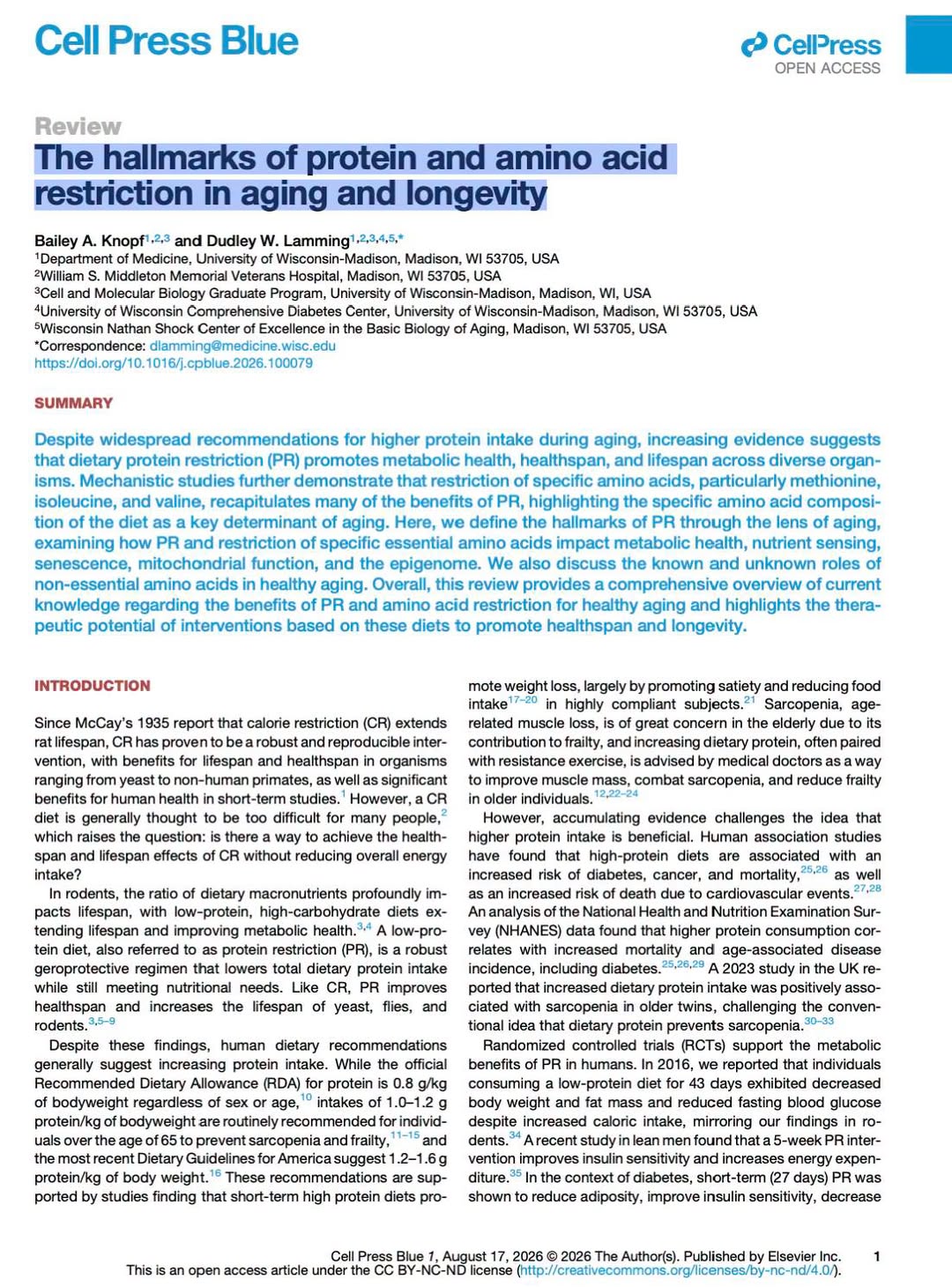
Research cited

Eat less protein to live longer? A new review says maybe. The human data says otherwise.

The paper is impressive, but almost all its "lives longer" results come from mice, rats, and flies. The second it gets to actual people, the goalposts move. We stop talking about lifespan and start talking about six-week blood sugar readings. The authors even admit the effect on human lifespan is "unknown."

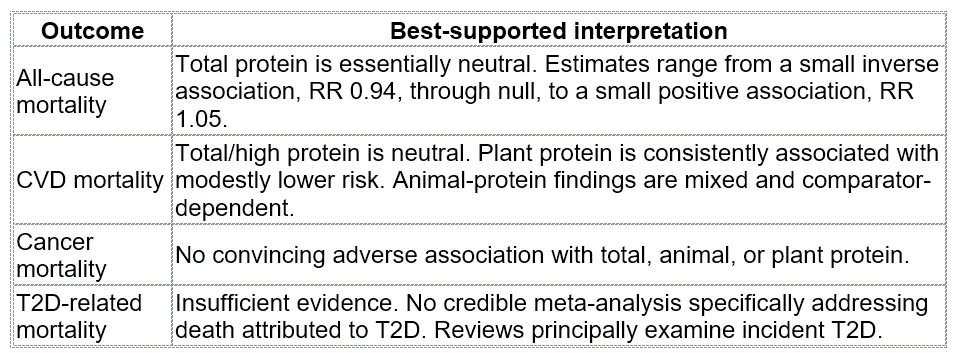
So what do the big human studies actually show? Look at the table below. Across hundreds of thousands of people:

Total protein and dying early? Basically no link.
Protein and heart disease death? Neutral. Plant protein looks slightly protective.
Protein and cancer death? No convincing harm.

And here's the kicker for anyone over 65. In older adults, eating too LITTLE protein is the real risk. More frailty, more falls, higher mortality. The very group being told to cut back is the group that does worse when they do.

Fair caveat: this is mostly observational data, so hold it loosely. But that cuts both ways.

Bottom line. Restricting protein does interesting things in a mouse. Telling a 75-year-old to eat less of it? The evidence isn't there. If anything, it points the other way.

No photo description available.
← newer: Welsh birthday rule natural experiment suggests shingles vacolder: Obesity as the biggest driver of premature mortality after s →