Cardiovascular disease and kidney disease are so intimately linked that they should be managed together as one cardiorenal syndrome.
The latest ESC guidelines.
Louis shares a summary of the 2026 ESC guideline on cardiovascular disease and CKD. Key messages include managing CVD and CKD together, testing both eGFR and urinary albumin-to-creatinine ratio, treating albuminuria as a cardiovascular vital sign, and staging CKD with both measures.
Cardiovascular disease and kidney disease are so intimately linked that they should be managed together as one cardiorenal syndrome.
The latest ESC guidelines.
2026 ESC Guidelines on Cardiovascular Disease and CKD :
Top 20 clinical messages :
~•~•~•~•~•~•~•~•~•~•~•~•~•~•~•~•~•
Recognition and risk assessment :
- Cardiovascular disease and CKD should be managed as one cardiorenal syndrome.
Each disease accelerates the other; treating them in isolation leads to missed prevention opportunities.
- Use the “STAMP on CKD” framework.
Screen, Triage and stage, Address cardiorenal risk, Modify cardiovascular management and Plan coordinated services.
- Screen every patient with cardiovascular disease for CKD.
Test both eGFR and urinary albumin-to-creatinine ratio (uACR) at diagnosis.
- Creatinine alone is not adequate CKD screening.
A patient may have substantial albuminuria and high cardiovascular risk despite a relatively preserved eGFR.
- Albuminuria should become a cardiovascular vital sign.
Increasing uACR predicts CKD progression, HF, atherosclerotic events and cardiovascular mortality.
- Confirm chronicity before labelling CKD.
Kidney structure or function abnormalities should generally persist for ≥3 months, unless the diagnosis is already clinically established.
- Stage CKD using both eGFR and uACR.
The combined G1–G5 and A1–A3 classification provides better prognostic information than either measurement alone.
- Repeat eGFR and uACR at least annually.
Annual reassessment is recommended in patients with CVD, diabetes or CKD, with more frequent monitoring when clinically indicated.
- Use validated risk prediction rather than clinical impression alone.
In CKD G3–G5, apply the Kidney Failure Risk Equation—KFRE to guide nephrology referral, monitoring and kidney-replacement planning.
Cardiorenal protective treatment :
——————————————————-
- Establish foundational cardiorenal therapy early.
For most eligible patients, the backbone comprises:
maximally tolerated ACE inhibitor or ARB
an SGLT2 inhibitor
appropriately intensive statin-based therapy
- Do not combine an ACE inhibitor with an ARB.
Dual RAS blockade increases AKI and hyperkalaemia without providing sufficient clinical benefit.
- Treat albuminuric CKD with maximally tolerated RAS inhibition.
ACE inhibitors or ARBs reduce albuminuria, cardiovascular risk and CKD progression, particularly in patients with hypertension or diabetes.
- SGLT2 inhibitors are now core kidney and cardiovascular drugs—not simply glucose-lowering agents.
Their benefits extend to patients without diabetes and are largely independent of their glucose-lowering effect.
- The eGFR threshold for SGLT2 inhibition has moved lower.
Initiate at eGFR ≥20 mL/min/1.73 m² and continue below 20 until kidney-replacement therapy begins. Initiation below 20 may be considered in selected patients—the important new Class IIa recommendation.
- Do not misinterpret the initial eGFR dip as treatment-induced kidney injury.
A modest early haemodynamic fall after RAS or SGLT2 inhibition is expected. Assess its magnitude, volume status, blood pressure, potassium and concomitant medication before stopping therapy.
- Use finerenone in eligible patients with diabetic albuminuric CKD.
In type 2 diabetes, albuminuria and suitable eGFR/potassium levels, finerenone further reduces cardiovascular events and CKD progression.
- Semaglutide has become a cardiorenal risk-modifying treatment.
It is recommended in eligible patients with type 2 diabetes and albuminuric CKD to reduce kidney and cardiovascular outcomes—not merely to improve HbA1c or weight.
- Offer intensive statin-based therapy broadly in non-dialysis CKD.
Treatment is driven by the patient’s high absolute ASCVD risk, not simply baseline LDL-C. Add ezetimibe when needed. Starting statins de novo after dialysis initiation offers less certain benefit, although established therapy may often be continued.
Modifying cardiovascular management :
- Do not undertreat HF because of CKD or a modest creatinine rise.
Guideline-directed HF therapies retain benefit in CKD, often with greater absolute benefit because baseline risk is higher. In HF with CKD:
SGLT2 inhibition is recommended at eGFR ≥20 irrespective of LVEF
steroidal MRAs remain foundational in eligible HFrEF patients
during decompensation, prioritize complete decongestion using adequate loop-diuretic doses, early response assessment and combination diuretics when needed
residual congestion is generally more dangerous than a transient modest creatinine increase
- Adapt cardiovascular procedures and antithrombotic treatment—do not deny them.
CKD raises both ischaemic and bleeding risks; DAPT must therefore be individualized.
Abbreviated DAPT may be appropriate after elective PCI when bleeding risk is high.
Minimize contrast, use appropriate hydration and consider imaging-guided low-contrast PCI.
AF stroke and bleeding scores perform less reliably in advanced CKD.
Prefer a suitably dosed DOAC over a VKA in eligible AF patients with eGFR >30 mL/min/1.73 m².
Advanced CKD and dialysis require individualized anticoagulation decisions.
Early cardiology–nephrology collaboration is essential.
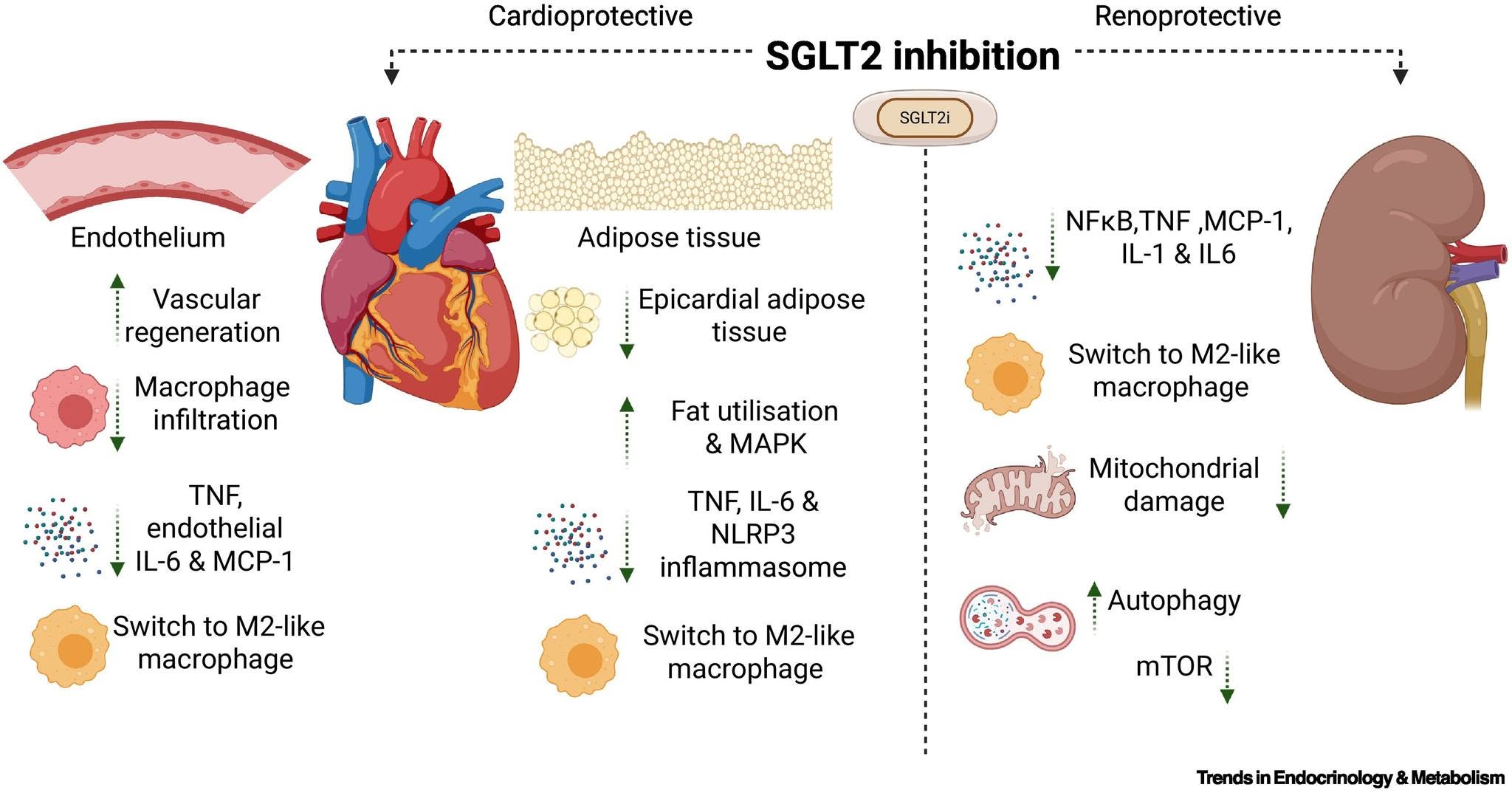
Louis shares a mechanism summary: SGLT2 inhibitors improve endothelial function, reduce macrophage infiltration and inflammatory mediators (TNF, IL-6, MCP-1) and protect the heart and kidneys in metabolic disease.
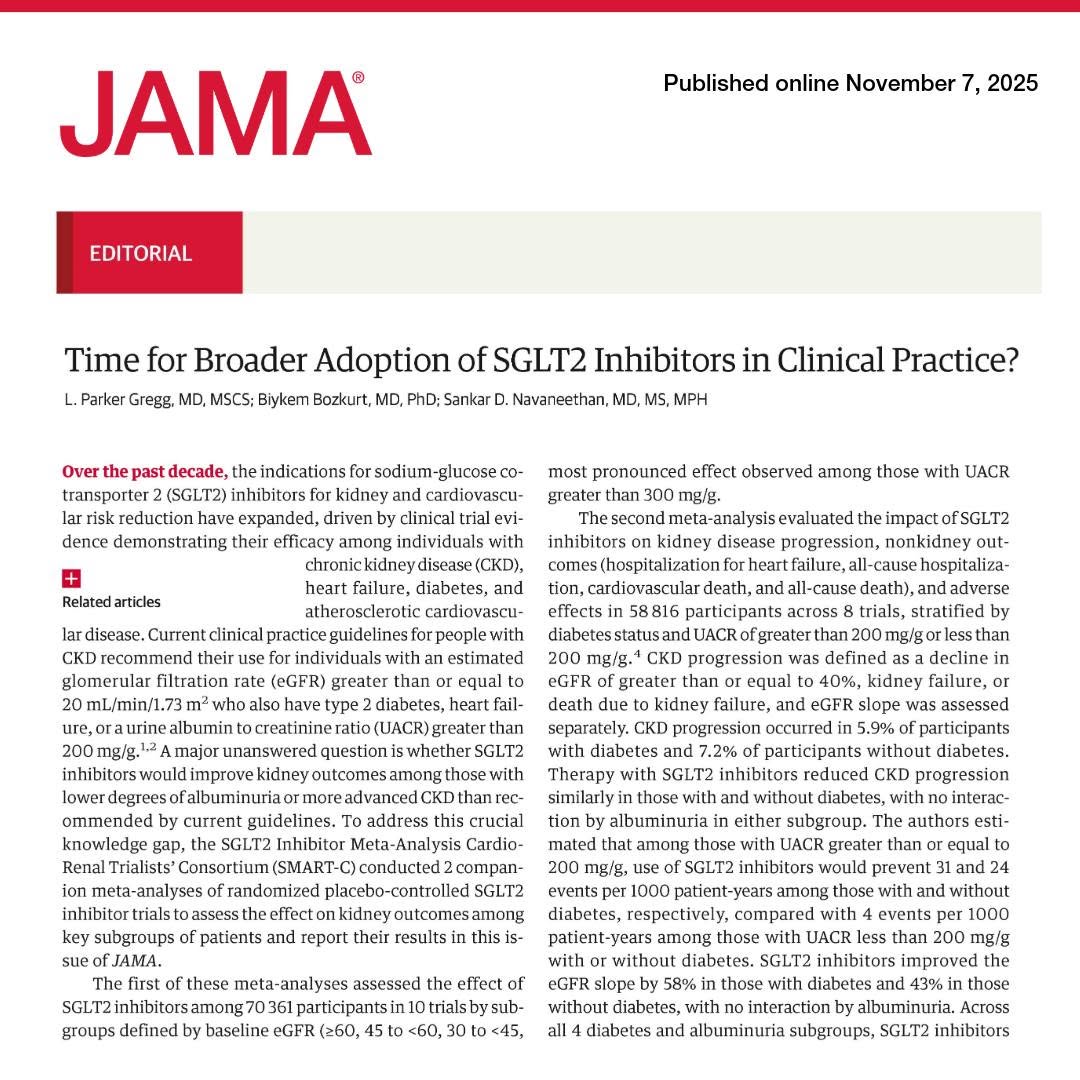
Louis shares a JAMA editorial: meta-analyses show SGLT2 inhibitors consistently reduce kidney disease progression and hospitalizations across eGFR and albuminuria subgroups, regardless of diabetes.
Louis highlights a new joint EAPC/ESC and ACC clinical consensus statement offering guidance for long-term high-volume exercisers over 35-40, covering atrial fibrillation, arrhythmias, coronary atherosclerosis, aortic dilatation, myocardial fibrosis and exercise-induced arrhythmogenic cardiomyopathy. Notes that very high exercise volumes over years may have cardiovascular downsides.
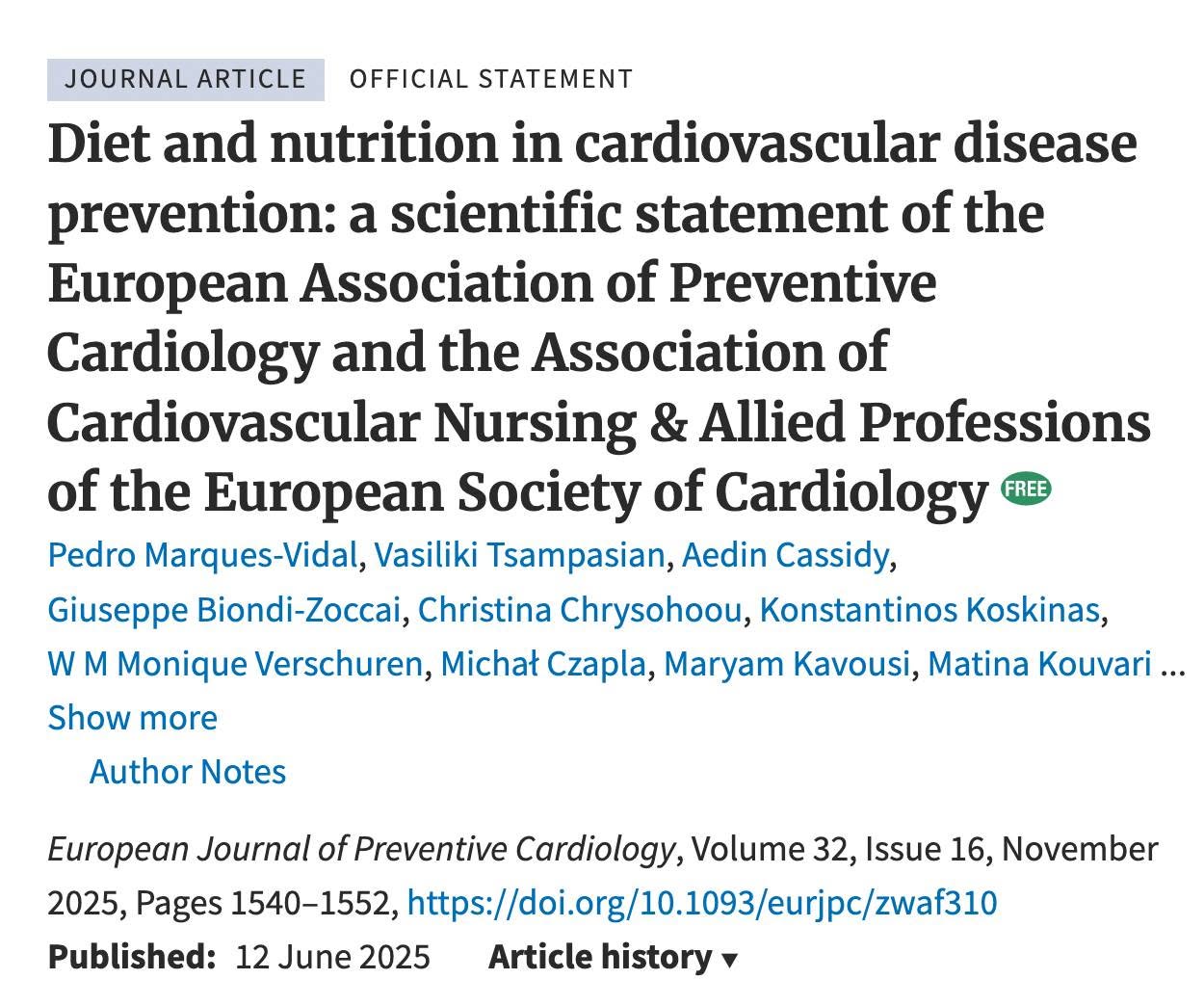
Louis shares the European Society of Cardiology/EAPC scientific statement on diet and cardiovascular disease. It concludes that diet is a primary factor, that plant-based whole-food patterns lower risk, and that ultraprocessed food, processed and red meat, salt, sugar and saturated fat raise it.
Louis explains rare dose-related proteinuria, hematuria or AKI with rosuvastatin, especially 40 mg or with CKD. PLANET I and II found rosuvastatin 40 mg lowered eGFR whereas atorvastatin 80 mg reduced proteinuria and preserved function.
Louis shares a teaching card that atorvastatin is the preferred statin in chronic kidney disease, citing the PLANET trial comparing it with rosuvastatin. His later edit says the original text had a typo: the correct statement is that atorvastatin improved proteinuria but had no effect on eGFR.