AM I AN IDIOT?
Ok, weird question, I know. I don’t think I am, but people out there sure do. You see, despite mountains and mountains of evidence to the contrary, there is, unfortunately, a growing number of people out there who have been misled by poor information regarding the role of LDL in cardiovascular disease. It feels like not a day goes by where someone doesn't comment to me about how the science I'm presenting is wrong. Sometimes I’ve been called, you guessed it, an idiot. Sometimes also stupid, ignorant, or some other unpleasantries I won’t repeat, because I'm saying something (with evidence to back it up) that doesn't sound like the Instagram reel or YouTube short they just heard "the truth" about heart disease or cholesterol from.
Almost invariably, the info they're drawing from has a grain of accuracy to it, but it's been exaggerated, or misinterpreted, or over interpreted, and these poor people, with no actual training in this field themselves, are completely vulnerable to it, with no idea how wrong they are. Worse than that, they often take on the arrogance and certainty of whomever they listened to (often a master storyteller/cherry picker telling them exactly what their biases make them hope to hear).
It's incredibly frustrating and sad, and it's getting worse.
Not sure what else to do about it but to just keep trying to help anyone with interest in this topic, who at least has an open mind, to learn. So here it goes again…
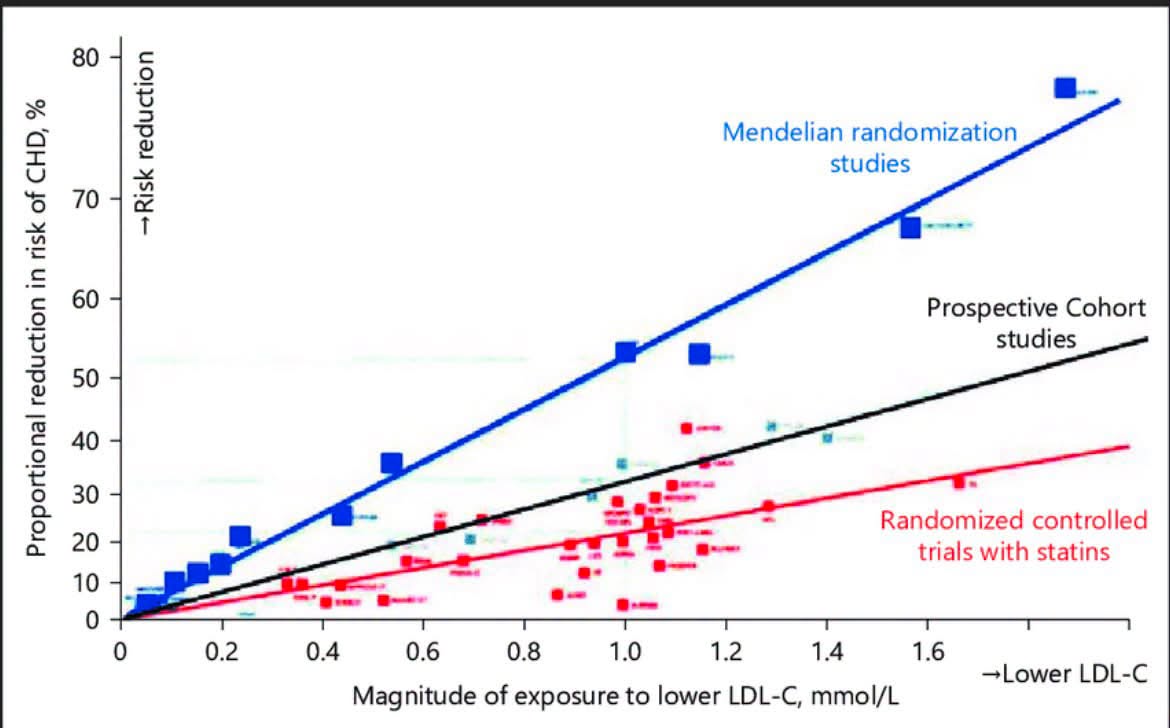
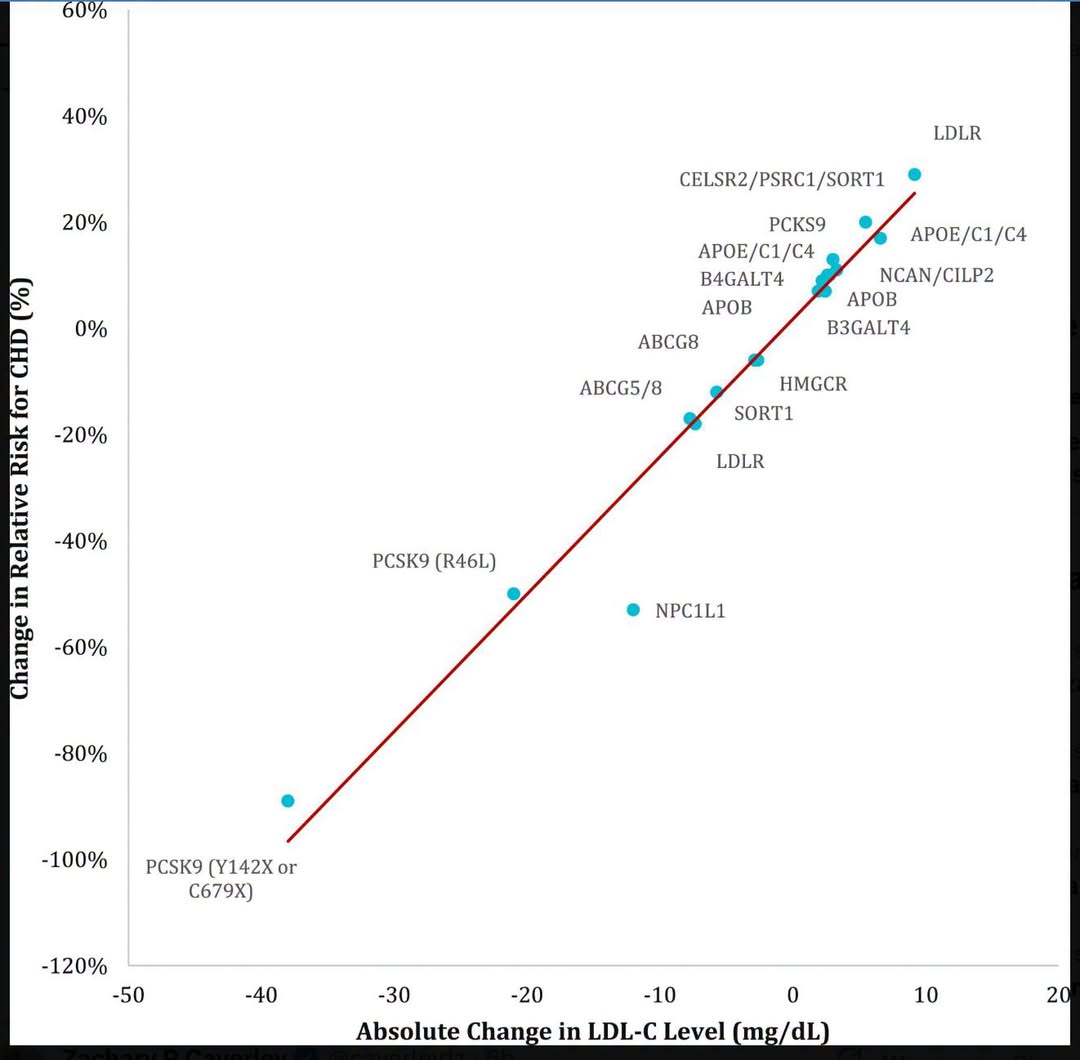
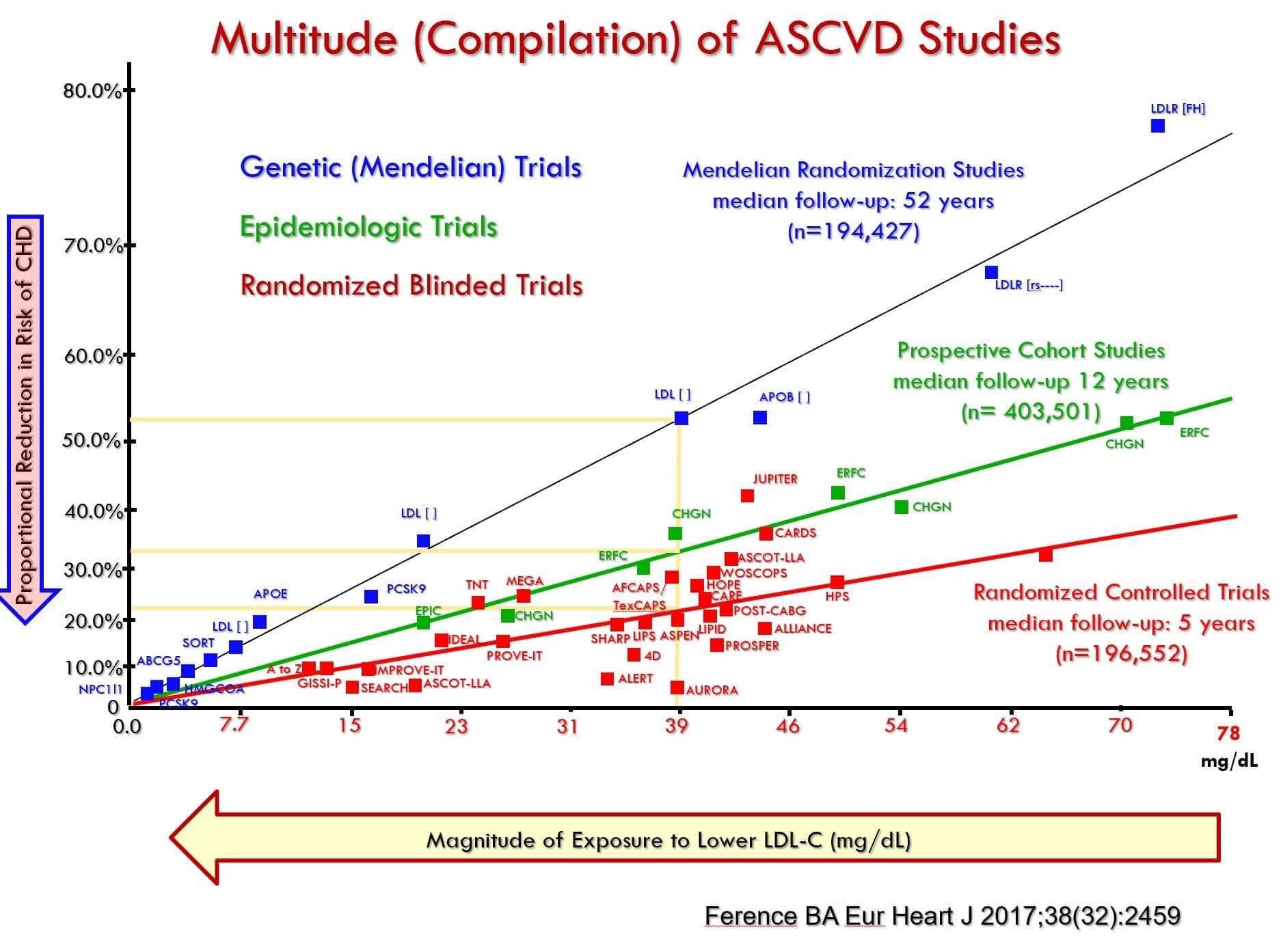
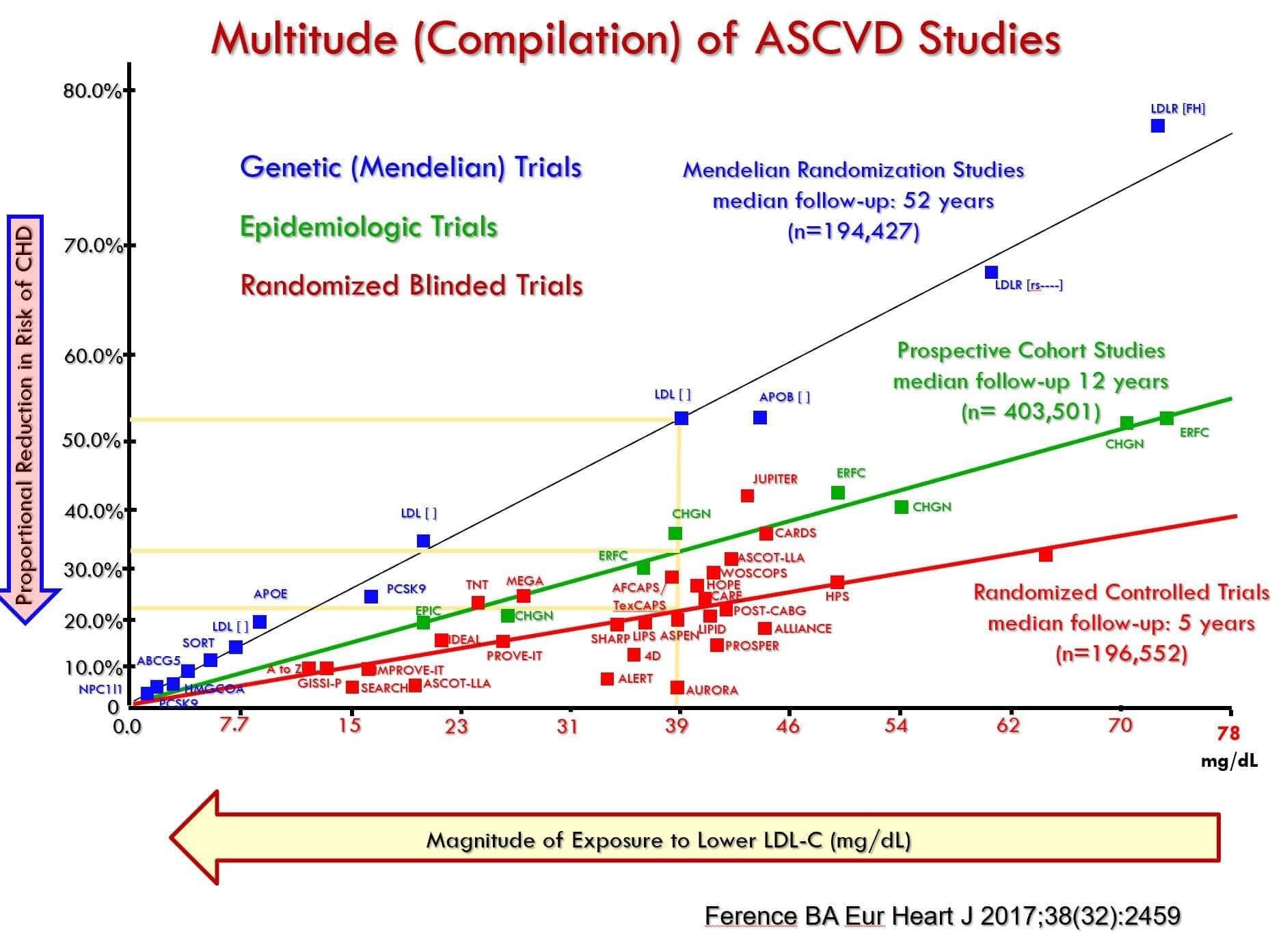
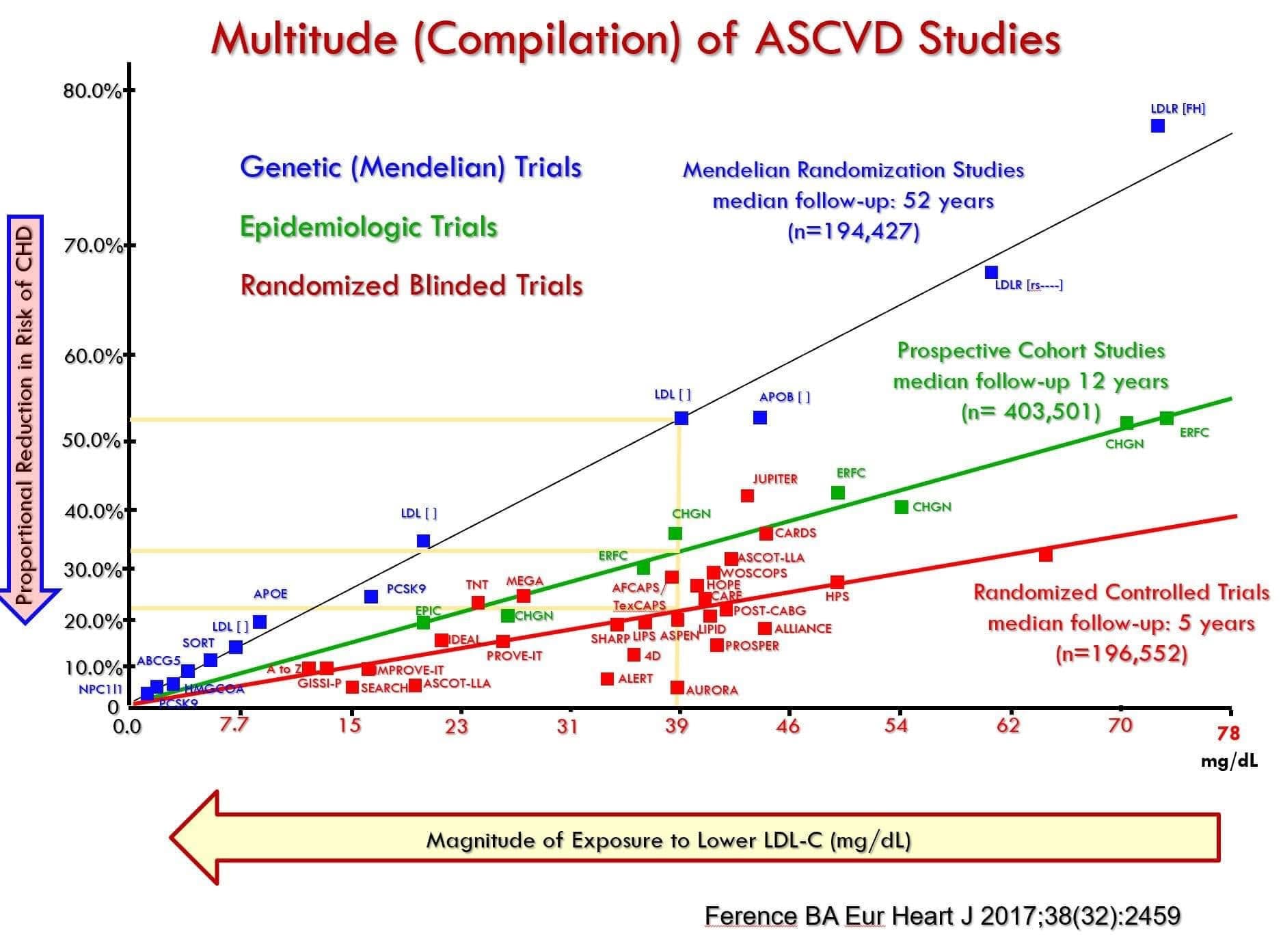
This graph is one of my favorite examples of why "mountains of evidence" isn't just a figure of speech. It's pulled from work looking at three completely different types of studies, Mendelian randomization studies (which look at people who, by genetic luck, have had lower LDL their entire lives), prospective cohort studies (following large groups of people over years), and randomized controlled trials of statins (typically lasting just a few years). Three very different methods, three very different sets of study weaknesses and strengths, done by different research groups around the world, with very different funding sources, all over different decades.
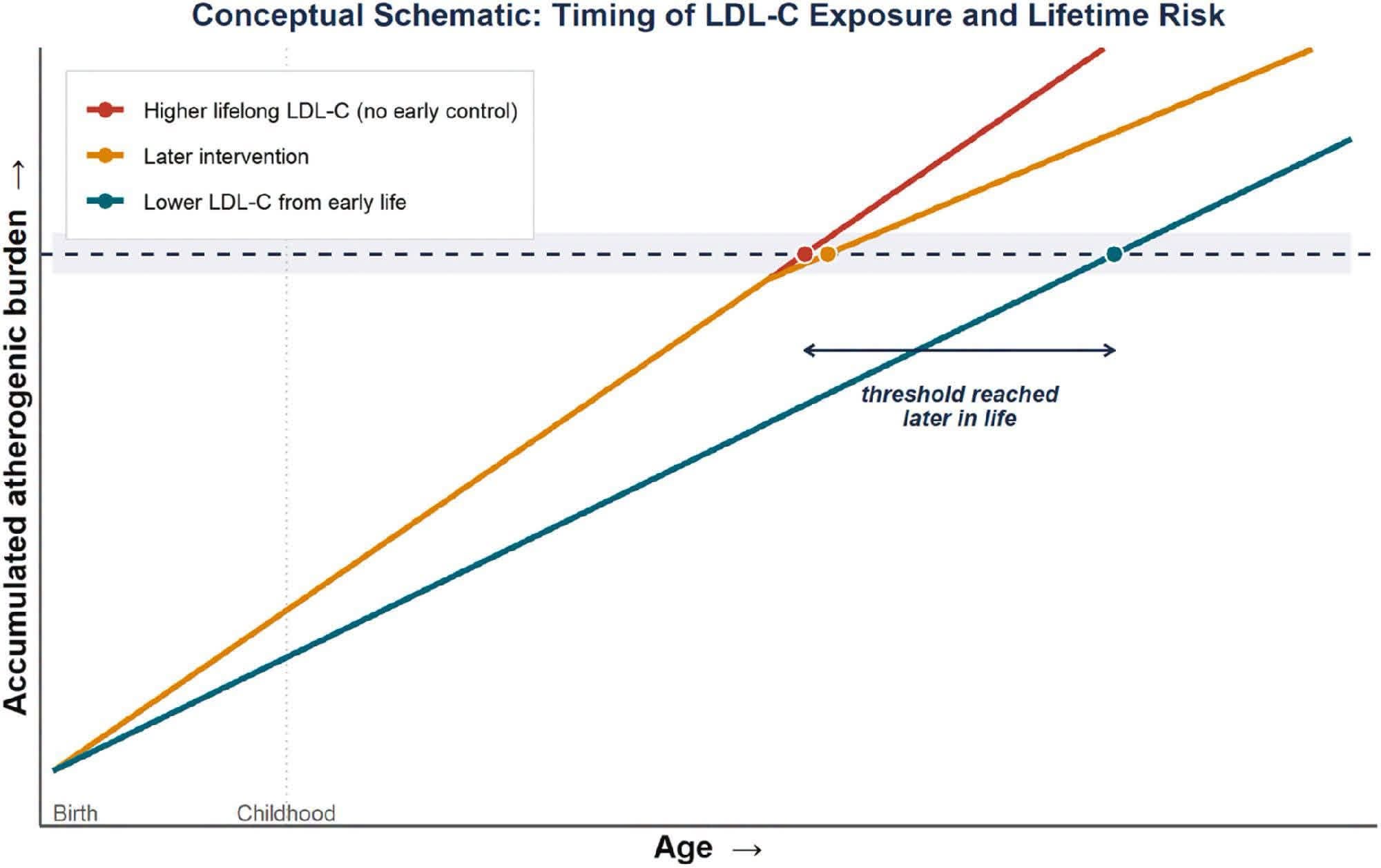
And yet, look what happens. Every single one of them lands on the same basic relationship. The more you lower LDL, and the longer you lower it for, the more your risk of coronary heart disease drops. The lines aren't identical, the Mendelian randomization line is steeper, which makes sense given those are lifelong exposures, while the RCTs only capture a few years of lowering. But the direction and the shape of the relationship agrees across all three.
That kind of agreement across totally different study designs is what scientists mean when they talk about triangulation of evidence. It's a much stronger form of proof than any single study, because it's a lot harder to explain away three independent methods all pointing the same direction than it is to poke a hole in one trial or one headline.
That all said, OF COURSE, I am also the first to acknowledge that atherosclerosis is a multifactorial disease, and some other things like poor metabolic health, high blood pressure, smoking, etc can have massive impacts even if LDL is not elevated. On the flip side it is also true that some people out there can have very high LDL but no discernible disease. Neither situation disproves the causal role LDL plays anymore than a chain smoker not getting lung cancer disproves the role of cigarettes in that disease either. There are ALWAYS outliers on either end of the spectrum but the key thing to remember is that outliers don’t disprove the role of something in a multifactorial disease. This is exactly why graphs like the one I’m sharing here are so important. They show the “probably” scenario, ie the one you should put your money on when your health is on the line.
So when someone tells you the LDL story is just a theory, or that it's been debunked, or that "new research" has overturned it, please remember this graph and remember, there are many things you can do to help prevent heart attacks but ignoring LDL is a bad idea. Then just keep scrolling.