HD-OPM Archive
Topics › Heart rhythm & heart failure

High-dose omega-3 raises AFib risk in high-CVD-risk people, not at low doses (2026)

Louis Nervegna · Sep 16, 2026 · ♥ 18 reactions · 12 comments · original Facebook post
Heart rhythm & heart failureSupplements & vitamins
AI summary & key facts

Louis warns that the atrial fibrillation risk from high-dose omega-3 is real. A 2021 meta-analysis of 7 RCTs (81,210 people) found higher AF risk, and a 2026 meta-analysis of 35 RCTs (114,592 people) confirmed it at higher doses in people at high CVD risk, but not in those without high risk, and not at low doses in either group.

We talk about benefits of omega 3 a lot in this group. But the AFIB risk from high doses is real and should be taken seriously.

Link to the 2021 meta-analysis of 7 randomized trials (on 81,210 people) referred to in the post:

Paper · Circulation · 2021Effect of Long-Term Marine ɷ-3 Fatty Acids Supplementation on the Risk of Atrial Fibrillation in Randomized Controlled Trials of Cardiovascular Outcomes: A Systematic Review and Meta-Analysis.Conclusion: In RCTs examining cardiovascular outcomes, marine ɷ-3 supplementation was associated with an increased risk of AF. The risk appeared to be greater in trials testing >1 g/d.pmc.ncbi.nlm.nih.gov

An updated 2026 meta-analysis of 35 randomized trials (in 114,592 people) was just published a few weeks ago. It confirmed that the AFIB risk from higher doses is very real in people at high risk for CVD. However, there was no increased risk from higher doses in people not at high risk for CVD. And there was no increased risk in either group from low doses:

Paper · Circ Arrhythm Electrophysiol · 2026Effects of Omega-3 Fatty Acid Treatment on Risk for Atrial Fibrillation: An Updated Meta-Analysis of 35 Trials including 114 592 Individuals.Conclusion: This meta-analysis suggests that high-dose EPA/DHA treatment is associated with an increased risk of AF in patients at high cardiovascular disease risk, whereas low-dose EPA/DHA does not appear to increase AF risk, even in high-risk populations. Further prospective studies are needed to evaluate any potential increased risk of higher doses balanced against potential benefits.ahajournals.org
#omega3 #fishoilHD #afibHD #fishoilafibHD

Research cited

Shared from FITTR · original post

Can something meant to protect your heart actually raise the risk of an irregular heartbeat and restlessness?

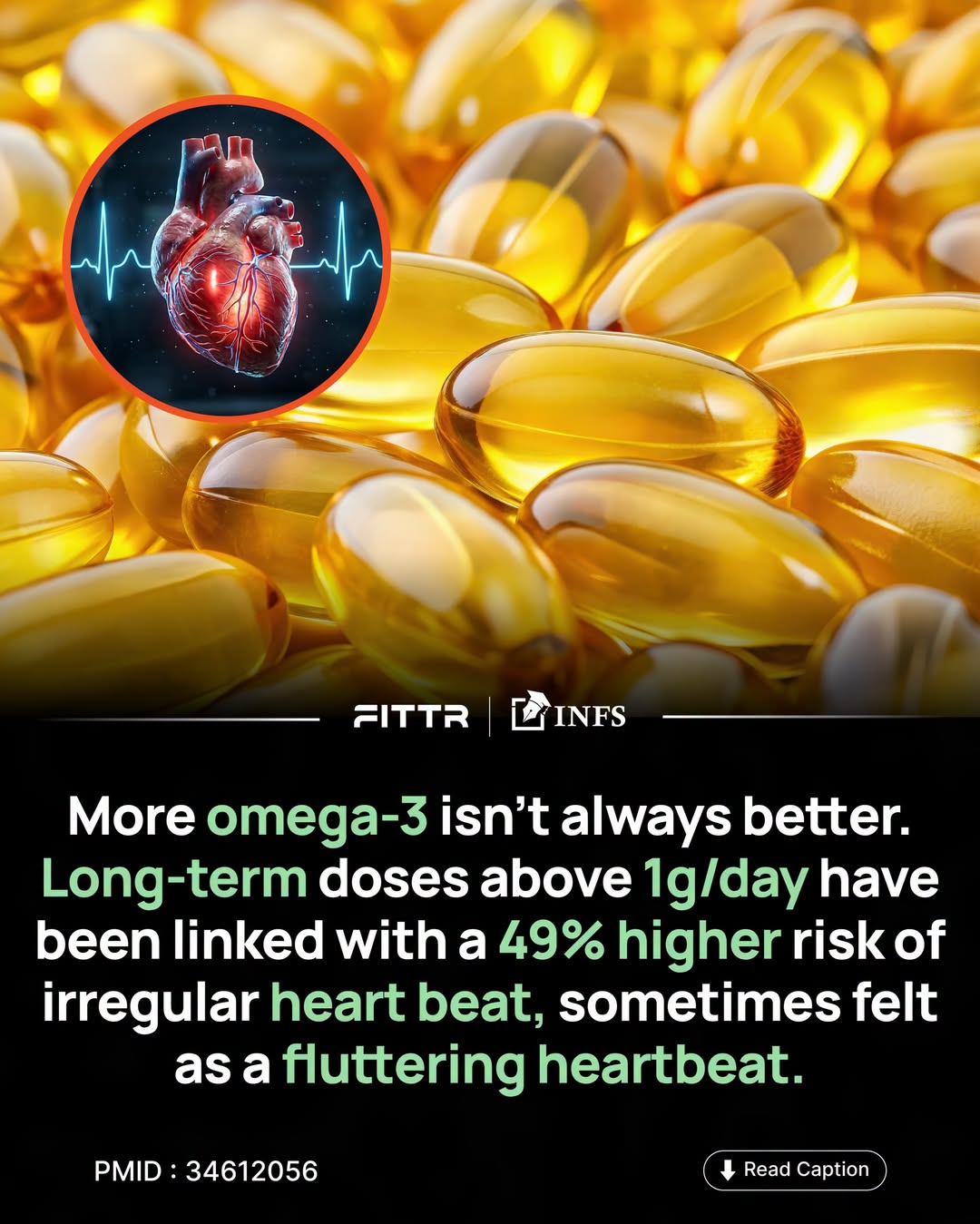
A 2021 meta-analysis of seven large randomized trials (81,210 participants) found omega-3 supplementation increased atrial fibrillation (AF) risk by 25% overall, with doses above 1 g/day linked to a 49% higher risk.

Each additional gram per day raised AF hazard by 11%.

It happens because Omega-3s integrate into cardiac cell membranes, altering ion-channel function and electrical signaling.

Your heart beats through carefully controlled electrical signals. Very high omega-3 doses may influence this system, potentially making abnormal rhythms easier to trigger.

Omega-3s offer cardiovascular benefits, but more isn’t always safer.

For most adults, staying at or below 1 g/day of EPA+DHA balances benefit with arrhythmia risk especially if you have existing heart disease palpitations.

(omega-3, fatty acids, heart-health, blood-pressure, stroke, diabetes, metabolism, inflammation, longevity, preventive-health, diagnosis, biomarkers, fitness, nutrition, sleep, exercise, strength-training, weight loss, obesity, fitness, FITTR)

Sources: PMID: 34612056

#preventivehealth #longevity #fitness #FITTR #weightloss

May be an image of heart and text that says 'FITTR LINFS INFS More OTEA- isn't always better. Long-term doses above 1g/day have been linked with a 49% higher risk of irregular heart beat, sometimes felt as a fluttering heartbeat. PMID: 34612056 Read Caption'
← newer: Harvard cohorts: plant protein linked to lower CVD and totalolder: Statin use linked to 35% lower odds of liver cancer in UK da →