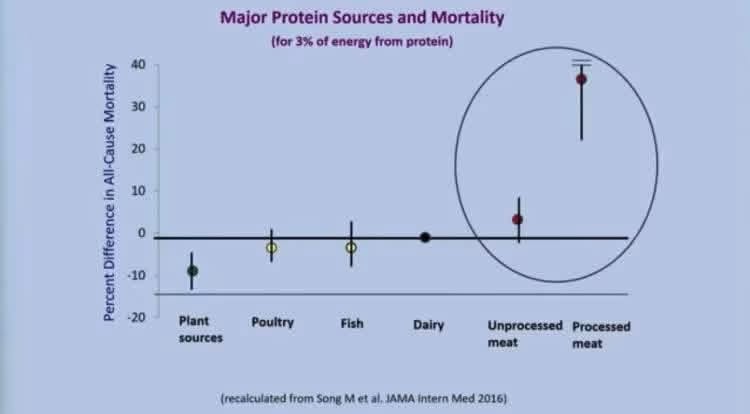
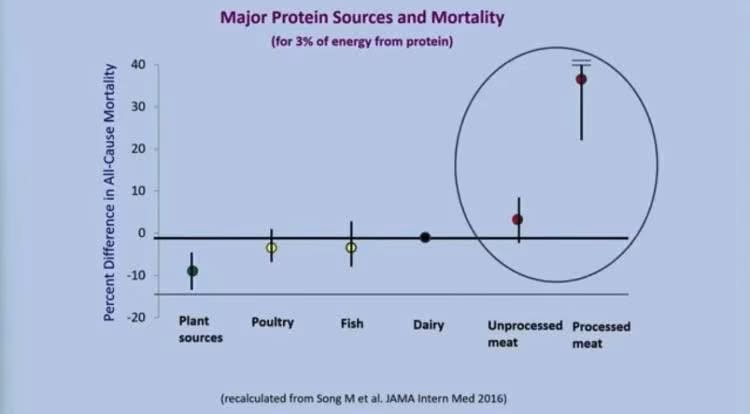
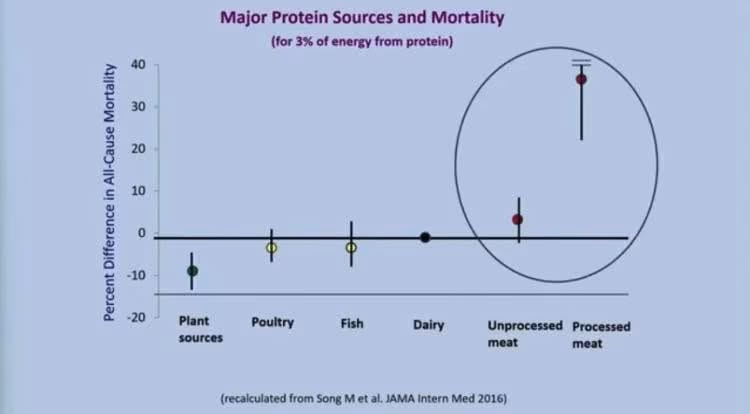
The latest results from both the Harvard Nurses Study and Harvard Physicians Followup Study indicate that increased plant protein intake seems to be strongly protective against both CVD mortality and total mortality.
What makes these Harvard results especially compelling is the large size and very long timeframe of the study: They tracked hundreds of thousands of people prospectively for 30 years of their lives, all the way from midlife to old age and death.
Animal protein does not show this same benefit in this 30 year data, driven largely by negative effects from red and processed meat. (The results on healthier forms of animal protein like seafood and yogurt are actually pretty good.)
We’ve talked about these Harvard results many times in the group now. See these past posts:
But the truth is that we’ve known that plant protein is likely protective over shorter periods of time for quite a while now— well before these 30 year Harvard results were published.
A meta-analysis of all the older high-quality prospective cohort studies examining this question was published in 2020. It demonstrated very clearly that increased plant protein intake was associated with significantly lower mortality over shorter periods of time. (This is the meta-analysis that Michael Greger refers to in the post below.)
The journal paper on that meta-analysis can be found here:
.
Paper · Eur J Epidemiol · 2020Dietary protein intake and all-cause and cause-specific mortality: results from the Rotterdam Study and a meta-analysis of prospective cohort studies.Evidence for associations between long-term protein intake with mortality is not consistent. We aimed to examine associations of dietary protein from different sources with all-cause and cause-specific mortality. We followed 7786 participants from three sub-cohorts of the Rotterdam Study, a population-based cohort in the Netherlands. Dietary data were collected using food-frequency questionnaires at baseline…pmc.ncbi.nlm.nih.govQuoted:
Furthermore, in the meta-analysis a higher plant protein intake was associated with lower all-cause and CVD mortality [e.g. for all-cause mortality, highest versus lowest, 0.93 (0.87, 0.99); per 5 E% increment, 0.87 (0.78, 0.98), for CVD mortality, highest versus lowest 0.86 (0.73, 1.00)]. Evidence from prospective cohort studies to date suggests that total protein intake is positively associated with all-cause mortality, mainly driven by a harmful association of animal protein with CVD mortality. Plant protein intake is inversely associated with all-cause and CVD mortality. Our findings support current dietary recommendations to increase intake of plant protein in place of animal protein.
#proteinHD #plantproteinHD #hnsHD #hpfsHD #animalproteinHD #plantproteinsummaryHD