Does Lp(a) play any essential role in the bloodstream?
The short answer is No.
Modern humans with little to no Lp(a) in their blood experience no significant side effects as a result.
However, it may have provided an evolutionary advantage to your ancient hunter-gatherer ancestors, which is why evolution seems to have selected for it in many people.
And high Lp(a) might actually lower the risk for developing certain diseases and conditions, like diabetes and hemorrhagic stroke. In other words, there might be some minor advantages to having high Lp(a), even though it strongly raises risk for CVD.
Here is a nice explanation from Gemeni AI:
Lipoprotein(a), commonly referred to as Lp(a), does not appear to have an essential physiological function in modern humans.
Individuals with extremely low or completely undetectable blood levels of Lp(a) suffer no obvious biological deficits, developmental issues, or functional impairment. Because of this, many lipidologists and evolutionary biologists view Lp(a) as an evolutionary remnant—a biological "fossil"—rather than a vital protein required for day-to-day metabolic health.
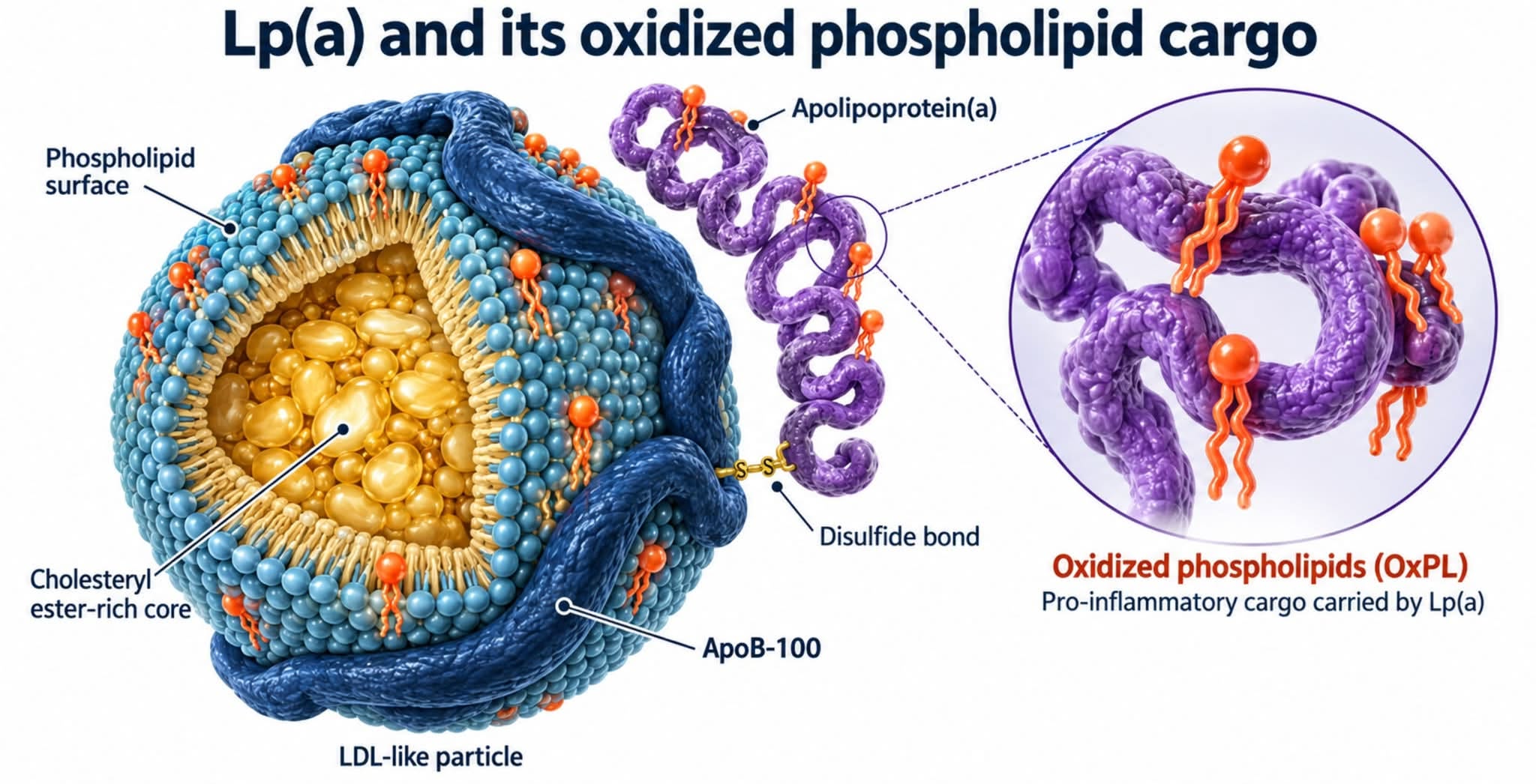
However, based on its molecular architecture (an LDL-like particle covalently bound to apolipoprotein(a), which shares high structural homology with plasminogen), several hypothesis-driven roles for Lp(a) have been proposed:
Proposed Evolutionary & Physiological Roles
- Wound Healing and Tissue Repair: Because apolipoprotein(a) binds to fibrin, Lp(a) accumulates rapidly at sites of vascular injury. It is thought to assist in localized tissue repair, matrix deposition, and endothelial cell modulation.
- Hemostasis and Bleeding Protection: Apo(a) competes with plasminogen for fibrin binding, which inhibits the breakdown of blood clots (fibrinolysis). In ancestral environments—prior to modern surgery and medicine—having elevated Lp(a) may have provided a survival advantage by reducing the risk of fatal hemorrhage from severe trauma, childbirth, or parasitic infections.
- Innate Immune Defense & Toxin Scavenging: Lp(a) acts as the primary plasma carrier for oxidized phospholipids (OxPL). By sequestering these highly reactive, pro-inflammatory lipid molecules, Lp(a) may act as a systemic "sponge" to buffer the cardiovascular system against oxidative stress or microbial pathogens.
- Compensatory Mechanism for Vitamin C Deficiency: Early evolutionary hypotheses proposed that as early primates lost the genetic capability to endogenously synthesize vitamin C (ascorbate), Lp(a) emerged to preserve blood vessel structural integrity. By promoting localized clotting and matrix stabilization, it may have helped prevent blood vessel fragility under low-ascorbate conditions.
The Modern Paradox
While these mechanisms likely offered a survival edge in hunter-gatherer eras characterized by frequent physical trauma and shorter lifespans, they become detrimental over a modern lifespan.
The exact traits that made Lp(a) useful for acute survival—pro-thrombotic properties (inhibiting clot breakdown) and pro-inflammatory activity (delivering oxidized lipids directly to vessel walls)—make it a potent driver of premature atherosclerotic plaque formation, aortic valve stenosis, and thrombosis today.
Could high Lp(a) protect against certain diseases and conditions?
Observational epidemiological data and Mendelian randomization studies show inverse associations between high Lp(a) levels and a few specific conditions. However, clinicians generally treat these "protective" effects as physiological trade-offs rather than actionable therapeutic benefits, because the cardiovascular harms of high Lp(a) almost always far outweigh the advantages.
The primary conditions where high Lp(a) appears to confer lower risk include:
- Type 2 Diabetes Mellitus
Large population studies (including data from the Copenhagen City Heart Study and UK Biobank) demonstrate a clear, inverse observational relationship between Lp(a) concentration and new-onset type 2 diabetes.
- The Association: Individuals with very high Lp(a) levels (e.g., >80–100 mg/dL) have a statistically lower risk of developing type 2 diabetes compared to those with extremely low or undetectable levels.
- The Biological Trade-off: Extremely low Lp(a) levels—often genetically driven by large apolipoprotein(a) isoform sizes or gene variants—are consistently linked to an increased incidence of impaired glycemic control and insulin resistance. This mirrors a similar phenomenon seen with statin-mediated LDL lowering and genetic variants in HMGCR, where aggressive lipid suppression slightly elevates diabetes risk while dramatically reducing vascular events.
- Bleeding Complications & Hemorrhagic Stroke
Because apolipoprotein(a) shares high structural homology with plasminogen, it acts as a competitive inhibitor of fibrinolysis (the body’s process of breaking down blood clots).
- The Association: Highly elevated Lp(a) creates a mild pro-thrombotic state. While this increases the risk of ischemic stroke and myocardial infarction, some large observational cohorts suggest high Lp(a) may be modestly protective against hemorrhagic events (e.g., intracerebral hemorrhage or severe gastrointestinal bleeding) by impairing rapid clot dissolution.
- Evolutionary Context: This pro-coagulant tendency is hypothesized to be the primary reason high Lp(a) survived natural selection, acting as a defense mechanism against fatal blood loss from acute physical trauma, childbirth, or severe infection.
- Infectious and Parasitic Disease Progression (Hypothesized/In Vitro)
Some specialized functional research suggests high Lp(a) may help bind and neutralize specific bacterial toxins and lipopolysaccharides (LPS).
- The Association: The high capacity of Lp(a) to sequester oxidized phospholipids (OxPL) and bind vascular toxins may act as a primitive sink during systemic acute-phase immune responses, potentially attenuating damage from certain bacterial or parasitic pathogens.
Key Clinical Context
While having high Lp(a) offers a statistically lower risk profile for conditions like type 2 diabetes, it is not considered clinically protective overall.
Elevated Lp(a) remains a major, independent causal driver of atherosclerotic cardiovascular disease (ASCVD), coronary artery disease, calcific aortic valve stenosis, and ischemic stroke. In clinical practice, any potential metabolic or pro-hemostatic advantage provided by high Lp(a) is massively overshadowed by its cardiovascular risk profile.