Pushing the limits of LDL cholesterol
July 2025
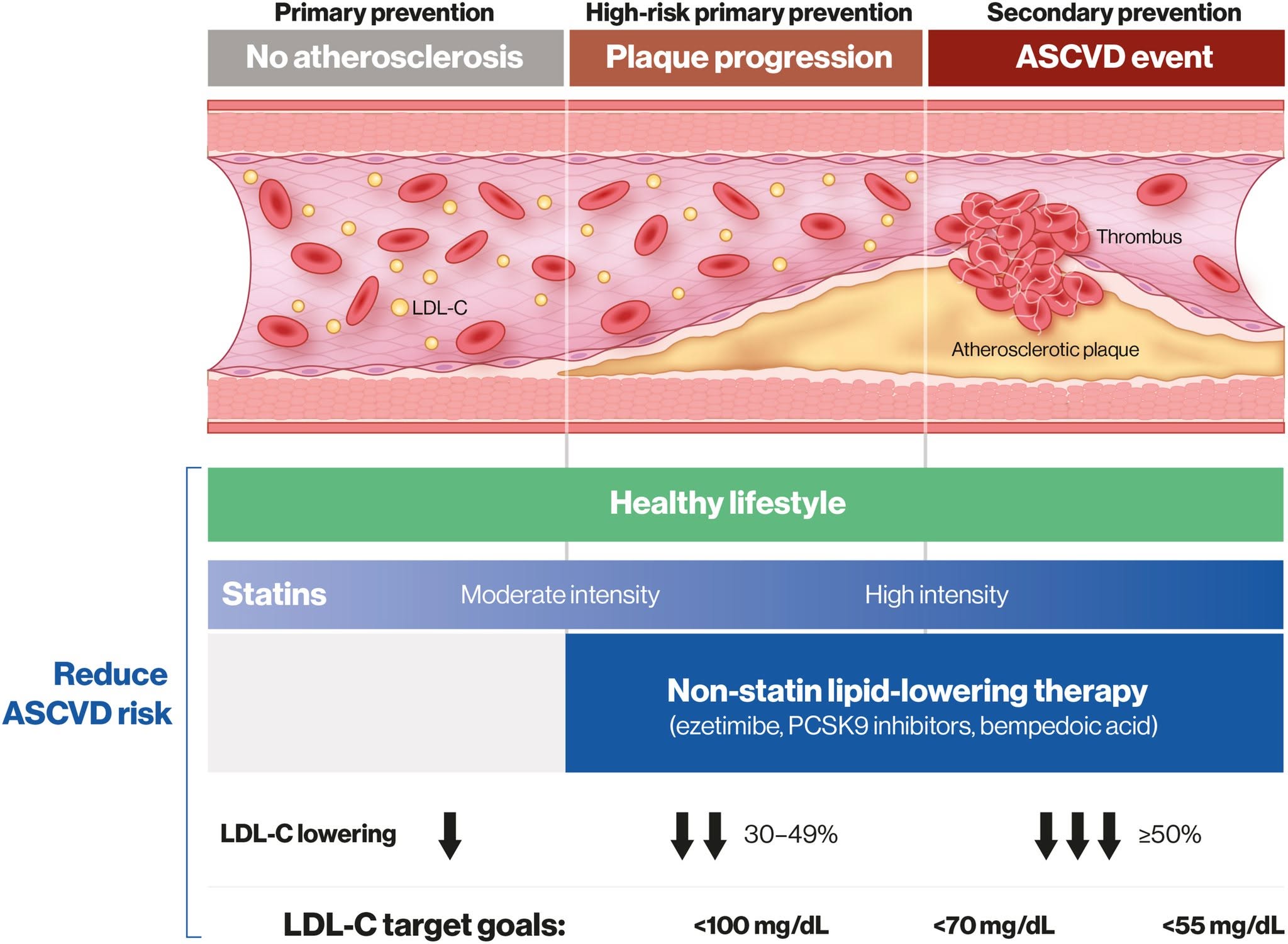
This review argues that the cardiovascular benefits of aggressively lowering LDL cholesterol (LDL-C) significantly outweigh minimal, largely theoretical risks. The authors trace the evolution of guidelines, which now recommend stringent targets like <55 mg/dL for very high-risk patients (ACC/ESC) and even <40 mg/dL after a recurrent event (ESC). These goals are achievable with newer therapies like PCSK9 inhibitors, which provide a 59-62% LDL-C reduction on top of statins. Clinical trial evidence is robust: the FOURIER trial demonstrated a 15% reduction in primary cardiovascular endpoints by lowering LDL-C to a median of 30 mg/dL, while a major meta-analysis confirmed a 21% relative risk reduction for every 38.7 mg/dL (1 mmol/L) drop, with benefits extending to levels as low as 21 mg/dL. Genetic studies further support this, linking certain PCSK9 mutations to an 88% reduction in coronary heart disease. The review concludes that concerns about hemorrhagic stroke (NNH 3333), cognitive decline (refuted by the EBBINGHAUS study), or hormone disruption are not supported by large-scale data, yet a significant treatment gap remains, as fewer than one in four high-risk ASCVD patients currently achieve the <55 mg/dL target.
Paper · Trends in Cardiovascular Medicine · 2025Pushing the limits of LDL cholesterol: Emerging paradigms in cardiovascular risk reductionsciencedirect.com