One of the doctors who planned and wrote much of the original clinical protocol for the “LMHR study” has serious concerns about how the study was implemented and is now being interpreted.
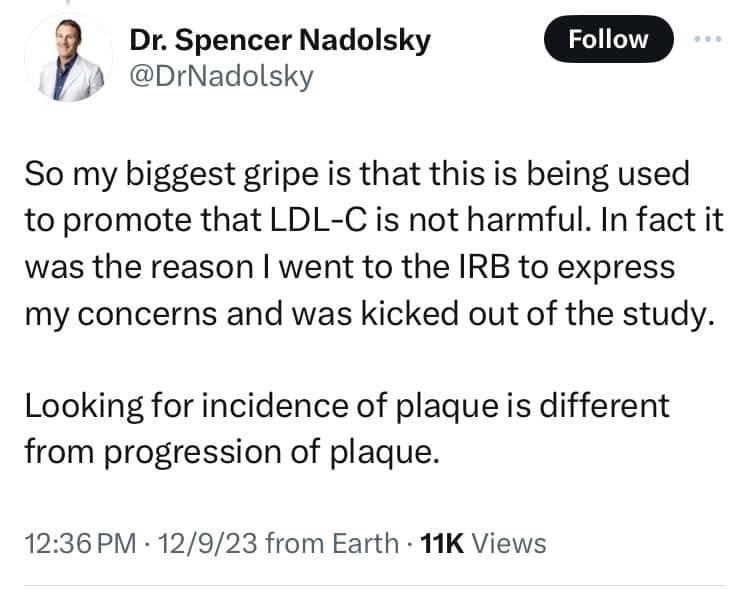
You can read his full explanation in this Twitter stream. Note that these are full threads. The link is just to the very first tweet in the threads.
I will paraphrase the concern here:
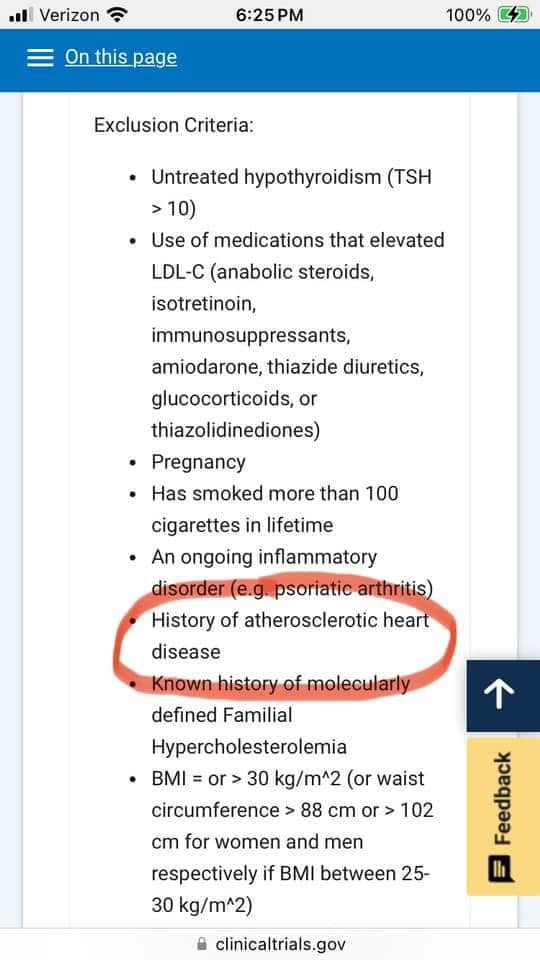
The study only enrolled people who were extremely healthy with no diabetes and no atherosclerosis. People with any history of atherosclerosis were officially EXCLUDED. It takes many years for a very healthy non-diabetic with zero calcification to develop soft plaque and have this transform into calcified plaque, even with very high LDL. The choice of who could enroll made it very unlikely that there would be any detectable atherosclerosis after only one year.
What does extremely healthy mean? In addition to no diabetes or atherosclerosis, the people enrolled in this study had: no prediabetes, perfect blood pressure, not overweight, no history of smokimg, and very low inflammatory markers (hs-CRP).
A better designed study would have enrolled people who already had atherosclerosis and then monitored their progression— because progression of existing atherosclerosis happens much more rapidly.
Post on X · Dr. Spencer NadolskyDr. Spencer Nadolsky on XRegarding the keto hypercholesterolemia data (LMHR), I have gotten many DMs due to me being the person who wrote much of the original protocol. The very original intention of the study was to monitor plaque formation in those with very high (>400 mg/dl) LDL-C levels due to keto.x.com Post on X · Dr. Spencer NadolskyDr. Spencer Nadolsky on XJust want to make sure there is no confusion here. If you assume people will develop rapid atherosclerosis after going keto and getting a high LDL-c (high 200s mg/dl) and your arteries were originally clear of atherosclerosis, that likely doesn’t happen. It takes many years. https://t.co/1FYwtWT7Wax.com