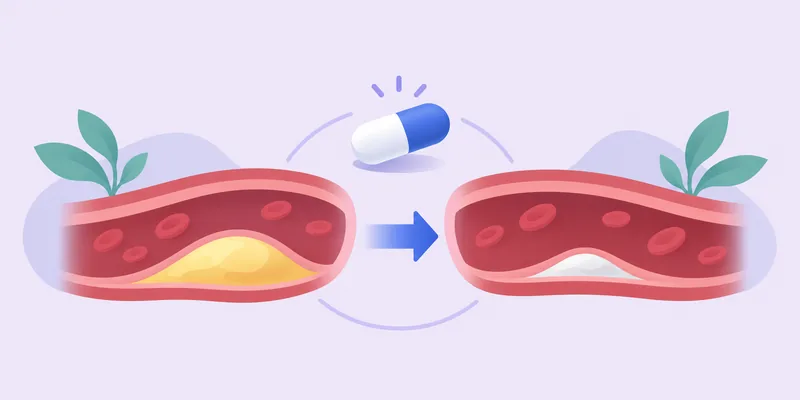
For many years, clogged arteries were thought of as a one-way street. The group's posts argue that this is no longer accurate: in randomized trials that image the artery wall directly, plaque volume has measurably gone down in people treated with statins, ezetimibe, PCSK9 inhibitors and several other approaches.12 Louis Nervegna, one of the group's admins, describes plaque reversal as "real" and says it is common in the first few years after starting a statin.13
The size of the effect depends on how it is measured, which drug or diet is used, and above all how low LDL cholesterol gets. Reductions of a few percent of plaque volume are typical, double-digit reductions have been reported in some trials, and the part that shrinks is mainly the soft, fatty, rupture-prone core rather than hard calcium.45
This summary flags where posts disagree and separates randomized evidence from single-patient stories. It is educational, not medical advice, and the group's admins recommend discussing any treatment decision with your own doctor.
What plaque is and how "shrinking" is measured
Atherosclerotic plaque is the buildup of cholesterol-rich material, inflammatory cells and, eventually, calcium inside the artery wall. Plaque is not one thing. Researchers separate it into soft or non-calcified plaque (fatty and fibrous tissue with a lipid core) and hard calcified plaque. Louis stresses that the soft plaque is the dangerous kind and that calcified plaque is more of a marker.14
Regression is reported in a few different ways, and mixing them up is the most common source of confusion:
- Total atheroma volume (TAV) is the total volume of plaque in the segment scanned, soft and calcified together. A "6.5% reduction in TAV" means the plaque is 6.5% smaller than at baseline, a relative change.7
- Percent atheroma volume (PAV) is the share of the scanned vessel volume occupied by plaque. A PAV of 15% means 15% of the scanned artery is plaque. Changes in PAV are usually quoted in absolute percentage points, so "PAV fell 1%" is a much smaller number than "TAV fell 17%".915
- Non-calcified plaque volume (NCPV) counts only the soft component and is usually given in cubic millimetres (mm3).8
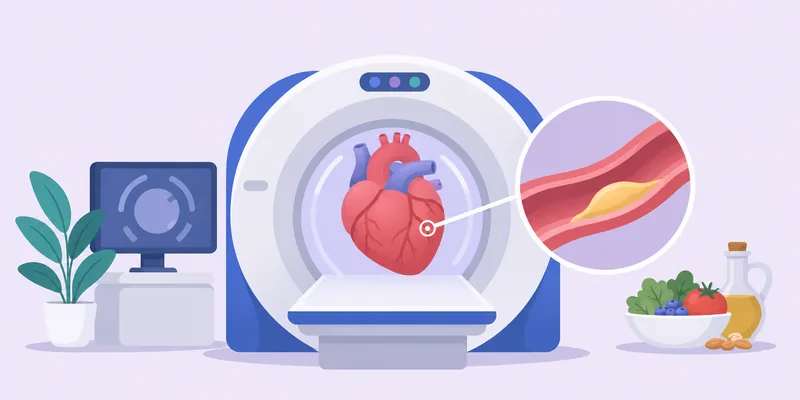
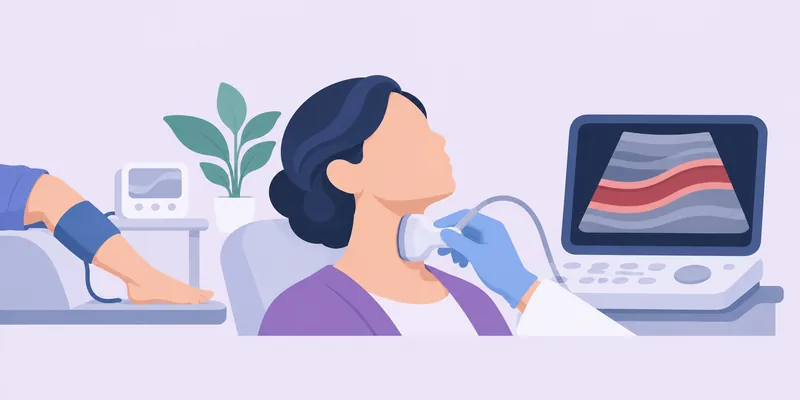
Intravascular ultrasound (IVUS) places a tiny ultrasound camera inside the artery and is described as the gold standard for imaging plaque.1617 Coronary CT angiography (CCTA) measures plaque non-invasively and can detect it long before it narrows the channel.418 Optical coherence tomography (OCT) is used to measure the thickness of the fibrous cap that covers a plaque, and near-infrared spectroscopy (NIRS) measures lipid content.1519
Ordinary x-ray angiography only shows the outline of the blood channel (the lumen), not the plaque in the wall. Early plaque makes the wall bulge outward, so a "normal" angiogram can hide a large plaque burden (Glagov remodeling).20 This is why Louis treats older angiography-based trials with caution.18
What the evidence shows
Statins: the largest body of evidence
Louis lists six randomized trials of statins and the reduction in total plaque volume each showed relative to baseline: COSMOS about 5%, SATURN about 5.5%, ASTEROID about 6.5%, IBIS-4 about 7.5%, STABLE about 8% and JAPAN-ACS about 17%. He attributes the percentages to a figure in a 2022 JACC state-of-the-art review of plaque regression, and notes they were measured by IVUS or CT angiography.46 Gokhan Can's earlier review summarizes the same literature as statins lowering total atheroma volume by 0% to 20%, with high-intensity atorvastatin and rosuvastatin looking more effective than lower doses.21 The JACC review is quoted as concluding that statins induce plaque regression in a dose-dependent manner and in proportion to the LDL-C reduction.12
Individual trial figures, as the group has posted them, are smaller because many are absolute PAV changes:
- SATURN (2011): high-dose atorvastatin 80 mg reduced PAV by 0.99% over 24 months in 1,039 patients.22 A separate analysis posted by Gokhan reports rosuvastatin 40 mg versus atorvastatin 80 mg, with PAV changes of -1.22% versus -0.99% (not significantly different) and somewhat larger TAV reductions with rosuvastatin.10
- ASTEROID (2006): rosuvastatin 40 mg reduced PAV by 0.98% over 24 months in 507 patients.22
- COSMOS (2016): PAV fell 0.95% versus 0.05% with placebo over 52 weeks in 418 patients, as described in the post.22
Louis often calls Japan-ACS the standout. About 300 patients with acute coronary syndrome at 33 centers in Japan were randomized to pitavastatin 4 mg or atorvastatin 20 mg a day. After 8 to 12 months, plaque volume in the non-culprit arteries (excluding the blockage that caused the event) changed by -16.9% and -18.1% respectively, measured by IVUS, with average LDL falling from about 130 to about 80-85 mg/dL.1623 Patients one standard deviation above the mean regressed by about 31-32%, and one patient by more than 70%.16 A different summary in the group lists Japan-ACS as -5.1% versus -0.7% for strong statins versus non-statin therapy in 252 patients, so figures for this trial differ from post to post.22
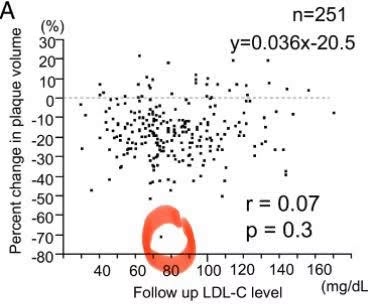
A 2021 meta-analysis shared by Gokhan pooled 31 studies and 4,997 patients and found significantly lower TAV and PAV with lipid-lowering therapy, with LDL below 80 mg/dL and HDL above 45 mg/dL associated with maximal regression.10
The newest addition is FLOWPROMOTE (JAMA Cardiology, 2026), a randomized trial in 104 statin-naive patients in Denmark with stable coronary disease imaged by CCTA at baseline, 9 and 18 months.24 Atorvastatin 40 mg reached an average LDL of about 70 mg/dL and total plaque volume fell about 13.6%. Rosuvastatin 40 mg plus ezetimibe 10 mg reached about 42.5 mg/dL and total plaque fell about 21.1%, with non-calcified plaque down 28.2% versus 20%.111325 The authors reported a linear relationship between achieved LDL and the amount of regression.11 The share of patients with regression of non-calcified plaque was given as 98% versus 77% in one post and about 90% in the lower-LDL group in another, so check the paper for the exact figure.1113 A caution noted in one summary: FLOWPROMOTE was an imaging study, not a trial of heart attacks or survival.25
Ezetimibe and PCSK9 inhibitors
Ezetimibe is a non-statin drug that blocks cholesterol absorption. Gokhan's review notes at least six IVUS trials in which adding ezetimibe to optimal therapy gave numerically greater regression (from -2.9% to -13.9% in total atheroma volume), though not every trial reached statistical significance.21 In a summary originally posted by group member Daniel Chong, the ZEUS trial in diabetic patients with acute coronary syndrome found plaque shrank 13.9% when ezetimibe was added to a statin versus 5.1% with statin alone, and PRECISE-IVUS reported PAV falling 1.4% with 78% of patients showing regression.2
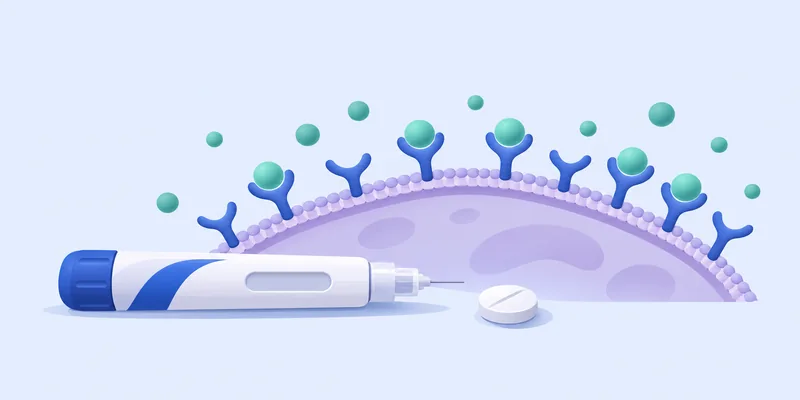
PCSK9 inhibitors (injectable antibodies that sharply lower LDL) have also been imaged on top of statins. In GLAGOV, evolocumab plus statin brought LDL to about 37 mg/dL and PAV fell 0.95% versus a 0.05% rise on statin alone, and TAV fell 2.9% versus 0.4% over 76 weeks.2627 Gokhan's summary lists a non-significant reduction with alirocumab in ODYSSEY J-IVUS over 36 weeks, and a further trial in which PAV fell 1.01% versus a 0.26% rise.26 One caution on naming: the same post and Louis's list place IBIS-4 in different categories, and another post gives the name PRECISE-IVUS to different trial details (ezetimibe in one post, evolocumab in another). Readers should check the primary papers rather than rely on the labels.2426
Show data
| Added drug | Comparison | |
|---|---|---|
| GLAGOV: evolocumab + statin vs statin alone (76 weeks) | -0.95 | 0.05 |
| PCSK9 trial in Gokhan's summary | -1.01 | 0.26 |
| PERISCOPE: pioglitazone vs glimepiride (18 months, type 2 diabetes) | -0.16 | 0.73 |
The YELLOW-III trial gave 137 patients maximum statin therapy and then evolocumab 140 mg every two weeks for 26 weeks. It reported fibrous cap thickness up more than 30% on OCT, PAV down by an absolute 1.38% on IVUS, and a TAV fall from 137.2 to about 131 mm3 (-4.4%) at an average LDL of about 39 mg/dL, with the shrinkage driven mainly by the lipid core.1529 Louis calls this the "melting butter" sign.30 The earlier YELLOW study reported falling lipid-core content within 7 to 8 weeks of intensive rosuvastatin, which Louis describes as stabilization rather than bulk shrinkage.19 His lists of regression trials also name FOURIER (2017) and HUYGENS (2021) alongside ASTEROID, GLAGOV and YELLOW-III, without giving their numbers.31
Colchicine, high-dose EPA, pioglitazone
- Colchicine (an anti-inflammatory drug): in a small randomized CT study led by Matthew Budoff, colchicine 0.5 mg daily lowered percent atheroma volume by more than 1% over one year and lowered CRP, with trends toward regression of non-calcified plaque and slower progression of calcified plaque.32 Gokhan's review describes the same study as open-label and notes that total atheroma volume changes were similar, with the benefit mainly in low-attenuation plaque, so the evidence is promising but limited.21
- High-dose EPA (icosapent ethyl, 4 g/day): the EVAPORATE trial enrolled 80 people with coronary disease, most with diabetes and on statins, with triglycerides of 135 to 499 mg/dL. After 18 months the EPA group had less unstable plaque and a lower total plaque volume than placebo.33 An earlier summary gives -17% in vulnerable plaque and points out that total plaque did not shrink much, so the type of plaque changed more than the amount.2 The posts repeatedly warn that doses this high can raise the risk of atrial fibrillation and advise talking to a doctor first.3334
- Pioglitazone (a diabetes drug): in PERISCOPE, 543 patients with type 2 diabetes had PAV change of -0.16% on pioglitazone versus +0.73% on glimepiride over 18 months.28
Diet, weight loss and exercise
Louis lists six randomized diet trials that showed plaque regression: Lifestyle Heart (1990, Ornish diet), STARS (1992, AHA diet), SCRIP (1994, AHA diet), PREDIMED (2013, Mediterranean), CORDIOPREV (2021, Mediterranean) and DISCO (2021, DASH).3536 He notes that none used a purely vegan diet; all were mostly plant-based, emphasizing fruits, vegetables, legumes, whole grains, nuts, olive oil and fish, and limiting refined foods, butter, fatty red meat and heavy alcohol.35
The DISCO-CT trial is the one Louis highlights most. Ninety-two non-diabetic patients with non-obstructive coronary disease were randomized to intensive medical therapy including statins, with or without dietitian-led DASH advice and more activity. Non-calcified plaque fell by 51.3 mm3 in the diet group versus 21.3 mm3 with medication alone, which is 2.4 times more.837 The trial lasted 66 weeks. Louis scaled the diet-group result to one year (about -39.5 mm3) and compared it with a typical at-risk person's growth of about 5 mm3 a year, giving his "eight years in one year" headline, and is explicit that the benchmark is a typical American, not each person's own prior growth.838 The diet was about 30% fat, mostly unsaturated, not low-fat, and calcified plaque did not rise in either group.839
Weight loss: Louis says about 30 lb of weight loss has been shown to reverse soft plaque, citing the DIRECT-Carotid trial of low-fat, Mediterranean and low-carbohydrate diets.364041
Exercise: the CENIT trial of supervised high-intensity interval training reported PAV falling 1.2% per year with no change in controls.2 Exercise on top of LDL below 70 mg/dL appears additive in a review Louis shared.42
Which LDL level is needed?
The group returns often to LDL thresholds. Louis's reading of the JACC figure is that regression of total plaque begins once LDL-C falls below roughly 90 mg/dL.47 A Medscape interview he quoted says that at an LDL of about 80 mg/dL roughly half of subjects had regression, and below 60 mg/dL 90% of regressable, lipid-rich plaques regressed.43 Gokhan summarizes a 2019 JACC review as saying progression stops below 70 mg/dL and regression generally needs levels below 60.44 A Cleveland Clinic cardiologist, in a clip Louis shared, says plaque volume can fall by up to 24% when LDL is pushed below 70 mg/dL.45 Louis also describes a 2004 intensive-statin IVUS trial that drove LDL to about 60 mg/dL.17
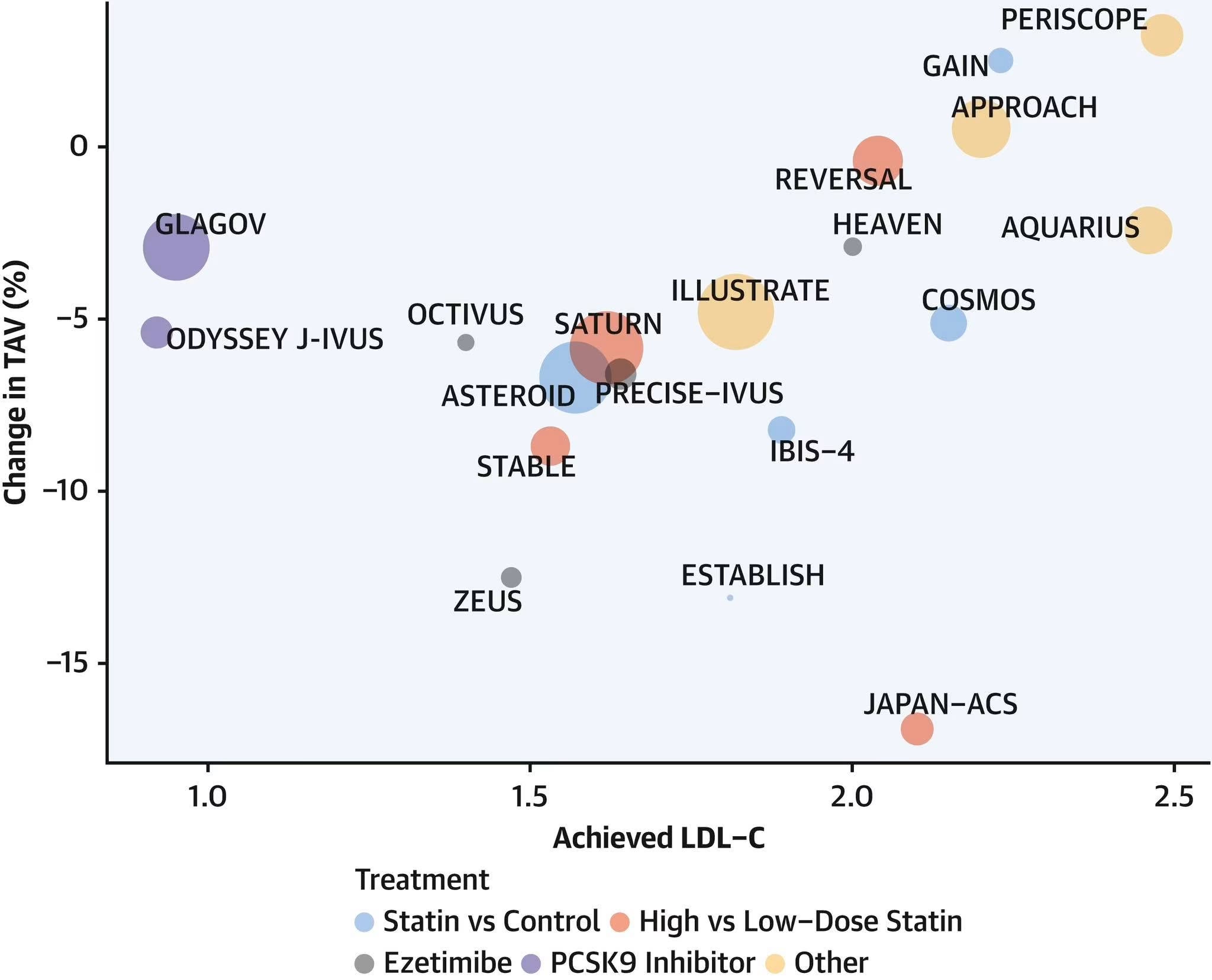
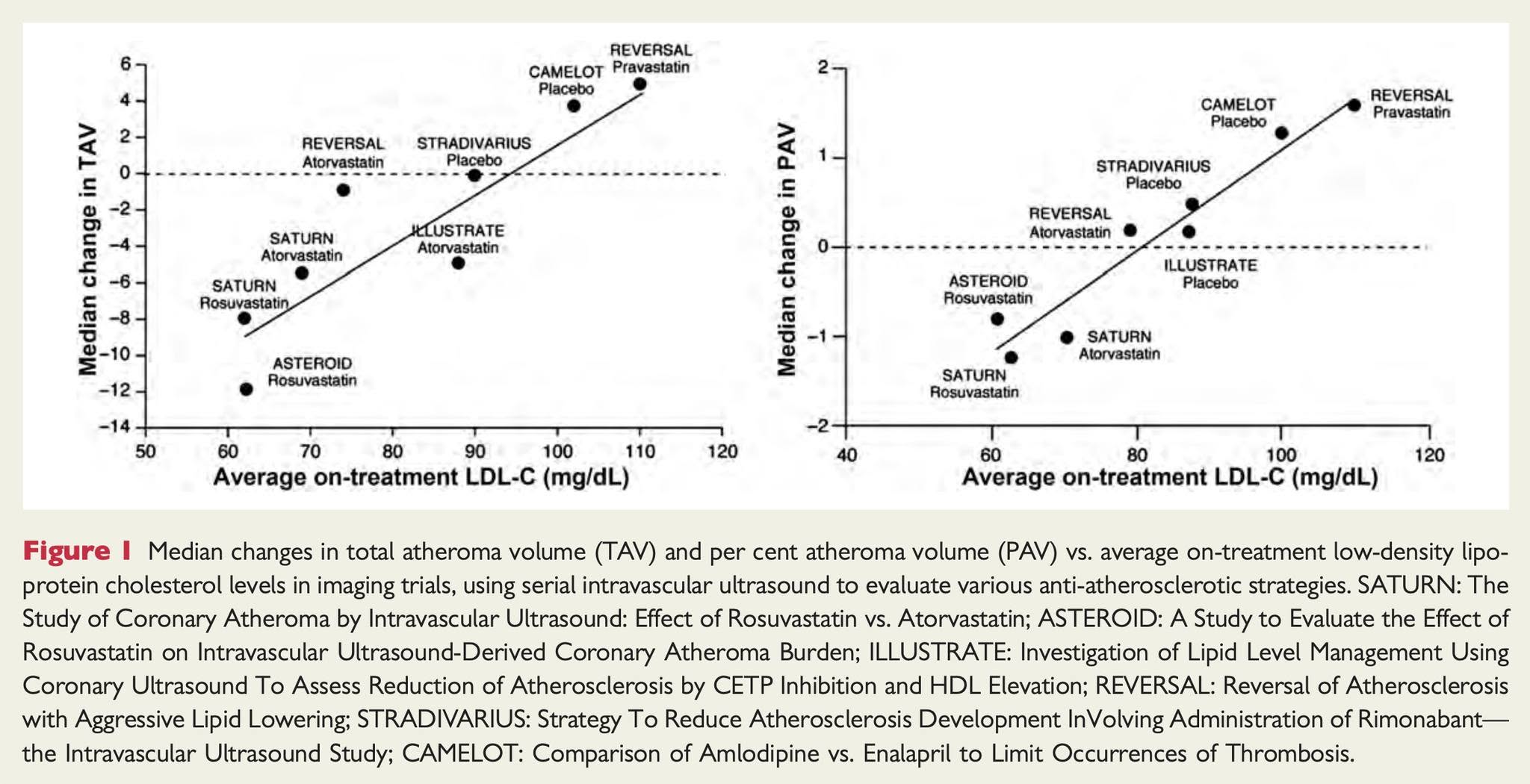
These numbers differ because they come from different trials, drugs and imaging methods. The consistent message is that lower achieved LDL goes with more regression,11 although Japan-ACS also showed large regression at about 80-85 mg/dL.16
Nuances, controversies and common misconceptions
Soft plaque shrinks, calcium often does not
In statin trials, fibrous and calcified plaque volumes tend to rise while non-calcified, fibrofatty and necrotic-core volumes fall.12 Louis explains that total plaque can fall even when calcium stays the same or increases, because soft plaque loss is large enough.4 Gokhan describes a "statin paradox", in which lipid-rich plaques regress into denser, calcified ones, and argues that PCSK9 inhibitors appear to regress plaque without the same calcification surge (GLAGOV, PACMAN-AMI, and smaller CAC studies).27 Louis shares the finding but notes that no outcome trial of PCSK9 inhibitors alone exists and that whether it matters long term is still debated.46
For readers tracking a coronary calcium (CAC) score, a post Louis shared explains why the score can rise while treatment is working.47 Louis argues that calcified plaque mostly acts as a proxy for how much soft plaque exists, that obsession with lowering CAC is misguided, and that the goal should be reversing soft plaque. He adds that nobody knows whether removing calcium would be beneficial or harmful without outcome trials.14 He also says a high CAC score is not a death sentence, and that exercise, weight loss and LDL below 70 mg/dL all help.40
Does shrinking plaque mean fewer heart attacks?
The posts repeatedly cite that each 1% reduction in PAV is associated with about a 20% reduction in major adverse cardiac events.910 A 2023 JAMA Cardiology meta-analysis of 7,407 patients across 23 studies is quoted as finding about 19% lower odds per percentage-point drop, with the explicit caveat that these are associations, not proof that a given amount of regression produces a specific risk reduction.13 Louis himself stresses that what ultimately matters is heart attacks, strokes and death, which is why outcome trials are needed.14 A review Gokhan summarized reports that plaques progressing rapidly before rupture carried a 28-fold higher likelihood of an acute coronary event,44 and CT-based plaque burden often predicts events better than the degree of stenosis.48
The Ornish trial and measurement error
Louis argues that the Ornish Lifestyle Heart Trial's reported lumen widening of 2.1% at one year and 3.4% at five years is below what x-ray angiography can reliably resolve (about 0.2 mm), and that the technique never measures plaque itself, so some of the reported reversal may be measurement error.18 This is the opinion of Louis and the academic cardiologists he cites, not a finding from the trial. He still counts the result as similar to PREDIMED and CORDIOPREV and smaller than DISCO-CT, and notes the Esselstyn diet has not been tested in randomized trials.36
Keto-CTA as a cautionary contrast
Keto-CTA was a one-year cohort of lean people on a ketogenic diet with very high LDL (about 254 mg/dL), in which PAV rose from 1.6% to 2.4% on average.49 Louis argues in a letter to JACC that a pre-specified outcome was omitted from the main text.50 These are one admin's critiques.
Case reports and anecdotes
Members share individual stories: severe LAD stenosis that became mild over four years on atorvastatin 10 mg,51 paired CT scans from the same scanner and radiologist,52 soft LAD plaque resolving on 6 g/day of EPA without a statin,34 and a carotid case with salmon, niacin and low-dose rosuvastatin.53 Louis calls the statin case an outlier, and the EPA member flagged atrial fibrillation and bleeding risks. These are single patients and cannot show what will happen to anyone else.
Fasting, supplements and unproven claims
Louis considers fasting biologically plausible through autophagy, but the plaque evidence he and a clinician he shared describe is anecdotal.41 Gokhan's review rates aged garlic extract, Centella asiatica, pine bark extract, nattokinase and a plant-based diet as promising but needing rigorous trials, and L-arginine and vitamin K2 as unclear.21 Louis calls supplement evidence "a gamble" based on small human or animal studies and advises sticking to safe options that do not conflict with proven treatments.36
What this means for you
- Know what is being measured. Ask whether a number is a relative change in TAV, an absolute change in PAV, or a soft-plaque (NCPV) change in mm3.49
- LDL lowering has the deepest evidence. The group's admins point to LDL levels around 70 mg/dL or lower as where progression often stops and regression becomes more likely, and to ezetimibe and PCSK9 inhibitors as ways to go lower; this is a conversation to have with your own doctor.114044
- Diet and weight loss appear additive to medication in DISCO-CT, and the diets tested were Mediterranean, DASH and similar mostly plant-based patterns, not necessarily vegan.835
- Do not judge progress by the CAC score alone, since it can rise while soft plaque falls. Louis favors imaging that measures plaque directly, such as CT angiography, if you want to track changes.1847
- High-dose fish oil: the posts warn of atrial fibrillation risk and recommend discussing it with a doctor first.33
- Louis criticizes online claims that statins do nothing, pointing to the randomized imaging trials, and cautions against unproven interventions.2351
Frequently asked questions
Do statins really reverse plaque?
According to the trials in the group's posts, yes, on average, in the soft plaque. Six randomized trials show total plaque falling about 5% to 17% from baseline.4 Individual response varies, and Louis calls the most dramatic case an outlier.1651
How fast can plaque change?
Reported timeframes range from 7 to 8 weeks for lipid-core content (YELLOW)19 and about six months for fibrous cap and volume changes (YELLOW-III)15, to 8 to 12 months in Japan-ACS16 and 18 months in FLOWPROMOTE.11
Does a vegan diet have to be used to reverse plaque?
Louis says no: of the six diet trials showing regression, none used a purely vegan diet, even the Ornish trial allowed egg whites and non-fat dairy. He adds that anyone getting good results on a vegan diet is welcome to share.35
Does shrinking plaque prove fewer heart attacks?
No. The 20% per 1% PAV figure is an association from meta-analysis and earlier trials, and FLOWPROMOTE did not measure clinical events.1325