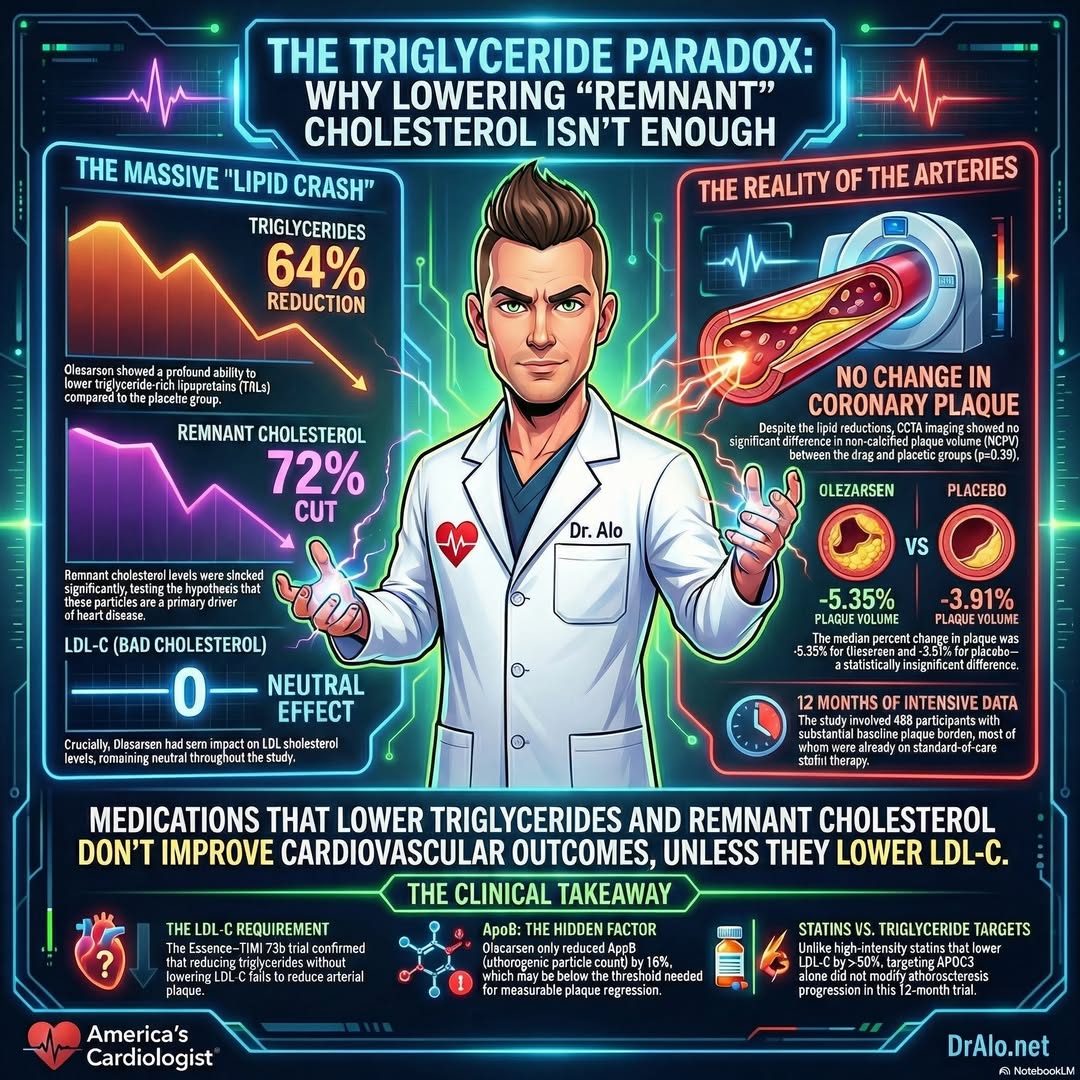
VLDL cholesterol is an emerging risk factor for atherosclerosis.
Accumulating evidence suggests that VLDL may be even more atherogenic than LDL.
There are some people with low LDL, but very high VLDL. These people may still be at high risk for heart disease, because of the atherogenicity of VLDL.
The most accurate way to learn your VLDL is to take a test that measures it directly.
But it can be roughly estimated from a standard lipid panel, by just dividing the value of triglycerides by 5. See below.
This is one of several reasons why you should be paying close attention to the value of triglycerides on your lipid panel.
A normal VLDL level is below 30 mg/dL, which corresponds to a triglyceride level below 150 mg/dL. This is the cutoff for “normal”, but optimal is likely lower, especially for people at high risk for CVD.
 Cleveland ClinicWhat Is VLDL Cholesterol?VLDL cholesterol is a “bad” cholesterol because, in excess, it causes plaque buildup (atherosclerosis) in your arteries. A normal VLDL level is below 30 mg/dL.my.clevelandclinic.org
——-
VLDL (very low-density lipoprotein) cholesterol can be estimated from a standard lipid panel using the triglyceride value. Here is the typical calculation:
VLDL Cholesterol = Triglycerides/5
The units are:
VLDL in mg/dL
Triglycerides in mg/dL
This calculation is based on the fact that each VLDL particle carries approximately 5 times as much triglyceride as cholesterol by weight.
So by dividing the triglyceride value by 5, you can get a reasonable estimate of the cholesterol content carried by VLDL particles.
Some examples:
If triglycerides = 150 mg/dL
VLDL = 150/5 = 30 mg/dL
If triglycerides = 250 mg/dL
VLDL = 250/5 = 50 mg/dL
This VLDL estimation is most accurate when triglycerides are < 400 mg/dL. At very high triglyceride levels over 1000 mg/dL, the ratio can change and this calculation becomes less precise.
It's also important to note that the VLDL value calculated this way includes the cholesterol content of VLDL remnants in addition to intact VLDL particles. (Studies show that these remnants are also atherogenic.)
Nevertheless, this simple calculation from the triglyceride measurement on a standard lipid panel provides a reasonable approximation of VLDL cholesterol levels for most people.