Do Statins Impact Cancer Risk?
Current research overwhelmingly indicates that statins neither cause nor cure cancer in general populations, though some evidence suggests potential benefits in specific contexts. Let's go over some key data points.
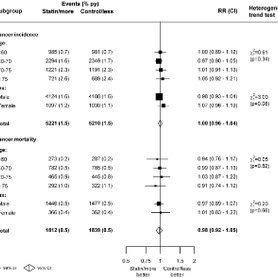
Major Meta-Analyses Show No General Cancer Link
A landmark 2012 meta-analysis [1] examined data from 134,537 participants across 22 randomized trials, with a median follow-up of 4.8 years. The results showed virtually identical cancer rates between statin users and non-users:
- Annual cancer incidence: 1.4% in both groups
- Annual cancer mortality: 0.5% in both groups
These findings were recently corroborated by a comprehensive 2023 meta-analysis of 35 randomized controlled trials [2]. This study found:
- No reduction in overall cancer incidence (Odds Ratio = 0.99)
- No decrease in cancer mortality (Odds Ratio = 0.99)
- No effect on specific cancer types, including genitourinary and breast cancers
- No impact from either statin type or duration of use
Emerging Research in Specific Cancers
While statins don't appear to broadly prevent or promote cancer, recent research has identified potential therapeutic applications. A 2021 review [3] suggests that statins may enhance the effectiveness of certain cancer treatments when used as part of combination therapy. However, these findings are preliminary and specific to particular cancer types and treatment protocols.
The Bottom Line
The extensive body of evidence indicates that statins, while crucial for cardiovascular health, neither increase nor decrease overall cancer risk. However, ongoing research is exploring their potential role as an adjunct therapy in specific cancer treatments. As with all medical research, these findings continue to evolve as new studies emerge.
1
Paper · PLoS One · 2012Lack of effect of lowering LDL cholesterol on cancer: meta-analysis of individual data from 175,000 people in 27 randomised trials of statin therapy.Conclusion: In 27 randomised trials, a median of five years of statin therapy had no effect on the incidence of, or mortality from, any type of cancer (or the aggregate of all cancer).journals.plos.org2
Paper · Lipids Health Dis · 2023The association of statin therapy and cancer: a meta-analysis.Conclusion: Through comprehensive analysis, we found that statin therapy does not reduce cancer incidence or mortality while protecting the cardiovascular system.pmc.ncbi.nlm.nih.gov3
Paper · J Exp Clin Cancer Res · 2021Statins: a repurposed drug to fight cancer.As competitive HMG-CoA reductase (HMGCR) inhibitors, statins not only reduce cholesterol and improve cardiovascular risk, but also exhibit pleiotropic effects that are independent of their lipid-lowering effects. Among them, the anti-cancer properties of statins have attracted much attention and indicated the potential of statins as repurposed drugs for the treatment of cancer. A large number of clinical and…pmc.ncbi.nlm.nih.gov