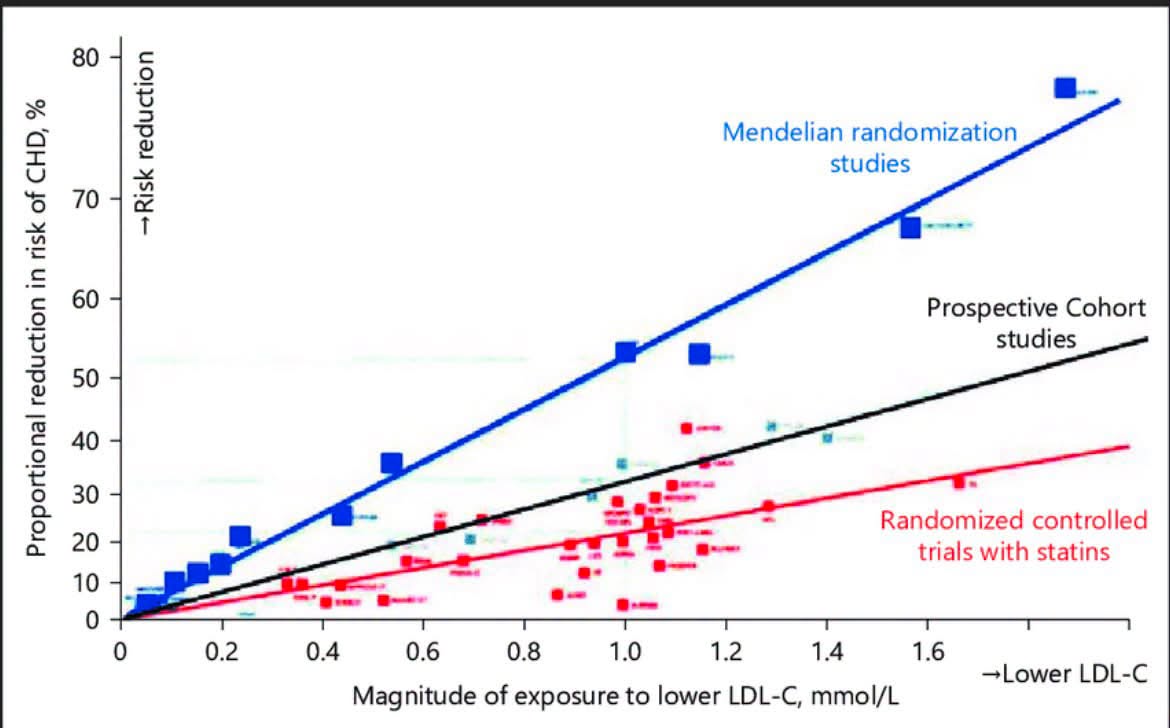
As of 2016, twenty five different randomized-controlled trials each independently showed that statins reduce major adverse cardiac events (MACE), like heart attacks and strokes.
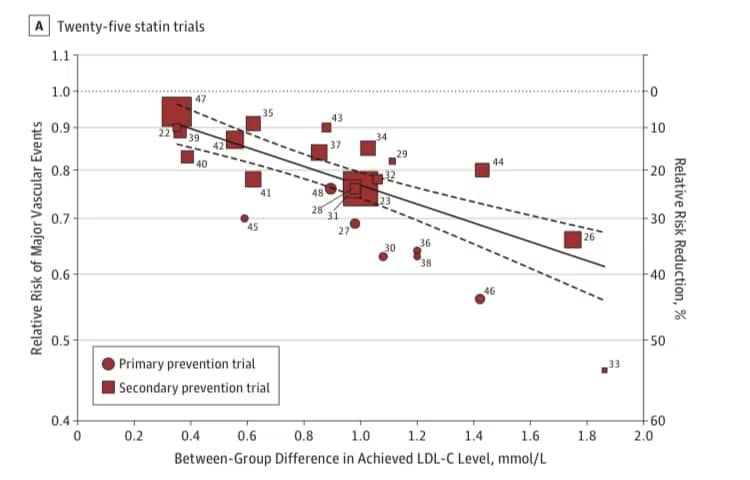
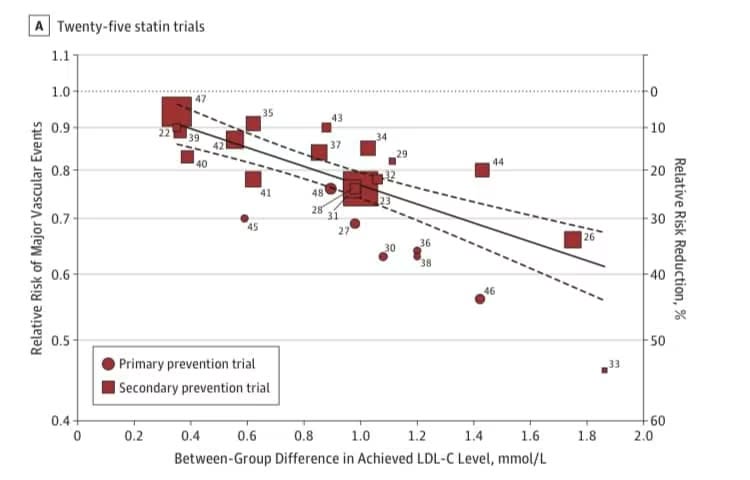
Here are all 25 of them— summarized on one graph.
There is no cherry picking here. This is every RCT conducted on statins up to 2016– except those lasting less than 6 months or with less than 50 adverse clinical events— only very short or small trials were excluded.
A lowering in LDL level of about 75mg/dL (1.9mmol/L) from the statin reduced the risk of having a heart attack or stroke (MACE) by about 40% on average, as compared to people taking a placebo.
(For example, someone with an LDL of 100mg/dL taking a statin in these trials would have a 40% lower risk of having a heart attack or stroke (MACE) on average than someone with LDL of 175mg/dL taking a placebo.)
To understand how this translates into a large reduction in absolute risk over the long term, see this post:
↪ Statin absolute risk reduction is cumulative: 1-2% in trials, far more over a lifetime
Seven of these clinical trials were primary prevention trials— participants who never had a heart attack or stroke before— as shown on the graph (circles). Notice that the risk reductions for the 7 primary prevention trials (circles) were even larger than the risk reductions for the 18 secondary prevention trials (squares).
Since 2016, even more clinical trials on statins have corroborated this.
This is WHY statins are now the standard of care in cardiology.
Note that 40mg/dL of LDL corresponds to about 1mmol/L.
Reference for this graph:
PaperAssociation Between Lowering LDL C and Cardiovascular Risk Reduction Among Different Therapeutic Interventions A Systematic Review and Meta analysisresearchgate.net