Zepbound vs. Wegovy: The First Head-to-Head Trial Shows a Clear Winner — and Why It Matters for Your Health
For the first time, we have a direct comparison of the two most advanced obesity medications. A new study in The New England Journal of Medicine (May 2025) shows — definitively — which one delivers more. But this isn’t just about weight loss. It’s about lowering your risks of cancer, dementia, heart disease, and extending life itself.
The study compared two of the most advanced medications we have for weight management: semaglutide (Wegovy) and tirzepatide (Zepbound). Both are weekly injections. Both are backed by mountains of data. But for the first time, we now have a head-to-head clinical trial showing which one delivers more.
The winner wasn’t close.
⸻
What the Study Found
Over 72 weeks, researchers followed 751 adults with obesity (but no diabetes). One group took tirzepatide 15 mg. The other took semaglutide 2.4 mg. Both groups received the same lifestyle support.
The results weren’t close.
After 72 weeks:
—Tirzepatide patients lost 50 pounds on average (~20% of body weight).
—Semaglutide patients lost 33 pounds (~14% of body weight).
That’s a 17-pound difference — in favor of tirzepatide — despite identical lifestyle interventions.
These aren’t marginal differences. For a disease (and yes, obesity is a disease) that underpins nearly every chronic health problem we treat, this is a monumental shift.
⸻
Why This Matters Far Beyond the Scale
Excess fat, especially visceral fat (the kind wrapped around your organs), isn’t just “weight.” It’s inflammatory, metabolically active tissue that wreaks havoc across the body.
Here’s what happens when we reduce it:
—Blood pressure drops.
—Blood sugar stabilizes.
—Cholesterol improves.
—Liver fat clears.
—Chronic inflammation calms down.
But it doesn’t stop there.
Cancer risk declines
Visceral fat increases estrogen, insulin, and IGF-1 — all of which fuel tumor growth. Obesity is now linked to 13 types of cancer. Reducing visceral fat means dialing back those risk factors.
Dementia risk may fall
Obesity drives insulin resistance in the brain, neuroinflammation, and vascular damage — all pathways to cognitive decline. Early studies suggest GLP-1 and GIP drugs like tirzepatide might protect neurons, improve blood flow, and even reduce amyloid plaques.
Longevity increases
Obesity accelerates aging. Not just through heart attacks or diabetes, but by damaging mitochondria, increasing oxidative stress, and promoting cellular senescence. Losing visceral fat restores metabolic flexibility — the foundation of healthy aging.
⸻
Why Tirzepatide Outperforms Semaglutide
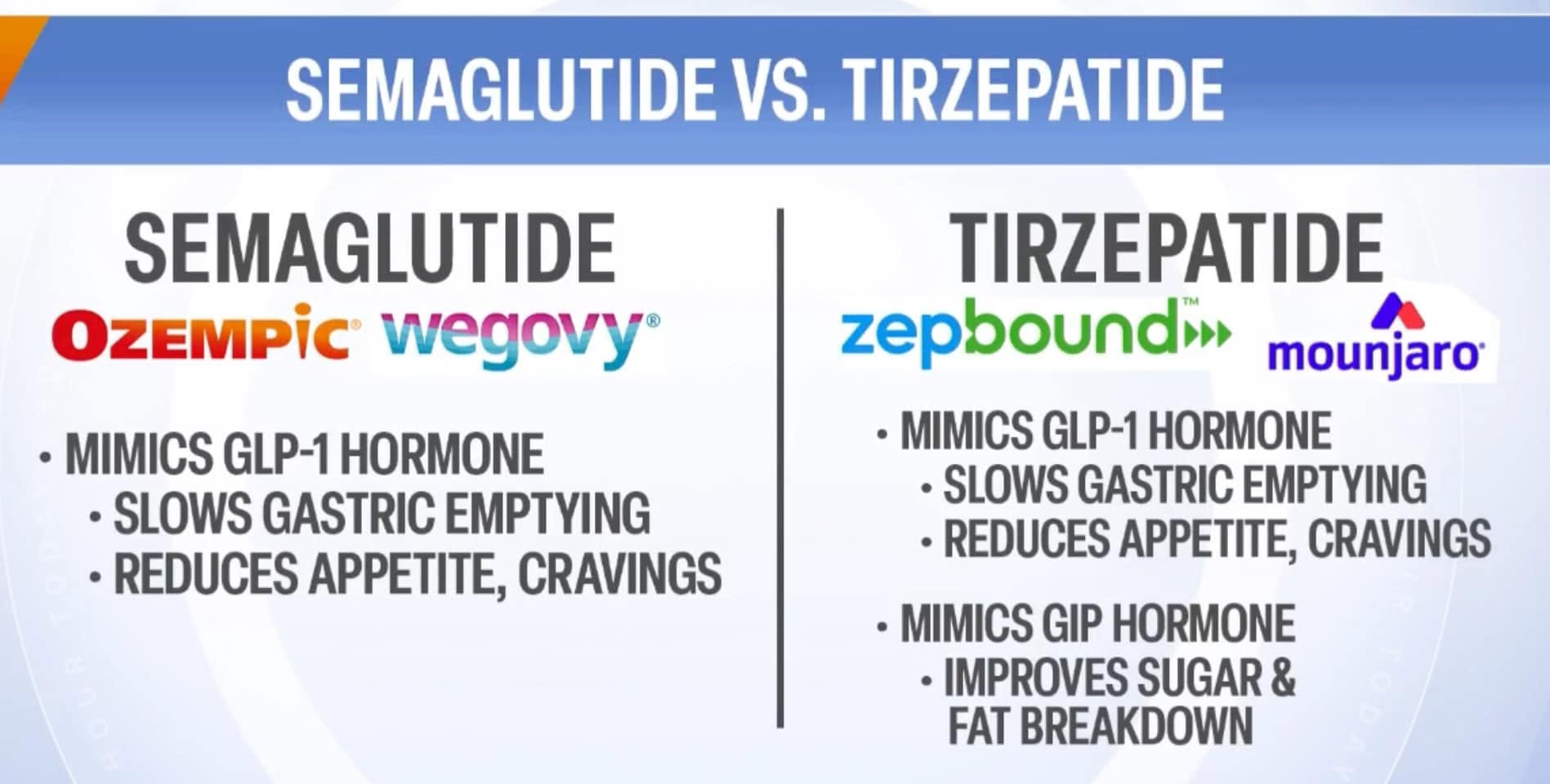
Both drugs harness GLP-1, curbing appetite and improving insulin sensitivity. But tirzepatide goes further. It also activates GIP — another gut hormone that amplifies fat burning, enhances insulin action, and reduces cravings more powerfully.
This “dual-incretin” effect isn’t theoretical. It’s exactly why tirzepatide outperformed semaglutide in this trial.
⸻
Risks and Considerations
While GLP-1 and GIP receptor agonists like tirzepatide and semaglutide are generally well-tolerated, they’re not without risks. The most common side effects are gastrointestinal, including nausea, vomiting, diarrhea, and constipation, particularly during dose escalation. There are rare but serious concerns, such as pancreatitis, gallbladder disease, and in those with certain genetic predispositions, a theoretical risk of medullary thyroid carcinoma. Careful patient selection and monitoring are essential. Equally important is the risk of over-reliance on medication without addressing lifestyle factors—these drugs are powerful, but not magic bullets.
The Muscle Mass Factor: Why Exercise Still Matters
Rapid weight loss can come at a cost: lean muscle mass. Without resistance training and sufficient protein, patients risk losing not just fat, but vital muscle — which is essential for long-term metabolic health and physical function.
Long-Term Use: A Chronic Treatment for a Chronic Disease
One critical message from this and prior studies: these medications are not short-term fixes. Both tirzepatide and semaglutide lead to weight regain when stopped — not because they “fail,” but because obesity is a chronic, relapsing disease.
Think of them like cholesterol or blood pressure meds: stop treating the root cause, and the problem returns.
The conversation needs to move from “how long do I need this?” to “how long do I want to keep my health gains?”
⸻
This is Health Optimization in Action
For too long, obesity has been dismissed as a personal failure of willpower. This study reinforces what many of us in medicine already knew: obesity is a hormonal, metabolic disease. And it’s finally a treatable one.
Yes, lifestyle matters. But for many people, biology fights back. These medications tilt the odds in the patient’s favor.
More importantly, they aren’t just for aesthetics. They’re risk-reduction tools:
—For heart disease.
—For diabetes.
—For cancer.
—For neurodegenerative diseases.
—For premature aging itself.
That’s the real story.
⸻
My Bottom Line
This isn’t just another weight loss trial. It’s the first direct comparison of two of the most powerful obesity drugs — proving that tirzepatide delivers greater results.
But more importantly, it reinforces the bigger picture:
Reducing visceral fat isn’t about aesthetics. It’s about reversing the root drivers of chronic disease, slowing aging, and improving longevity.
Paper · N Engl J Med · 2025Tirzepatide as Compared with Semaglutide for the Treatment of Obesitynejm.org