GLP-1 drugs are injectable (and some oral) medicines that copy gut hormones involved in appetite and blood sugar. Semaglutide (sold as Ozempic and Wegovy) and tirzepatide (Mounjaro and Zepbound, which also acts on a second hormone called GIP) are the best known. The group's posts agree on the core facts: they produce large weight loss, they prevent or treat type 2 diabetes, and in large trials they lower the rate of heart attacks, strokes and cardiovascular death.123
The group is less unanimous about why. Louis Nervegna repeatedly argues that these drugs are essentially "calorie restriction in a pill" and that much of their benefit comes from the negative energy balance and fat loss rather than anything unique to the drug.45 Other results he shares, such as heart-event reductions within six months and inflammation falling before weight loss, hint that there may be more to it.67 This article lays out the evidence, the caveats and the downsides. It summarizes group discussion and is not medical advice.
What these drugs are
GLP-1 (glucagon-like peptide-1) is a hormone the body already makes. According to a Scientific American piece Louis quoted, specialized gut bacteria turn the fiber and polyphenols in plant foods into molecules that stimulate GLP-1 and a partner hormone, PYY. These hormones help regulate blood sugar, tell the brain you have had enough to eat, and slow the movement of food through the gut, a mechanism called the "colonic brake".11 A separate news item reported that pancreatic alpha cells, long thought to make only glucagon, also make substantial GLP-1.12
The drug versions differ in how many hormone receptors they target:
- Semaglutide (Ozempic, Wegovy, and the oral form Rybelsus) targets GLP-1.610
- Tirzepatide (Mounjaro, Zepbound) targets GLP-1 and GIP.23
- Retatrutide is a not-yet-approved triple agonist (GLP-1, GIP and glucagon). A news report Louis shared described a large phase 3 trial with an average 28% body weight loss, up to 70 lb, over around 18 months.13
Gokhan Can, a group admin, takes a simple stance: "Weight loss is the best drug if you're obese. New GLP1 drugs can be a significant aid."14
Weight loss and metabolic effects
How much weight do people lose?
In the first head-to-head trial, published in the New England Journal of Medicine, 751 adults with obesity but no diabetes received tirzepatide 15 mg or semaglutide 2.4 mg for 72 weeks with identical lifestyle support. Tirzepatide users lost about 50 lb (roughly 20% of body weight) versus about 33 lb (roughly 14%) on semaglutide.2 In SURMOUNT-1's three-year follow-up, tirzepatide led to weight changes of -12.3% (5 mg), -18.7% (10 mg) and -19.7% (15 mg) at 176 weeks, versus -1.3% on placebo.15 In SELECT, semaglutide produced a mean 9.4% weight loss at 104 weeks versus 0.9% for placebo, along with a 3.8 mm Hg drop in systolic blood pressure versus 0.5.1
Diabetes and prediabetes
In SURMOUNT-1, 1.3% of people on tirzepatide developed type 2 diabetes compared with 13.3% on placebo,15 and an earlier report described the reduction in progression from prediabetes as 94%.3 In SELECT, the share of participants reaching an HbA1c of 6.5% or higher was 3.5% versus 12.0%.1
Show data
| GLP-1 drug | Placebo | |
|---|---|---|
| Type 2 diabetes over 3 years (SURMOUNT-1, tirzepatide, prediabetes and obesity) | 1.3% | 13.3% |
| HbA1c 6.5% or higher (SELECT, semaglutide, obesity without diabetes) | 3.5% | 12.0% |
Louis explains this through fat in the liver and pancreas: weight loss clears this "ectopic" fat, which he sees as the principal cause of insulin resistance and beta-cell dysfunction. He adds that any diet producing major weight loss can do the same, and the drug simply makes it easier.1516 A large AHA 2026 observational study of 256,492 adults with prediabetes and obesity found GLP-1 users had 31% less diabetes and 41% lower mortality than metformin users, but the data were unpublished and not yet peer reviewed.17
Fatty liver and eating behavior
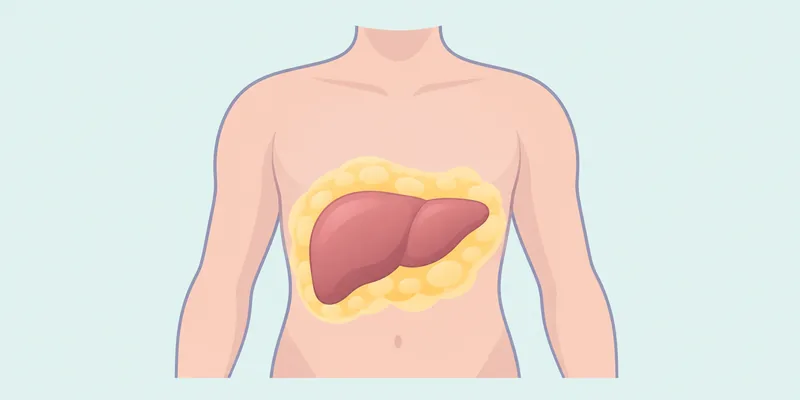
In the phase 3 ESSENCE trial of semaglutide 2.4 mg in biopsy-proven MASH (fatty liver with inflammation) with fibrosis stage 2-3, inflammation resolved in 63% versus 34% on placebo and fibrosis improved by at least one stage in 37% versus 22%; weight fell 10.5% versus 2%. This was a 72-week interim analysis, and cirrhosis was not studied.16 Gokhan reported that his own liver numbers normalized for the first time in about three years while on tirzepatide and retatrutide, though that is one person's experience.18
Show data
| Semaglutide 2.4 mg | Placebo | |
|---|---|---|
| Liver inflammation resolved | 63% | 34% |
| Fibrosis improved by at least one stage | 37% | 22% |
A survey of consumers on GLP-1 drugs found they reported eating roughly 720-990 fewer calories per day and shifted away from processed food, sugary drinks, refined grains and beef toward fruit, leafy greens and water, while still craving high-calorie foods as much as before.19 Louis also shares articles describing reduced cravings for ultra-processed food.20
What the heart trials show
SELECT: the landmark trial
Gokhan's summary of SELECT: about 17,000 adults with overweight or obesity and no diabetes took semaglutide 2.4 mg weekly or placebo for about 40 months. The primary outcome (cardiovascular death, nonfatal heart attack or nonfatal stroke) occurred in 6.5% versus 8.0% (hazard ratio 0.80, 95% CI 0.72-0.90).1 Secondary results:
- Nonfatal heart attack: 2.7% versus 3.7% (HR 0.72)
- All-cause death: 4.3% versus 5.2% (HR 0.81)
- Cardiovascular death: 2.5% versus 3.0% (HR 0.85, not statistically significant, p = 0.07)
- Cardiovascular death or heart-failure hospitalization: 3.4% versus 4.1% (HR 0.82)1
Show data
| Hazard ratio (log scale) | 95% CI | |
|---|---|---|
| *Primary outcome (CV death, heart attack or stroke) | 0.80 | 0.72–0.90 |
| Nonfatal heart attack | 0.72 | 0.61–0.85 |
| All-cause death | 0.81 | 0.71–0.93 |
| CV death or heart-failure hospitalization | 0.82 | 0.71–0.96 |
| Cardiovascular death | 0.85 | 0.71–1.01 |
Later analyses probe why. A report on new SELECT data found a 41% lower risk of major adverse cardiovascular events (MACE) within six months of starting, before substantial weight loss or reaching the full 2.4 mg dose, which suggests effects beyond weight.6 Another analysis of 17,604 participants with existing heart disease found semaglutide reduced an inflammation marker (hsCRP) by 38% versus placebo, early, even in people who lost little weight, and independent of cholesterol change. People with the highest inflammation had 2 to 4 times the risk, and those whose inflammation fell the most had the fewest events. Modelling suggests part of the benefit runs through inflammation, though this shows a link, not proof of cause.7
Across many trials
A meta-analysis in Cardiovascular Diabetology pooled 109,846 patients from 25 studies over about 3.5 years. GLP-1 drugs reduced total heart attack (RR 0.86; one event prevented for every 207 treated), cardiovascular death (RR 0.87; 170), MACE (RR 0.87; 67) and stroke (RR 0.88; 335). Benefits appeared with and without diabetes, were added on top of statins and blood pressure medicines, and were larger at higher BMI.9
Show data
| Relative risk (log scale) | 95% CI | |
|---|---|---|
| Heart attack | 0.86 | – |
| Cardiovascular death | 0.87 | – |
| Major cardiovascular events (MACE) | 0.87 | – |
| Stroke | 0.88 | – |
| Gastrointestinal side effects | 1.55 | – |
Tirzepatide and other outcome trials
In SURPASS-CVOT, 13,299 adults with type 2 diabetes and established heart disease took tirzepatide (up to 15 mg) or dulaglutide 1.5 mg weekly for a median of 4 years. MACE occurred in 12.2% versus 13.1% (HR 0.92); tirzepatide met the noninferiority bar but did not formally reach superiority (p = 0.09). The FDA approved tirzepatide for cardiovascular risk reduction in type 2 diabetes on that basis.21 A post-hoc kidney analysis found a 23% lower risk of major kidney events versus dulaglutide.22
Other signals include a report that Zepbound cut heart failure risk in a late-stage study,14 a Nature Medicine cohort of nearly 1 million adults with type 2 diabetes in which both tirzepatide and semaglutide were linked to fewer heart attacks, strokes and deaths,23 and a JAMA cohort showing lower dementia, stroke and all-cause mortality than other diabetes drugs.24 Louis also notes LEADER, SELECT and FLOW showed real reductions in heart events and deaths for semaglutide.25
Kidneys
The REMODEL study found semaglutide in people with type 2 diabetes and chronic kidney disease cut albuminuria by 40% and reduced kidney fat. Louis reads this as the result of negative energy balance, quoting an argument that modest weight reduction can rapidly change insulin sensitivity, blood pressure, inflammation and kidney hemodynamics.5
Beyond the heart: promising, but weaker evidence
Many group posts list further possible benefits. They vary greatly in quality, and the group has had to correct itself.
- Knee osteoarthritis. A small pilot (20 people) in Cell Metabolism found semaglutide plus hyaluronic acid raised knee cartilage thickness 17% over six months versus under 1% with hyaluronic acid alone, with mouse work suggesting a weight-loss-independent effect on cartilage cells.2627 Louis later added an edit to an earlier, more exuberant post noting it contained inaccuracies and overstated implications, though the 17% figure was correct.28 A records-based study also linked these drugs to fewer knee replacements, but it was observational.29
- Cancer. Observational studies suggest lower cancer risk or progression: about 30% less breast cancer in over 100,000 women,30 fewer deaths in colon cancer patients,31 and lower cancer risk than insulin in diabetes.32 A study reporting 91% lower all-cause death in women with breast cancer and diabetes was explicitly noted as observational, with an all-cause endpoint that does not show fewer cancer deaths.33 A mouse study with tirzepatide is preliminary.34
- Alcohol and nicotine. A short trial of low-dose semaglutide in alcohol use disorder found less drinking and craving, but larger trials are needed.3536
- Dementia. Observational data link semaglutide to 20-46% lower Alzheimer's-related dementia risk in diabetes,4 yet the EVOKE phase 3 trials found oral semaglutide did not slow Alzheimer's progression.10
- Testosterone. In men with obesity, testosterone rises with weight loss; a real-world study found normal levels rose from 67% to 86%, and a small pilot (n = 83) favored tirzepatide over testosterone therapy over two months. Louis argues visceral fat is the usual cause of low testosterone in middle age.373839
- Aging. A Nature study found elderly female mice on semaglutide lived about 12% longer, but their food intake fell about 24%, so much of the effect may be calorie restriction.4041 A company's claim of a 3.1-year biological age reversal rested on one DNA aging clock over 32 weeks, extrapolated.25 A post Louis shared reports that ARPA-H is funding groundwork for aging trials that include semaglutide.42
Downsides and open questions
Muscle and body composition
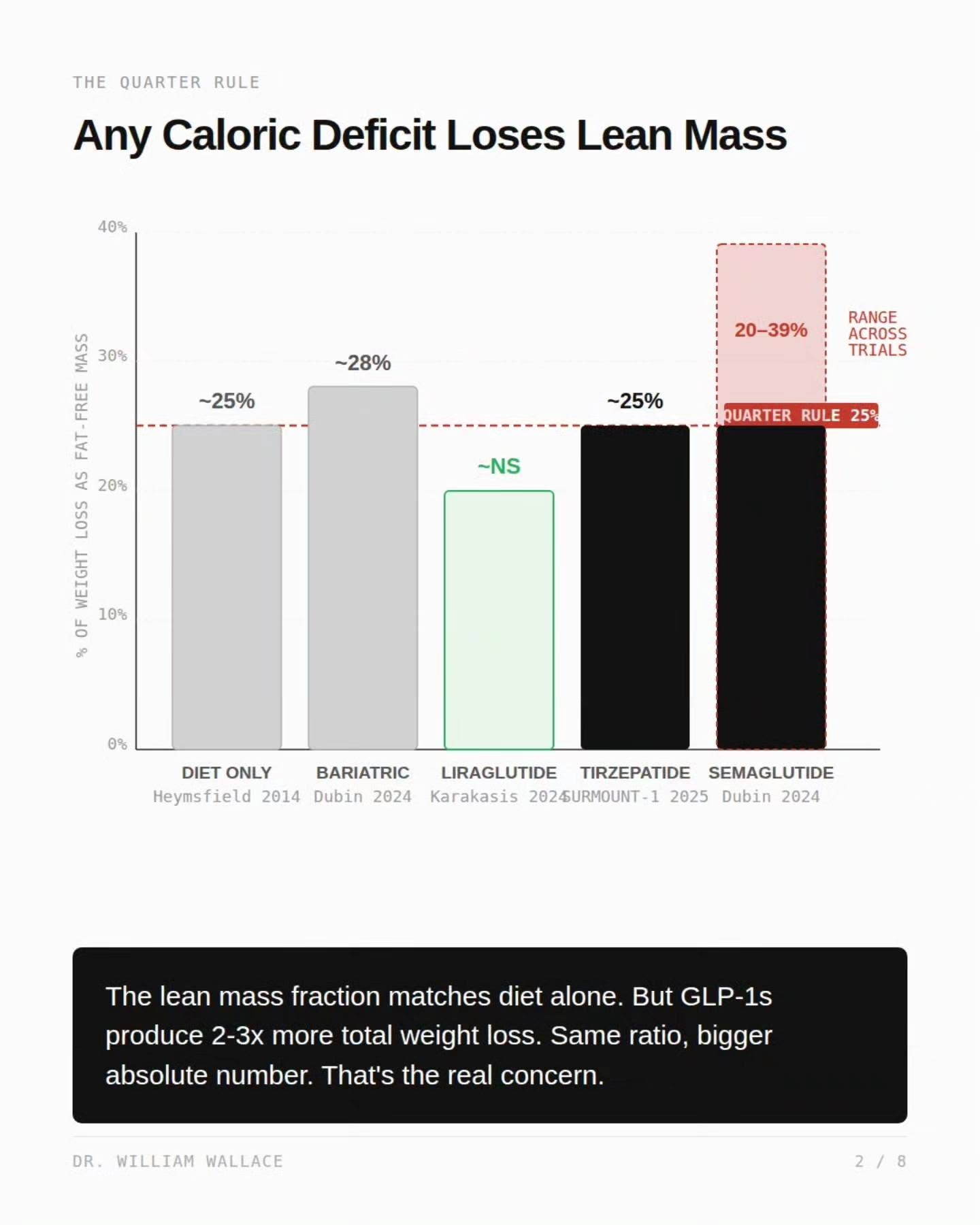
Muscle loss is the most discussed concern. The widely cited "40% muscle loss" figure came from DXA scans of lean mass in STEP-1, which also count water, organs and liver.43 A 2026 meta-analysis found the share of weight lost as lean mass was about 20-26% whether people used semaglutide, tirzepatide or dieted intensively.8 A meta-analysis of 22 randomized trials reported lean-mass loss near 25% of weight lost, matching diet trials and bariatric surgery.44 A 36-study review found most weight lost was fat, including visceral fat, with modest lean loss comparable to dieting,45 and a Cell Reports Medicine paper reported strength and function were maintained.46 In SEMALEAN, 12 months of high-dose semaglutide reduced lean mass about 5%, improved grip strength 4.5 kg and cut sarcopenic obesity from 49% to 33%.43
Louis argues resistance training prevents most muscle loss and cites a 16-week study (82 people with type 2 diabetes) in which high-dose exercise plus diet lost 8.0% body fat while fat-free mass changed only -0.2%.47 Louis also offers a more speculative view, that brief catabolic periods and autophagy under calorie restriction help clear damaged tissue and that the muscle that remains is higher quality; he cites no studies for the general claim.4348 One post he shared warns that without exercise and good nutrition, weight loss can lead to sarcopenia, lower bone mass and nutrient deficiencies.15 Another notes that rapid weight loss in older people raises frailty concerns.41
Side effects and the experience of taking them
The 25-trial meta-analysis found gastrointestinal side effects were significantly more common (RR 1.55, about one extra case for every 9 treated).9 SURPASS-CVOT also reported safety consistent with the GLP-1 class, mainly gastrointestinal.21 Eric Verdin shared that at higher doses he experienced anhedonia, a reduced sense of pleasure, and he settled on a much lower dose that still improved his metabolic markers; this is one person's report, though he says he has heard similar accounts.49
Is it the drug or the weight loss?
Louis's recurring reading is that the benefits track calorie restriction and fat loss, so diet and exercise could do the same for those who can sustain it.91739 Evidence pointing the other way includes the early MACE reduction before weight loss,6 inflammation falling in people who lost little weight,7 and mouse data in which a pair-fed control group did not get the same cartilage protection.27 The group has not settled this question.
Access and cost
Louis shared a report that Medicare will for the first time cover obesity drugs, with a $50 monthly copay; he describes the eligibility as a BMI over 35.50
What this means for you
- Talk to your doctor about it as one tool. The group's admins frame these drugs as an aid for people with obesity, not a replacement for good eating and exercise.914
- Know the strongest evidence. The heart-event data are strongest in people with obesity and existing cardiovascular disease (SELECT) and in type 2 diabetes with heart disease (SURPASS-CVOT).121
- Pair medication with resistance training and adequate protein. Multiple posts recommend this to protect muscle and strength.84547
- Watch nutrition. Eating much less can bring nutrient deficiencies and bone loss if diet quality is poor.15
- Report mood changes and GI symptoms. Side effects, including anhedonia at higher doses, are a reason to discuss dose with your prescriber.949
- Treat cancer, dementia, aging and cartilage claims as preliminary. Many rest on observational data, pilots or mice.10263341
Frequently asked questions
Do GLP-1 drugs reduce heart attacks?
In SELECT, semaglutide cut a composite of cardiovascular death, heart attack and stroke by about 20% (6.5% versus 8.0%).1 A meta-analysis of 25 randomized trials found a 14% reduction in heart attacks.9
Does tirzepatide work better than semaglutide?
For weight loss, yes in the head-to-head trial: about 20% versus 14% over 72 weeks.2 For heart outcomes, SURPASS-CVOT compared tirzepatide with dulaglutide, not semaglutide, and found noninferiority.21
Will I lose muscle?
Some lean mass is lost with any major weight loss, roughly 20-26% of the weight lost in pooled analyses, similar to dieting.844 Resistance training is the recommended counter.47
Do these drugs slow aging?
Mouse studies and a few biomarker analyses suggest so, but the human evidence is not there yet, and the mouse benefit coincided with a roughly 24% fall in calorie intake.2540
Do they treat Alzheimer's disease?
Not so far in the trial that tested it: oral semaglutide did not slow Alzheimer's progression in EVOKE.10