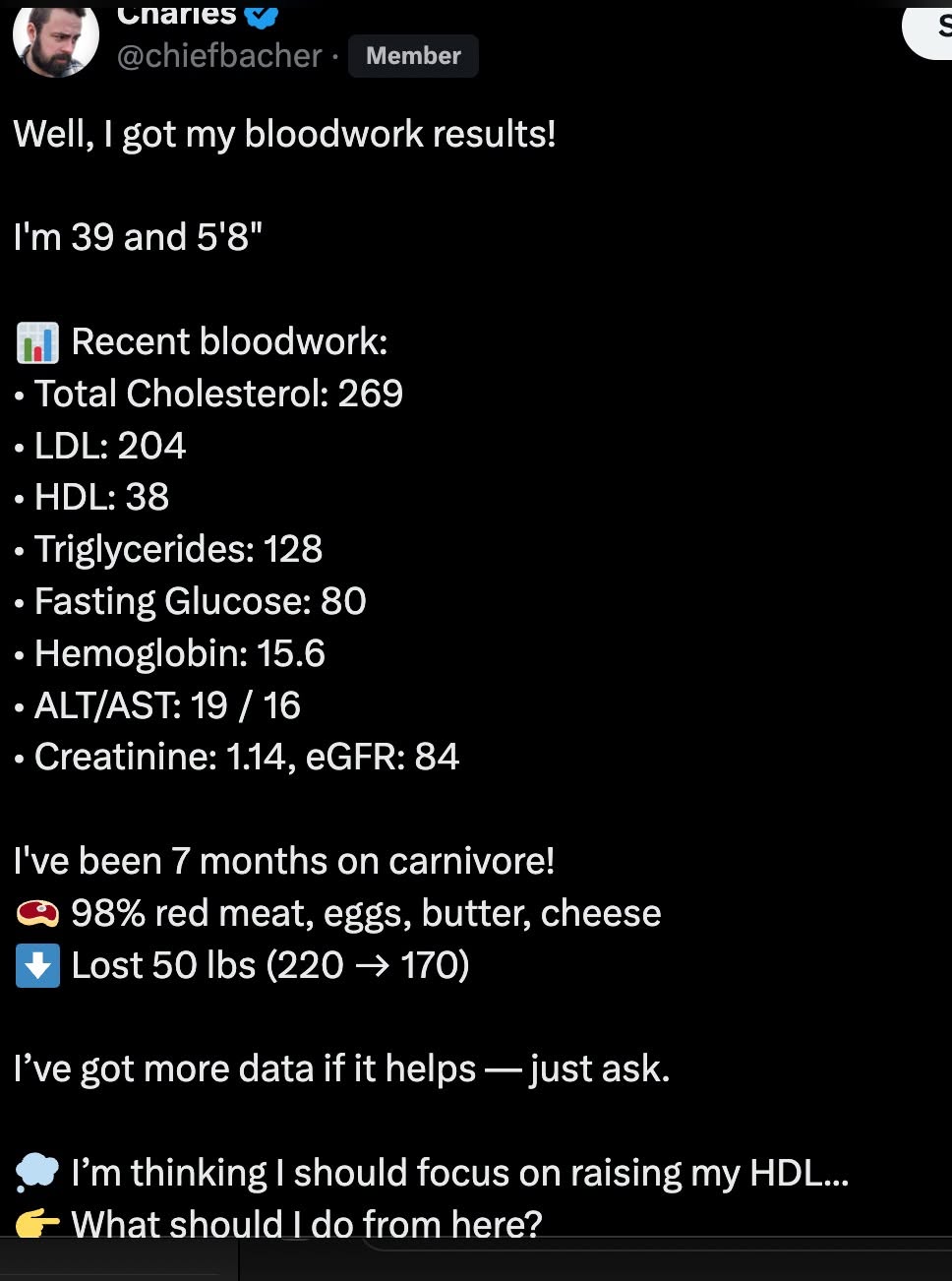
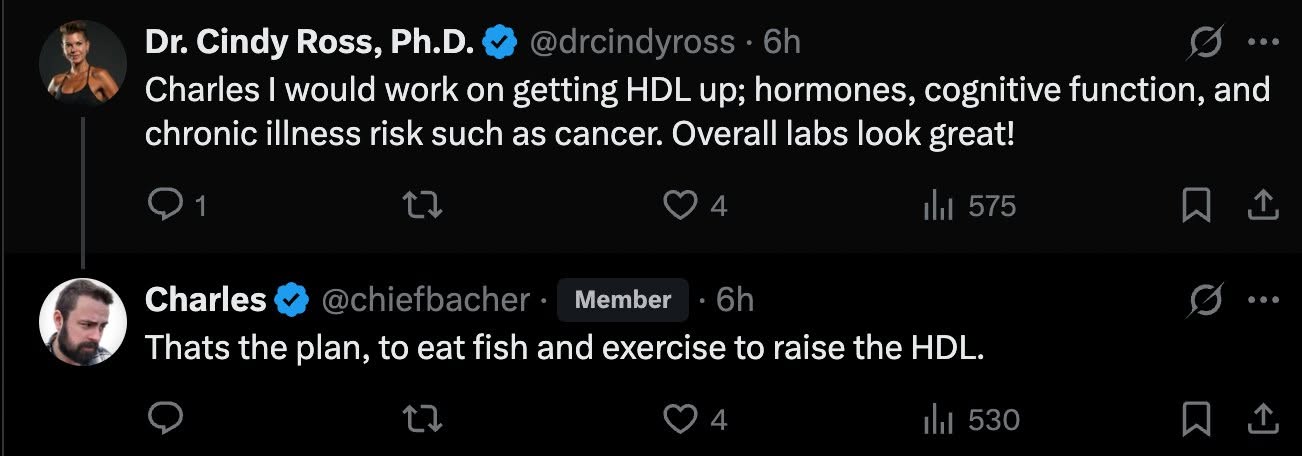
HDL is basically useless as an intervention target in CVD, except as a crude marker of insulin resistance. And there are far more accurate ways to measure insulin resistance than using HDL, e.g. an oral glucose tolerance test which also measures insulin.
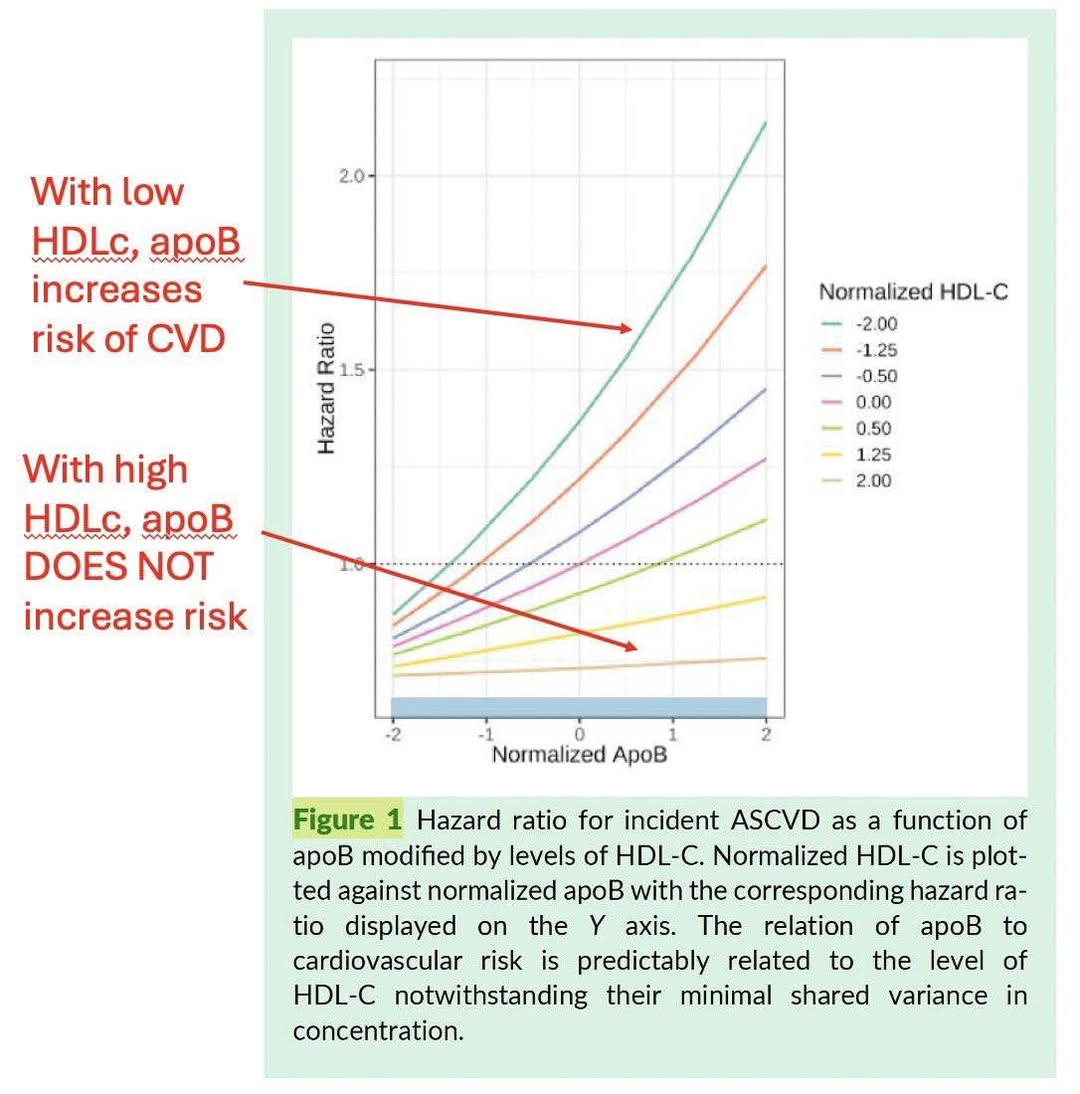
Every single large randomized trial testing HDL-raising as an intervention has failed to prevent heart attacks and strokes. Literally every single one. It has a perfect track record of failure in cardiology.
It is good to have higher HDL for the same reason that it is good to have better insulin sensitivity. That’s about the only evidence-based thing you can say about HDL as an intervention target in cardiology.
The focus should be on improving insulin sensitivity, not on HDL.
(If you focus on inproving insulin sensitivity, the HDL will likely go up naturally as a side effect.)
References on HDL:
↪ HDL and ApoA-I raising therapies repeatedly failed, so HDL is probably not directly causal
↪ CSL112 ApoA-I infusion failed in phase 3 AEGIS-II, supporting HDL as marker not cause
↪ Low HDL matters mainly through insulin resistance; raising HDL itself failed in trials
↪ TG/HDL, insulin resistance and LDL: both are independent causes of heart disease
↪ TG/HDL ratio tracks visceral fat; clearing liver and pancreas fat improves it
↪ Why insulin resistance lowers HDL, and why improving insulin sensitivity beats chasing HDL
↪ Interview: insulin resistance and LDL/ApoB are both independent causes of heart disease