Another very large randomized controlled trial testing an intervention to raise HDL (in this case ApoA1) has failed.
They literally gave patients native ApoA1 isolated from human plasma (CSL112) and it still failed in this large phase 3 trial. This proves definitively that ApoA1 by itself is not directly causal in heart disease.
So far, every single large RCT that has ever tested pharmaceutical interventions to raise HDL and/or ApoA1 has failed to prevent heart attacks and strokes.
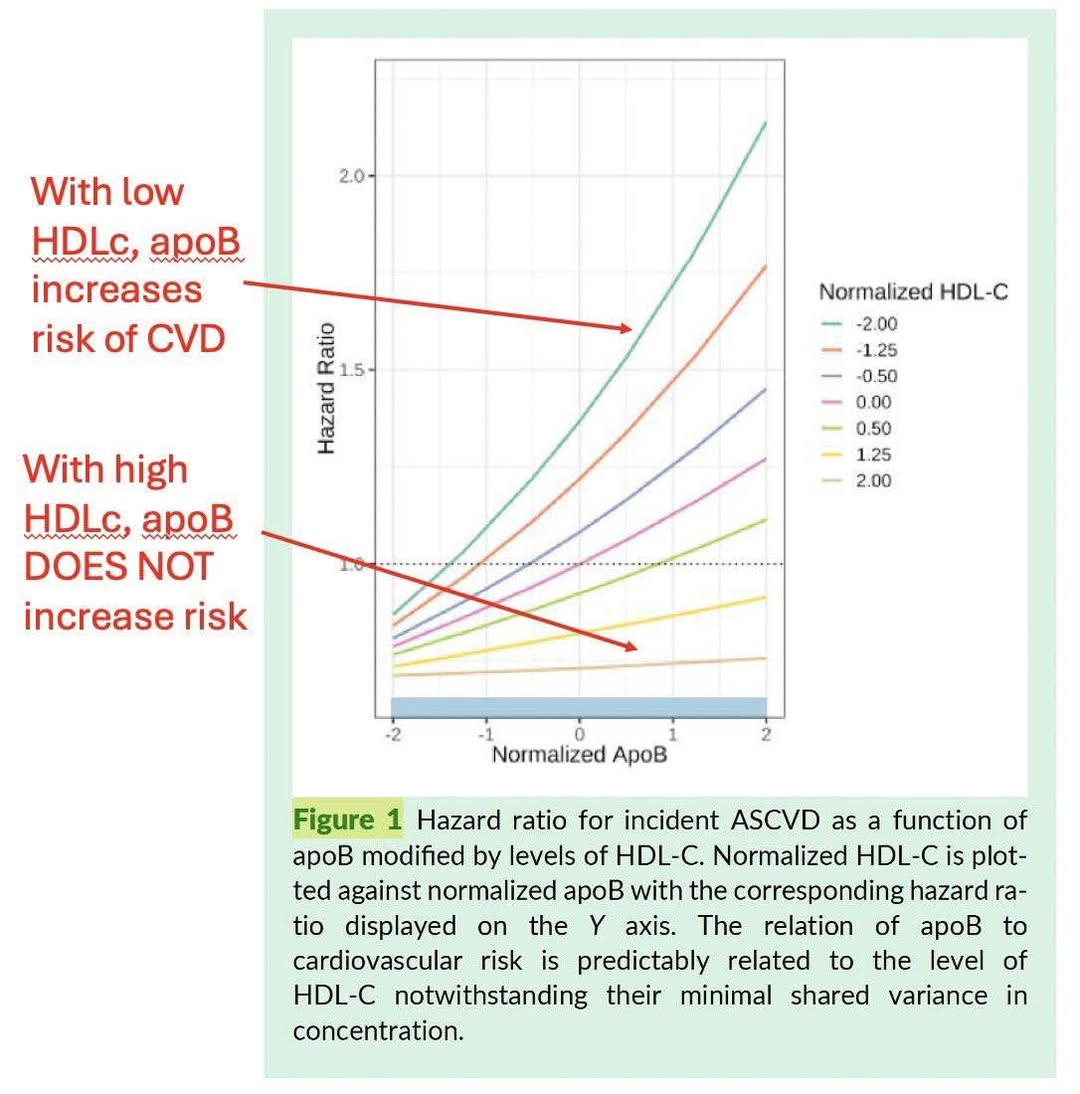
This does NOT mean that HDL or ApoA1 are bad markers for risk— they are good markers— but it does provide clear evidence that they are not causal by themselves.
If not directly causal by themselves, then the really interesting question becomes:
What are they actually markers for? Most researchers suspect insulin resistance.
An important corollary here is the following: If you are trying to raise your HDL or ApoA1 by any method besides improving insulin sensitivity, then there is a good chance that this will not actually lower your risk— because HDL by itself does not appear to be directly causal. However, insulin resistance is causal.