Is it really true that statin trials show no benefit if TG/HDL < 1 ?
In other words, does TG/HDL < 1 nullify the harmful effect of high LDL or high ApoB in large randomized trials?
Let’s fact check this statement with Gemini AI.
Scientific Accuracy & Fact-Check
The statement is scientifically inaccurate as a categorical rule. While the Triglyceride-to-HDL (TG/HDL) ratio is a powerful marker for insulin resistance and the presence of small dense LDL (sdLDL) particles, it does not nullify the benefits of statin therapy in clinical trials.
- The TG/HDL Ratio vs. Statin Efficacy
The TG/HDL ratio is often used as a proxy for the "atherogenic lipid phenotype." A ratio below 1 suggests a person has mostly large, buoyant LDL particles. However, major statin trials (such as JUPITER or HOPE-3) included participants with varying lipid profiles, and benefit was consistently observed based on the reduction of ApoB or LDL-P (total particle count), regardless of the initial ratio.
- Particle Size vs. Particle Number
Particle size does not affect risk after properly accounting for total number of particles.
If we ignore size and focus strictly on total particle number (LDL-P), the statement about TG/HDL < 1 becomes even less accurate.
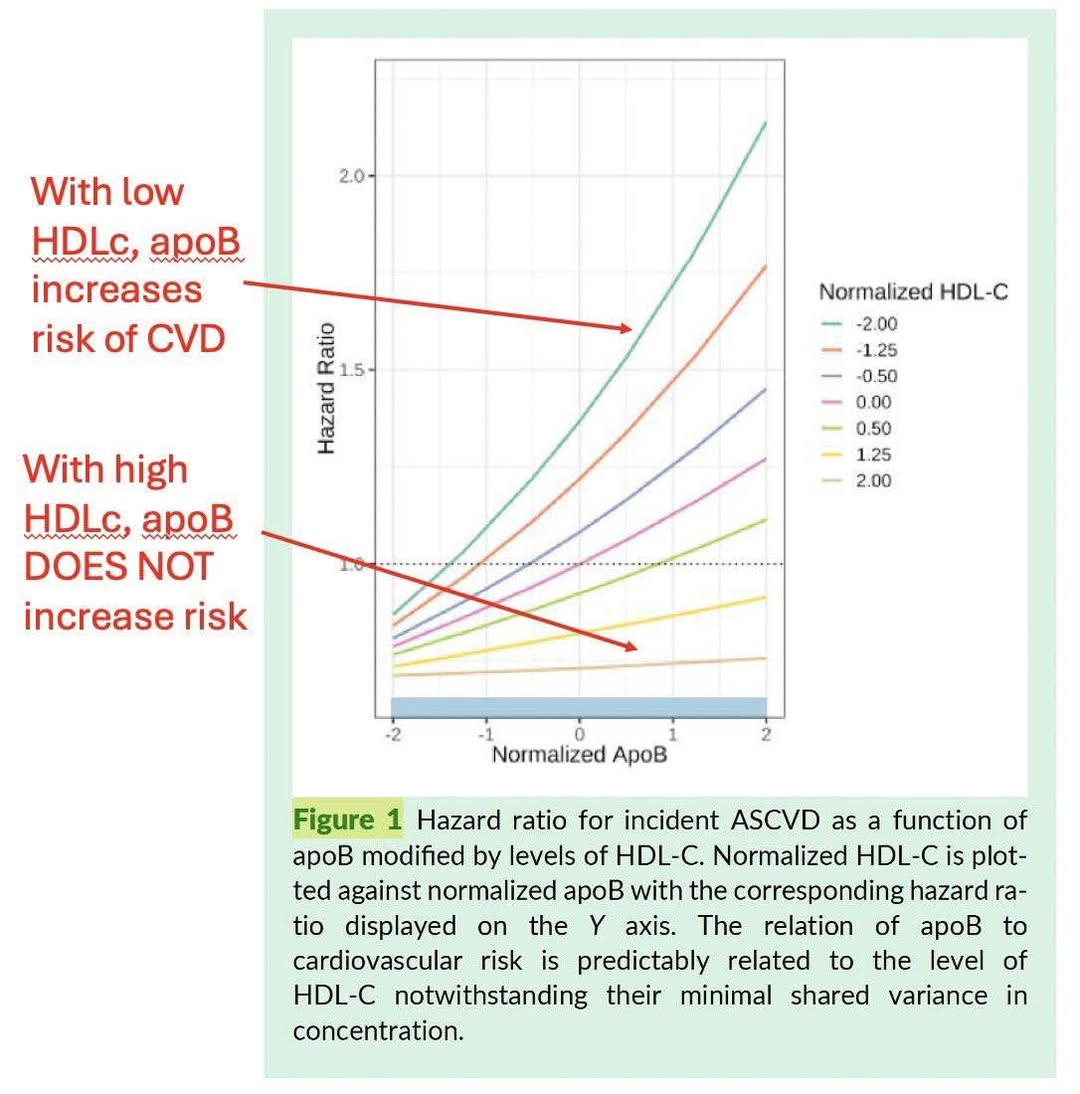
Even if a patient has a TG/HDL < 1 (indicating large particles), if their total number of particles is high, their risk remains high.
Statins effectively lower the total number of particles. Therefore, a patient with a "healthy" ratio but a high total count would still derive a significant risk reduction benefit from a statin.
- Clinical Trial Evidence
There is no landmark double-blind, placebo-controlled trial that demonstrates a "zero benefit" threshold at a TG/HDL ratio of 1. While some post-hoc analyses suggest that those with high TG and low HDL (the "High Risk" group) see greater relative benefit, the group with "optimal" ratios still sees a reduction in absolute cardiovascular events when their LDL-C or LDL-P is lowered.
Critique of the Statement
Overgeneralization: The statement treats a biomarker (TG/HDL) as an absolute "on/off" switch for medication efficacy, which ignores the multi-factorial nature of heart disease (inflammation, blood pressure, and total ApoB load).
Misalignment with Total Count Logic: Since total particle number is the primary driver of risk, the TG/HDL ratio (which mostly describes particle quality/size) becomes a secondary metric. If the total number of particles is elevated, the statin remains beneficial for risk reduction, regardless of what the ratio says about the size of those particles.
Summary Verdict: The statement is false. Statins show benefit based on the reduction of total atherogenic particles; a TG/HDL ratio < 1 may indicate a lower baseline risk, but it does not mean the benefit of further particle reduction is zero.