HD-OPM Archive
Topics › Nuts, fish, coffee, tea, cocoa & other foods

High blood xylitol linked to 57% higher MACE risk in observational cohorts (ESC 2026)

Louis Nervegna · Sep 04, 2026 · ♥ 3 reactions · 0 comments · original Facebook post
Nuts, fish, coffee, tea, cocoa & other foodsHeart attack, stroke & procedures
AI summary & key facts

A study presented at ESC Congress 2026 analyzed 17,710 participants from CLSA and EPIC-Norfolk. Highest-quartile xylitol levels were associated with 57% higher MACE risk over six years in CLSA and 18% higher over 30 years in EPIC-Norfolk, with a dose-response pattern. It is observational and cannot show xylitol causes events.

#xylitolHD

Research cited

A major long-term analysis presented at ESC Congress 2026 has linked high blood levels of the artificial sweetener xylitol with an increased risk of serious cardiovascular events. Researchers analysed 17,710 participants from two prospective observational cohorts—the Canadian Longitudinal Study on Aging (CLSA) and EPIC-Norfolk. In the CLSA cohort, people with xylitol levels in the highest quartile had a 57% higher risk of a major adverse cardiovascular event—including heart attack, stroke or death—compared with those in the lowest quartile during six years of follow-up. The association remained after researchers adjusted for established cardiovascular risk factors including age, sex, smoking, cholesterol levels, diabetes and hypertension.

The longer-running EPIC-Norfolk cohort produced a similar, though smaller, association: over 30 years of follow-up, participants with the highest xylitol levels had an 18% higher risk of major cardiovascular events than those with the lowest levels. Across both cohorts, researchers observed a dose-dependent relationship, meaning cardiovascular event rates tended to increase as blood xylitol levels increased. Previous research has also suggested that xylitol can enhance platelet clotting. However, the researchers and the European Society of Cardiology stressed that these findings come from observational research and cannot establish that xylitol itself causes heart attacks or strokes. Further studies are needed to determine its long-term cardiovascular safety.

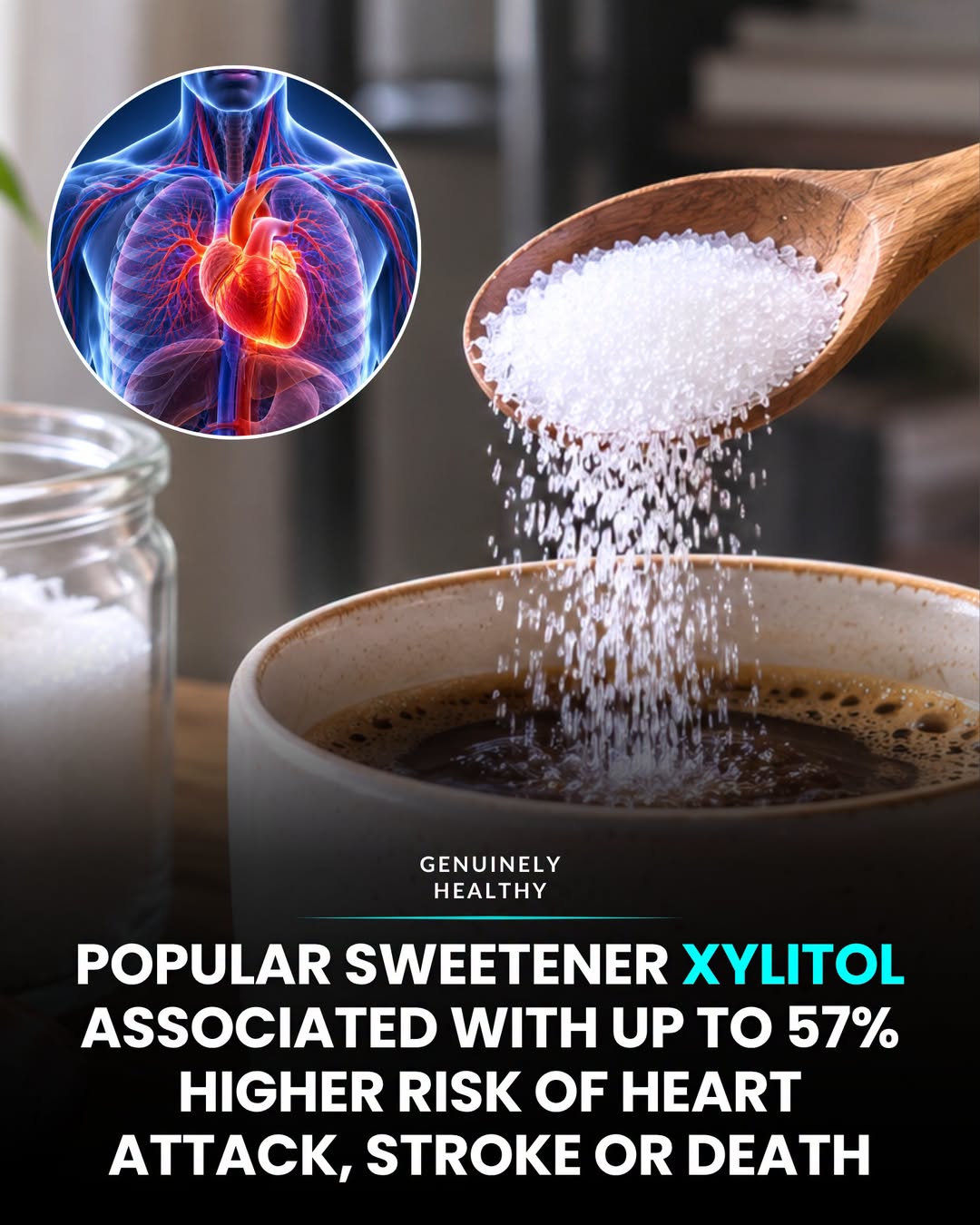
May be an image of text that says 'GENUINELY HEALTHY POPULAR SWEETENER XYLITOL ASSOCIATED WITH UP to 57% HIGHER RISK OF HEART ATACK, STROKE OR DEATH'
#cardiovascular#heartattack#stroke#artificialsweeteners#riskfactors#aging#smoking#cholesterol
← newer: Does a CAC scan change outcomes? Two 2026 randomized trials older: BMJ review: calcium and vitamin D supplements offer little b →