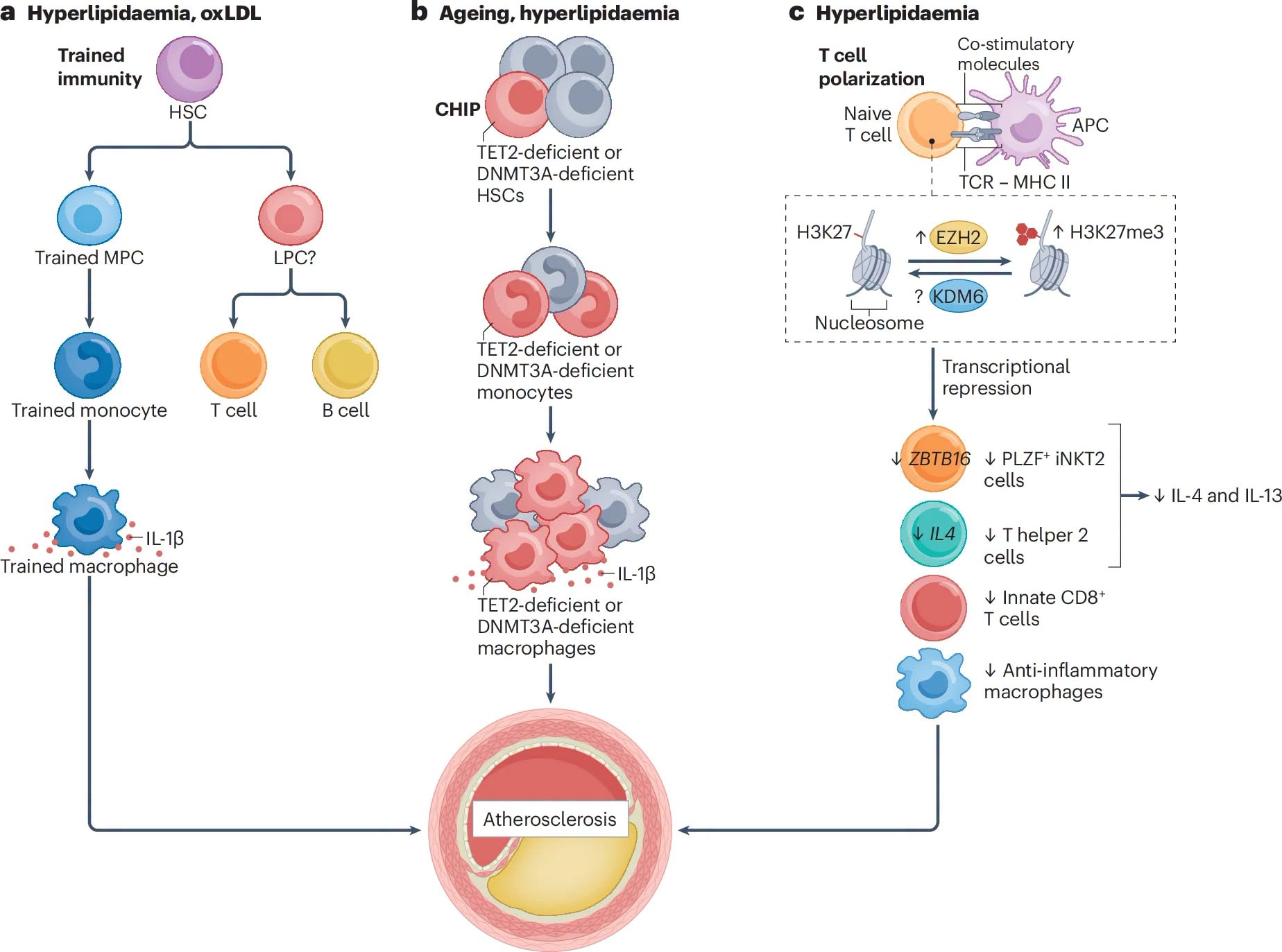
Genetic inheritance certainly does play a major role in susceptibility to major diseases. However, there are few cases that have been discovered of single genes being responsible for diseases, or even small numbers of genes being responsible. The truth is that dozens or even hundreds of inherited genes function in aggregate to increase susceptibility to various diseases. This polygenic inheritance is still poorly understood.
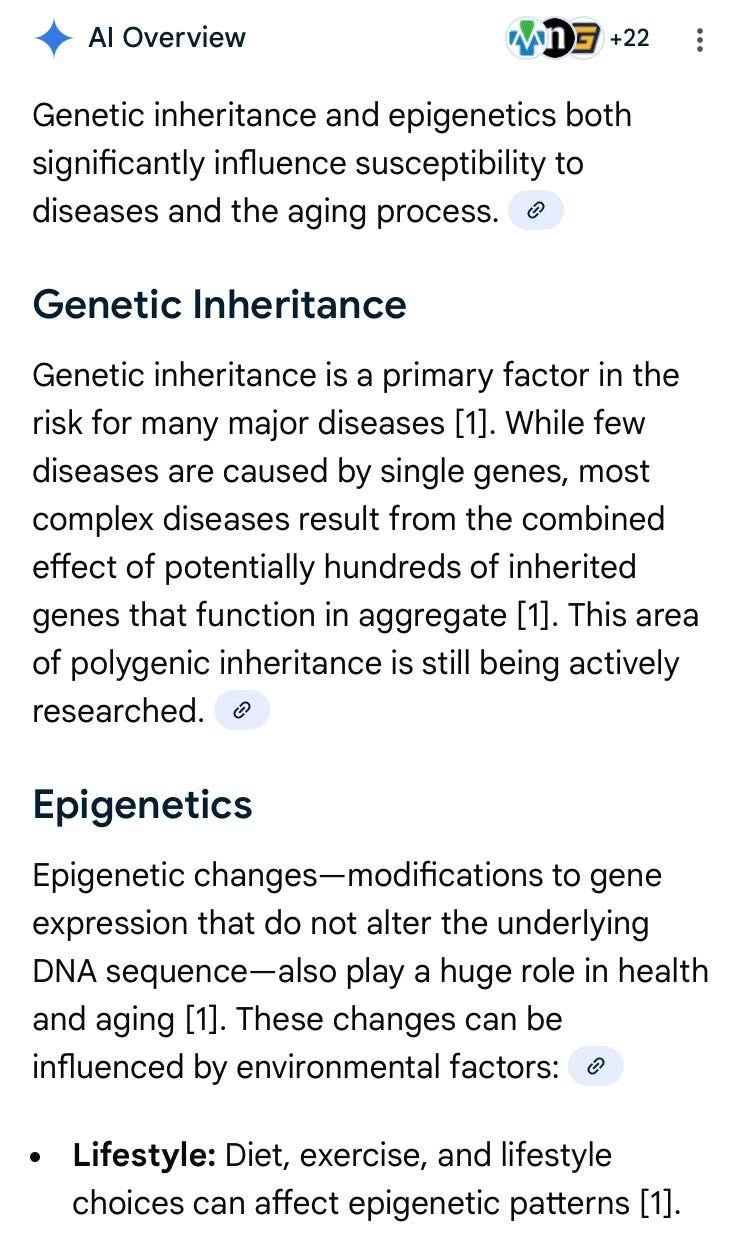
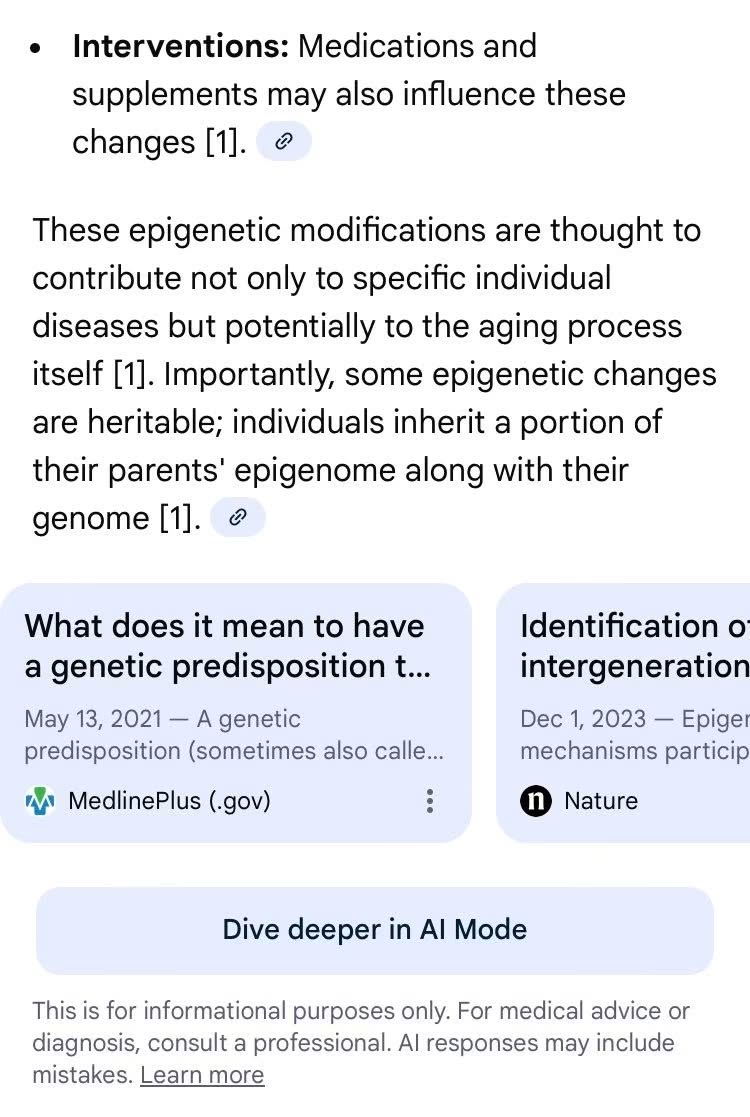
Epigenetic changes that occur as we get older also play a huge role, and can be influenced through diet, exercise, lifestyle, medication, supplements, etc. Epigenetics controls how existing genes get expressed, e.g. to what degree a particular gene is turned on or off. These epigenetic changes that occur with advancing age may be partially responsible not just for individual diseases, but for the aging process itself.
It’s also important to point out that some epigenetic changes are also inherited. You don’t just inherit your parent’s genome— you also inherit a good part of their epigenome, as well.