Link to full study:
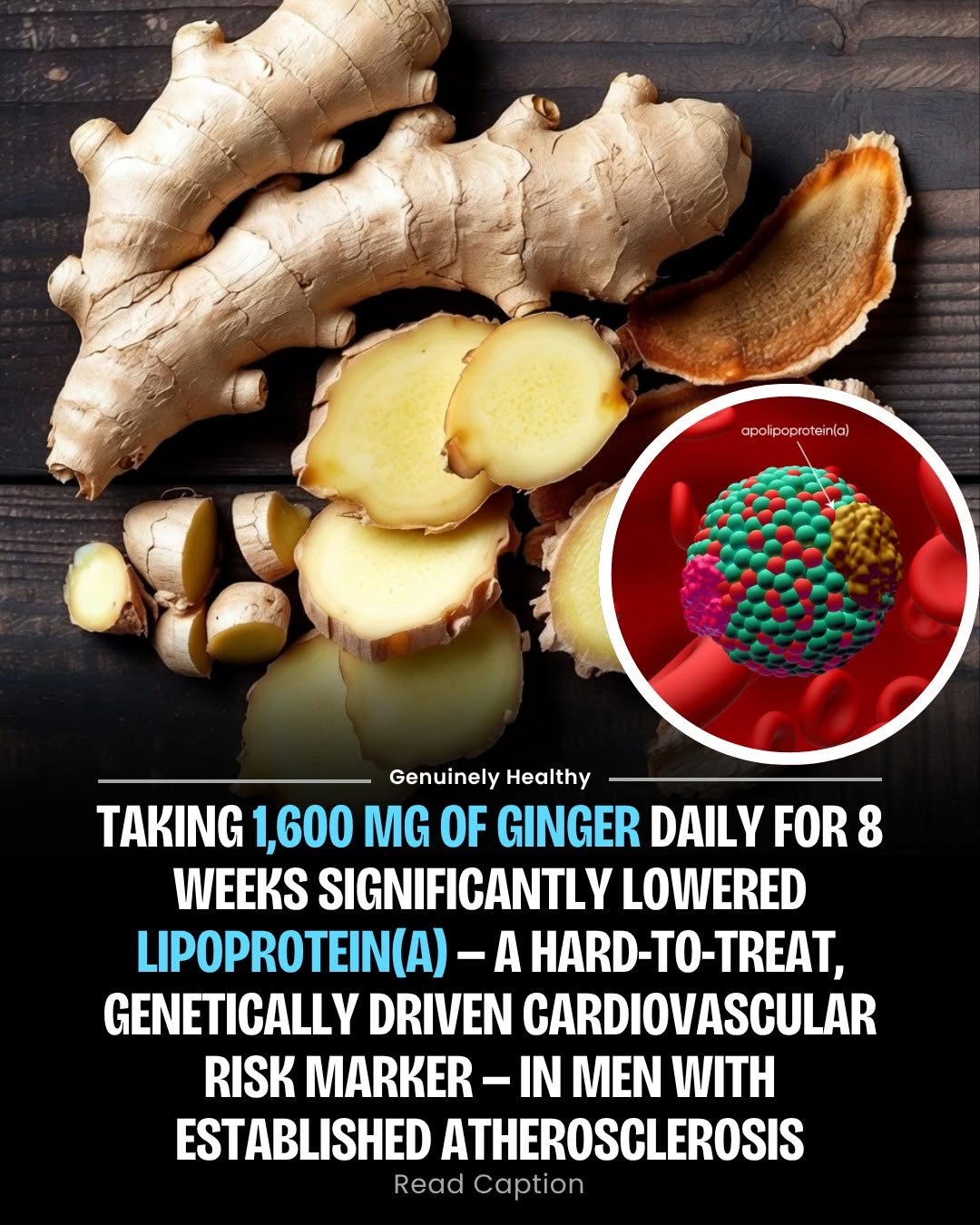
Paper · ARYA Atheroscler · 2020Decreased lipoprotein (a) and serum high-sensitivity C-reactive protein levels in male patients with atherosclerosis after supplementation with ginger: A randomized controlled trial.Conclusion: This study showed that ginger had anti-atherosclerosis and anti-glycemic properties associated through a significant decreased Lp(a) and FBS in patients with atherosclerosis supplemented with ginger.pmc.ncbi.nlm.nih.govThis was a small randomized trial involving 57 male patients with atherosclerosis.
The roughly 5 ng/mL drop in Lp(a) was small, but statistically significant. It’s worth noting that the average Lp(a) in the study was already low to begin with, 27 ng/mL. (Perhaps people with high Lp(a) would see a larger effect?)
There was also a 0.66 ug/dL drop in hsCRP, which is more impressive. Ginger is known to have anti-inflammatory properties.
Additionally, the ginger lowered fasting blood sugar by 12.5% compared to controls.
Quoted from the full study;
“This study was a double-blind, placebo-controlled, randomized clinical trial conducted on [male] patients with atherosclerosis. Participants in the ginger and control groups received 1600 mg of powdered ginger or placebo (wheat flour) in capsules daily for 8 weeks. Weight, body mass index (BMI), fasting blood sugar (FBS), cholesterol, triglyceride (TG), low-density lipoprotein (LDL), very-low-density lipoprotein (VLDL), high-density lipoprotein (HDL), lipoprotein (a) [Lp(a)], high-sensitivity C-reactive protein (hs-CRP), and total anti-oxidant capacity (TAC) were assessed before and after the intervention.”
“Ginger consumption in the intervention group significantly reduced serum Lp(a) level (27.25 ± 1.30 ng/ml vs. 23.57 ± 0.97 ng/ml) (P = 0.040) and also the level of hs-CRP in the intervention group was 1.90 ± 0.33 µg/ml and 1.24 ± 0.15 µg/ml (P = 0.010) before and after intervention, respectively, but the levels of Lp(a) and hs-CRP were not decreased significantly in the placebo group. The level of TAC in the ginger group was 0.71 ± 0.05 mM and after the trial was 0.57 ± 0.04 mM (P = 0.050); no significant differences were seen in TAC when ginger was administered at 1600 mg/daily for 60 days. Also the level of Lp(a) and hs-CRP but not TAC reduced significantly in ginger group compared to placebo group after intervention.”
“This study showed that ginger had anti-atherosclerosis and anti-glycemic properties associated through a significant decreased Lp(a) and FBS in patients with atherosclerosis supplemented with ginger.”
“It is well known that ginger can act as a hypoglycemic agent in patients with type 2 diabetes [18,25]. Based on our findings, there was a 12.5% decrease in FBS in patients who consumed ginger supplements for 8 weeks compared to control subjects.”