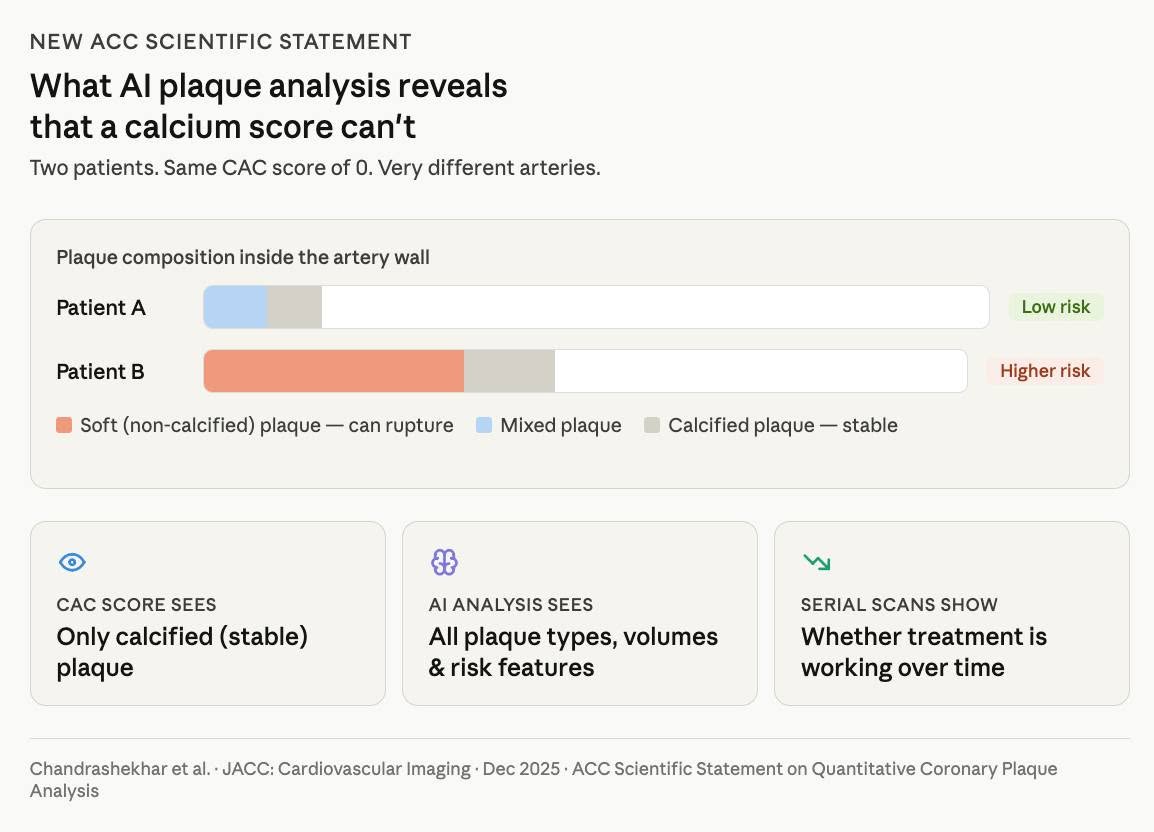
New guidelines from the American College of Cardiology on the use of AI tools (like Cleerly and HeartFlow) to track plaque progression with CT angiography.
#ctaHD #aiHD #cacHD #plaqueHD #hearyflowHD #cleerlyHD #qcpaHD #accHD #guidelinesHD
Shared summary of new American College of Cardiology guidance on AI quantitative coronary plaque analysis (QCPA, e.g. Cleerly, HeartFlow). Unlike CAC, which only measures calcified plaque, QCPA characterizes all plaque types, including soft plaque more likely to rupture, and can help follow treatment response.
New guidelines from the American College of Cardiology on the use of AI tools (like Cleerly and HeartFlow) to track plaque progression with CT angiography.
#ctaHD #aiHD #cacHD #plaqueHD #hearyflowHD #cleerlyHD #qcpaHD #accHD #guidelinesHD
USING AI-BASED PLAQUE ANALYSIS TO FOLLOW TREATMENT
The ACC just released official guidance on AI-powered coronary plaque analysis, and here are key take homes....
If you have heart disease or are at high risk, you've probably heard about CAC scores and coronary CT angiograms. But there's a newer layer on top of that: AI software that can actually measure your plaque; where it is, how much is there, what type, and whether it's the dangerous kind.
So what does this new guidance say that matters most for people with coronary plaque?
- A CAC score tells you plaque is definitely there, but doesn't show the whole picture or enough detail. Quantitative Coronary Plaque Analysis (QCPA) tells you about all types of plaque, not just calcified, and much more about what kind of threat your plaque actually poses.
Calcified plaque (what a CAC score measures) is the stable, older stuff. Non-calcified plaque, especially soft, low-density plaque, is what ruptures and causes heart attacks. AI plaque analysis can quantify both. That's a big difference.
- If your CT shows visible plaque, this analysis can help make better treatment decisions. The statement specifically recommends QCPA for people who already have plaque on their scan, because it's not just "you have some plaque", it's "here's how much, what type, and where.
- It can help track whether treatment is actually working, but give it time. The guidance suggests re-scanning at 2-5 year intervals minimum and that more frequently than that may not be accurate or tell much, leading to unnecessary radiation exposure. Plaque doesn't change overnight. But being able to see whether your plaque burden is stable, shrinking, or growing? That's truly useful information that wasn't available to most patients even a few years ago.
- Not all AI tools are equal, yet. The ACC is currently pushing vendors to validate and standardize their tools against real-world data. Some are further along than others (see below for more detais)
The bottom line: we're quickly moving from "do you have heart disease?" toward "how much, what kind, and is it getting better or worse?". I've been using this type of analysis in my practice for the past couple of years, along with CIMT ultrasounds which provide some similar though less detailed info, and it has been extremely valuable.
The two main companies who are furthest along:
HeartFlow is probably the most clinically validated at this point for QCPA specifically. They claim 95% accuracy versus IVUS as the invasive gold standard, using blinded core lab adjudication, and their plaque analysis received FDA clearance in October 2022. They now have 489 U.S. installed sites, and a Category 1 CPT code effective January 2026. Their proprietary "Plaque Staging" framework (risk tiers based on total plaque volume) has some prognostic data behind it, though Plaque Staging is still an investigational-only framework not yet FDA-reviewed.Cleerly is also FDA-cleared and may actually have stronger plaque characterization capacity, as their platform gives detailed breakdown of plaque subtypes including low-attenuation plaque. Also their COMPARE product gives longitudinal disease evaluation. They've also been expanding into ischemia assessment, so they're building toward a more integrated platform.
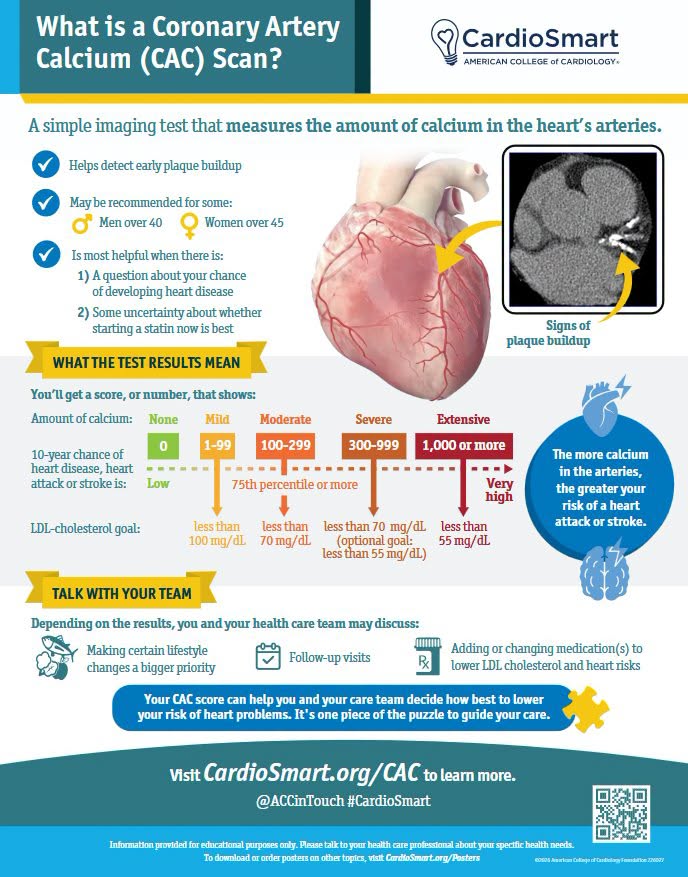
Louis shares an American College of Cardiology infographic on CAC scoring, covering how a calcium heart scan works, how to interpret results and what to discuss with the care team.
Louis summarizes the updated lipid guideline: LDL goals stay risk-scaled, with early prevention emphasis and consideration of Lp(a), apoB and CAC testing to guide intensity.
A quoted summary of the 2026 ACC antiplatelet statement says pooling 13 trials of 165,265 people, aspirin modestly reduced heart attacks and strokes but raised major bleeding and did not reduce all-cause death. Benefit faded in trials after 2000, likely because statins now supply the protection.
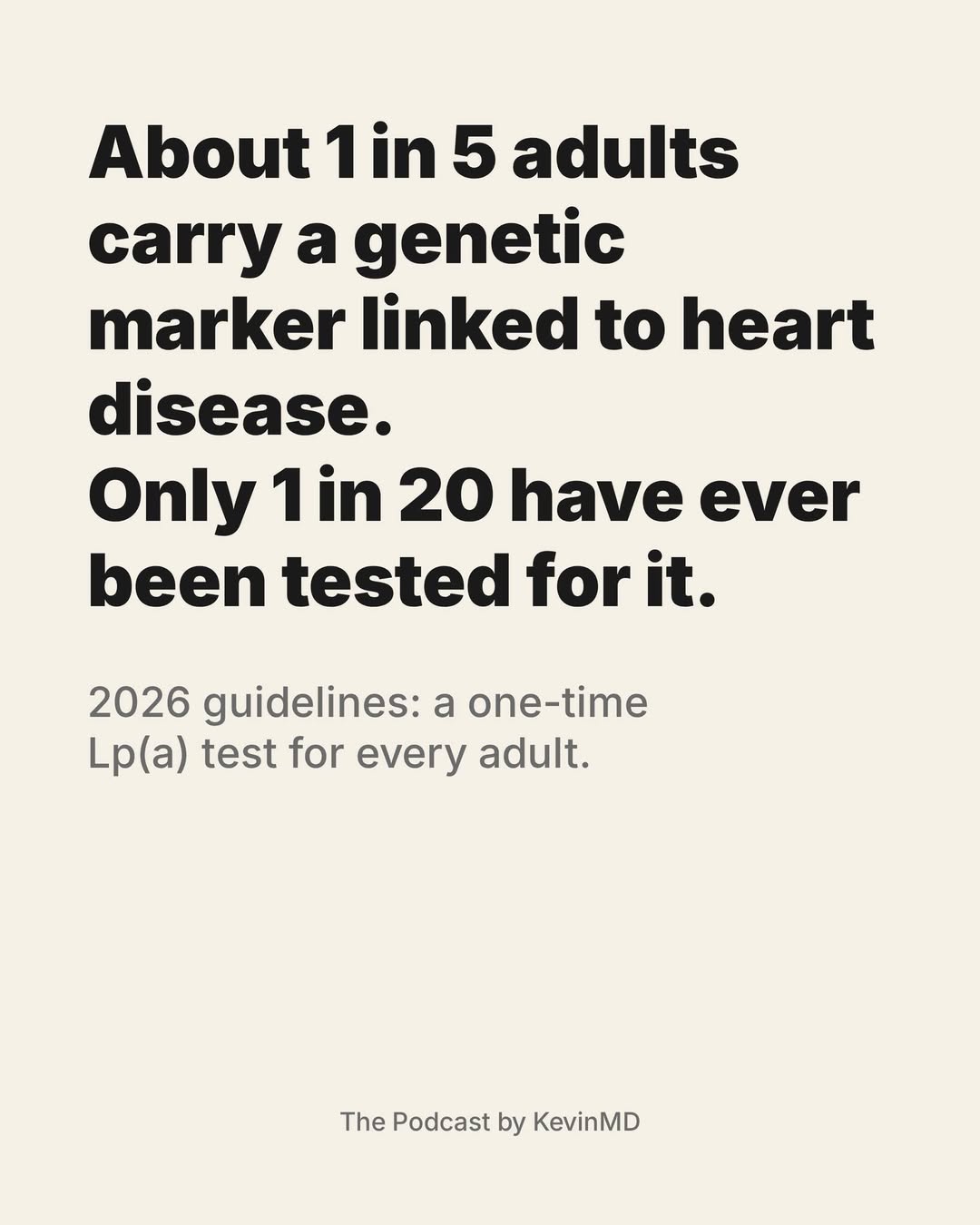
Louis shares a summary of the 2026 ACC/AHA cholesterol guideline update: highest-risk LDL target below 55, next tier below 70, others below 100, and a CAC score above 300 triggers the highest-risk category.
Louis highlights a new joint EAPC/ESC and ACC clinical consensus statement offering guidance for long-term high-volume exercisers over 35-40, covering atrial fibrillation, arrhythmias, coronary atherosclerosis, aortic dilatation, myocardial fibrosis and exercise-induced arrhythmogenic cardiomyopathy. Notes that very high exercise volumes over years may have cardiovascular downsides.
Louis quotes a September 2025 JACC: CardioOncology state-of-the-art review noting that AHA, ACC, ACS, NCCN and WCRF/AICR guidelines all recommend a predominantly whole-food plant-based diet, as does the EAT-Lancet consensus. Patterns like Mediterranean and DASH are included, emphasizing fruits, vegetables, whole grains, legumes, nuts, seeds and olive oil while minimizing red meat.