HD-OPM Archive
Topics › Supplements & vitamins

Omega-3 supplements cut aggressive behavior by up to 28% in a 29-study meta-analysis

Louis Nervegna · Jun 01, 2026 · ♥ 5 reactions · 0 comments · original Facebook post
Supplements & vitaminsBrain health & dementia
AI summary & key facts

FoundMyFitness shares a meta-analysis of randomized trials with nearly 4,000 participants finding omega-3 supplementation reduced aggression, consistent across ages, sexes and doses. The authors concluded there is sufficient evidence to begin implementing omega-3 supplementation for this purpose.

#omega3HD #fishoilHD #aggressivebehaviorHD #brainHD #psychiatryHD

Research cited

This is a big deal. Omega-3s reduce aggressive behavior across randomized controlled trials.

A meta-analysis of 29 studies and nearly 4,000 participants found that omega-3 supplementation reduced aggressive behavior by up to 28%. The benefit was broadly consistent across children and adults, males and females, community and clinical samples, and across high and low omega-3 doses and treatment durations. It also helped with both reactive/impulsive and proactive/planned aggression.

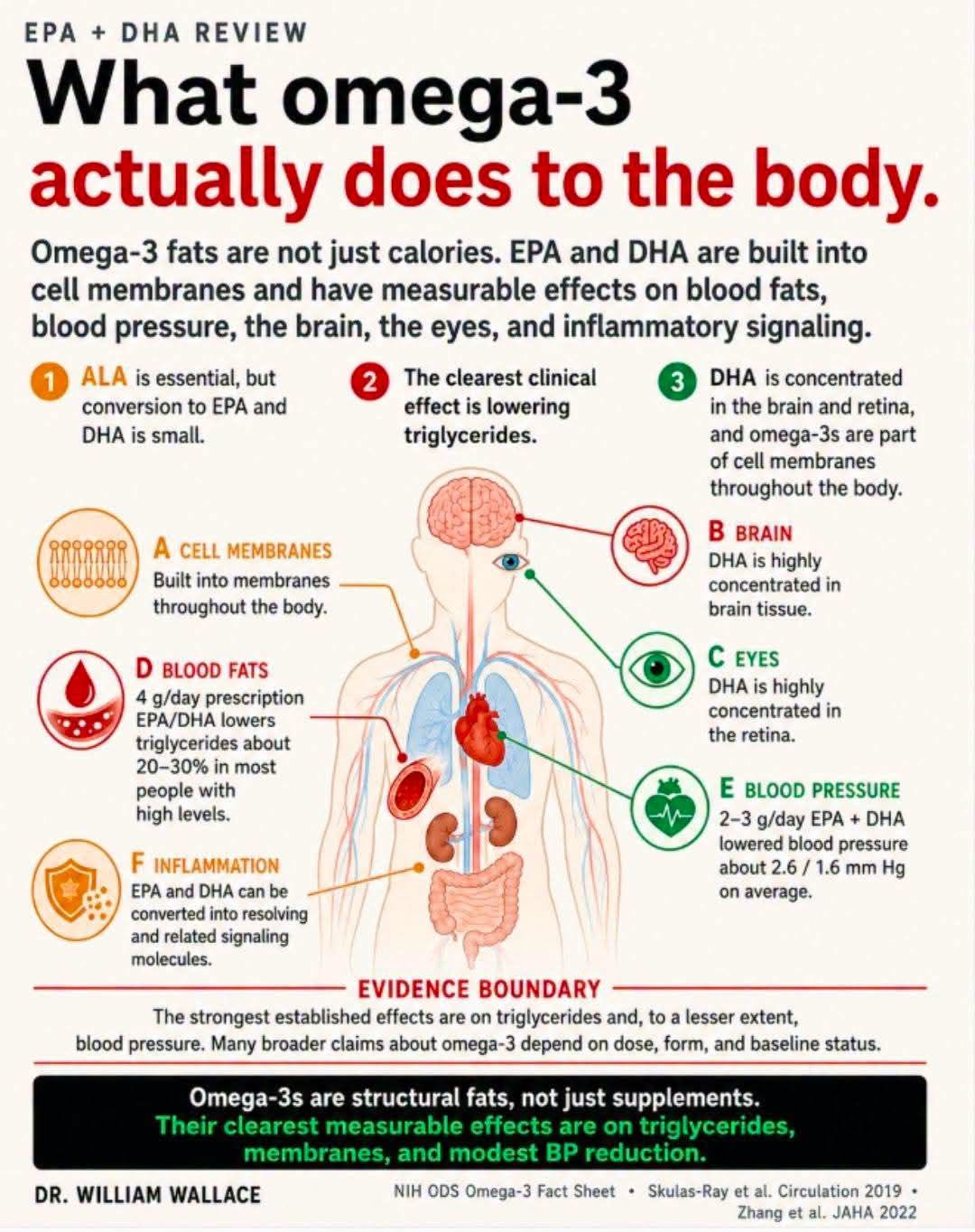
Mechanistically, this makes sense. Omega-3s are deeply involved in brain cell membranes, neurotransmission, neuroinflammation, cerebral blood flow, and gene regulation. DHA is especially enriched in the prefrontal cortex, which is critical for impulse control, emotion regulation, and executive function.

The authors even concluded that there is now “sufficient evidence” to begin implementing omega-3 supplementation to reduce aggression in the community, the clinic, or the criminal justice system. That’s a remarkable statement for a nutritional intervention and a reminder that omega-3s influence brain health and may also shape behavior in meaningful ways.

Study title:
“Omega-3 supplementation reduces aggressive behavior: A meta-analytic review of randomized controlled trials”

← newer: ACC guidance backs AI plaque analysis on CT angiography to golder: Lower lifetime LDL exposure means lower CVD risk across gene →