HD-OPM Archive
Hashtags

#animalprotein

21 posts

Insulin stimulates liver cholesterol production, linking insulin resistance to high LDL

Jun 25, 2024 · Louis Nervegna ♥ 17 · 💬 22 LDL, ApoB & lipid panel

The post explains that insulin signals the liver to make more cholesterol by keeping HMG-CoA reductase active, one reason insulin resistance and metabolic syndrome go with high cholesterol. It argues protein, especially animal protein, also raises insulin, partly offset by glucagon, and that swapping animal for plant protein lowers cholesterol beyond saturated fat and fiber effects. Much of the protein argument is the poster's inference.
Harvard cohorts: plant protein linked to lower CVD and total mortality over 30 years

Sep 16, 2026 · Louis Nervegna ♥ 19 · 💬 15 Protein

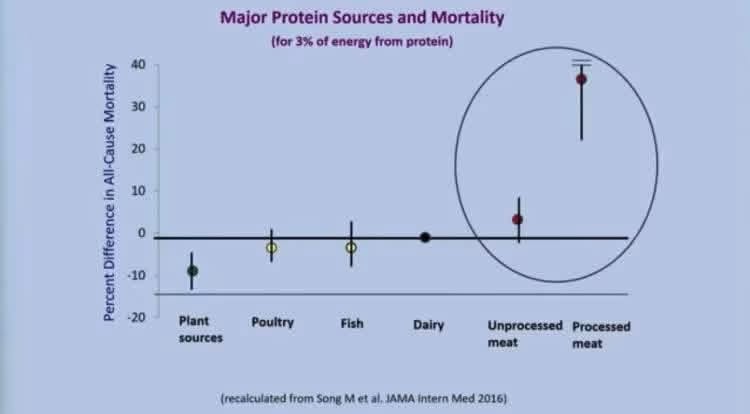
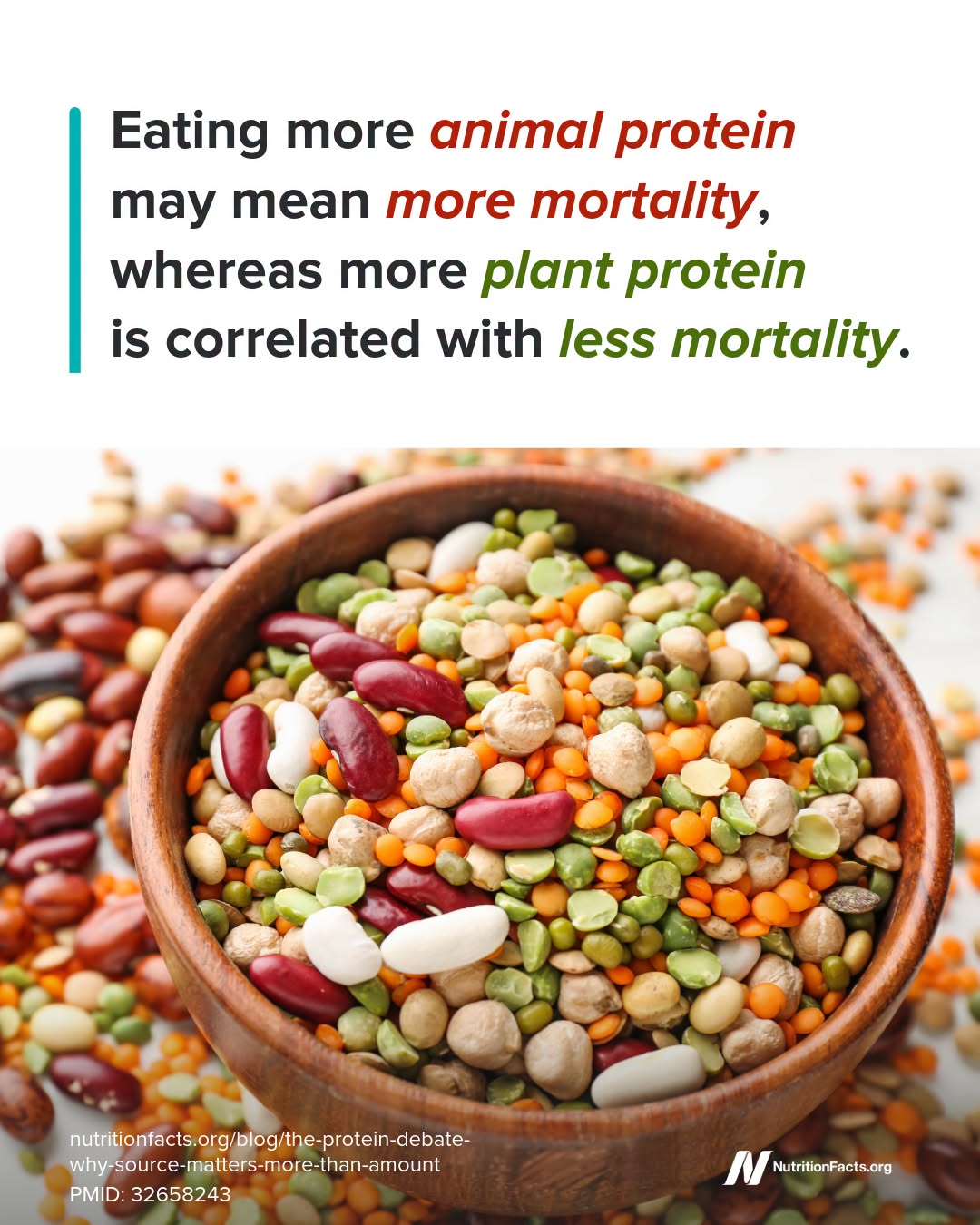
Louis summarizes Harvard Nurses' Health Study and Health Professionals Follow-up Study findings that higher plant protein intake is strongly associated with lower CVD and all-cause mortality over 30 years, whereas animal protein is not, driven by red and processed meat. Seafood and yogurt look favorable. The shared text cites a Rotterdam Study plus meta-analysis of protein intake and mortality.

Harvard cohort: unhealthy low-carb diets raise diabetes risk, plant-based ones lower it

Nov 30, 2025 · Gokhan Can ♥ 13 · 💬 15 Low-carb, keto & carnivore

Summarises a video on a 30-year Harvard study of over 200,000 participants: low-carb diets high in animal protein, saturated fat and refined carbs like white potatoes were linked to higher type 2 diabetes risk, while plant-based versions (nuts, avocado, whole grains) lowered it. It also discusses rapid weight loss without exercise causing 'fat overshooting' on regain.

Nurses' Health Study: plant but not animal protein linked to lower frailty in older women

Aug 31, 2024 · Louis Nervegna ♥ 10 · 💬 10 ↩ 3 Protein

Louis cites a 2022 Nurses' Health Study analysis in older women: higher plant protein intake was associated with lower frailty risk, but animal and dairy protein were not. Substituting 5% of energy from plant protein for animal, dairy or non-dairy animal protein was linked to 38%, 32% and 42% lower frailty risk respectively.

Midlife plant protein raised odds of healthy aging 22-58% per 3% of calories (NHS)

Aug 31, 2024 · Louis Nervegna ♥ 6 · 💬 15 ↩ 7 Protein

Louis summarizes a Nurses' Health Study analysis of midlife protein and later-life health. Total and animal protein were unfavorably associated with chronic disease, while plant and dairy protein were favorable. Replacing 3% of energy with plant protein (from fats, carbs, animal or dairy protein) raised odds of healthy aging by 22-58%, and the protein came mainly from food rather than supplements.

Six converging evidence lines favor plant protein over red and processed meat

Aug 27, 2026 · Louis Nervegna ♥ 11 · 💬 4 Protein

Louis shares an Ageproof article by group member Mert Erogul MD arguing that genetics, IGF-1 biomarkers, rodent experiments, amino-acid decomposition, short-term human trials and epidemiology converge: methionine, isoleucine and valine, not leucine or total protein, are implicated. Favoring whole-food plant protein over red and processed meat likely extends lifespan.

Another large cohort: higher plant protein linked to 35% lower all-cause mortality

Sep 10, 2026 · Louis Nervegna ♥ 18 · 💬 3 Protein

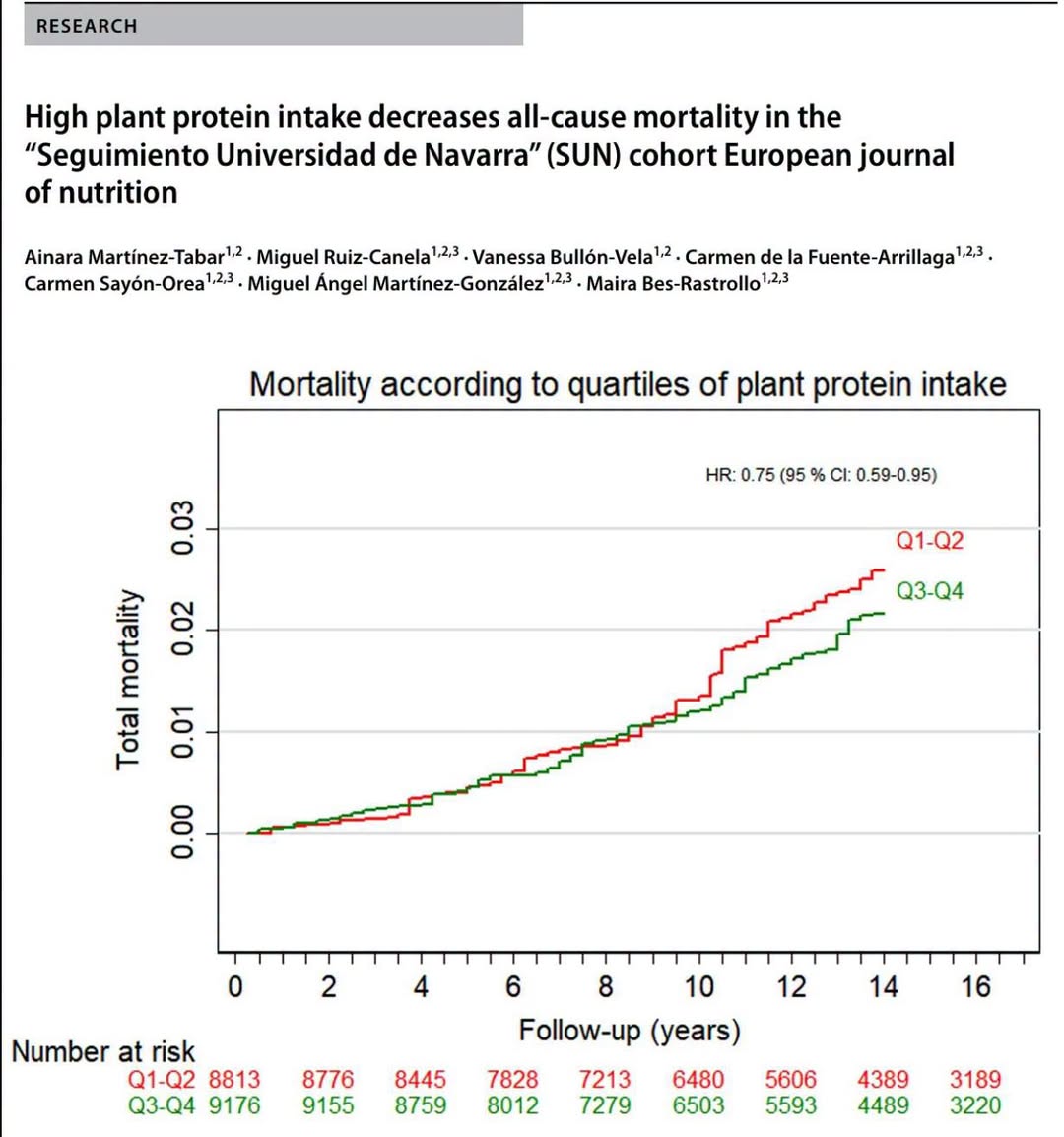
Louis notes that another large prospective cohort confirms Harvard findings on protein. Higher plant protein intake was associated with 35% lower all-cause mortality, while animal protein showed no significant association. The shared summary adds that the effect likely reflects whole plant foods such as grains, legumes and vegetables.

Six lines of evidence favor whole-food plant protein over red and processed meat

Nov 12, 2026 · Louis Nervegna ♥ 12 · 💬 3 ↩ 1 Protein

Louis recommends an article by group member Mert Erogul MD on protein and aging. It argues six lines of evidence converge: growth-signaling genetics, IGF-1 biomarker data, rodent protein restriction through FGF21 and mTORC1, the roles of methionine, isoleucine and valine, short-term human trials, and epidemiology showing source matters more than amount. Plant protein from whole foods is favored.

Valter Longo says higher whole-food plant protein likely protects against heart disease

May 18, 2026 · Louis Nervegna ♥ 9 · 💬 3 ↩ 1 Protein

Louis notes that Longo, in a podcast, accepts the epidemiology showing whole-food plant protein protects the heart. The rationale is getting plant protein from legumes, nuts, seeds and whole grains without the excess of isoleucine, methionine and BCAAs found mainly in animal protein, which shorten lifespan in animal models.

Whole-food plant protein beats animal protein for long-term outcomes in Harvard cohorts

Mar 30, 2026 · Louis Nervegna ♥ 11 ↩ 2 Protein

Louis summarizes 30-year follow-up in the Harvard Nurses' Health Study and Health Professionals Follow-up Study: whole-food plant protein is associated with better outcomes, especially for heart disease. The benefit depends on the animal protein type: plant protein is only slightly better than fish, poultry and fermented dairy but clearly better than red and processed meat.

Summary of Dudley Lamming's isoleucine restriction research in rodents

Jul 25, 2026 · Louis Nervegna ♥ 0 · 💬 1 Protein

Louis shares a simplified summary of Dudley Lamming's rodent work on restricting the amino acid isoleucine, linking earlier posts. Human translation is unclear, though some short-term trials of protein restriction show metabolic benefits that might be due to lower isoleucine intake.