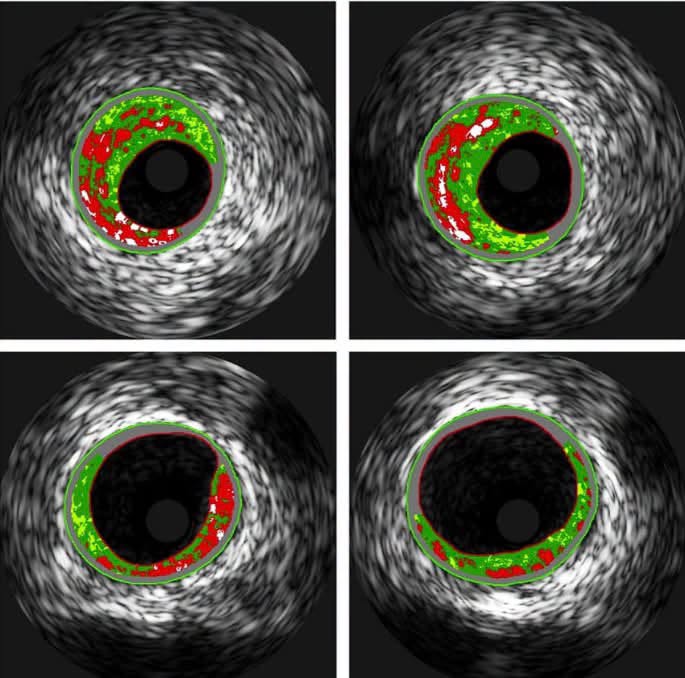
Add this new RCT to the big pile of previous randomized trials proving statins REVERSE both soft plaque (NCPV) and total plaque (TAV).
The addition of ezetimibe to push LDL lower increased the plaque reversal even more, in this particular case.
Link to journal paper:
Paper · JAMA CardiologyJAMA Cardiology articlejamanetwork.com
Quoted:
“In this randomized clinical trial of 104 statin-naive patients with stable coronary artery disease assessed by coronary computed tomography angiography, more intensive lipid-lowering therapy (rosuvastatin 40 mg + ezetimibe 10 mg) achieved lower low-density lipoprotein cholesterol (LDL-C) levels and resulted in significantly greater regression of total [TAV] and noncalcified coronary plaque volume [NCPV] compared with intensive therapy (atorvastatin 40 mg) over 18 months of treatment. Lower achieved LDL-C levels were linearly associated with greater plaque regression.”
“These findings suggest that coronary atherosclerosis is, at least in part, reversible with intensive lipid-lowering therapy in treatment-naive patients and supports targeting very low LDL-C levels to promote regression of coronary plaque burden.”
The total plaque reversal in this new study was very large, when compared to past trials:
LDL 70mg/dL ~13.5%
LDL 40mg/dL ~21%
These are very big numbers!
They were proven with full CT-angiography.
See this post summarizing some of the past trials: ↪ Six statin trials show 5 to 17% total plaque reversal, with the best results at lowest LDL.
The reversals in total plaque from past trials have ranged anywhere from 5% to 17%.
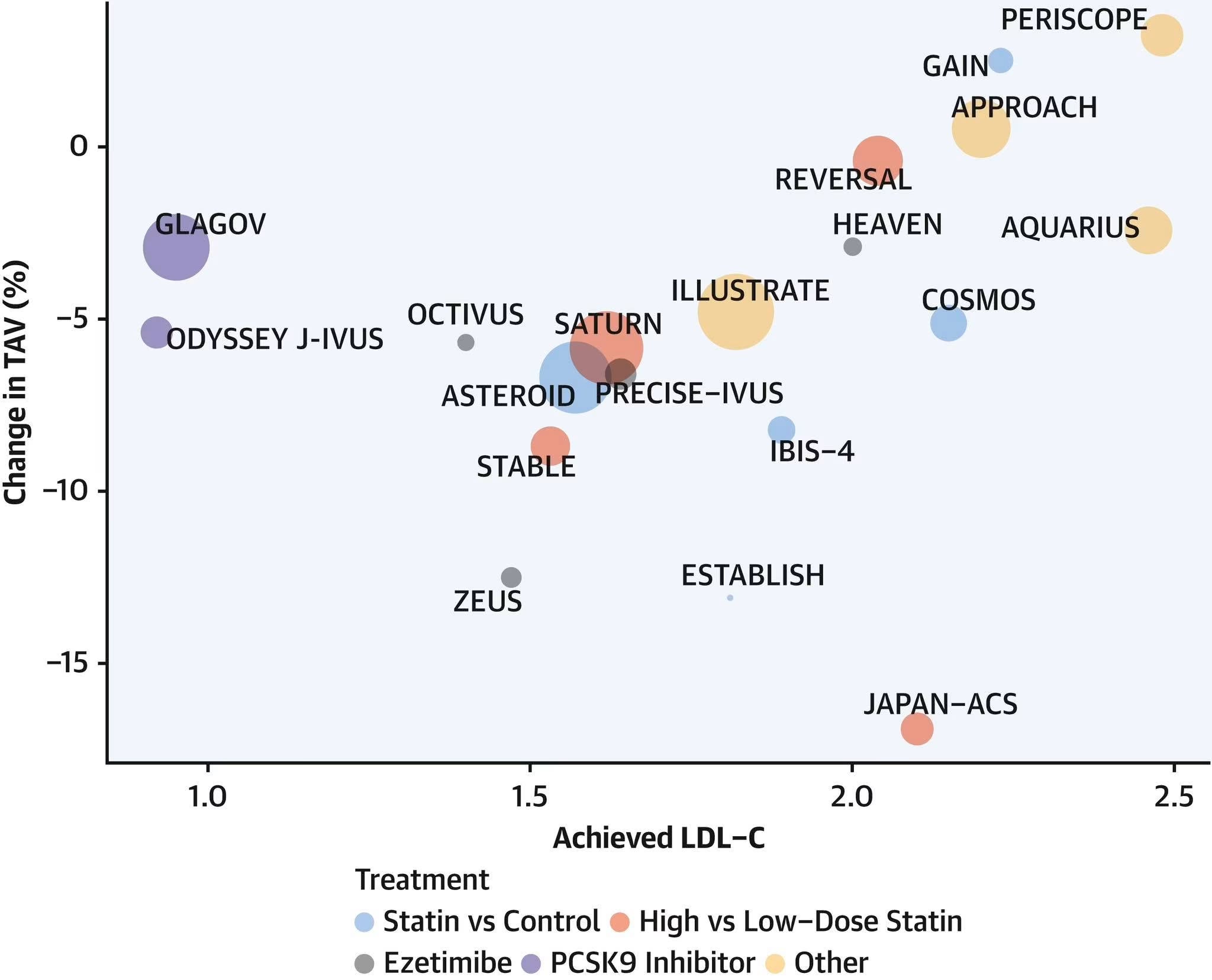
I listed some of these randomized trials by name below, and the amount of the reversal in total plaque volume (TAV):
COSMOS ~5%
SATURN ~5.5%
ASTEROID ~6.5%
IBIS-4 ~7.5%
STABLE ~8%
JAPAN-ACS ~17%
These reversals were proven with either CT-angiogram or IVUS (the gold standard).
The reality is that plaque reversal with statins is fairly common when first starting. You can read the many past posts about this by searching the group for the tag #statinreverseHD.
#statinsHD #statinreverseHD #flowpromoteHD #ezetimibeHD #ezetimibereverseHD #reverseHD
MORE EVIDENCE. LOWER LDL. LESS PLAQUE.
Another excellent study just published in JAMA Cardiology.
Researchers followed 104 patients with coronary artery disease for 18 months, using advanced CT imaging to measure changes in plaque throughout their coronary arteries.
The results?
Those who lowered their LDL to an average of 70 mg/dL saw a 13.6% reduction in total plaque volume.
Those who lowered it even further, to around 43 mg/dL, saw a 21.1% reduction.
And 90% of patients in the lower LDL group experienced plaque regression!
Even more importantly, there was a linear relationship between how low LDL got and how much plaque regressed. This is important because it provides further evidence supporting the fact that LDL is causal in atherosclerosis.
This is also yet another powerful demonstration that atherosclerosis is not necessarily a one-way street, and that the lower we get LDL, the greater the potential for actually reversing the disease.
And remember, while this study used medications, LDL lowering can be accomplished in through multiple approaches in many cases, including intensive diet and lifestyle changes, often allowing us to use lower medication doses or sometimes avoid them altogether. Plus, these changes help address various other potential contributing factors to plaque build up outside of LDL and the more angles you get at the better.
It's also very important to acknowledge that LDL lowering, even aggressive LDL lowering doesn't always cause plaque to regress in every single case. Sometimes people have such powerful residual factors as play that what would typically be expected to happen (based on evidence like this study) doesn't happen in them.
This is why I feel it is CRUCIAL to track your plaque via imaging (like used in this study) to confirm you are getting the desired response to whatever treatment you are using, including even if your LDL is getting super low, and not just make assumptions.
In other words.....TEST, AND DON'T GUESS.
For the typical case though, LDL lowering WORKS. And the evidence just keeps getting stronger.
Want to learn more? Check out my upcoming group courses:
For laypeople, starting Dec 2nd:
vital-human.comFLOW Method Group Coaching Programvital-human.com
For doctors, starting January 20th:
vital-human.comPractitioner Courses | Vital Humanvital-human.com
Source: