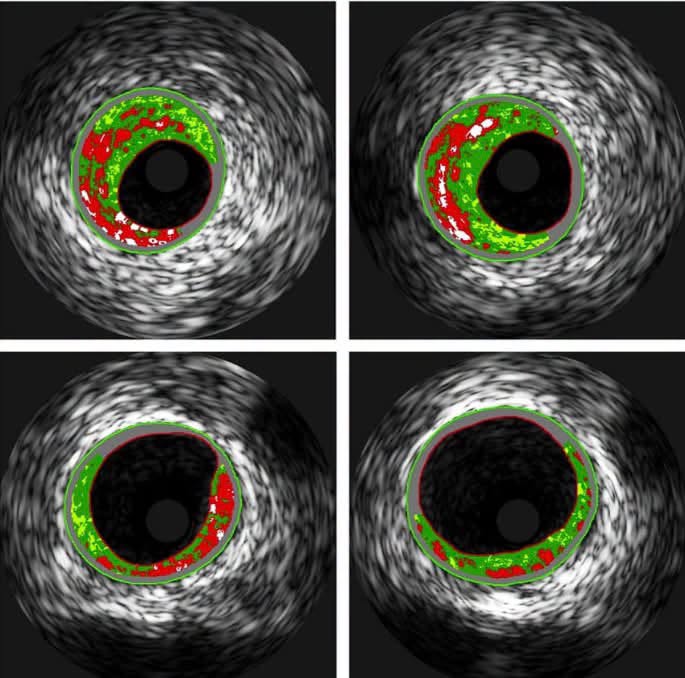
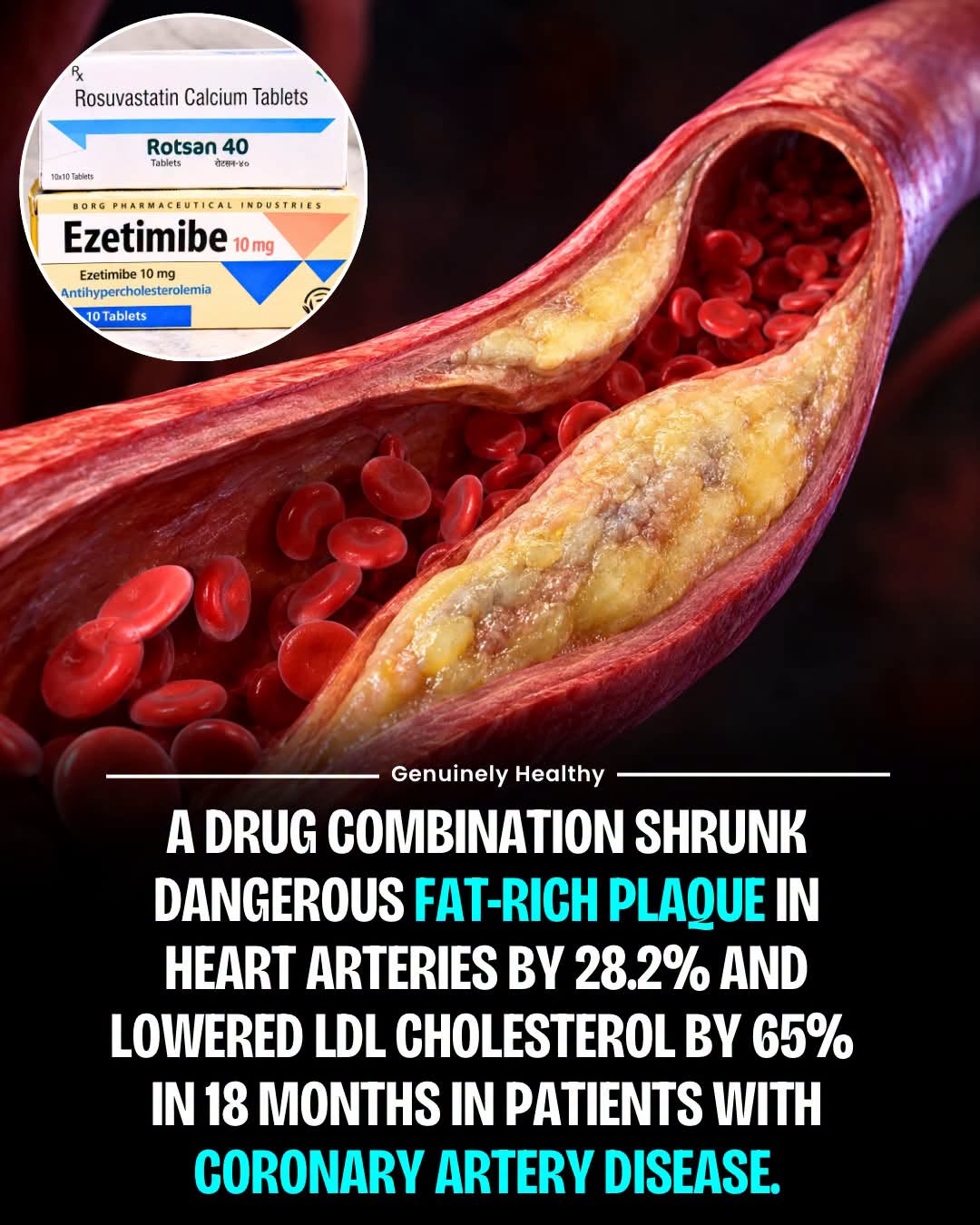
Push your LDL down to 40mg/dL with statins+ezetimibe and reverse your total plaque volume (TAV) by a whopping 21%, in just 18 months.
You melt away over 1/5 of all the plaque in your coronary arteries in a year and a half.
It sounds too good to be true…
But it was just proven in a well-done randomized trial (FLOWPROMOTE) using full high-resolution CT-angiography.
—————-
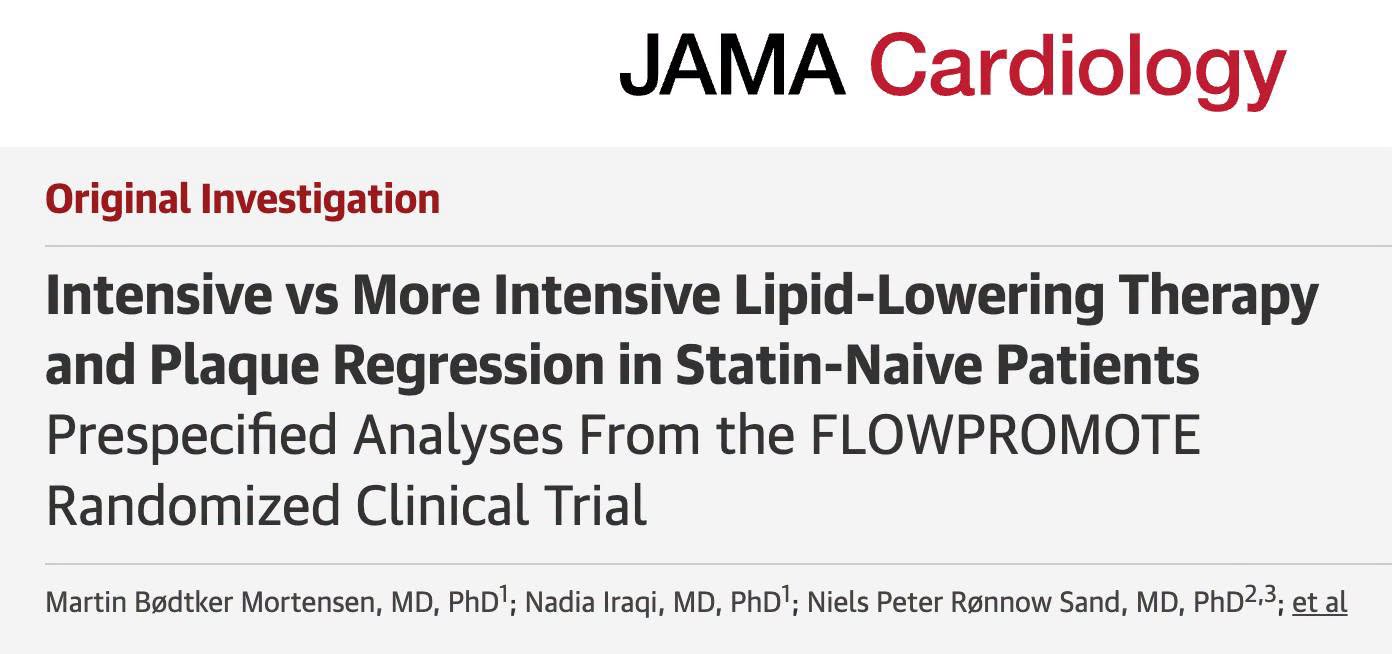
The information provided in this post captures the groundbreaking results of the FLOWPROMOTE randomized clinical trial, which was just published in JAMA Cardiology:
Paper · JAMA CardiologyJAMA Cardiology articlejamanetwork.com
The trial confirms that coronary artery disease is not an inevitable one-way street, and that aggressive lipid-lowering therapy can actively reverse total arterial plaque burden.
📊 The Core Data Behind the Trial
The FLOWPROMOTE study followed 104 statin-naive patients with stable coronary artery disease over an 18-month period. Using advanced, high-resolution coronary computed tomography angiography (CCTA), researchers compared two tiers of cholesterol-lowering strategies:
Atorvastatin 40 mg daily
- Achieved LDL-C ~70 mg/dL
- Total plaque volume regression ~14%
Rosuvastatin 40 mg + Ezetimibe 10 mg daily
- Achieved LDL-C ~40 mg/dL
- Total plaque volume regression ~21%
🔍 Key Clinical Realities & Caveats
While these findings are an exciting milestone for preventive cardiology, experts note a few essential clinical nuances:
- Soft vs. Hard Plaque: The "melting away" occurs primarily in the high-risk, lipid-rich non-calcified (soft) plaque volumes. Conversely, calcified (hard) plaque volumes actually increased across both treatment groups. This process is known as plaque stabilization—transforming volatile plaque into dense, safe calcification that is far less likely to rupture and cause a heart attack.
- The "Lower is Better" Linear Benefit: The study demonstrated a clear, continuous linear association where lower achieved LDL levels directly correlate with greater plaque regression, supporting aggressive medical targets for high-risk patients.
- Imaging vs. Hard Clinical Events: It is important to note that FLOWPROMOTE was designed as an imaging-based end-point study rather than a clinical trial measuring long-term heart attack reductions or survival rates. However, large-scale clinical trials (like IMPROVE-IT and FOURIER) have already established that adding non-statin medications to baseline statin therapy in order to drive LDL down further, safely translates into significant reductions in hard cardiovascular events like heart attacks and strokes.
This text summary was written in collaboration with Gemini AI.
#statinreverseHD #statinsHD #flowpromoteHD #ezetimibeHD #ezetimibereverseHD #reverseHD
A fascinating new study was published yesterday, October 30, in JAMA Cardiology. For anyone interested in actually reversing coronary artery disease rather than simply slowing its progression, I think the results are pretty exciting.
This wasn’t an observational study or a collection of personal success stories. It was a randomized controlled trial (RCT), one of the strongest forms of medical evidence.
The FLOWPROMOTE trial enrolled 104 patients with established coronary artery disease who had never taken statins. Researchers randomly assigned them to two groups:
- Group 1: Atorvastatin 40 mg daily.
- Group 2: Rosuvastatin 40 mg plus ezetimibe 10 mg daily.
Both groups underwent coronary CT angiography (CCTA) at baseline, 9 months, and 18 months. Rather than simply measuring cholesterol levels or looking at a single coronary lesion, researchers quantified plaque throughout the coronary arteries.
Here’s what happened after 18 months:
- LDL-C fell to 42.5 mg/dL in the more aggressive treatment group, versus 69.5 mg/dL in the atorvastatin group.
- Total coronary plaque volume decreased 21.1% versus 13.6%.
- Noncalcified (soft) plaque decreased 28.2% versus 20.0%.
- 90% of patients receiving the more aggressive treatment experienced total plaque regression, compared with 75% in the other group.
- Remarkably, 98% of patients in the more aggressive group experienced regression of noncalcified plaque.
And the lower the achieved LDL-C, the greater the plaque regression tended to be.
Here’s something else unsurprising: Calcified plaque actually increased in both groups.
That’s what I would have expected based on previous research. Despite the increase in calcified plaque, TOTAL plaque volume decreased substantially. The reduction in noncalcified plaque more than offset the increase in calcified plaque.
This is consistent with what we’ve learned from other imaging studies: intensive statin therapy can be associated with greater plaque calcification and density, changes that may reflect a more stable plaque composition.
It also helps explain why coronary calcium scores can increase even when treatment is working. An increasing calcium score doesn’t necessarily mean atherosclerosis is getting worse. Calcium scoring alone can’t tell us what’s happening to total plaque volume or its composition.
Of course, we need to recognize the limitations. This was a relatively small trial involving 104 patients, and the plaque measurements were prespecified secondary outcomes. It wasn’t designed to establish whether the observed regression translated into fewer heart attacks or deaths. Nor can it tell us how much of the benefit came from adding ezetimibe versus using a different statin.
But the evidence of measurable plaque regression is compelling, particularly because the researchers used objective imaging across the coronary arteries and compared two randomized treatment groups.
For me personally, with my recent LDL-C at 21 mg/dL and ApoB at 39 mg/dL, these findings reinforce my decision to pursue aggressive lipid lowering in conjunction with my cardiologist.
Interestingly, my own coronary calcium score increased from 742 in May 2025 to approximately 929 on my photon-counting CT in Milan a few weeks ago. Because the scans were performed on different systems, I can’t reliably quantify how much of that difference reflects actual change. And without comparable measurements of total plaque volume, I can’t say whether my own plaque is regressing (I just finally managed to transfer my last CCTA images to Dr Filippo Cademartiri in Milan, so I’m eager to see his comparison).
My biggest takeaway: Coronary atherosclerosis isn’t necessarily a one-way street.
We’ve known for years that plaque regression is possible. This trial provides additional randomized evidence that the degree of LDL lowering matters, and that substantial reductions in total plaque burden can occur within just 18 months.
And perhaps just as importantly, more calcium doesn’t automatically mean more total plaque.
I think that’s genuinely encouraging news for those of us actively managing coronary artery disease.
Here’s the study: