Most people in this group are not looking for a cardiologist who simply waits for symptoms. They want a doctor who treats heart disease as something that can be measured early, driven down aggressively and monitored over time. The group's admins offer a consistent answer to the question of how to find and work with such a doctor: if you are at high risk, find a good cardiologist, listen to them, and bring your own research into the conversation as additions to their plan rather than as replacements for it.1
This article pulls together what the group's posts say about choosing a doctor, which questions and tests to raise, how doctors tend to think about particular treatments, and when to see a cardiologist promptly. It is an organized summary of group discussion, not medical advice; the admins repeatedly recommend discussing any change with your own doctor.
A note on scope: the group does not publish a checklist of credentials for picking a cardiologist. What follows is built from admin opinions, personal experiences and shared expert commentary, and it is labelled as such where it is opinion.
Rule number one: find a good cardiologist and listen
Louis Nervegna, one of the group's admins, calls this "Rule #1" for people at high risk of a heart attack. His reasoning is that most of what circulates on social media is guesswork backed by little hard science, including videos that cherry-pick one study out of a hundred while ignoring the rest. Science, he says, considers the totality of the evidence.1 The group's "best of" index places this post first in its list of foundational topics.7
His second argument is about timing. In his view, people who are already at high risk have mostly lost the window to experiment; that window was years earlier, before the disease became severe. He also notes that you hear about the rare high-risk people who "cured" themselves, but not about those who experimented and died.1 This is an opinion, not a research finding, and it is worth reading as the admin's framing of risk rather than as a study result.
Add, do not replace
The practical rule that follows is simple. If you want to use alternative or natural approaches, including various diets, Louis suggests doing so in addition to what your cardiologist recommends. If those approaches work, your risk will fall and you can work with your cardiologist to reduce the amount of treatment as appropriate. He stresses there is no hard rule against stopping or reducing a medication if your condition markedly improves.1
That framing matters for the doctor relationship: you are not asking permission to abandon treatment, you are proposing a joint plan with a defined way to step treatment down if the numbers improve.
What "prevention-minded" looks like in practice
Several posts help describe what the group means by a good doctor, even though none gives a formal definition.
Science-based, but willing to go beyond the minimum
Louis explains why new therapies take so long to become standard of care: approval requires three phases (safety, preliminary efficacy and full efficacy), typically a decade or more and at least $100 million, sometimes nearly $1 billion. Large phase 3 trials often fail, so some promising therapies are never tested at that scale.4
Meanwhile, he notes, the FDA allows a physician to use any dietary supplement with GRAS status and to prescribe almost any drug off-label, such as a drug approved only for cancer being used for heart disease. This gives doctors flexibility to go beyond the standard of care. He argues the best doctors still rely on quality science when they do so, even where it does not meet the bar for full FDA approval.4
A related example is a physician quoted in a shared post who explains why he takes an SGLT2 inhibitor off-label. Louis notes that most of the evidence comes from people with diabetes and that benefits in non-diabetics are inferred from mechanisms, so this is a topic to raise with a doctor rather than assume.8
Focused on slowing the underlying processes
Louis praised one cardiologist as someone who "actually gets it" because the goal is to slow the processes that cause major diseases in the first place, which he describes as essentially the aging process, with diet as the best tool currently available, followed by exercise, lifestyle, and certain drugs and supplements.9 This is his personal view.
Aware that heart disease has many contributors
Louis summarizes a Joel Kahn video saying there are at least 25 major risk factors and that all should be addressed. LDL is special because it appears necessary for plaque formation, though not always sufficient, since some people with very high LDL never develop plaque.10 A shared video with lipidologist Tom Dayspring makes a similar point: heart disease is multifactorial, with LDL and ApoB as one major contributor alongside age, genetics, insulin resistance, chronic inflammation, endothelial dysfunction, high blood pressure, smoking and others.11 Louis also shared a graphic of 17 modifiable risk factors, noting that some are far better proven than others but that targeting as many as possible is reasonable.12
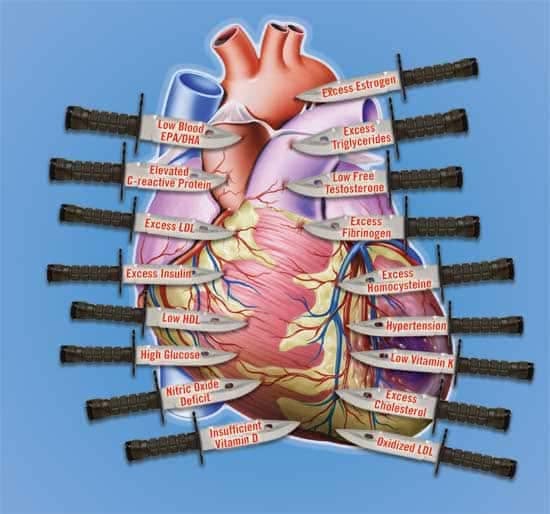
The ARREST-AF trial, shared by Louis, adds a structured example: after ablation for atrial fibrillation, a physician-led risk-factor program produced 61% arrhythmia-free patients at 12 months versus 40% with usual care, in a JAMA Cardiology randomized trial.13
Gokhan Can, the other admin, also points listeners to lipidologists. He summarized a Peter Attia podcast episode with Tom Dayspring on atherosclerosis development, apoB and biomarkers14, and Louis shared a lipidologist's explanation of why LDL particle size probably matters little.15
The gap between guidelines and everyday care
Why does a patient sometimes have to push? One Harvard Gazette item shared by Louis says US cardiovascular deaths fell 70% from the late 1960s but leveled off around 2010, with experts citing a lack of urgency among doctors and patients and healthcare barriers.3 Gokhan says his own doctors rarely order tests such as hsCRP, ApoB, insulin and cystatin C, so he orders them himself.5
Tests worth asking about
The group's posts mention several tests that may not be ordered by default. In each case the advice is framed as something to discuss with your doctor.
| Test | What it adds | Caveat from the group |
|---|---|---|
| ApoB | Counts LDL, VLDL and IDL particles; about $28 out of pocket at one lab2 | Doctors may not order it by default5 |
| hsCRP | Inflammation marker; ACC recommendations support universal testing16 | Temporarily very high during an infection17 |
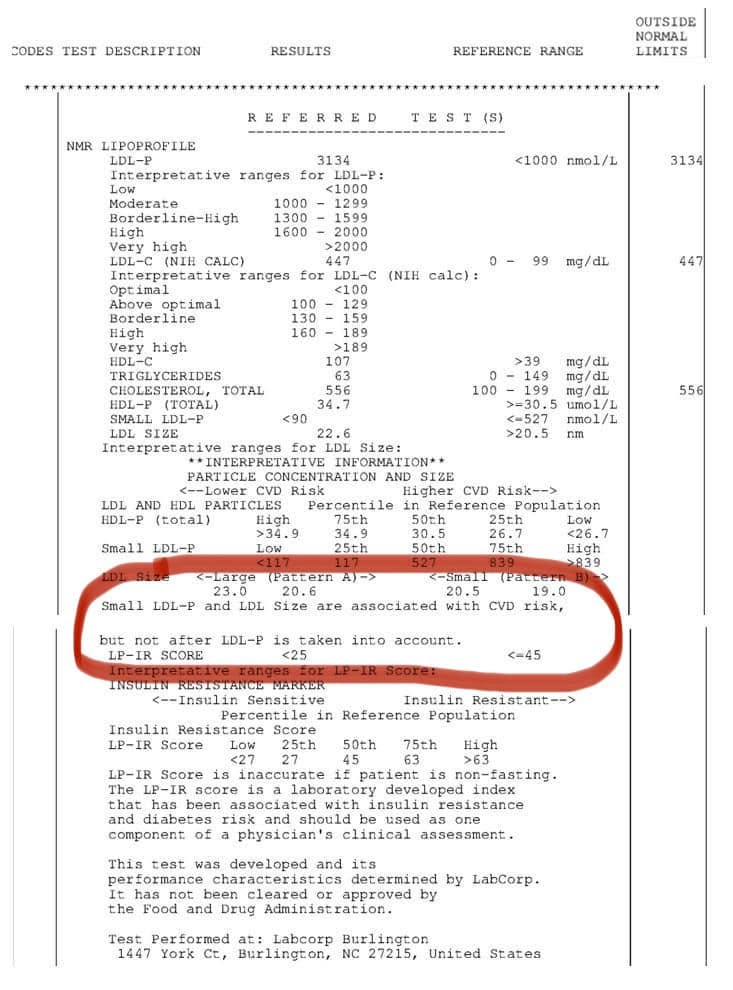
| NMR particle size | Reports small LDL particles18 | Adds no risk information once LDL-P is counted18 |
| Calcium score CT | Measures calcified plaque19 | A zero can falsely reassure, especially younger people and women20 |
| Coronary CT angiogram | Shows plaque that narrows the lumen6 | A normal scan can miss early plaque in the artery wall6 |
Lipid and inflammation markers
- ApoB. Louis points out that ApoB tests are cheap and can be ordered yourself if a physician or insurer will not cooperate; he cites a price of $28 from one lab company. ApoB reflects LDL, VLDL and IDL particles.2
- hsCRP. A shared cardiologist's segment described new American College of Cardiology recommendations supporting universal testing for this inflammation marker, and encouraged viewers to ask their doctor for it.16 Louis adds a timing caution: hs-CRP will be temporarily very high during an infection, so it is best not to test during that period.17
- Particle size and ratios. Louis notes that NMR reports themselves say small LDL size is associated with risk but not once LDL-P is taken into account, which is why most cardiologists no longer order size testing.18 Gokhan shares a video on why ratios such as triglycerides:HDL-C can mislead.21
- HDL and triglycerides. Louis argues that drugs which raise HDL have repeatedly failed to cut events in trials such as AIM-HIGH, HPS2-THRIVE, dal-OUTCOMES, ILLUMINATE and ACCELERATE.22 Likewise, in BRIDGE-TIMI 73a olezarsen cut triglycerides 64% with no change in plaque volume, and he says drug-lowering triglycerides matters little unless they exceed about 400-500 mg/dL.23 The takeaway for a doctor visit is that more numbers are not always better; ApoB already captures the risk carried by VLDL particles.23
- Lp(a) and inflammation drugs. A shared physician commentary on two trials presented at the AHA meeting noted that one drug cut Lp(a) by nearly 80% and another sharply reduced inflammation, yet events matched placebo in both. The lesson drawn is that changing a marker does not guarantee benefit.24
- Other markers. Louis explains that in people with low-normal ferritin and no symptoms, he believes extra iron is generally a bad idea; he advises seeing a doctor to look for sources of iron loss, with hematologists best qualified to treat true deficiency.25 He also notes that long-term very low carbohydrate diets can produce normal or low TSH with low T3 or T4, a pattern that can confuse doctors who are not used to it, so it can help to tell your doctor about your diet.26
Imaging
A cardiologist video shared by Louis lists three tests used to evaluate heart disease: echocardiogram, cardiac stress test and calcium scoring CT.19 The group is cautious about over-reading any single result:
- A coronary CT angiogram mainly shows plaque that narrows the lumen, so a normal scan does not rule out early plaque growing within the wall.6
- A calcium score of zero can give false reassurance, particularly in younger people and women, according to a cardiologist's warning that Louis shared.20
- Joel Kahn's guide to high calcium results, shared by Gokhan, covers why to get a heart CT, what to do with results and how to try to reverse atherosclerosis, and links a 2022 JACC review on plaque regression.27
- Gokhan also summarized a video in which a presenter's calcium score fell from 66 to 42 over three years amid many simultaneous lifestyle changes; the presenter admits he does not know which mattered, and many cardiologists believe progression can be slowed but not reversed to zero.28
Risk calculators and their limits
Louis shared the AHA's PREVENT calculator for ages 30 to 79 without known cardiovascular disease, built on newer and more diverse data than the 2013 Pooled Cohort Equations and including kidney and metabolic conditions. He warns it will underestimate risk if you already had a heart attack or stroke, have significant atherosclerosis or a high calcium score.29 In another post he compares hazard ratios from the SCORE O.P. model for people over 65: age compounds to roughly 19.5 times higher coronary death risk from 65 to 85, compared with 2.3 times for diabetes and 1.88 for smoking.30 This is a useful reminder to ask your doctor which calculator they use and what it leaves out.
Show data
| Times higher risk (log scale) | 95% CI | |
|---|---|---|
| *Aging from 65 to 85 | 19.5 | – |
| Diabetes | 2.3 | – |
| Smoking | 1.88 | – |
| Systolic blood pressure 40 mmHg higher | 1.31 | – |
| Total cholesterol 40 mg/dL (1 mmol/L) higher | 1.13 | – |
Talking about medications
Medication conversations are where many people feel stuck, and the group has several examples of how to approach them.
Statins: raise the worries openly
Louis wrote a point-by-point summary of what a cardiologist at a major research hospital would likely say about statins. He cites a meta-analysis of 55 studies in over 7 million people linking statin use to lower dementia risk, and the SAMSON trial, which he says showed about 90% of statin muscle pain is attributable to the nocebo effect (symptoms driven by expectation of harm). He also cites JUPITER, in which statins lowered heart attacks and strokes by 44% versus placebo in 1.9 years, and a pooled analysis of 13 trials (91,140 patients) in which 255 people treated for 4 years produced one extra diabetes case while preventing 5.4 cardiovascular events.31
On benefit, he shares a Cleveland Clinic cardiologist's explanation that statins can reverse plaque when LDL is pushed below 70 mg/dL, mainly by shrinking the fatty core, and that six large trials showed total plaque volume falling 5% to 17%.32
A real example of a detailed conversation
Gokhan posted the message he sent his cardiologist. On rosuvastatin 5 mg plus ezetimibe 10 mg his LDL was 90 and then 63 mg/dL, similar to earlier values on low-dose rosuvastatin alone (71, 70, 91). He had also noticed his fasting insulin rise from about 14 to about 21 uIU/mL, and asked about pitavastatin plus an injectable PCSK9 inhibitor.33 It is a single person's data (an n-of-1), but it shows a useful pattern: bring your numbers, state your specific concern, and propose options to discuss.
In another post he describes reconsidering his target after a friend had a heart attack at 48. At an LDL of 70 mg/dL he was thinking about retrying low-dose ezetimibe to approach 50 mg/dL, with his cardiologist's support.34
Niacin and other add-ons
Louis explains that niacin can lower Lp(a) and is still used by some cardiologists; one member saw a 40% drop on 1500 mg. But niacin has not been proven in large trials to reduce heart attacks, strokes or mortality, and two very large trials found no extra benefit on top of high-dose statins with more side effects. He frames it as something to discuss with your cardiologist, not a substitute for proven drugs.35 In a later post he repeats that Lp(a) falls as much as 80% have been reported but are uncommon, and that niacin should not be combined with high-dose statins.36
Aspirin during infections
Louis notes that infections temporarily raise the risk of heart attack and stroke, and suggests people with heart disease ask their doctor about a daily baby aspirin during illness and for a period afterward.37 He gives a window of about a week or two after the infection or vaccination, if the doctor approves.17 For Covid, he cites a 2022 meta-analysis associating aspirin with lower mortality without more bleeding.38
When to see a cardiologist promptly
A post sharing Mayo Clinic and Cleveland Clinic information notes that atrial fibrillation is the most common type of tachycardia and that ischemic heart disease from atherosclerotic blockages is the most common cause of ventricular tachycardia; Louis advises seeing a cardiologist as soon as possible if rapid heartbeat occurs.39 A post Louis shared on isometric wall squats for blood pressure adds that people with heart disease should consult a doctor first and never hold their breath during the holds.40
In one reported case, a sitosterolemia essay describes a person with clogged arteries despite good health, and Louis notes that it may be more common than doctors realize. This is a reminder that unexplained disease may deserve further workup.41
What this means for you
These points are drawn from admin opinion and shared material; check them with your own doctor.
- If you are at high risk, the group's admins recommend finding a cardiologist you trust and following the plan, adding other approaches rather than replacing treatment.1
- Consider asking whether ApoB, hsCRP and other markers have been measured, and note that some can be ordered yourself.2516
- Ask what a scan can and cannot rule out before drawing reassurance from a normal CTA or a zero calcium score.620
- Bring up statin worries, supplements and diet changes, and discuss a plan to scale treatment down if your numbers improve.131
- Ask which risk calculator is used and whether it fits your situation, especially if you already have plaque.29
- Avoid blood tests for inflammation while sick, and ask about aspirin during infections.17
- Tell your doctor about unusual diets, since patterns such as low T3 on very low carbohydrate diets may be missed.26
- Treat supplements and off-label ideas as topics for a science-minded doctor, not self-prescription.4
Frequently asked questions
What if my doctor does not order the tests I want?
Gokhan reports that his doctors rarely order hsCRP, ApoB, insulin or cystatin C, so he orders them himself.5 Louis notes ApoB is inexpensive and can be paid for out of pocket.2 Share results with your doctor afterward.
Should I try alternative approaches instead of medication?
Louis's advice for high-risk people is to add them to, not substitute them for, cardiologist-recommended treatment, and to reduce treatment later with your doctor if risk falls.1
Can a good doctor go beyond guidelines?
According to Louis, yes: physicians can use GRAS supplements and prescribe off-label, and the best ones still base this on quality science.4
Is a zero calcium score or normal CT angiogram enough?
Not necessarily. A normal CTA can miss early wall plaque, and a zero calcium score can falsely reassure, particularly in younger people and women.620
Are statins safe to discuss with my cardiologist?
Louis's summary cites evidence on dementia, muscle pain and diabetes risk, and notes the very low cost of generic statins, for example a one-month supply of 5 mg rosuvastatin for $4 on Amazon pharmacy.31 If you have side effects, raise them openly; Gokhan's own message shows how to present data and options.33
Is there a book I can bring to my cardiologist?
Louis recommends "The Stents I Didn't Get" by group member Steve Kaplan, saying it is consistent with what the group recommends and suggesting readers give a copy to their cardiologist. Proceeds go to heart-disease charities.42