Vanadium sulfate is a supplement that used to be an alternative treatment for diabetes.
It seems to have gone out of vogue. You don’t hear much about it nowadays.
It was always controversial as a supplement because vanadium is toxic, even in lower doses. Vanadium is found naturally in certain foods in very low concentrations as a trace mineral. But it was never really clear whether the higher doses used for diabetes were truly safe in the long term.
Now a new study in mice has demonstrated that vanadium sulfate is a senolytic. It kills senescent cells. By doing so, it seems to extend lifespan in male mice by 7.4%, even when started late in life. (Female lifespan was not tested.) It also improved fitness and metabolic markers, as well as markers in various disease models, in both males and females.
Link to journal paper:
Paper · Nat Aging · 2026Altered protein cysteine reactivity in senescent cells is a vulnerability for senolysis to ameliorate agingnature.comQuoted:
In a new study published in Nature Aging, a group of researchers from the University of Chicago has described the senolytic activity of a mineral called vanadyl sulfate (VS). It is naturally found in food, such as shellfish, mushrooms, and soybeans, and it is sold as an over-the-counter supplement. Previous research suggests that VS might assist in glucose processing [2].
The researchers then moved to experiments with naturally aged mice. 76-week-old animals received VS in drinking water for 13 weeks. 12-week-old mice were used as a reference group. Most measurements included 12 to 15 mice per group.
The treatment improved fitness (hanging endurance), body composition (reduced fat accumulation), and glucose tolerance. The treatment group also had better liver and kidney markers along with less kidney inflammation. These improvements were accompanied by reductions in senescence markers: SA-β-gal, p16, p21, and inflammatory gene expression.
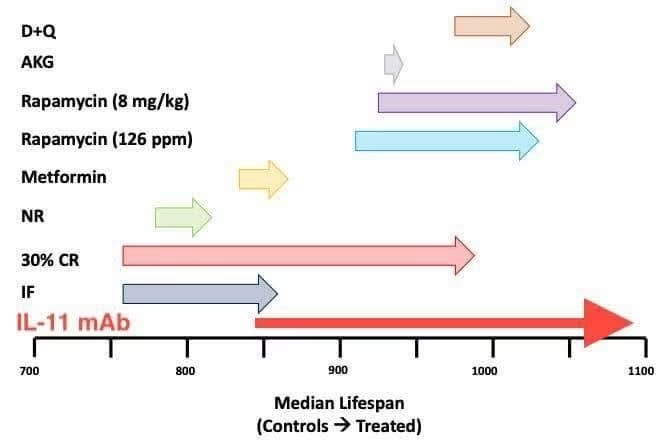
Moreover, 90-day treatment that was started in male mice at about 71 weeks of age (late adulthood) increased median lifespan from 887 to 952 days, or by 7.4%. This result is made more impressive by the late start and the short duration of the treatment as well as by relatively long-lived controls. The cohort, however, was small (about 20 mice per group), and the lifespan increase barely reached statistical significance.
In an interesting additional experiment, aged mice received VS for six weeks before either continuing treatment or switching back to ordinary water. While circulating vanadium returned to baseline after withdrawal, improvements in fitness, fat accumulation, glucose tolerance, and several tissue measurements were largely retained until the end of follow-up. These results are compatible with lasting changes in tissue composition, such as removal of senescent cells, but they do not prove it.
Aged female mice also showed improved endurance and metabolic measurements and reduced senescence-associated markers after three months of treatment. However, female lifespan was not tested.
Next, the researchers asked whether VS could affect diseases in which senescent cells have been implicated. VS treatment indeed improved disease-associated metrics in mouse models of diabetes, liver fibrosis, atherosclerosis, and lung fibrosis.
Having established these effects, the researchers turned to the mechanism – how exactly does VS kill senescent cells? Working with senescent fibroblasts in vitro, they learned that VS quickly disrupts protein handling in senescent cells, eventually leading to controlled self-destruction (apoptosis), which senescent cells normally evade.
#vanadiumHD #vanadiumsulfateHD #senolyticsHD #miceHD #agingHD #longevityHD