Fibrates
- Fibrates are PPAR-α agonists that have multiple effects on lipid metabolism.
- They lower triglycerides. They raise HDL cholesterol.
- Fibrates also have anti-inflammatory and anti-atherogenic effects beyond their lipid modifying actions.
- Meta-analyses and real-world studies suggest fibrates have a role for CVD risk reduction in patients with metabolic syndrome, especially those with high triglycerides and low HDL cholesterol levels.
- Two popular drugs in this class are Fenofibrate and Gemfibrozil.
Paper · Diabetes Metab J · 2020Fibrates Revisited: Potential Role in Cardiovascular Risk Reduction.Fibrates, peroxisome proliferator-activated receptor-α agonists, are potent lipid-modifying drugs. Their main effects are reduction of triglycerides and increase in high-density lipoprotein levels. Several randomized controlled trials have not demonstrated their benefits on cardiovascular risk reduction, especially as an "add on" to statin therapy. However, subsequent analyses by major clinical trials,…ncbi.nlm.nih.gov
The article by Kim and Kim (2020) provides an overview of the evidence supporting the use of fibrate drugs, particularly fenofibrate, for cardiovascular risk reduction in patients with metabolic syndrome and atherogenic dyslipidemia (elevated triglycerides and low HDL cholesterol).
Mechanism of Action
- Fibrates are PPAR-α (peroxisome proliferator-activated receptor alpha) agonists that have multiple effects on lipid metabolism.
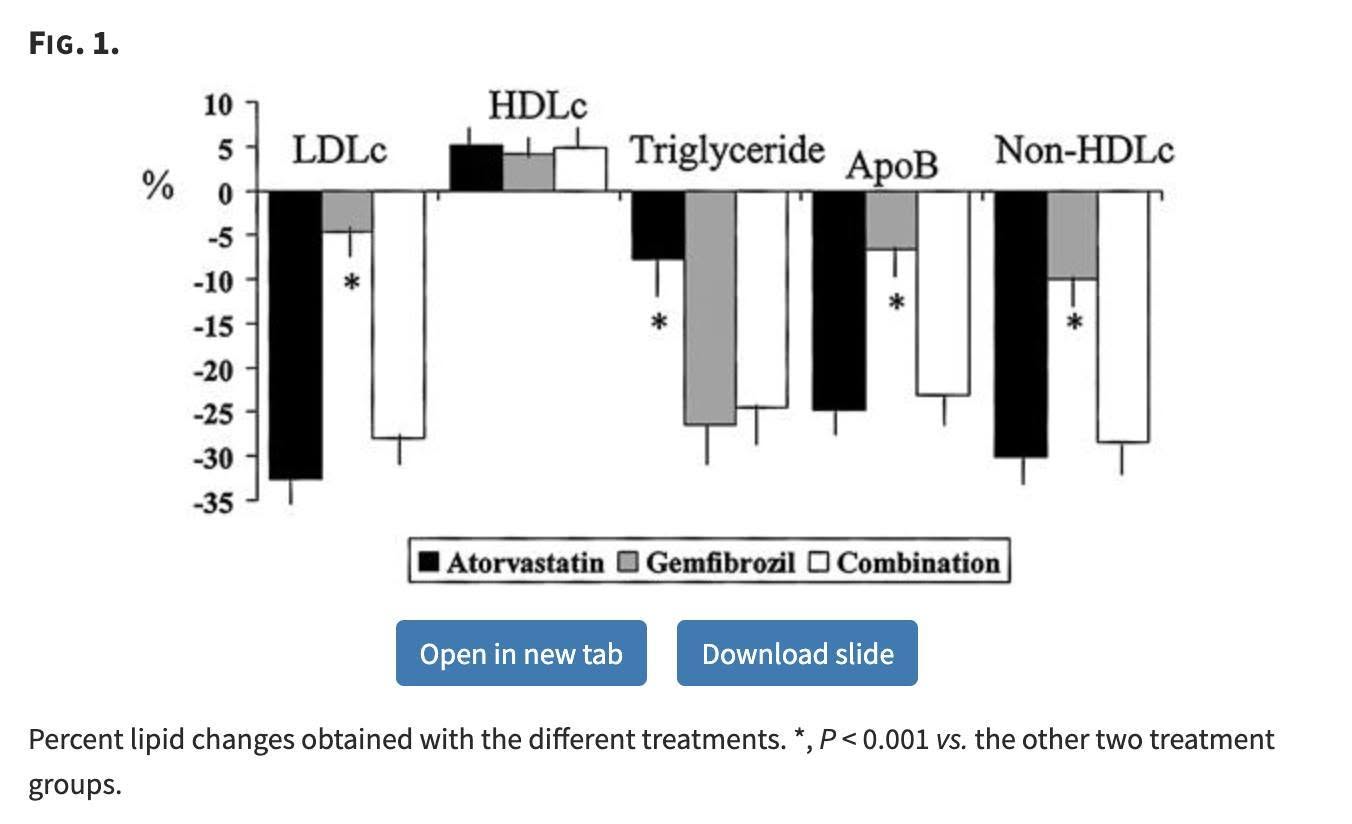
- They lower triglycerides mainly by increasing lipolysis through increasing LPL activity and lowering ApoC-III levels. They raise HDL cholesterol by increasing ApoA-I and ApoA-II synthesis.
- Fibrates also have anti-inflammatory and anti-atherogenic effects beyond their lipid modifying actions.
Residual Cardiovascular Risk
- Many patients continue to experience cardiovascular events despite well-controlled LDL cholesterol levels with statins.
- Atherogenic dyslipidemia, characterized by high triglycerides, low HDL cholesterol and presence of small dense LDL particles, has been identified as an important contributor to residual cardiovascular risk.
- As such, there has been renewed interest in drugs like fibrates that target atherogenic dyslipidemia.
Clinical Trials of Fibrates
- Early fibrate trials like the Helsinki Heart Study (gemfibrozil) and VA-HIT study (gemfibrozil) showed significant reductions in cardiovascular events. However, later trials with bezafibrate like the BIP and LEADER trials failed to show benefit.
- The FIELD trial with fenofibrate in type 2 diabetes patients did not meet its primary endpoint but suggested benefit in subgroups. The ACCORD trial of fenofibrate plus simvastatin versus simvastatin alone found no additional benefit, but a subgroup with high triglycerides and low HDL cholesterol did have a reduction in events.
Potential Role of Fibrates in Metabolic Syndrome
- Although fibrates trials have had mixed results overall, subgroups with high triglycerides and low HDL cholesterol levels consistently show improved outcomes. This represents patients with metabolic syndrome and insulin resistance.
- In these patients, fibrates like fenofibrate seem to have substantial triglyceride lowering effects. Fibrates may also have complementary effects to statins in modulation lipoprotein metabolism.
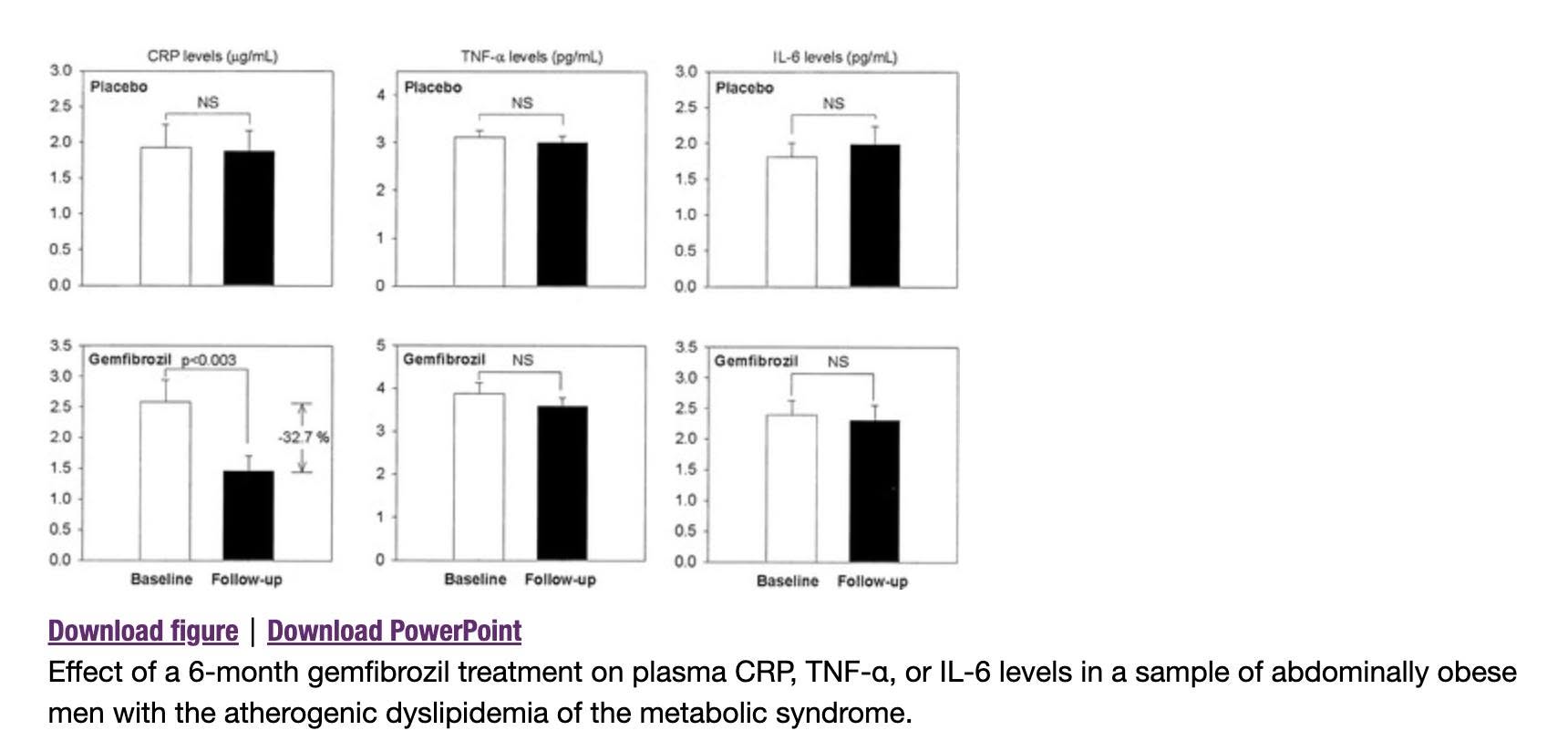
- Beyond their lipid effects, fibrates have demonstrated anti-inflammatory actions in patients with metabolic syndrome that may confer additional cardiovascular benefits.
Real-World Data on Fibrate Therapy
- Real-world studies provide additional insight into the effectiveness of treatments in broader patient populations.
- In the Three City observational study, elderly patients treated with fibrates had a 34% lower risk of stroke compared to no lipid lowering therapy.
- More recently, the ECLIPSE study found a 26% reduction in major cardiovascular events in patients with metabolic syndrome treated with fenofibrate plus statin compared to statin alone. The reduction was 36% in those meeting criteria for high triglycerides and low HDL cholesterol.
Conclusions
- Evidence from subgroup analyses of trials, meta-analyses and real-world studies suggest fibrates like fenofibrate have a role for cardiovascular risk reduction in patients with metabolic syndrome, especially those with high triglycerides and low HDL cholesterol levels.
- Current guidelines recognize this potential benefit in specific dyslipidemia patient groups. However, results from ongoing trials like PROMINENT with pemafibrate are needed to provide more definitive conclusions.
In summary, Kim and Kim (2020) provide a review indicating fibrates should be considered as adjunctive therapy to statins for residual cardiovascular risk reduction in patients with atherogenic dyslipidemia associated with metabolic syndrome. Additional evidence is still needed from randomized trials focused on this particular high-risk patient subgroup.
Brian Kennedy on Gemfibrozil (2022)
 ▶Video · YouTube · Longevity Summit DublinMechanisms of Action of Longevity Therapeutics – Brian Kennedy at Longevity Summit Dublin 2023Mechanisms of Action of Longevity Therapeutics – Brian Kennedy at Longevity Summit Dublin 2023youtube.com
- Gemfibrozil extends lifespan in yeast and worms and improves healthspan parameters in worms.
- Gemfibrozil is an old drug used to treat high triglycerides and raise HDL cholesterol. It is still widely used with statins to treat hyperlipidemia.
- The original proposed mechanism was that Gemfibrozil binds to a complex containing PPAR-alpha, releasing the complex and allowing PPAR-alpha to activate transcription. However, the aging phenotypes don't require PPAR-alpha, so this is likely not the real mechanism.
- New experiments show Gemfibrozil blocks the uptake of dipeptides and tripeptides in yeast, worms, and human cells, leading to reduced amino acid levels. This inhibits mTOR activation, which may explain the anti-aging effects.
- Gemfibrozil specifically inhibits dipeptide transporters in the intestine, reducing amino acid absorption. This starves cells of amino acids needed to activate mTOR.
- The talk concludes that the real targets of Gemfibrozil are now known, for both anti-aging effects and reducing triglycerides. This allows medicinal chemistry efforts to optimize Gemfibrozil for these targets, rather than the incorrect PPAR-alpha target.
Meta analyses of Fibrates:
- Checking your browser - reCAPTCHA (ncbi.nlm.nih.gov)
- The Lancet article (The Lancet)
Gemfibrozil lowers HS-CRP and Trigs:
- J Clin Endocrinol Metab article (J Clin Endocrinol Metab)
- Link to ahajournals.org (ahajournals.org)
Gemfibrozil shows some longevity benefits in mice:
- Mechanisms of Action of Longevity Therapeutics – Brian Kennedy at Longevity Summit… (Longevity Summit Dublin)
- Gemfibrozil, a lipid-lowering drug, improves damage in a mouse model of aging (Rapamycin Longevity News)