HD-OPM Archive
Topics › Aging & longevity

Taurine deficiency may drive aging; Columbia study spans worms, mice, monkeys and humans

Louis Nervegna · Mar 01, 2024 · ♥ 23 reactions · 28 comments · original Facebook post
Aging & longevitySupplements & vitamins
AI summary & key facts

Louis highlights a 2023 Columbia University study on taurine and aging in worms, mice, monkeys and humans, noting taurine also benefits the cardiovascular system. He stresses that age is the biggest causal risk factor for heart disease and taurine might be an anti-aging intervention, with emphasis on 'might', and that it seems reasonably safe.

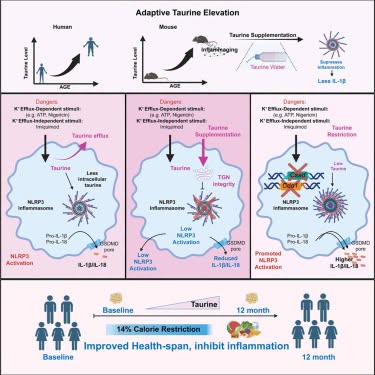
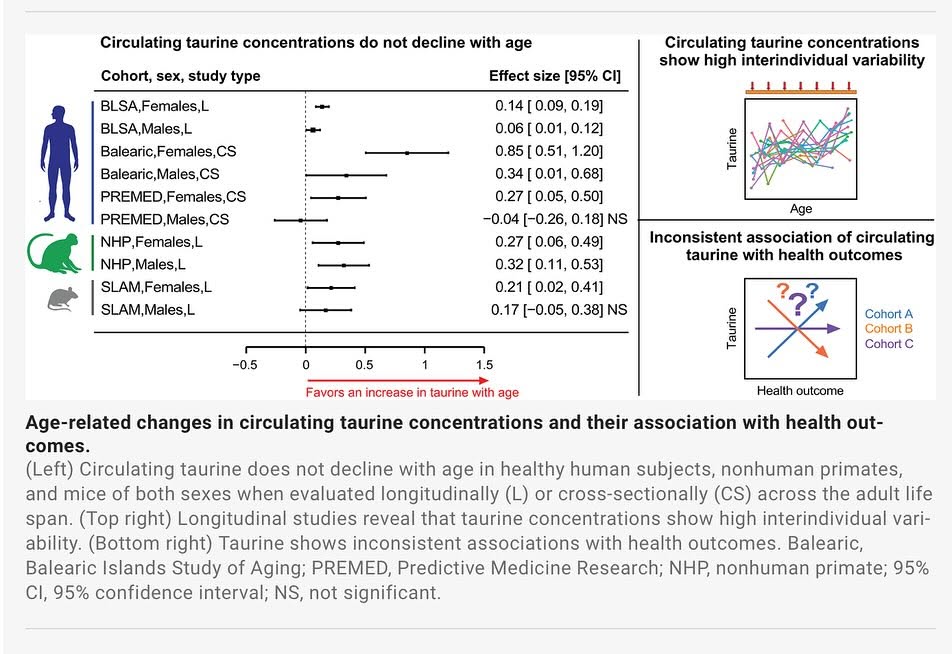
This study at Columbia University on the amino acid taurine and its effects on the aging process in worms, mice, monkeys, and humans, attracted a large amount of attention this past summer (2023).

Yet many people here are probably not aware of it.

Given that taurine also has beneficial effects on the heart and cardiovascular system, this study is very relevant to the group.

Age is by far the biggest causal risk factor for heart disease. Interventions that target the aging process of the cardiovascular system itself are the future of cardiology. The research is still in its infancy, but taurine might be one of those interventions. Emphasis on might. Most importantly, it appears to be reasonably safe. (It is naturally produced by the human body and found in food.)
#taurineHD #columbiaHD #agingHD #monkeysHD #miceHD

ColumbiaDoctorsTaurine and Aging: Can It Extend Lifespan?Columbia researchers have identified taurine deficiency as a key driver of aging in animals. They explain how taurine could affect again in humans.columbiadoctors.org

Research cited

← newer: Coffee consumption is associated with about 25% lower heart older: Ultra-processed foods tied to about 50% higher CVD death ris →