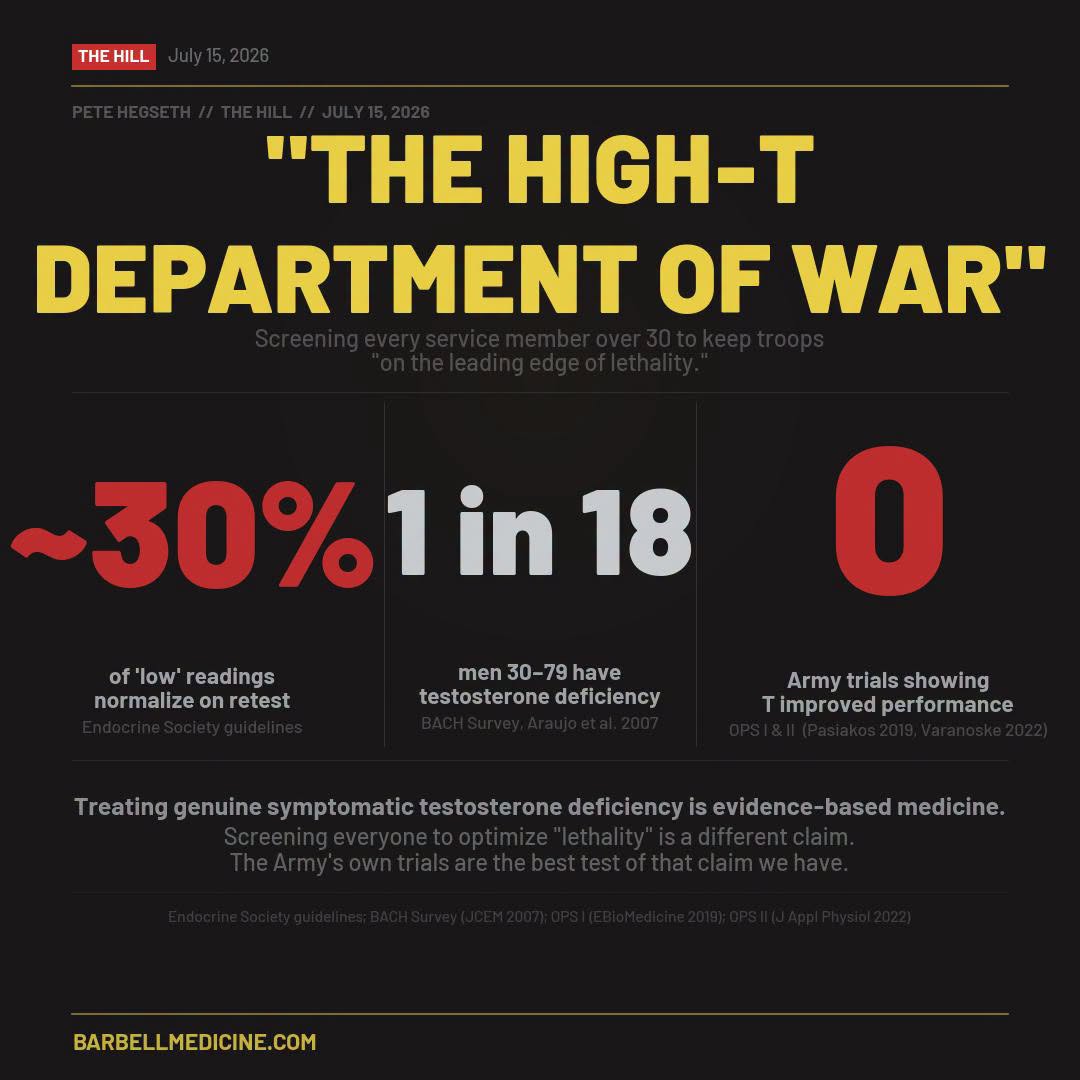
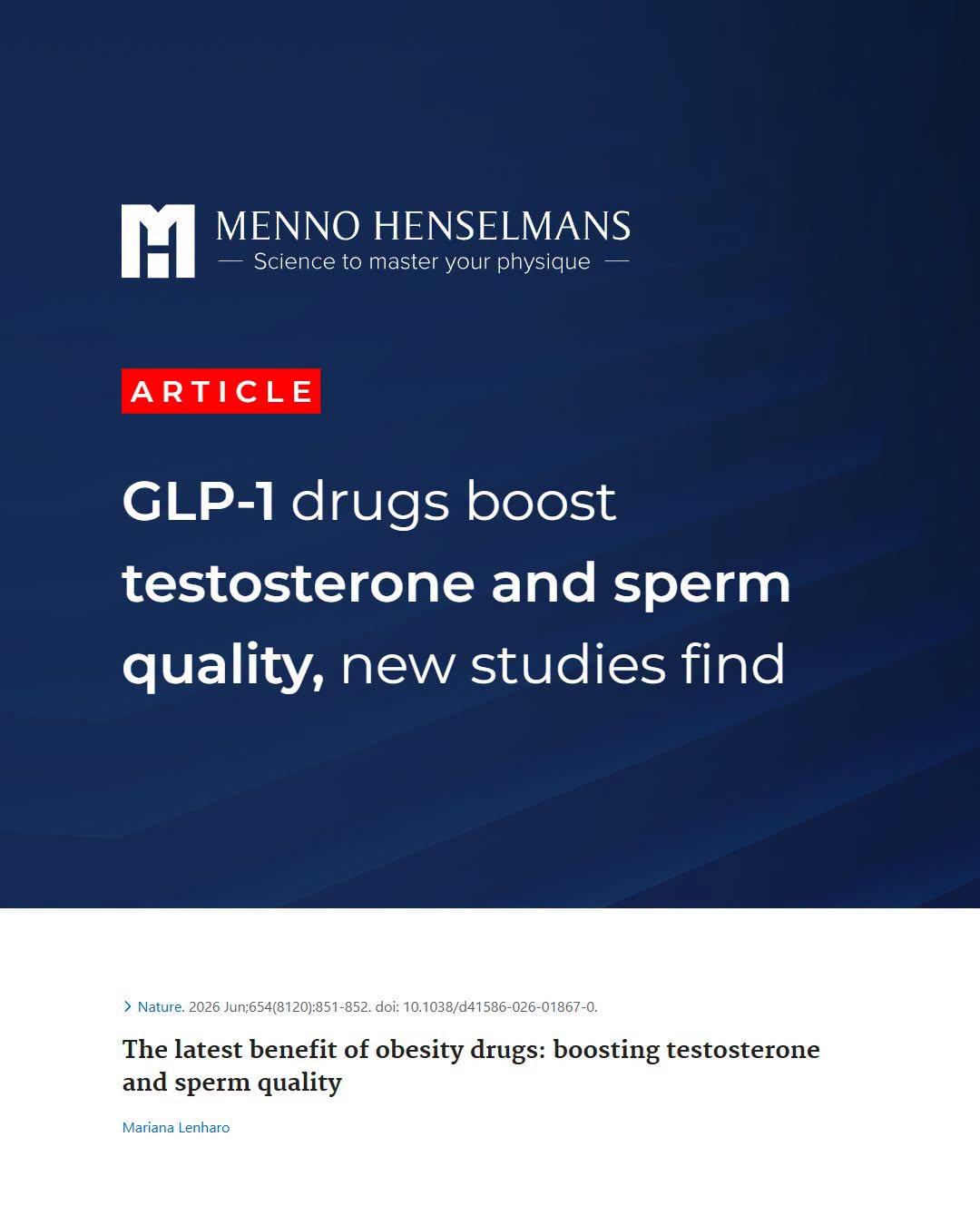
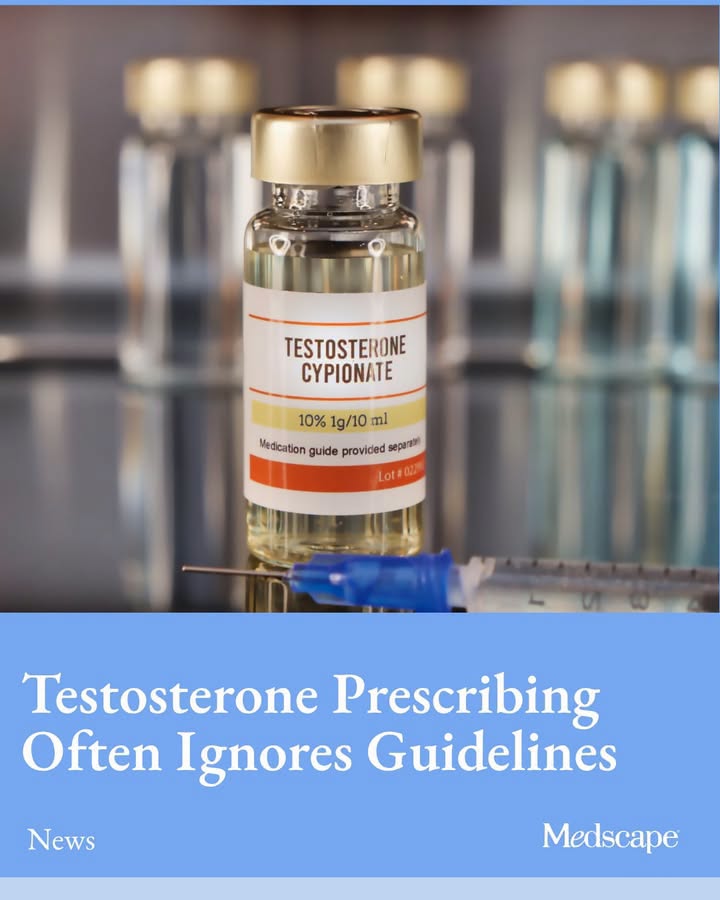
Beware of “doctors” who prescribe testosterone for “anti-aging”. The only proven benefit of testosterone therapy is to treat clinically diagnosed hypogonadism. No credible study has ever demonstrated any longevity benefit to testosterone therapy beyond treating hypogonadism, in humans or in any other mammal.
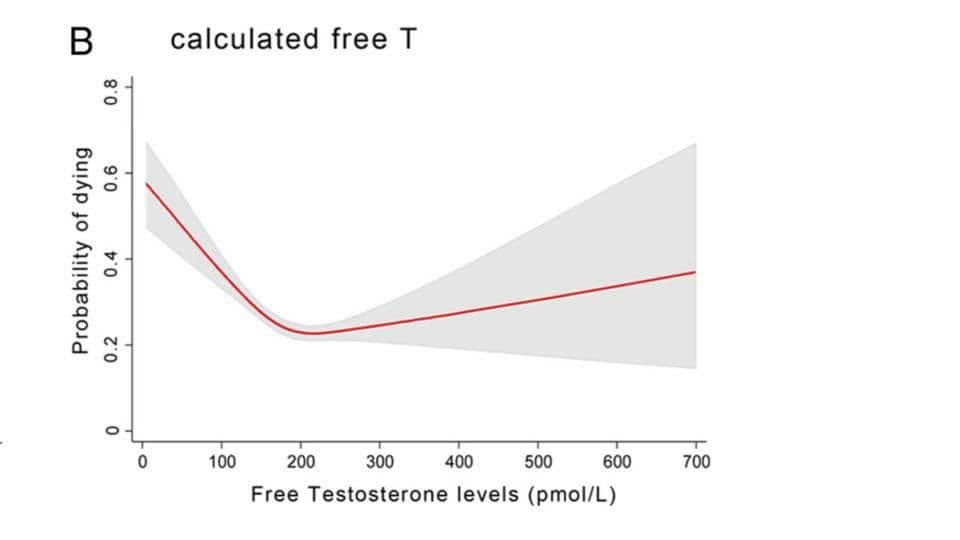
Serum testosterone concentration seems to show an inverse U-shaped relationship with human longevity in older men. Levels that are too high are associated with increased mortality, particularly from heart disease.
This data comes from 3690 men ages 70 to 92.
The optimal free testosterone is around 200 in that age range, and the probability of dying goes up linearly above that level.
Paper · The Journal of Clinical Endocrinology & Metabolism · 2014In Older Men an Optimal Plasma Testosterone Is Associated With Reduced All-Cause Mortality and Higher Dihydrotestosterone With Reduced Ischemic Heart Disease Mortality, While Estradiol Levels Do Not Predict Mortalityresearch-repository.uwa.edu.auTestosterone (and other androgens) shorten lifespan of mice, by a lot
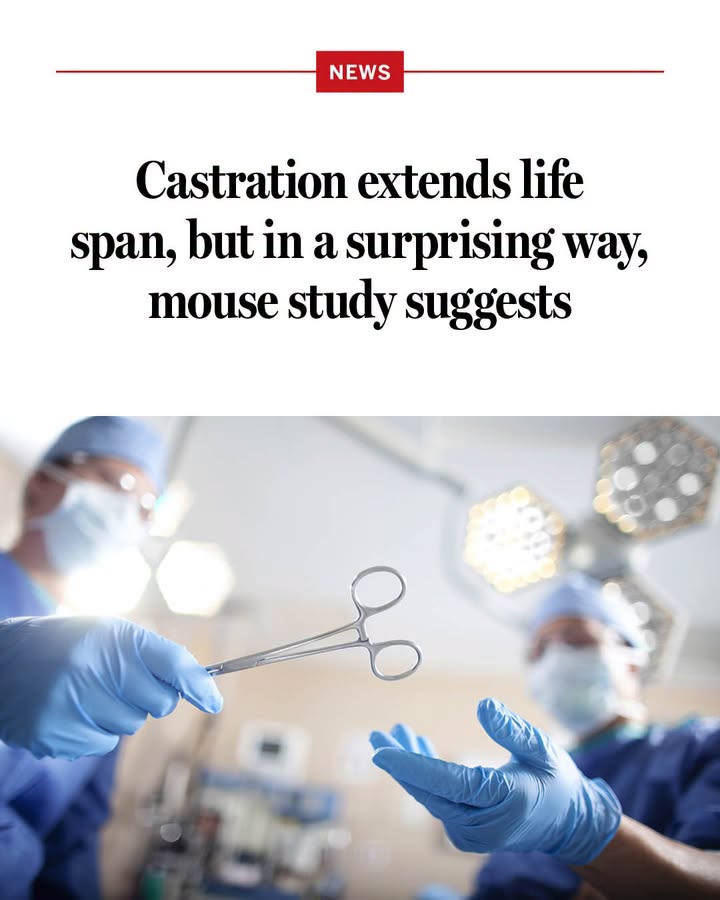
Paper · Med Sci Sports Exerc · 1997Exposure to anabolic-androgenic steroids shortens life span of male mice.Adult male laboratory mice were exposed for 6 months to a combination of four anabolic-androgenic steroids of the kinds and at the relative levels to which human athletes and body builders expose themselves. The four steroids included testosterone, two 17-alkylated steroids, and an ester, and they were given at doses that totaled either 5 or 20 times normal androgenic maintenance levels for mice. By the time the…pubmed.ncbi.nlm.nih.govCastration extends lifespan in both rodents and primates
Paper · GeroScience · 2023Castration reduces mortality and increases resilience in male mice: what is next?link.springer.com Paper · Aging Cell · 2023Prepubertal castration eliminates sex differences in lifespan and growth trajectories in genetically heterogeneous miceSex differences in aging and longevity have been widely observed, with females consistently outliving males across human populations. However, the mechanisms driving these disparities remain poorly understood. In this study, we explored the influence of post‐pubertal testicular effects on sex differences in aging by prepubertally castrating genetically heterogeneous (UM‐HET3) mice, a unique mouse model that emulates…onlinelibrary.wiley.com Paper · J Reprod Fertil · 1967The effects of sex steroid hormones upon longevity in rats.pubmed.ncbi.nlm.nih.gov Paper · Am Nat · 2009Testosterone-mediated effects on fitness-related phenotypic traits and fitness.The physiological and behavioral mechanisms underlying life-history trade-offs are a continued source of debate. Testosterone (T) is one physiological factor proposed to mediate the trade-off between reproduction and survival. We use phenotypic engineering and multiple laboratory and field fitness-related phenotypic traits to test the effects of elevated T between two bank vole Myodes glareolus groups: dominant and…pubmed.ncbi.nlm.nih.gov PaperCell Press articlecell.com Paper · Am J Primatol · 2016Long-term effects of castration on the skeleton of male rhesus monkeys (Macaca mulatta).While osteopenia (OPE) and osteoporosis (OPO) have been studied in various species of aging nonhuman primates and extensively in ovariectomized rhesus and cynomolgus macaques, there is virtually no information on the effects of castration on the skeleton of male nonhuman primates. Most information on castrated male primates comes from a few studies on the skeletons of eunuchs. This report used a subset of the…ncbi.nlm.nih.govDifferences in testosterone and other androgen levels may (at least partially) explain why female mammals consistently live longer than males.
Paper · Annals of the New York Academy of Sciences · 2017Life history evolution, reproduction, and the origins of sex‐dependent aging and longevityMales and females in many species differ in how they age and how long they live. These differences have motivated much research, concerning both their evolution and the underlying mechanisms that cause them. We review how differences in male and female life histories have evolved to shape patterns of aging and some of the mechanisms and pathways involved. We pay particular attention to three areas where considerable…nyaspubs.onlinelibrary.wiley.com