Dietary intake of total, animal, and plant proteins and risk of all cause, cardiovascular, and cancer mortality: A systematic review
Willett et al, BMJ 2020
TL; DR
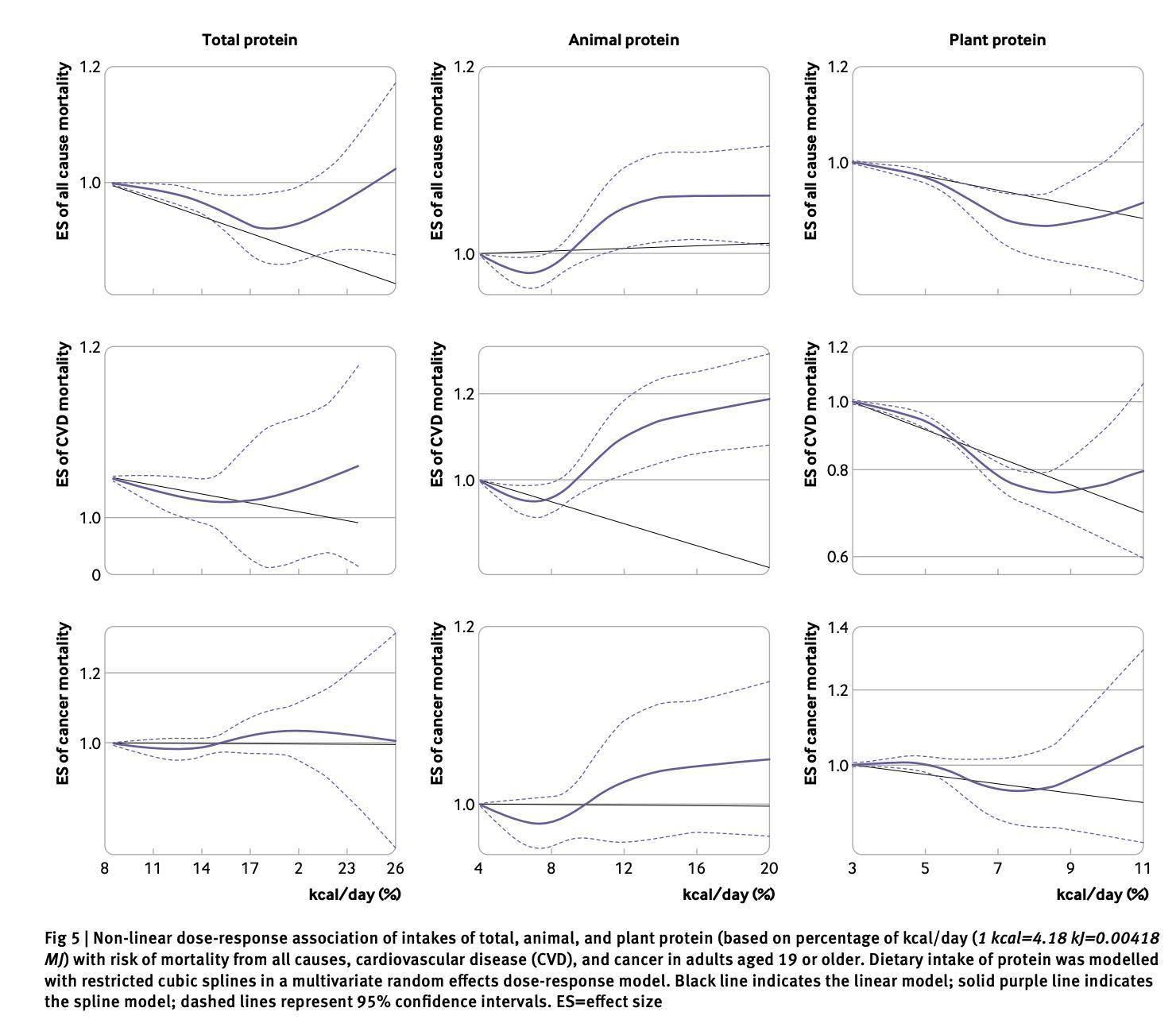
- The correlations between protein intake and mortality / CVD are very weak.
- Overall, the higher the protein macros, the lower the mortality in this meta-analysis --- but plant protein is more strongly associated with improved outcomes.
- The risk increase from animal protein is minuscule for up to 20% of calories.
Results: 32 prospective cohort studies were included in the systematic review and 31 in the meta-analysis. During the follow-up period of 3.5 to 32 years, 113 039 deaths (16 429 from cardiovascular disease and 22 303 from cancer) occurred among 715 128 participants. Intake of total protein was associated with a lower risk of all cause mortality (pooled effect size 0.94, 95% confidence interval 0.89 to 0.99, I2=58.4%, P<0.001). Intake of plant protein was significantly associated with a lower risk of all cause mortality (pooled effect size 0.92, 95% confidence interval 0.87 to 0.97, I2=57.5%, P=0.003) and cardiovascular disease mortality (pooled hazard ratio 0.88, 95% confidence interval 0.80 to 0.96, I2=63.7%, P=0.001), but not with cancer mortality. Intake of total and animal protein was not significantly associated with risk of cardiovascular disease and cancer mortality. A dose-response analysis showed a significant inverse dose-response association between intake of plant protein and all cause mortality (P=0.05 for non-linearity). An additional 3% energy from plant proteins a day was associated with a 5% lower risk of death from all causes.
Conclusions: Higher intake of total protein was associated with a lower risk of all cause mortality, and intake of plant protein was associated with a lower risk of all cause and cardiovascular disease mortality. Replacement of foods high in animal protein with plant protein sources could be associated with longevity.
PaperThe BMJ articlebmj.com