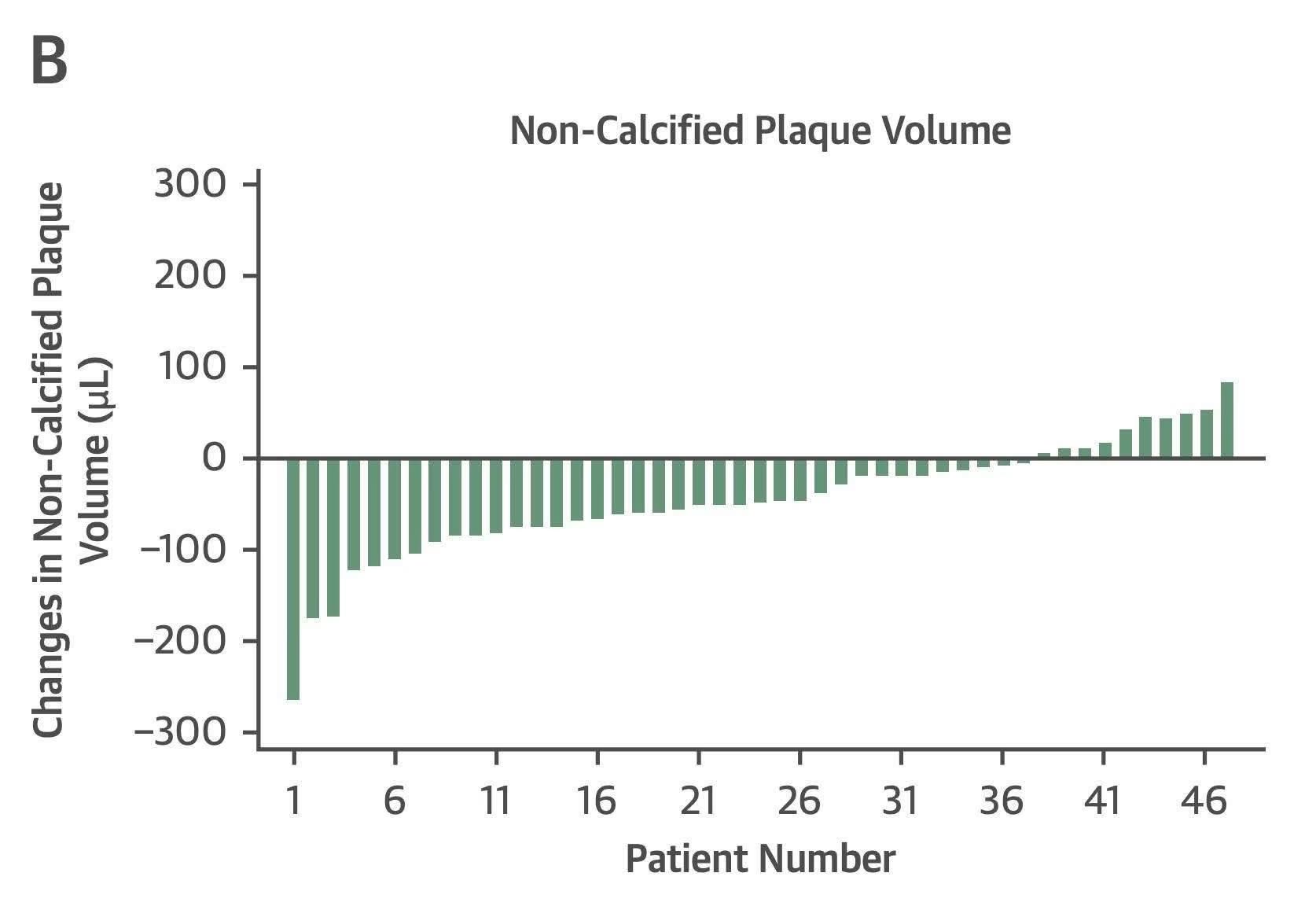
Let's look at the changes in non-calcified plaque volume (NCPV) in the recent Keto-CTA (LMHR) trial.
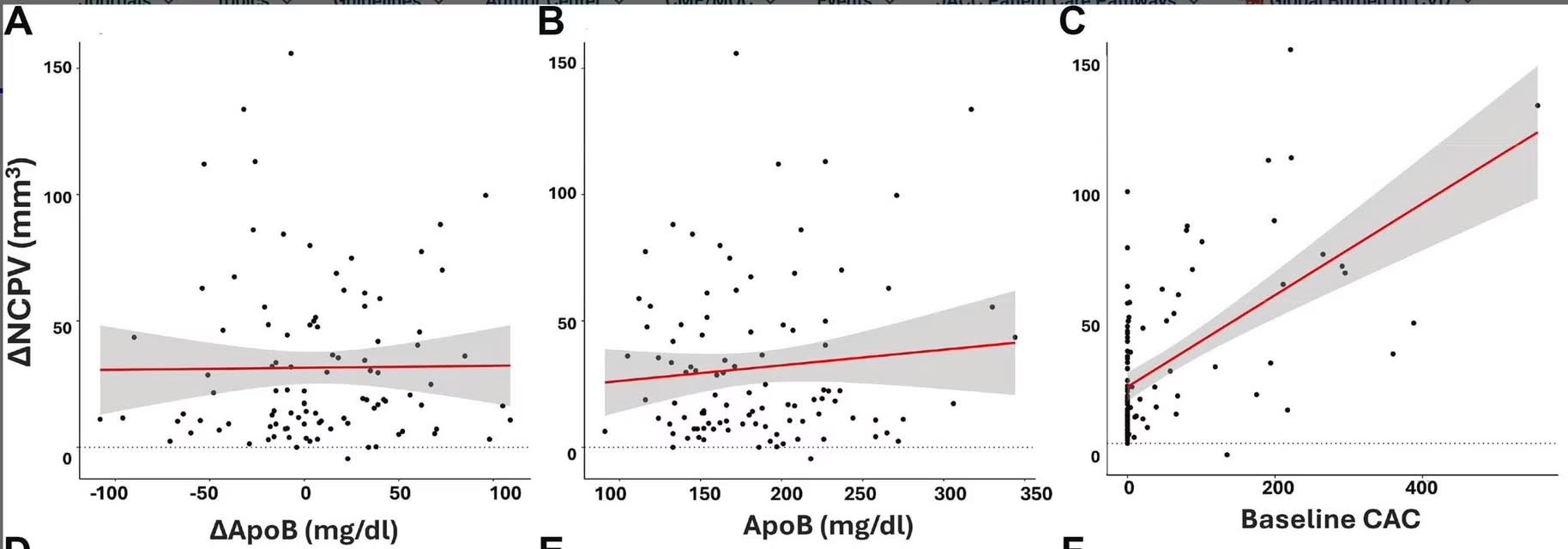
In the first image, we see the changes in NCPV in the keto trial among people with an average LDL of 254 mg/dL. Overall, we see significant increases. The higher the baseline plaque volume level, the greater the increase in non-calcified plaque volume. All participants saw plaque progression or neutral.
For comparison, we have a recent study by the same principal investigator Matthew Budoff. In the second image we see changes in the same parameter (non-calcified plaque volume) in people with additional risk factors for atherosclerosis such as hypertension (53%) and diabetes (21%) and with a high baseline level of non-calcified plaque volume.
These people had their LDL levels intensively lowered with the PCSK9 inhibitor Repatha to around 30 mg/dl. Most participants saw major plaque regression.
In this comparison, the keto trial results look bad.
The lean metabolically-healthy group on keto with very high LDL shows significant plaque progression, despite having low plaque volume to begin with.
The hypertensive overweight metabolically-unhealthy group with very low LDL shows significant plaque regression, despite having high plaque volume to begin with.
Access link to Matthew Budoff second study:
PaperScienceDirect articlesciencedirect.com↪ Repatha for 18 months reduced non-calcified plaque on CT angiography in a 47-patient study
(This post is from the LMHR group on Facebook. I edited it to provide context.)
Reference for LMHR study:
Paper · JACC: Advances · 2025RETRACTED: Longitudinal Data From the KETO-CTA Studyjacc.orgNote that NCPV can be measured in either units of uL or units of mm^3. These are the same thing. One cubic millimeter (1 mm^3) is exactly the same volume as one microliter (1 uL). Keep this in mind when comparing different studies to one another.
#ketoctaHD #lmhrHD #ncpvHD #budoffHD #ketoctasummaryHD #reverseHD #pcsk9reverseHD #repathaHD