I am very disappointed by the results of the LMHR prospective cohort study.
Total plaque volume increased by 0.8% on average in this study after one year.
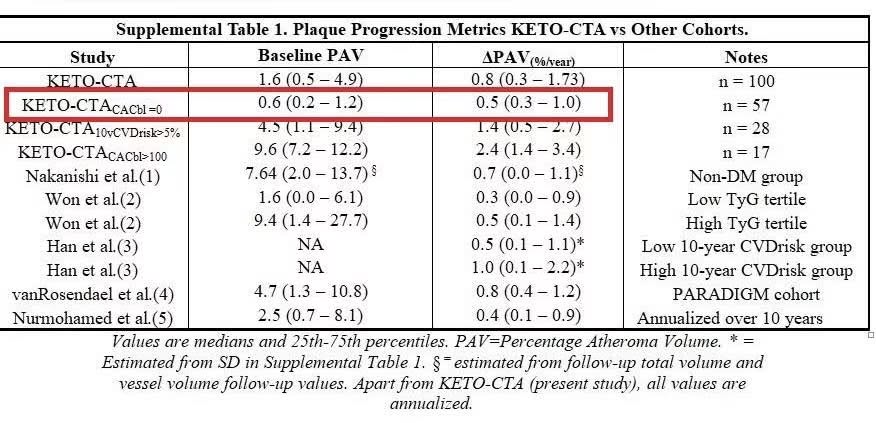
See the table from the supplemental material in the paper, with the LMHR results circled in yellow. I included it below.
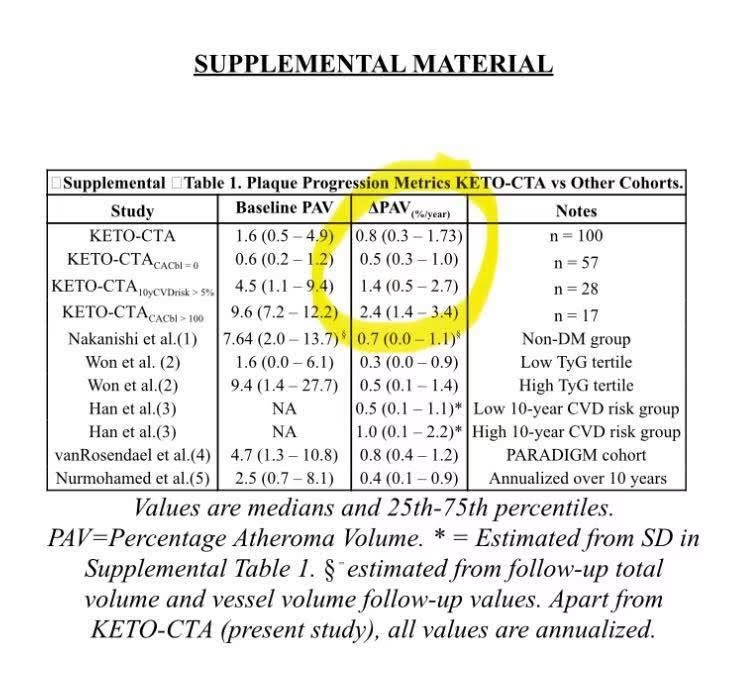
This 0.8% progression is not good. This is considerably worse than the average plaque progression of a typical American, meaning someone who is significantly overweight, sedentary, and eats a standard American diet.
We know that 20% of people in the USA will have a heart attack in their lifetime, so being worse than the typical plaque progression of the average American is not a good thing.
The table in the supplemental material of the paper shows multiple other studies involving typical westerners who were overweight, sedentary, and ate the SAD diet, who showed progressions in total plaque volume less than 0.8% per year. Take a look at the table. The LMHR progression is worse.
If you look only at people with CAC scores over 100 at baseline in the LMHR study, they saw plaque volume increase by a whopping 2.4% in one year on the keto diet!
This is 3x worse than the average person in the study (which is already bad). This is scary. Again look at the progressions in the other studies on the table. They are much less than this.
If you look only at people with 10 year risk greater than 5% on the standard AHA calculator, they saw an increase in plaque volume of 1.4% in one year on keto, regardless of their CAC score at baseline.
This is 2x worse than the average person in the study. Again, see the table for comparison to other studies.
As many here know, the LMHR people in this study were all lean and metabolically healthy with very few risk factors for heart disease, except very high LDL. The LMHR people were very physically active and health-conscious. Most took supplements commonly thought to be “heart healthy” like vitamin K2, vitamin D, magnesium, fish oil, etc. Many engaged in intermittent fasting and other trendy health practices, in addition to keto. None had ever been officially diagnosed as having heart disease.
Despite all this, these people had considerably worse plaque progression than average Americans who are significantly overweight, sedentary, and just eating the standard American diet. And when you look separately at LMHR people with CAC > 100 or 10 year risk > 5% the progression is 3x and 2x worse than the average person in the study.
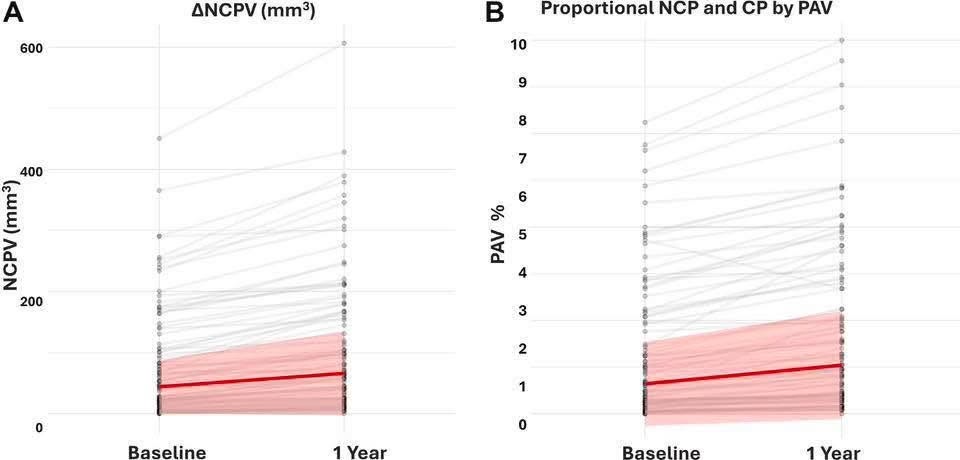
I also included the figure from the paper showing plaque progression in each of the 100 people in the trial.
Most people with plaque at baseline showed significant progression. The ones that progressed the most were the ones with the most plaque to start. So people with atherosclerosis are seeing very significant progression in this study.
The only people who did not progress are the ones with near-zero plaque to start. In other words, the people with zero atherosclerosis.
This raises serious questions about the safety of the keto diet for anyone who is LMHR with existing atherosclerosis.
There is no case of plaque regression in this figure, as measured by NCPV. Not a single person saw any plaque regression, as measured by NCPV. This is disappointing.
Paper · JACC: Advances · 2025RETRACTED: Longitudinal Data From the KETO-CTA Studyjacc.org