The Keto-CTA (LMHR) study directly tested the hypothesis that good metabolic health and large LDL particle size protect against very high ApoB and very high LDL.
It failed to show any protection.
Lean metabolically healthy people with very low TG/HDL and large LDL particle size saw rapid plaque progression in this study. These people had an average LDL of 254 mg/dL.
Their plaque progression was 3x worse than a comparable group of normal people eating the standard American diet with considerably worse metabolic health, but with normal LDL (the Nature-CT study).
You can read past posts on this study by clicking the tag #ketoctasummaryHD.
You can read past posts on LDL particle size by clicking the tag #particlesizeHD.
#tghdlratioHD #triglyceridesHD #hdlHD #apobHD #ldlHD
I copied this post from the LMHR group.
It is referring to the Keto-CTA study, which tested the effects of a keto diet on arterial plaque in a cohort of lean metabolically-healthy individuals with very high LDL and low TG/HDL (LMHR).
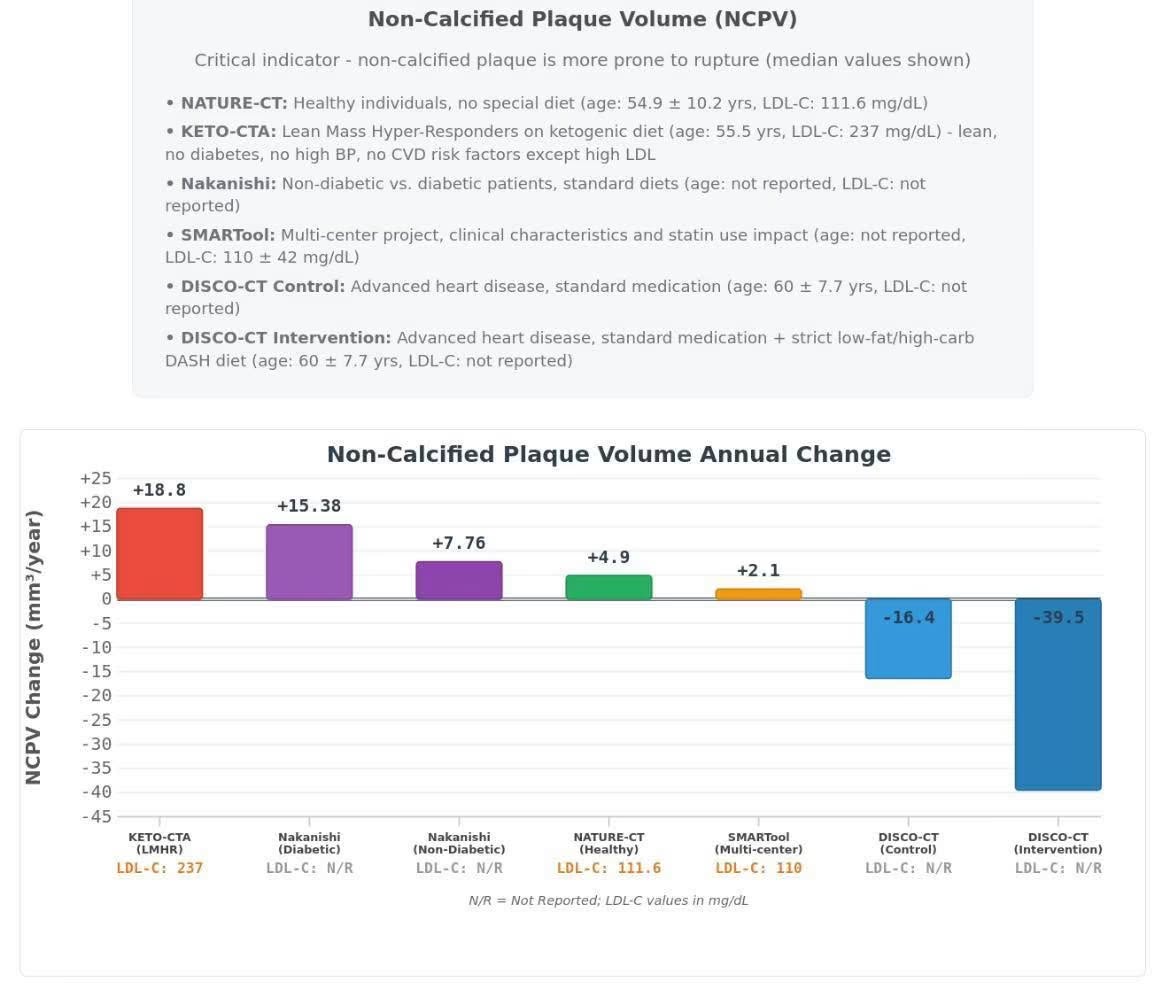
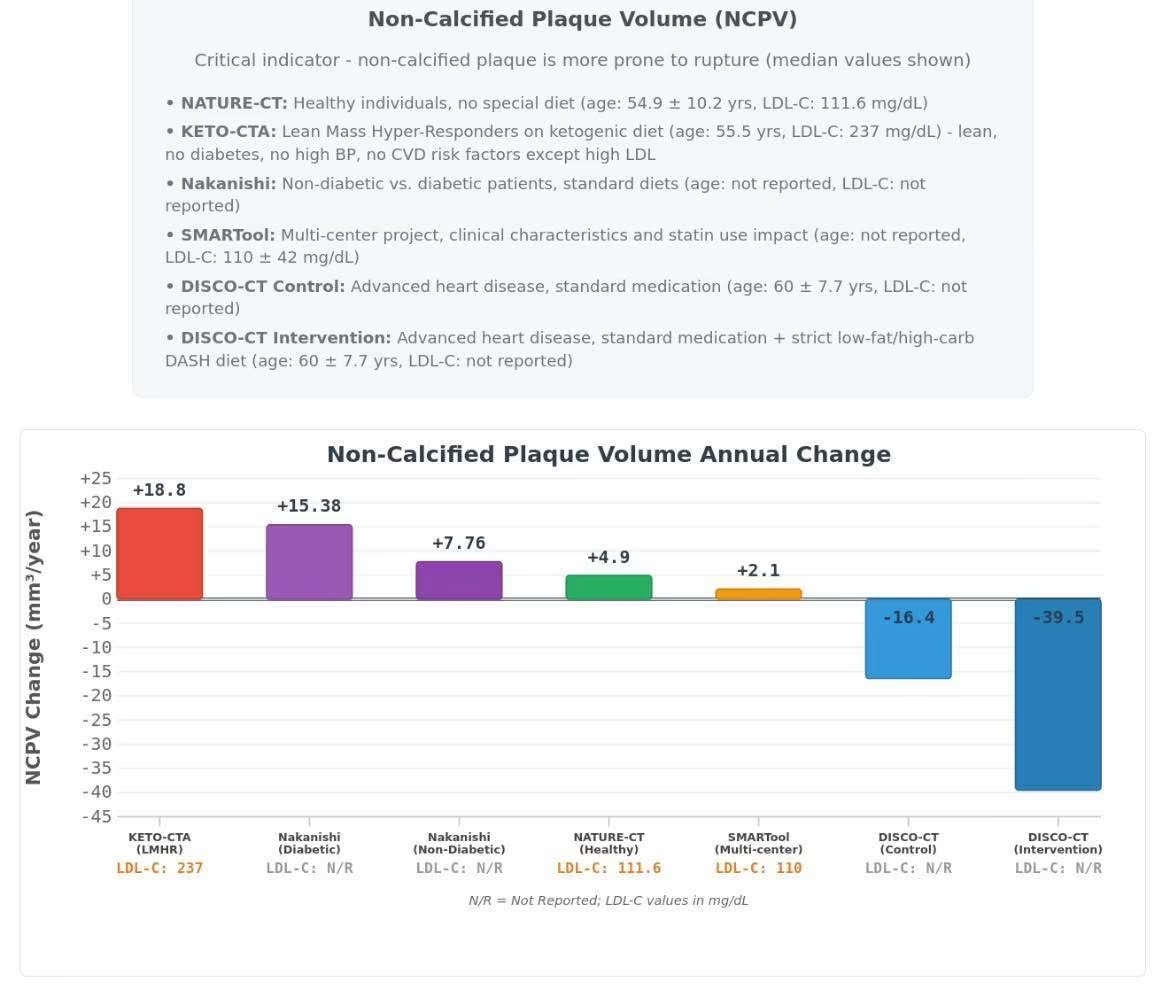
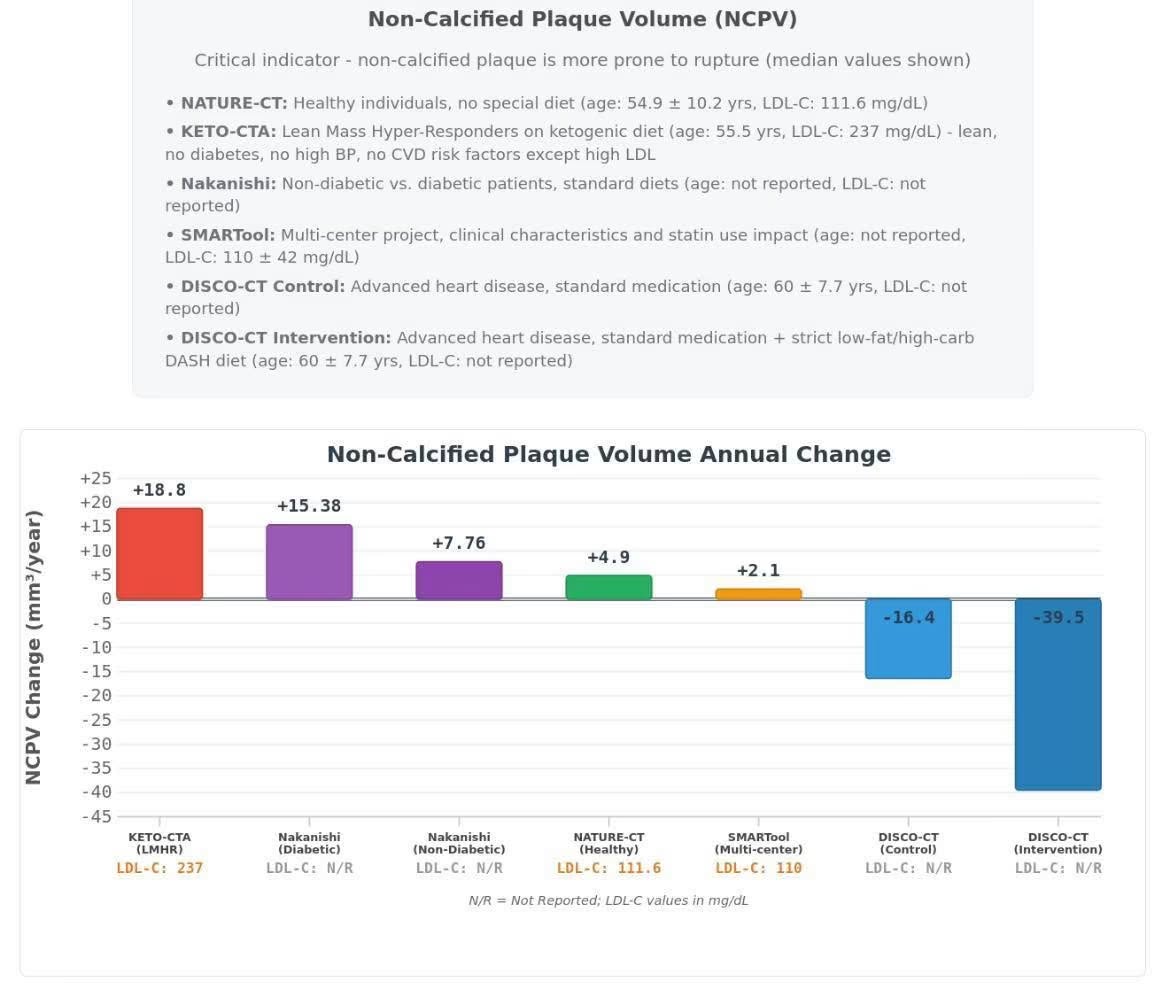
It compares plaque progression (NCPV) in the Keto-CTA study to multiple other studies.
The best results came from the intervention group in the DISCO study. This group showed significant plaque REVERSAL after one year, using statins, other medications, and a DASH diet very similar to the traditional mediterranean diet. See graph in photo.
The Keto-CTA group saw significant plaque progression.
Here are the studies being compared in the graph in the photo:
- NATURE-CT: Healthy individuals, no special diet (age: 54.9 ‡ 10.2 yrs, LDL-C: 111.6 mg/dL)
- KETO-CTA: Lean Mass Hyper-Responders on ketogenic diet (age: 55.5 yrs, LDL-C: 237 mg/dL) - lean, no diabetes, no high BP, no CVD risk factors except high LDL
- Nakanishi: Non-diabetic vs. diabetic patients, standard diets (age: not reported, LDL-C: not reported)
- SMARTool: Multi-center project, clinical characteristics and statin use impact (age: not reported, LDL-C: 110 ‡ 42 mg/dL)
- DISCO-CT Control: Advanced heart disease, standard medication (age: 60 ‡ 7.7 yrs, LDL-C: not reported)
- DISCO-CT Intervention: Advanced heart disease, standard medication + strict DASH diet (age: 60 ‡ 7.7 yrs, LDL-C: not reported)
Original post:
facebook.com/share/p/15dkw5QgJo
Quoted:
Comparison of study results using CT angiogram to determine rate of soft plaque progression / regression. Note the DISCO group already had advanced heart disease, and KETO-CTA was a healthy cohort (no hypertension, obesity, diabetes etc).
Sources:
KETO-CTA:
Paper · JACC: Advances · 2025RETRACTED: Longitudinal Data From the KETO-CTA Studyjacc.org
KETO-CTA addendum:
Paper · JACC Adv · 2025Reply: The Keto CTA Study.pmc.ncbi.nlm.nih.gov
Nakanishi:
Paper · Atherosclerosis · 2016Plaque progression assessed by a novel semi-automated quantitative plaque software on coronary computed tomography angiography between diabetes and non-diabetes patients: A propensity-score matching study.Conclusion: The current study among matched patients indicates diabetes is associated with a greater plaque progression. Our results show the need for strict adherence of diabetic patients to the current preventive guidelines.pubmed.ncbi.nlm.nih.gov
NATURE-CT:
Paper · Circulation · 2024Abstract 4139340: Atherosclerotic Plaque Progresses Over Time in Healthy Individuals Without MACE, Risk Factors, or InterventionsIntroduction: Studies on the natural history of coronary artery disease have traditionally evaluated the progression of the disease in the presence of MACE, risk factors or risk modifying interventions including pharmacological and non-pharmacological treatment. It is not known how atherosclerotic plaque progresses over the time in the absence of MACE, risk factors or risk modifying interventions. Aim: To evaluate…ahajournals.org
SMARTool:
Paper · Circ Cardiovasc Imaging · 2020Impact of Clinical Characteristics and Statins on Coronary Plaque Progression by Serial Computed Tomography Angiography.Background Progression of coronary artery disease using serial coronary computed tomography angiography (CTA) is of clinical interest. Our primary aim was to prospectively assess the impact of clinical characteristics and statin use on quantitatively assessed coronary plaque progression in a low-risk study population during long-term follow-up. Methods Patients who previously underwent coronary CTA for suspected…ahajournals.org
DISCO:
Paper · JACC: Cardiovascular Imaging · 2021High-Risk Coronary Plaque Regression After Intensive Lifestyle Intervention in Nonobstructive Coronary Diseasejacc.org
Source for chart:
reddit.comRedditreddit.com
#ketoctaHD #ketoctasummaryHD #naturectHD #ncpvHD #dashHD #mediterraneanHD