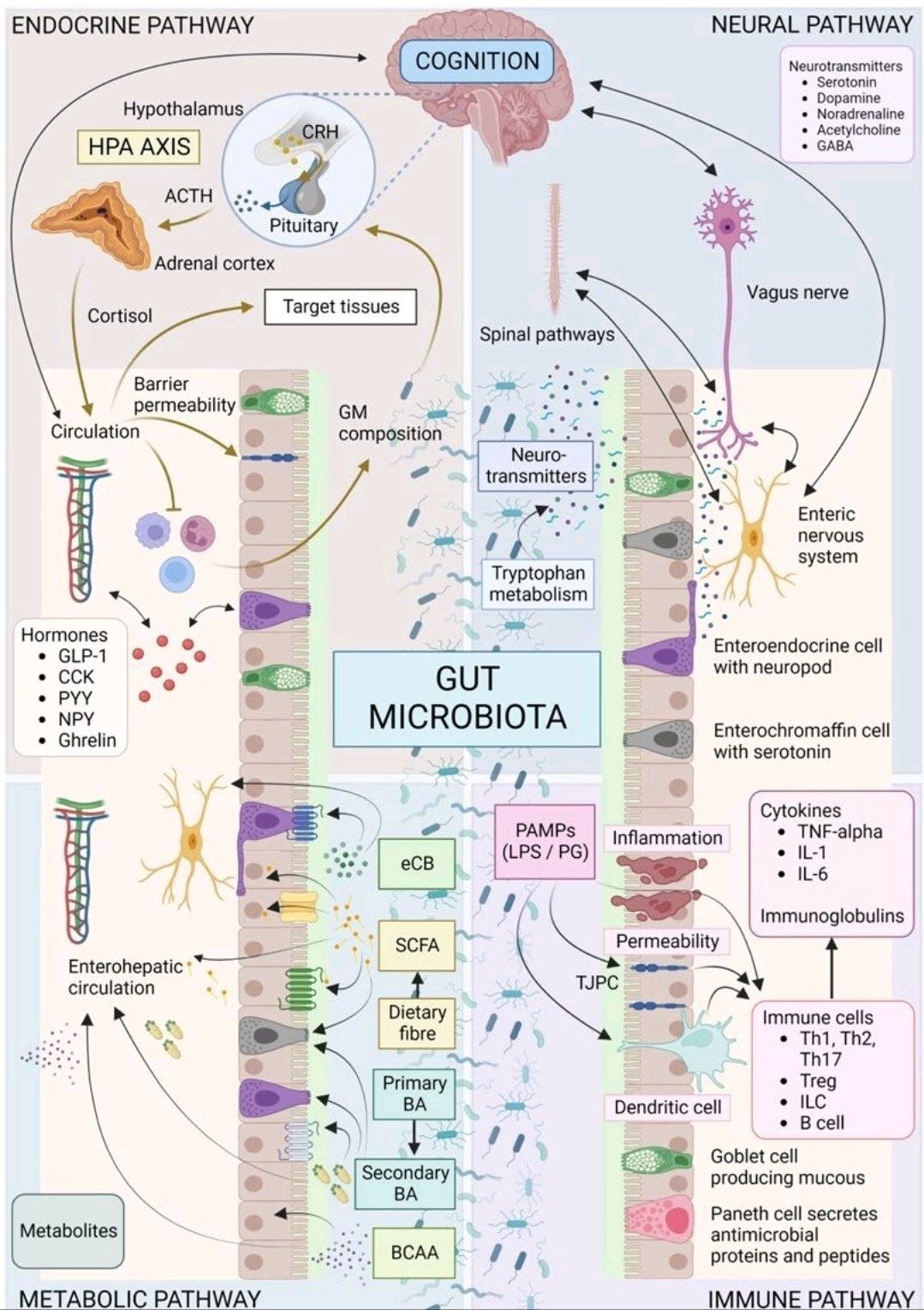
We now know that the gut and brain directly communicate with one another.
gut health = brain health
A shared infographic describes bidirectional gut-brain communication: vagus and enteric neural signaling, microbiota effects on the HPA axis and hormones such as GLP-1, immune cytokines, and metabolites like short-chain fatty acids. Louis adds that gut health is brain health.
We now know that the gut and brain directly communicate with one another.
gut health = brain health
The gut-brain axis is a bidirectional communication network between the gastrointestinal tract and the central nervous system. This dynamic system integrates neural, endocrine, immune, and metabolic signals, many of which are modulated by the gut microbiota.
🧠 1. Neural Pathway
The vagus nerve and enteric nervous system (ENS) transmit afferent signals from the gut to the brain. Microbial metabolites and host-derived neurotransmitters (e.g., serotonin, dopamine, GABA) influence mood, cognition, and stress responses. Enteroendocrine and enterochromaffin cells release neuroactive compounds in response to microbial cues.🧬 2. Endocrine Pathway
The gut microbiota modulates HPA axis activity through changes in gut barrier integrity, circulating metabolites, and stress hormones. Cortisol, released from the adrenal cortex, affects both systemic inflammation and brain function. Microbiota-regulated hormones such as GLP-1, CCK, and ghrelin further influence appetite, mood, and behavior.🦠 3. Immune Pathway
Microbial antigens (PAMPs) and metabolites interact with intestinal immune cells (e.g., Th1, Th17, dendritic cells), influencing systemic and neuroinflammatory tone. Elevated cytokines like TNF-α, IL-1, and IL-6 have been linked to blood-brain barrier disruption, depression, and cognitive impairment.🔁 4. Metabolic Pathway
The gut microbiota ferments dietary components (e.g., fiber, protein, bile acids) into signaling molecules including:-SCFAs (butyrate, propionate)
-Secondary bile acids
-Branched-chain amino acids (BCAAs)These metabolites affect energy regulation, neurotransmission, and epigenetic signaling within the CNS and peripheral tissues.
Louis shares two randomized trials of peanut butter. In 120 older adults at fall risk, 43 g/day for six months improved sit-to-stand speed and muscle power without changing weight; a separate 6-month trial in young adults (ARISTOTLE) found better memory and stress response.
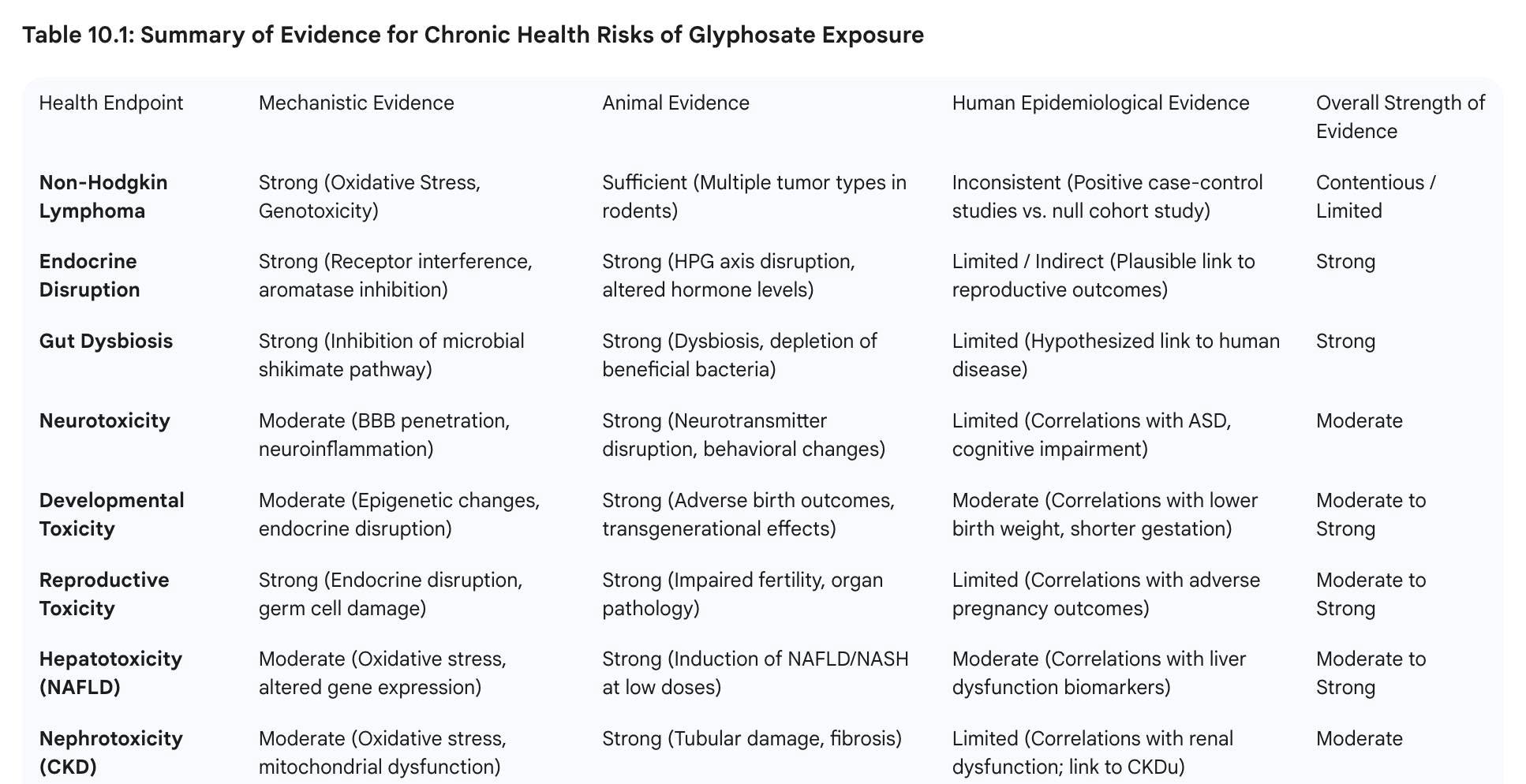
An advocacy-style essay arguing that glyphosate should be avoided. It cites the 2015 IARC classification as probably carcinogenic to humans, based on limited human evidence of non-Hodgkin lymphoma, sufficient animal evidence and strong mechanistic evidence. Not specific to heart disease.
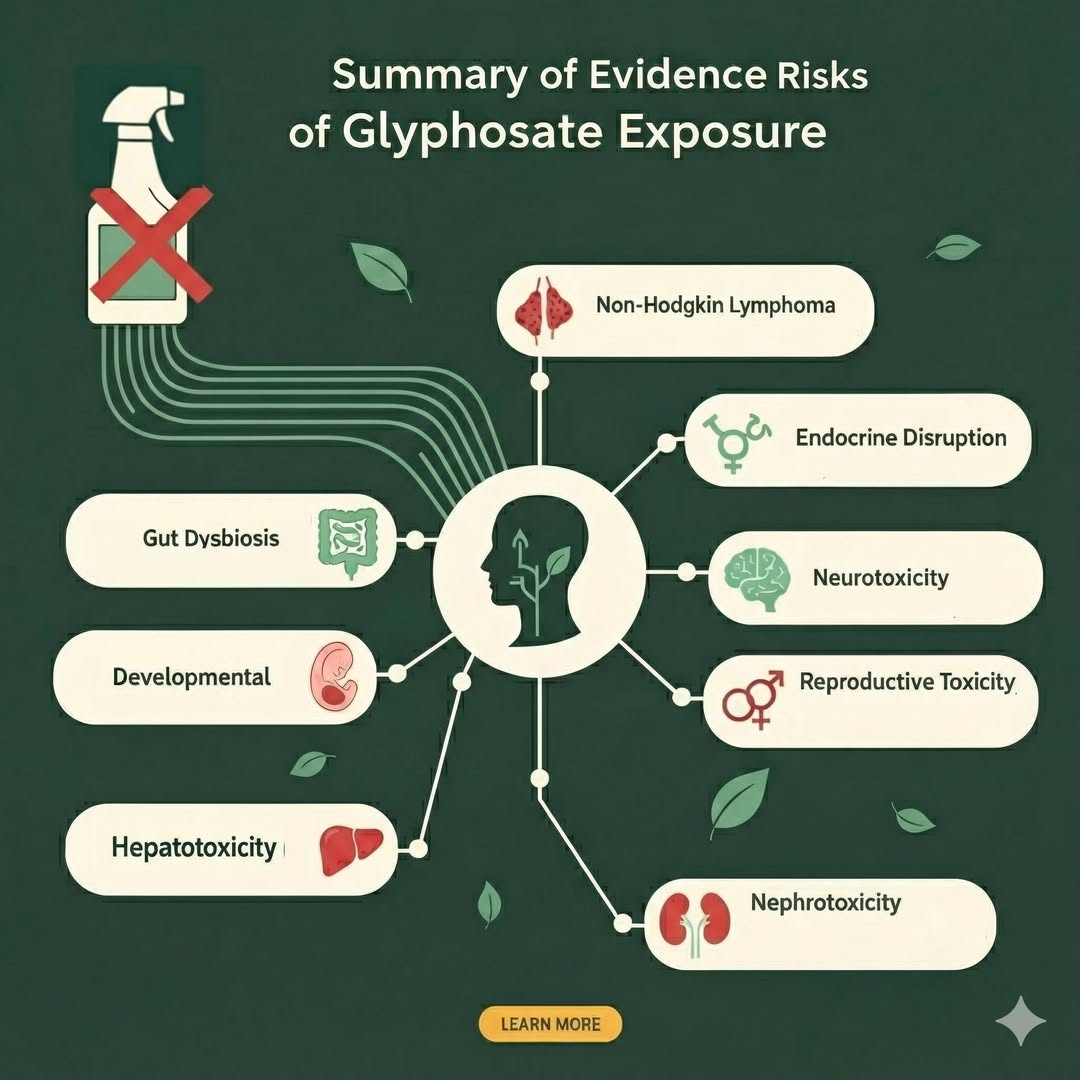
A comprehensive overview of glyphosate use and the regulatory split over its safety. Use rose about 15-fold after GM crops in 1996, and pre-harvest desiccation of oats, wheat and legumes explains high residues in some non-GM foods. IARC and other agencies reached different conclusions on cancer risk.
A review-style explainer on organic versus conventional food. It clarifies that the USDA Organic label certifies farming practices rather than health claims, and that organic farming still permits some pesticides. The core tension is a clear drop in pesticide exposure against more complex evidence for long-term health benefit.
A phase II trial in Science Advances found that the constipation drug lubiprostone (16 ug daily) preserved eGFR over 24 weeks versus decline on placebo. Surprisingly, it did not cut uremic toxins; instead it shifted the gut microbiome and raised spermidine. Kidney disease commonly accompanies heart disease.
A detailed explainer on ImP, a gut-microbial metabolite elevated in type 2 diabetes, atherosclerosis, heart failure, kidney disease and fatty liver. It is made from dietary histidine by specific bacteria in dysbiotic guts and is more tied to microbiome composition than to histidine intake, so a diverse, high-fiber microbiome is protective.