(no text — see the shared post below)
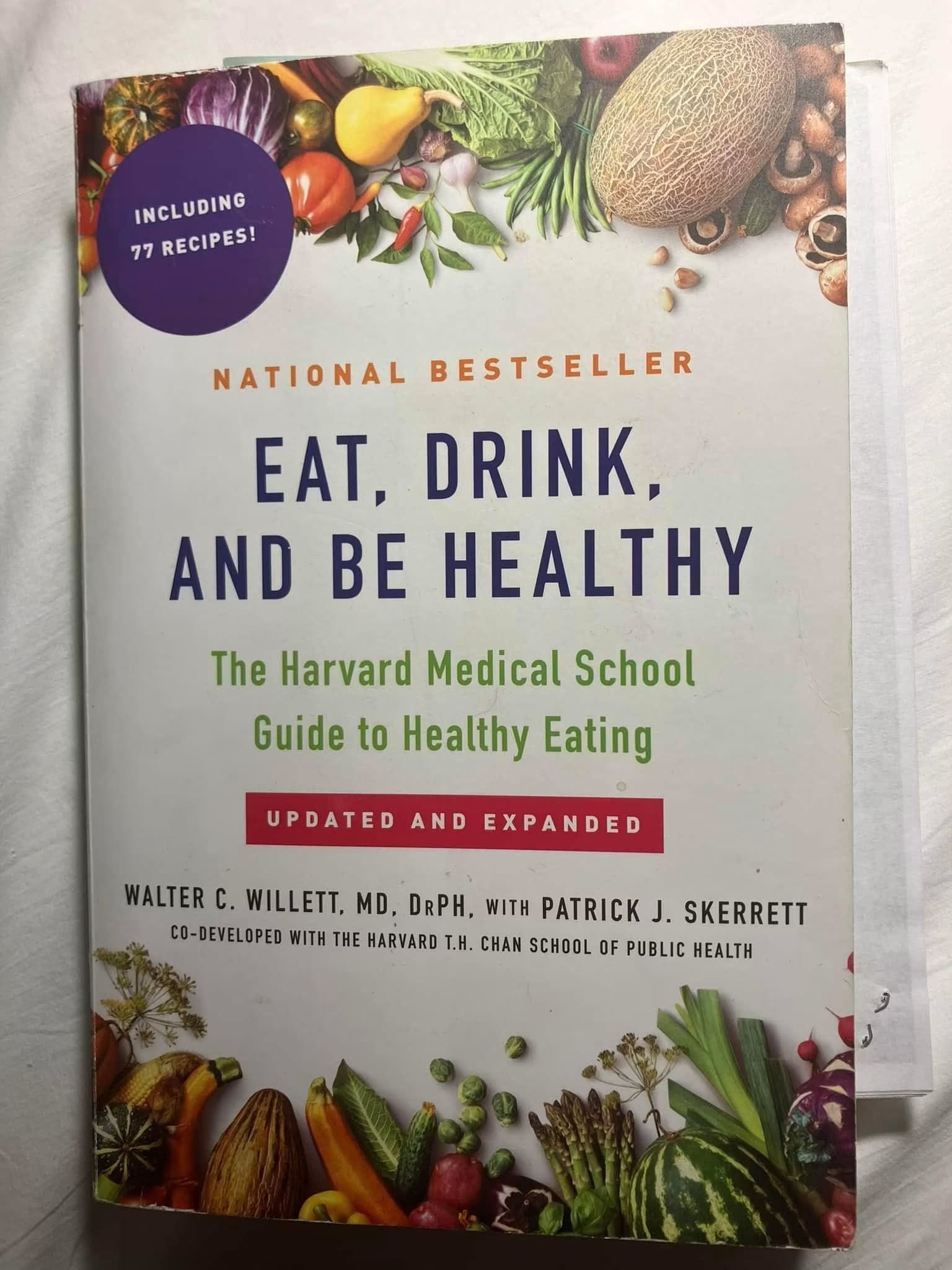
Walter Willett shares my concern that processed whey and other processed protein powders may increase the risk for cancer in the long term by dramatically raising levels of insulin/IGF1.
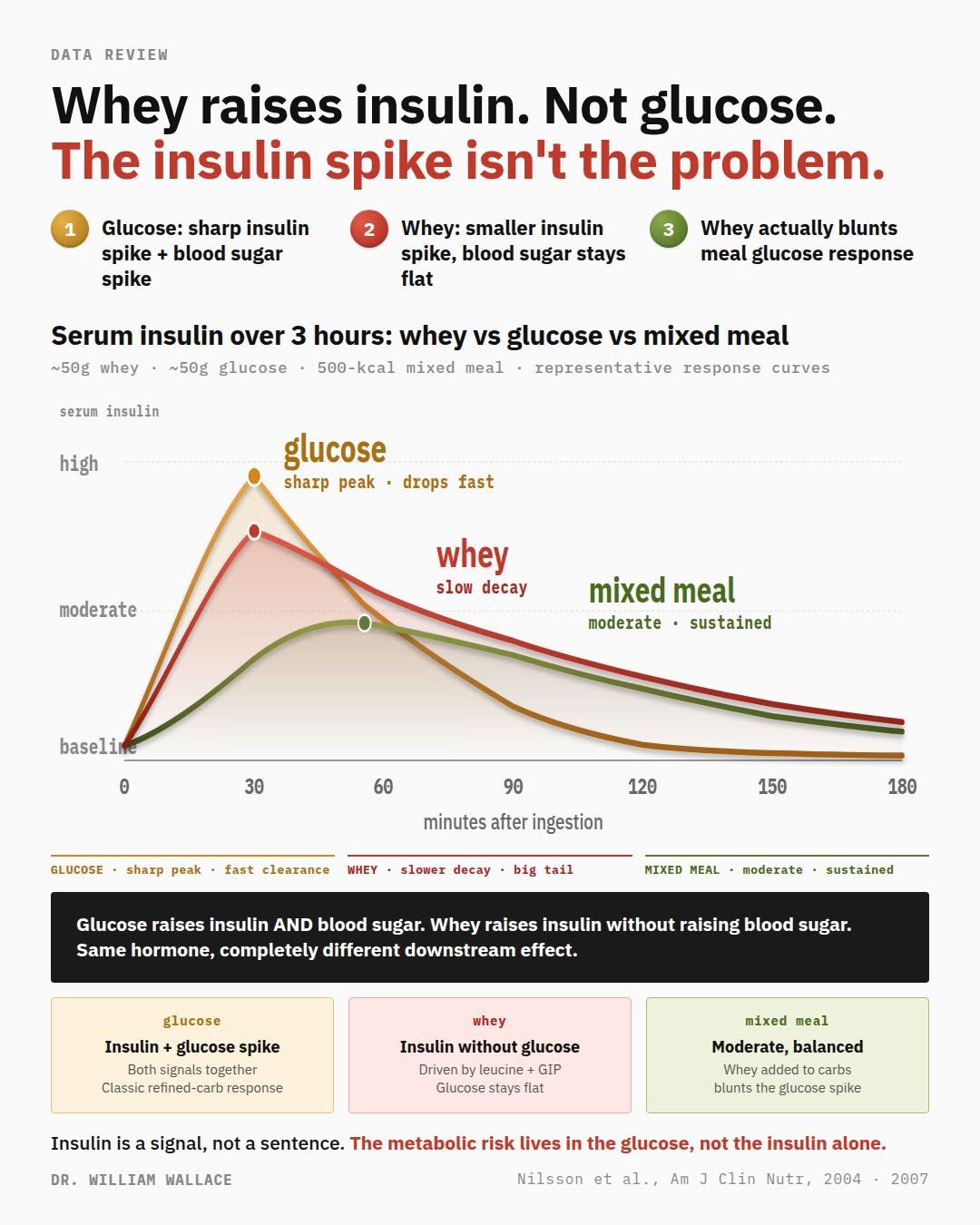
Whey protein powder has an extremely high insulin index. Calorie for calorie, it spikes insulin levels much more than even pure glucose or white bread:
↪ Whey protein raised insulin about twice as much as glucose or white bread per calorie
↪ Beef and whey raise insulin more than pasta, oatmeal or glucose: use the insulin index
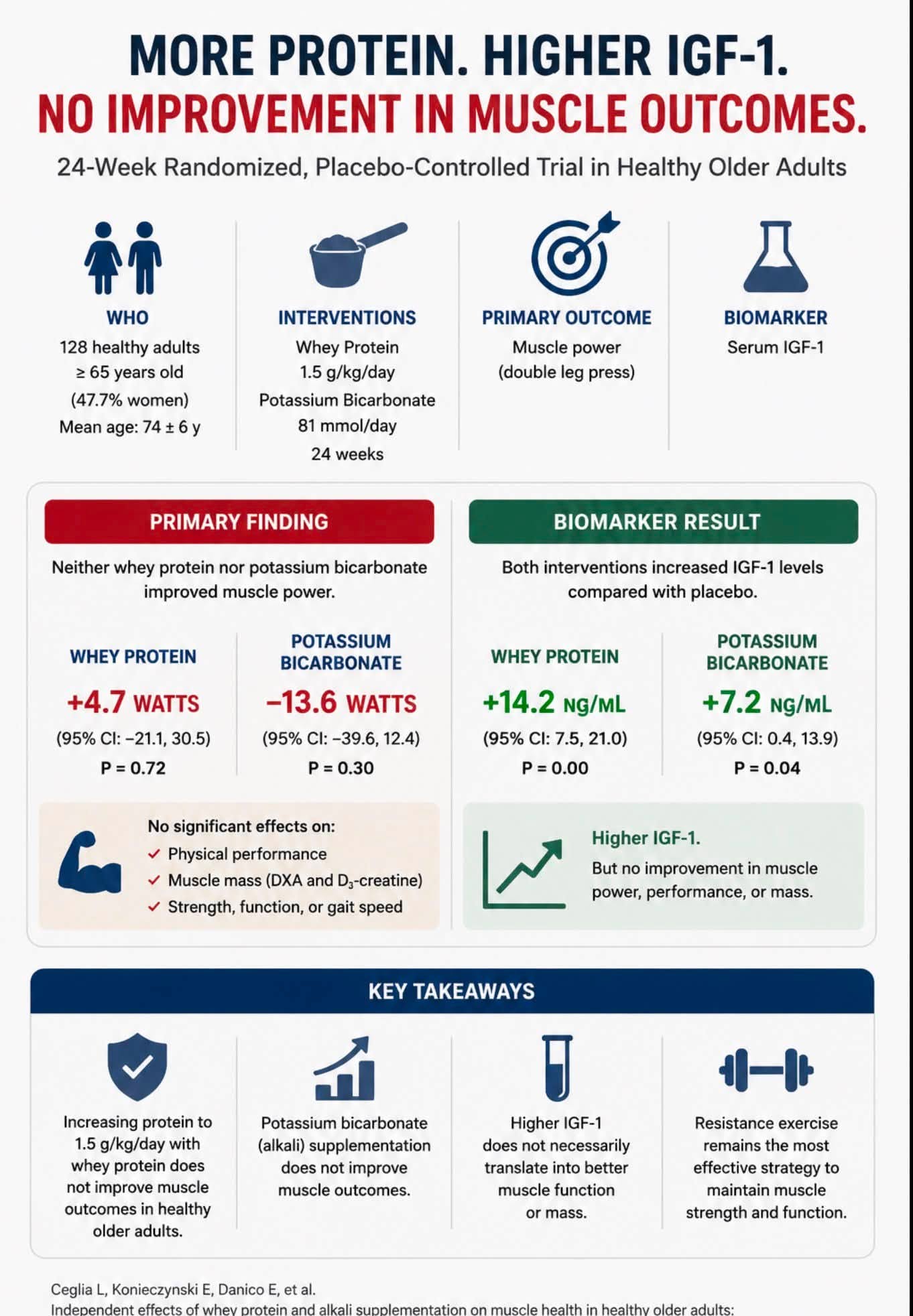
There is no food on the planet that raises insulin/IGF1 levels more than processed whey protein. It is probably the most insulinogenic food that we know of. This is why bodybuilders love it. Insulin and IGF1 directly promote growth. The problem is that they also promote growth of cancer cells.
It’s a big red flag when the most distinguished nutritional epidemiologist in the world is seriously worried about something like this.
There is a real possibility that this processed protein shake craze may be causing more harm than good in the long term. People should at least be aware of this.
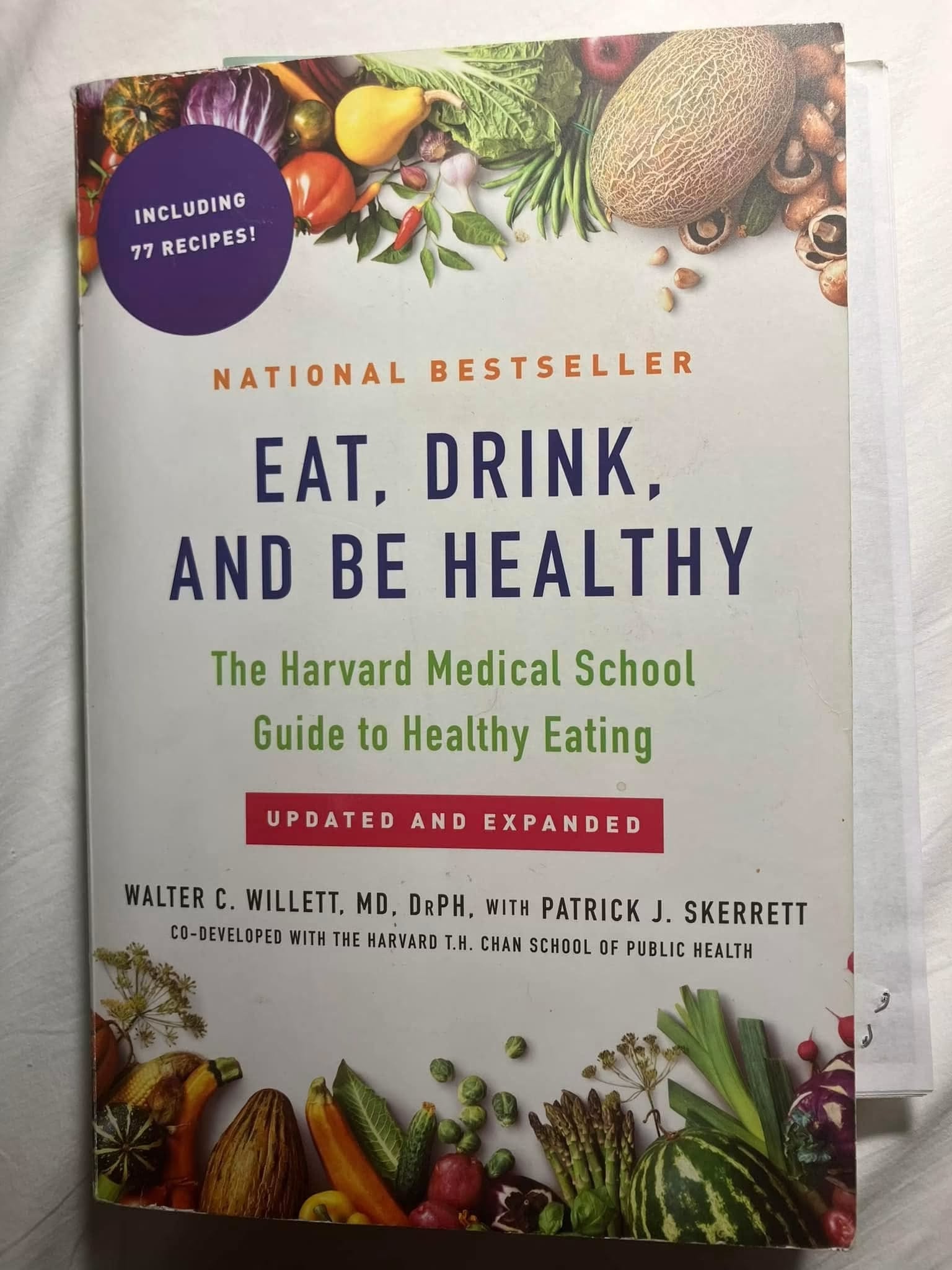
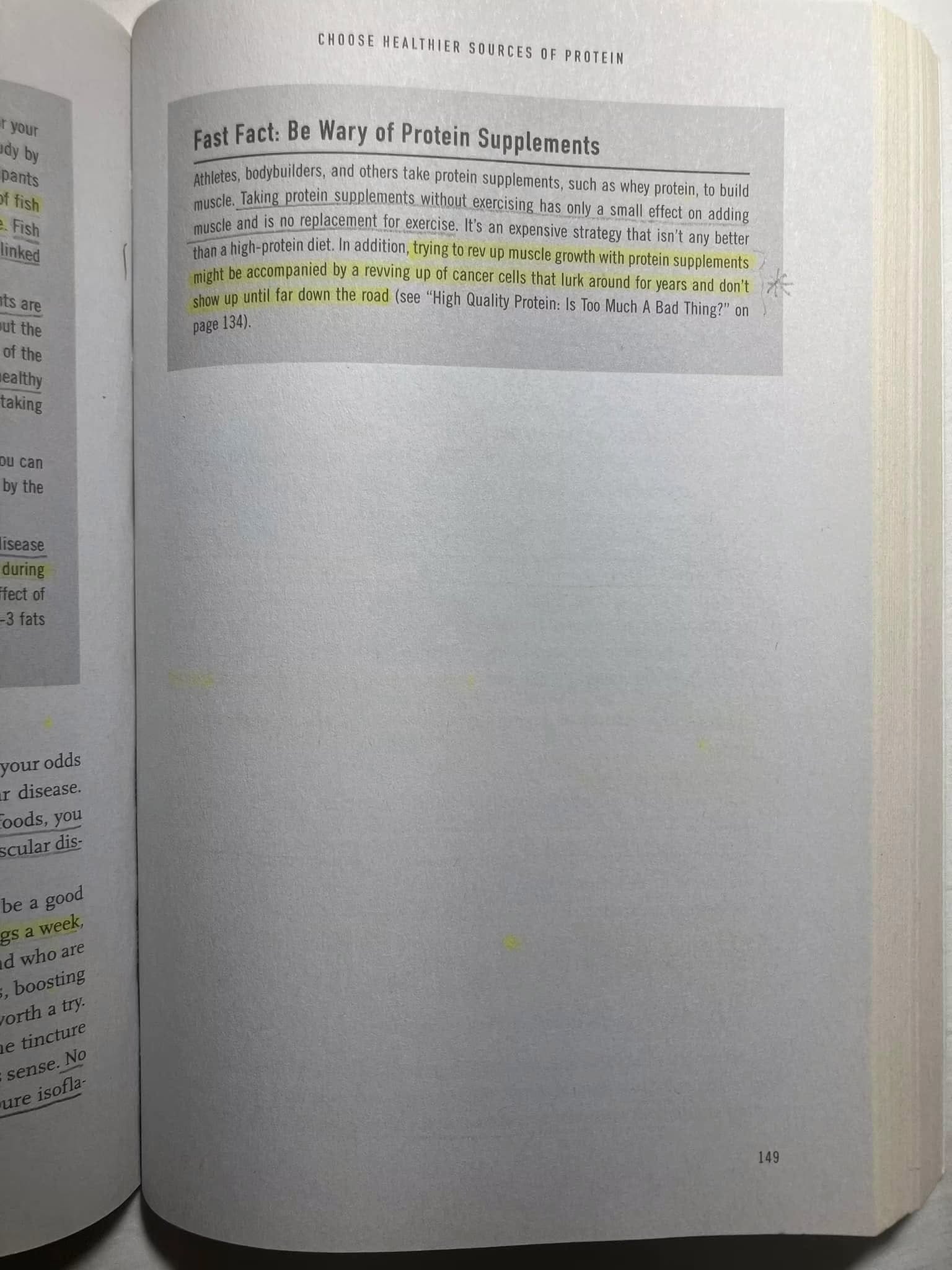
From p149 of his 2017 book:
“Fast Fact: Be Wary of Protein Supplements—
Athletes, bodybuilders, and others take protein supplements, such as whey protein, to build muscle. Taking protein supplements without exercising has only a small effect on adding muscle and is no replacement for exercise. It's an expensive strategy that isn't any better than a high-protein diet. In addition, trying to rev up muscle growth with protein supplements might be accompanied by a revving up of cancer cells that lurk around for years and don't show up until far down the road (see "High Quality Protein: Is Too Much A Bad Thing?" on page 134).”
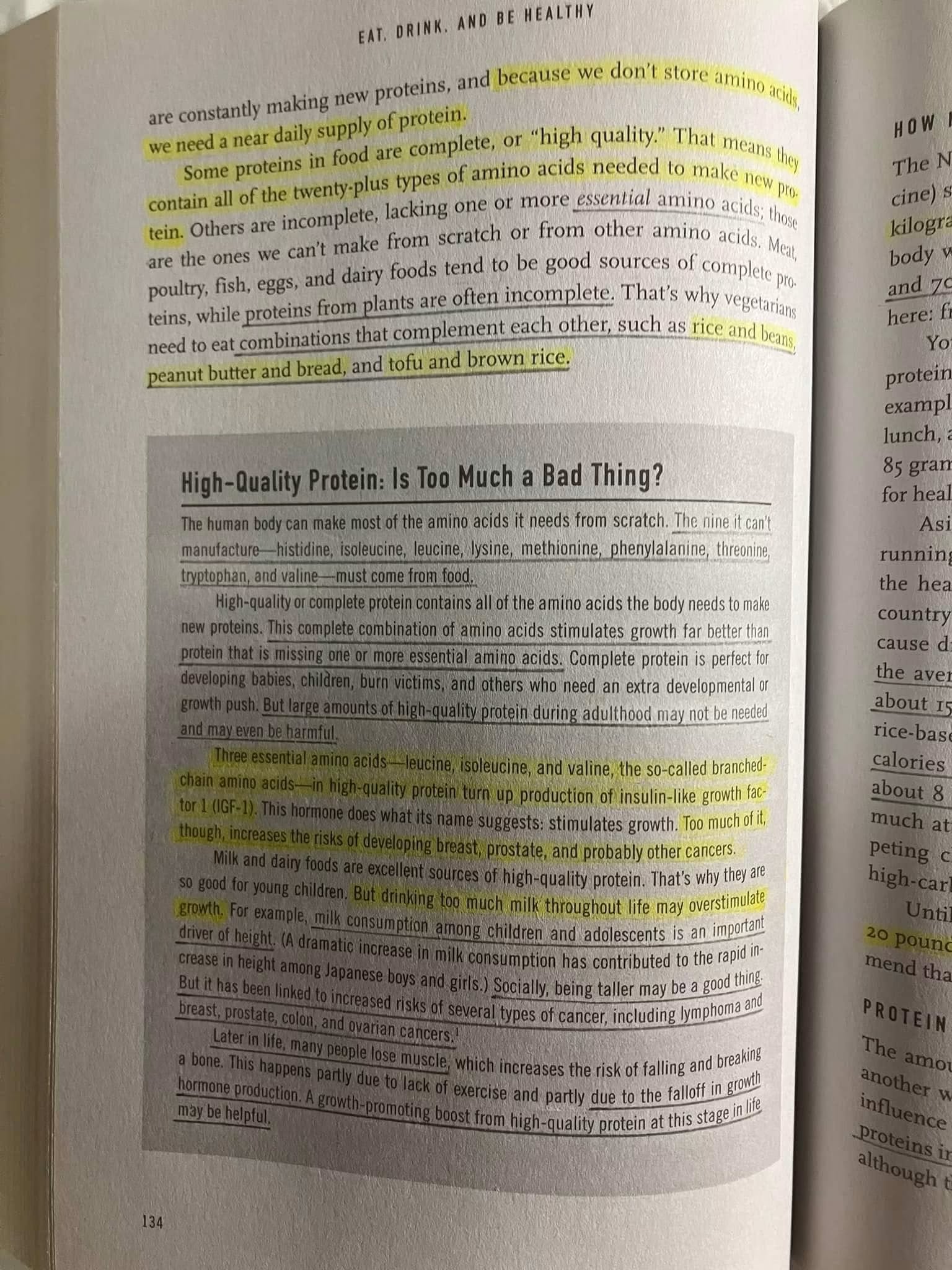
From page 134:
“Three essential amino acids- leucine, isoleucine, and valine, the so-called branched-chain amino acids- in high-quality protein turn up production of insulin-like growth factor (IGF-1). This hormone does what its name suggests: stimulates growth. Too much of it, though, increases the risks of developing breast, prostate, and probably other cancers.
Milk and dairy foods are excellent sources of high-quality protein. That's why they are so good for young children. But drinking too much milk throughout life may overstimulate growth.”
#proteinHD #wheyHD #igf1HD #cancerHD #proteinpowdersHD #willettHD #harvardHD #bcaaHD #milkHD #dairyHD #muscleHD #resistancetrainingHD