Black cumin seeds have a number of beneficial health properties, including anti-inflammatory properties and reduction of cholesterol.
They have a strong peppery taste, and can be used in place of black pepper to flavor food.
The seeds are sometimes sold in supplement form as “black seed” or “black seed oil”.
Note:
Most of the supplement products sold in the USA labeled “black cumin seed” or “black seed” contain Nigella Sativa. This article is about Nigella Sativa.
#blackcuminHD
Systematic reviews and meta-analyses of randomized controlled trials have found that daily black cumin consumption significantly improves cholesterol, triglycerides, blood pressure, and blood sugar control.
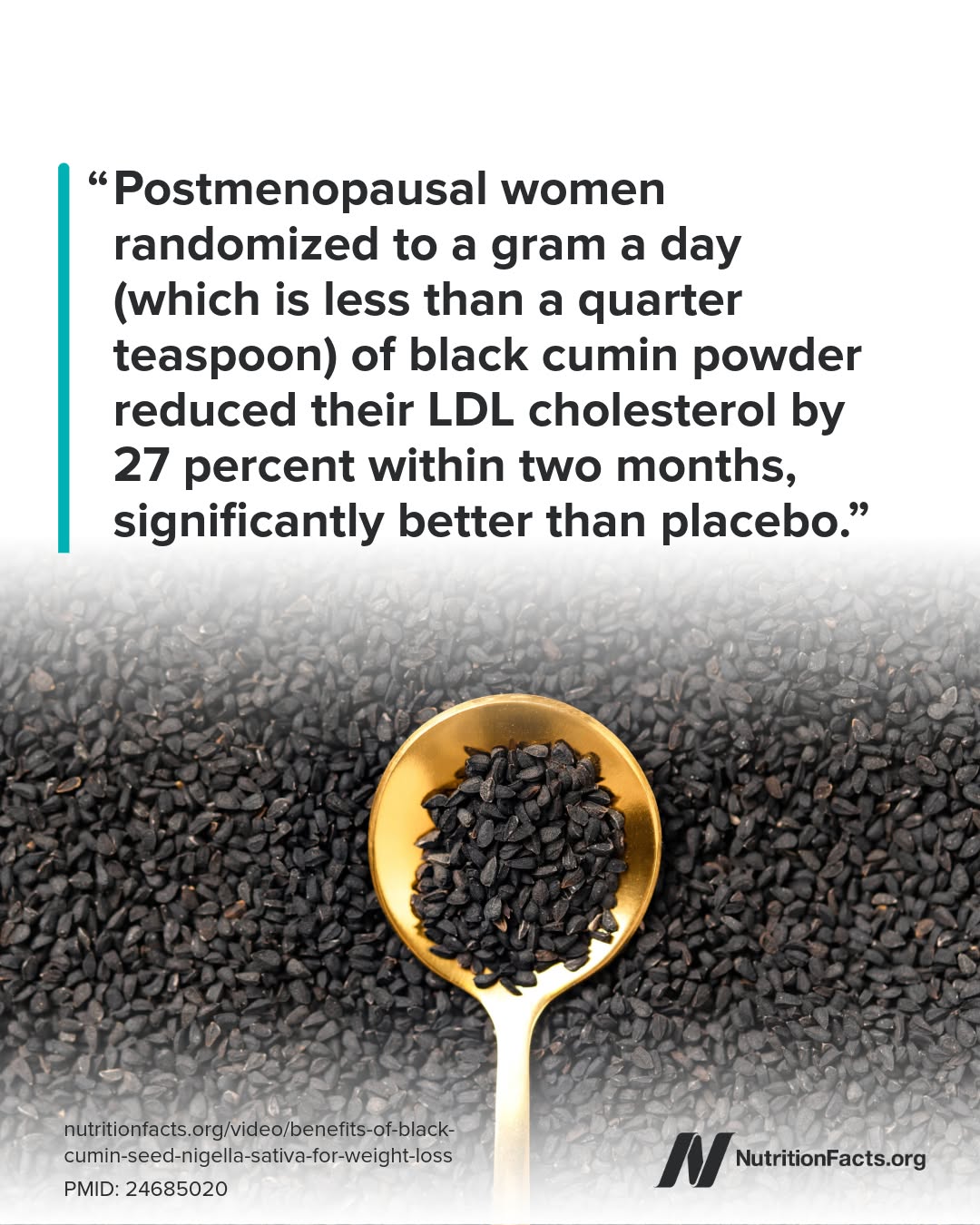
One study found that postmenopausal women randomized to a gram a day (which is less than a quarter teaspoon) of black cumin powder reduced their LDL cholesterol by 27 percent within two months, significantly better than placebo. Those are the kind of results you’d expect from a statin drug.
Now, a month after stopping the black cumin, cholesterol levels started to creep back up, so you may want to make it part of your daily routine. Black cumin appears to be a cheap, safe, effective, and delicious (if you like spicy food) treatment for some of our deadliest risk factors. Talk with your doctor about your cholesterol-lowering options.
A systematic review and meta-analysis of randomized, controlled, weight-loss trials found that study participants taking about a quarter teaspoon of black cumin powder every day lost weight within a span of a few months. This is why a daily quarter teaspoon of ground black cumin is one of my 21 Tweaks in How Not to Diet.
Learn more about black cumin at Benefits of Black Cumin Seed (Nigella Sativa) for Weight Loss | NutritionFacts.org (nutritionfacts.org). What benefit might black cumin have for Hashimoto’s Disease? See the video at Diet for Hypothyroidism: A Natural Treatment for Hashimoto’s Disease | NutritionFacts.org (nutritionfacts.org).
PMIDs: 26875640, 27512971, 29154069, 24685020, 29857879