Mendelian Randomization Reveals Modifiable Longevity Pathways: BMI, Blood Pressure, Lipids, and Type 2 Diabetes
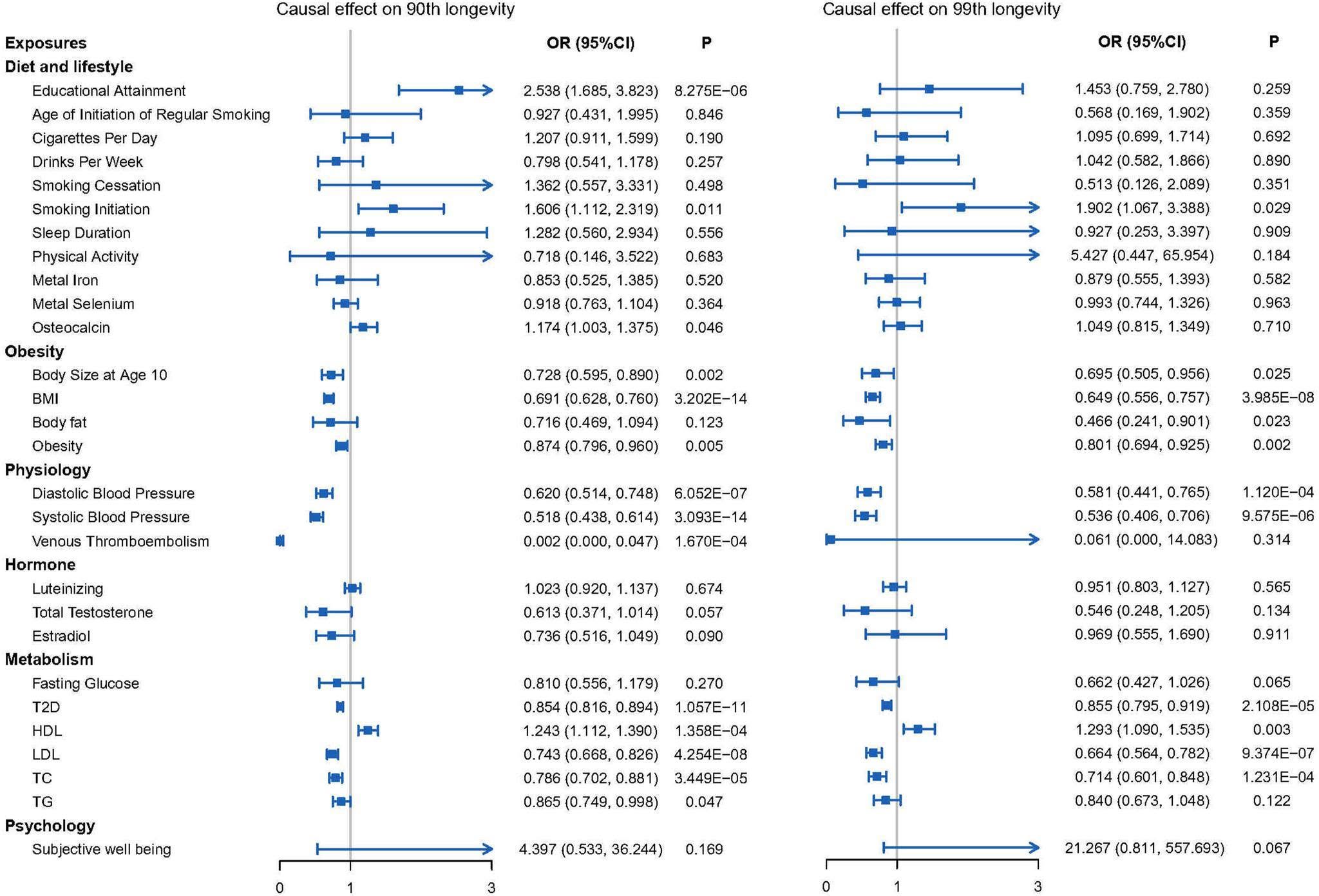
This study used Mendelian randomization to explore the causal relationships between 46 potentially modifiable risk factors and longevity, focusing on individuals of European ancestry. The analysis identified nine factors significantly associated with both longevity (≥90 years) and super-longevity (≥99 years): body size at age 10, BMI, obesity, diastolic blood pressure (DBP), systolic blood pressure (SBP), type 2 diabetes (T2D), high-density lipoprotein (HDL) cholesterol, low-density lipoprotein (LDL) cholesterol, and total cholesterol (TC). Higher predicted levels of HDL cholesterol were linked to greater odds of longevity, while the other factors were associated with lower odds. Additionally, the study found suggestive links between later smoking initiation and higher longevity odds, while higher educational attainment, low genetic liability to venous thromboembolism, and genetically predicted lower triglycerides were associated with higher odds for longevity (≥90th) but not super-longevity (≥99th).