HD-OPM Archive
Topics › Supplements & vitamins

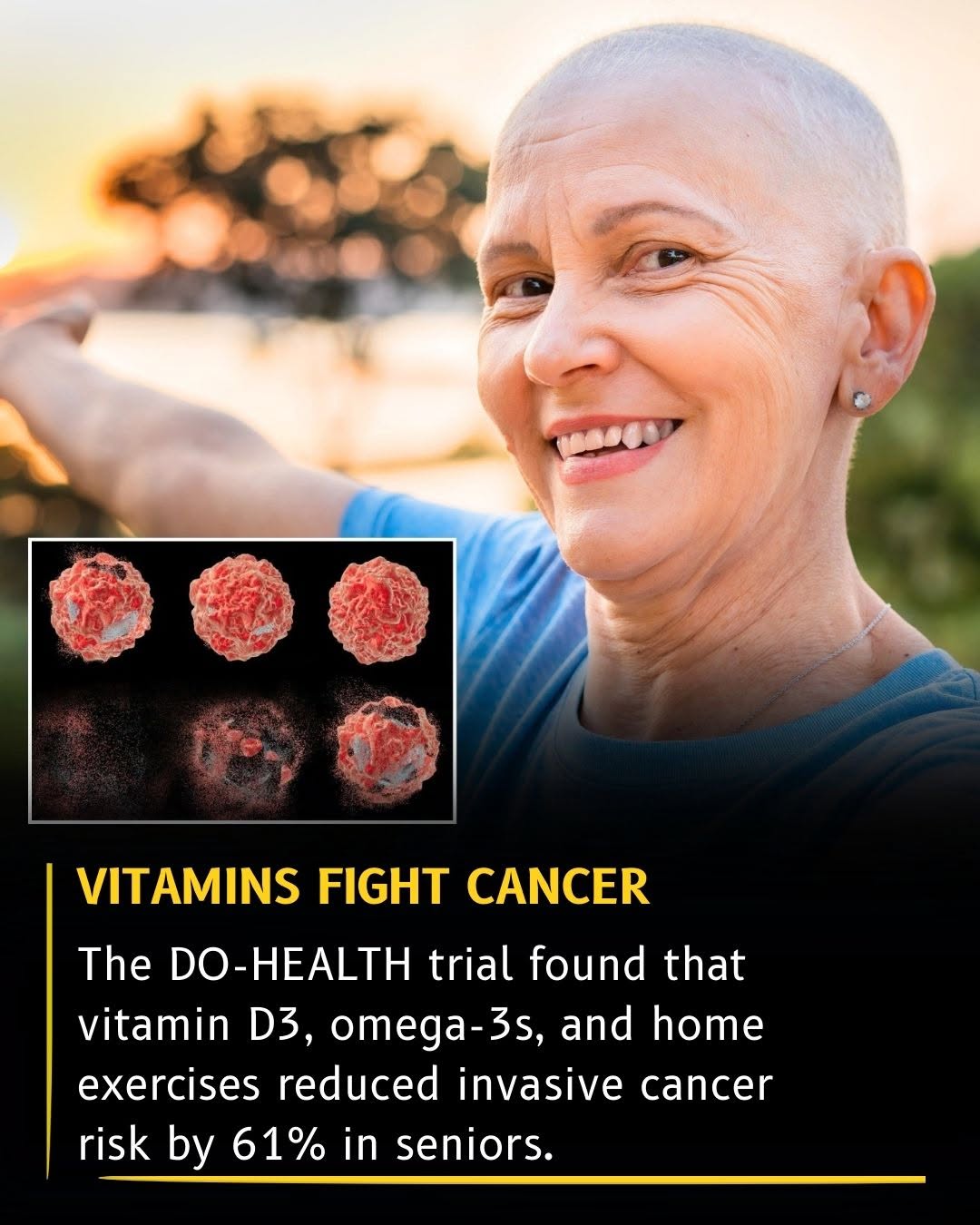
DO-HEALTH: vitamin D, omega-3 and exercise cut invasive cancer risk 61% in adults 70+

Louis Nervegna · Dec 09, 2025 · ♥ 22 reactions · 2 comments · original Facebook post
Supplements & vitaminsCancerExercise & fitness
AI summary & key facts

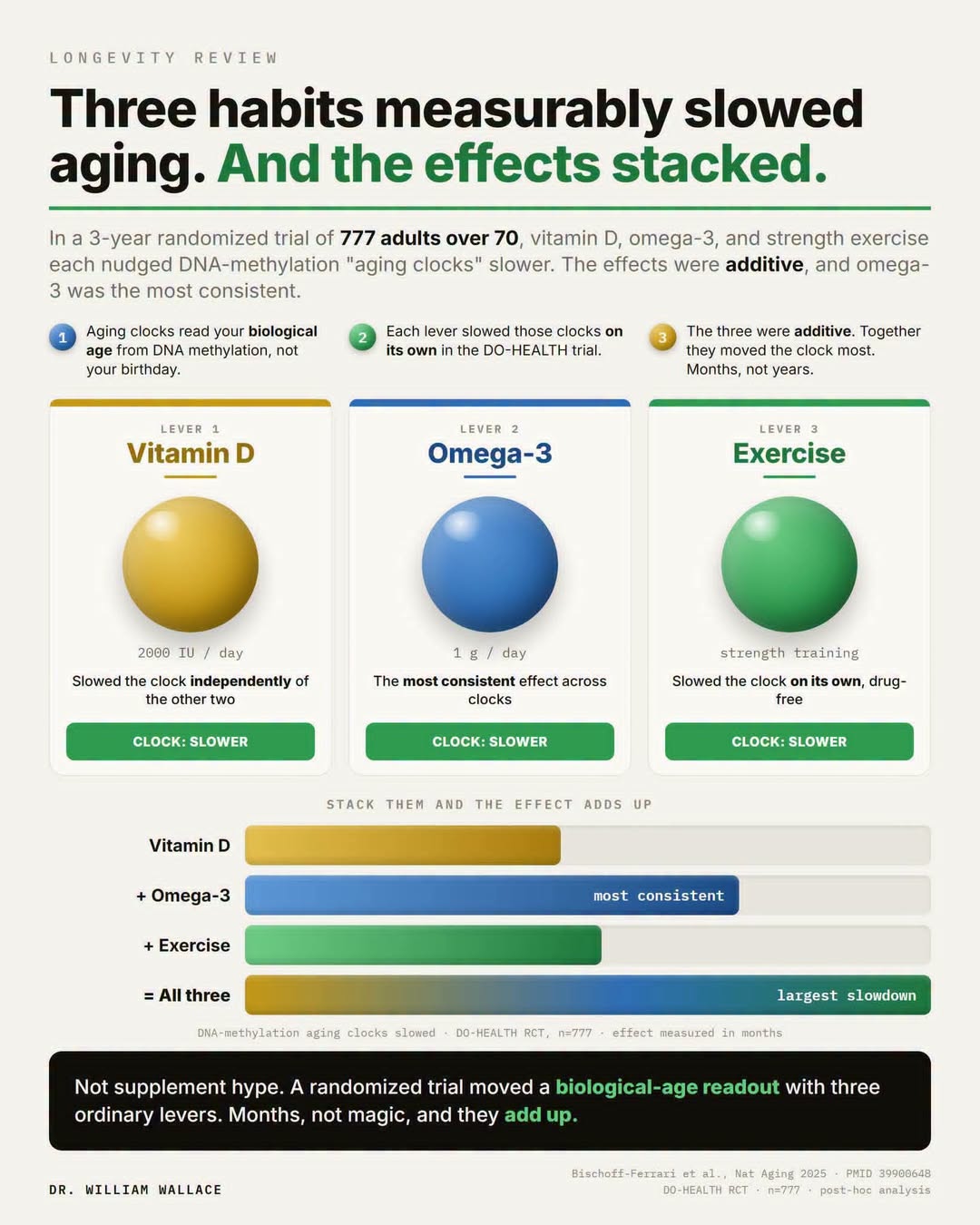
Louis shares the 3-year DO-HEALTH randomized trial (2,157 adults aged 70+, five European countries) in which the combination of vitamin D3 2000 IU/day, omega-3 1 g/day and a home strength exercise program gave a 61% reduction in invasive cancer versus placebo. Only the combination was highlighted, with 4 cases versus 12.

Link to full study:

Paper · Front Aging · 2022Combined Vitamin D, Omega-3 Fatty Acids, and a Simple Home Exercise Program May Reduce Cancer Risk Among Active Adults Aged 70 and Older: A Randomized Clinical Trial.Objective: The aim of this study was to test the individual and combined benefit of vitamin D, omega-3, and a simple home strength exercise program on the risk of any invasive cancer. Design: The DO-HEALTH trial is a three-year, multicenter, 2 × 2 × 2 factorial design double-blind, randomized-controlled trial to test the individual and combined benefit of three public health interventions. Setting: The trial was…pmc.ncbi.nlm.nih.gov

#vitamindHD #omega3HD #exerciseHD #fishoilHD #dohealthHD #cancerHD
Research cited

A 3-year randomized, double-blind clinical trial known as the DO-HEALTH study was led by Dr. Heike A. Bischoff-Ferrari of the University of Zurich. It was published on April 25, 2022, in Frontiers in Aging.

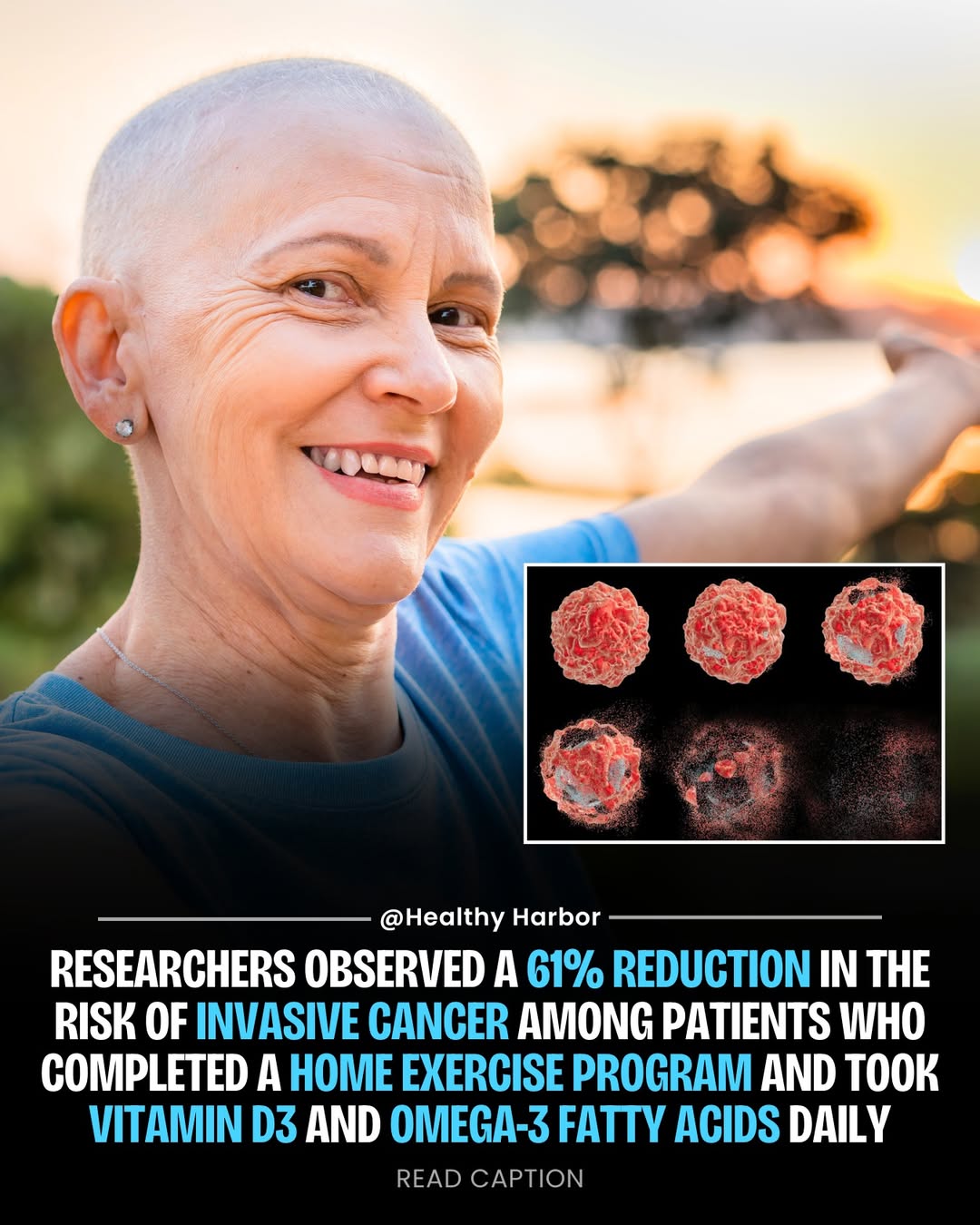
The study found that healthy adults aged 70 and older who took vitamin D3 (2000 IU per day), omega-3 fatty acids (1 g per day), and followed a home-based strength and balance exercise program experienced a 61% reduction in invasive cancer risk compared with a placebo group.

Out of 2,157 participants across five European countries, only 4 cancer cases occurred in the combined-intervention group versus 12 cases in the placebo group.

The number needed to treat was 35. This shows that the combined lifestyle and nutritional approach, rather than any single intervention alone, was responsible for the significant cancer risk reduction.

No photo description available.
← newer: Shared content unavailableolder: Niacin inhibited vascular calcification in mice via SIRT1/SI →