🩸 What Exactly Is HbA1c? (And Why It Reflects 3 Months of Sugar Exposure)
Hemoglobin is the protein inside red blood cells (RBCs) that carries oxygen.
When glucose circulates in the blood, a small portion of it binds irreversibly to hemoglobin — without enzymes, without insulin.
This glycated hemoglobin is called HbA1c.
🔬 Why does this happen?
Glucose is a reactive molecule.
The higher and more persistent the blood sugar, the more hemoglobin becomes glycated.
📌 This process:
- Does not switch on or off
- Does not depend on insulin
- Increases steadily with glucose exposure
🧬 Why does HbA1c reflect ~3 months?
Red blood cells live for about 120 days.
During their lifespan:
- RBCs are continuously exposed to blood glucose
- Hemoglobin accumulates glucose over time
- Once glycated, it cannot be reversed
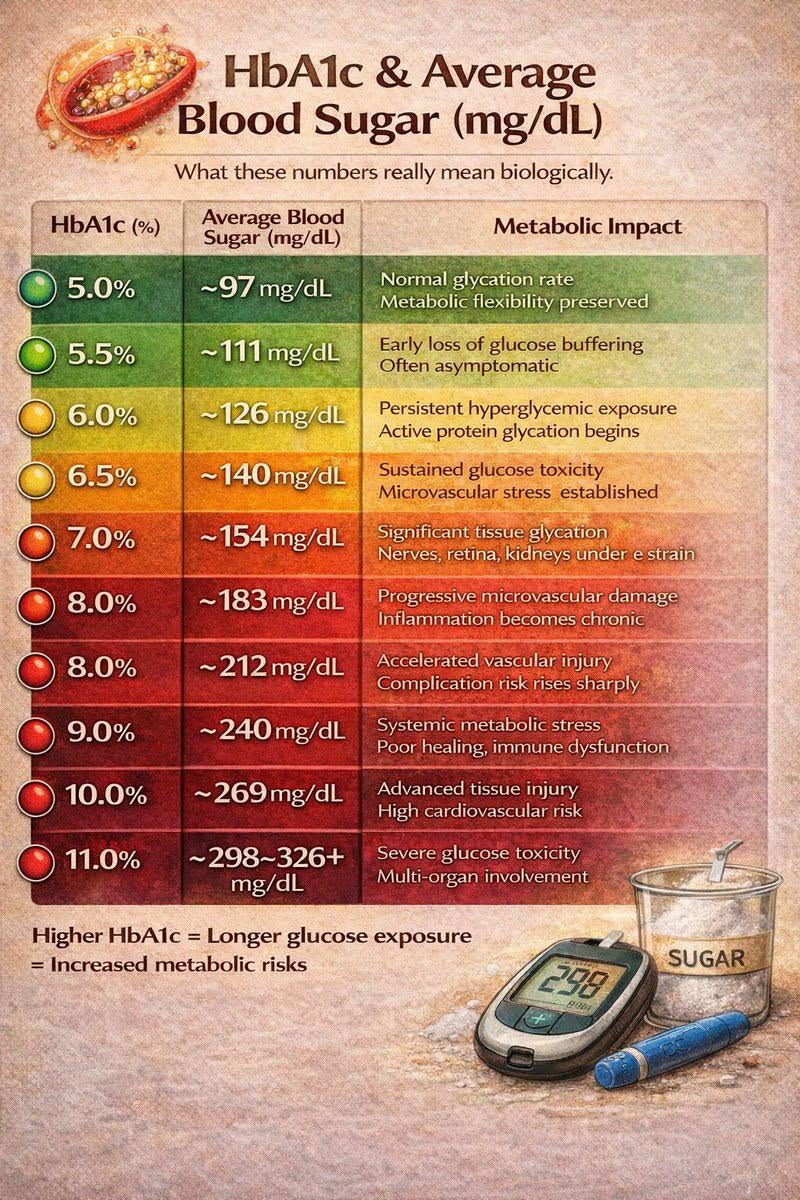
So HbA1c represents the average glucose exposure across the lifespan of RBCs.
New RBCs carry fresh hemoglobin.
Older RBCs carry a memory of past glucose exposure.
The final HbA1c value is a weighted average of:
- Recent weeks
- Previous months
🧠 Important clinical nuance
HbA1c reflects recent weeks more strongly —
but it cannot change overnight.
That’s why:
- One good day won’t normalize HbA1c
- One bad week doesn’t explain a very high HbA1c
✨ Clinically important
HbA1c is not a snapshot.
It is a biological memory stored inside red blood cells.
🧠 HbA1c tells us how long your tissues have been bathing in glucose.
HbA1c is not today’s sugar —
it’s yesterday, last month, and the last three months written into your blood.