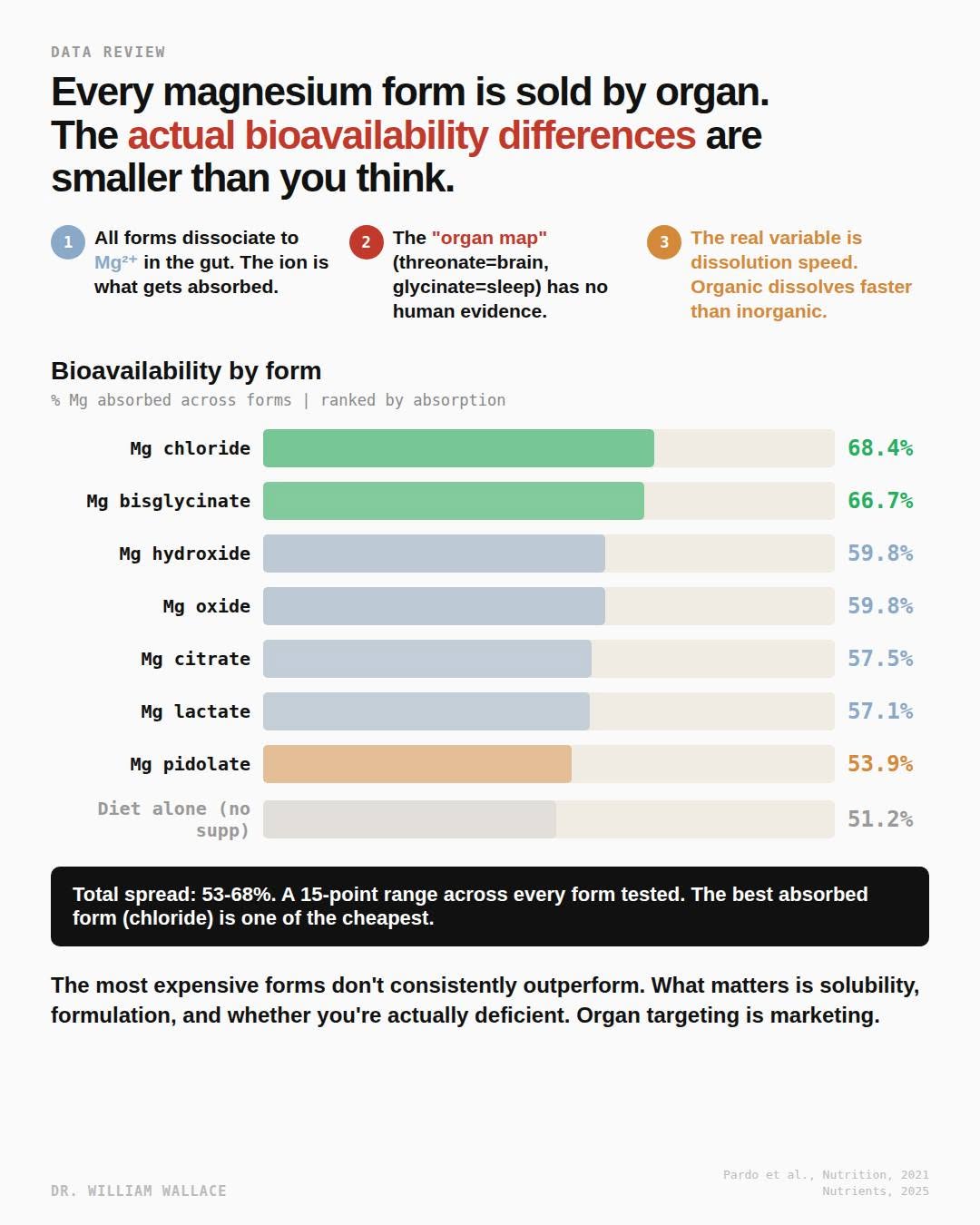
A wake-up call on the marketing hype behind various forms of magnesium supplements.
Turns out that all forms (including magnesium oxide) are well-absorbed into cells in major organs, after oral consumption. The differences are fairly minor.
A shared piece argues that every magnesium salt dissociates in stomach acid and Mg2+ is what is absorbed, so threonate-for-brain or taurate-for-heart claims lack human data. Louis says differences between forms are fairly minor.
A wake-up call on the marketing hype behind various forms of magnesium supplements.
Turns out that all forms (including magnesium oxide) are well-absorbed into cells in major organs, after oral consumption. The differences are fairly minor.
There is a chart that shows up on every magnesium brand's website. Threonate for brain. Glycinate for sleep. Taurate for heart. Malate for energy. It looks scientific. It is not based on human data.
Here is what actually happens when you swallow any magnesium salt. The bond between the magnesium ion and whatever it is attached to (citrate, glycine, oxide, taurine) breaks apart in your stomach acid. What gets absorbed through your intestinal wall is the magnesium ion itself, Mg²⁺. The ligand goes its separate way. The form you buy determines how fast and how completely the salt dissolves. It does not determine where the magnesium ends up in your body.
Human bioavailability studies have consistently shown that organic forms (citrate, glycinate, chelate) produce modestly higher blood levels and greater urinary excretion than inorganic forms (oxide). Lindberg et al. (1990) measured magnesium absorption in healthy volunteers after oral loading and found significantly more magnesium absorbed from citrate than from oxide (p<0.05). The reason was solubility: citrate dissolved 55% in water while oxide was virtually insoluble, only reaching 43% solubility in simulated peak stomach acid. Walker et al. (2003) confirmed this over 60 days in a randomized, double-blind, placebo-controlled trial of 46 healthy adults. Both citrate and amino acid chelate outperformed oxide in absorption (p=0.033), with citrate producing the highest blood magnesium levels at both the acute and 60-day timepoints.
But here is the part that rarely gets discussed. These studies all measured serum magnesium and urinary excretion. Both are limited markers. Serum magnesium reflects only about 1-2% of total body magnesium and is tightly regulated by the kidneys. It stays in the normal range even when your total body stores are significantly depleted. A bump in serum magnesium after taking a dose tells you the magnesium entered your bloodstream. It does not tell you it reached your muscles, bones, or brain. Urinary excretion is a better absorption marker in people whose magnesium stores are already full, but it still only captures what passed through blood and got filtered out by the kidneys.
The most telling finding in the entire magnesium form debate is buried in a 2017 crossover study by Kappeler et al. They gave 20 healthy men either magnesium citrate or magnesium oxide after saturating their magnesium stores. Citrate produced significantly higher serum magnesium for up to 6 hours and greater 24-hour urinary excretion. But when they measured intracellular magnesium, in monocytes, lymphocytes, and red blood cells, there was no significant difference between the two forms. The markers that reflect what is actually inside your cells could not tell the cheap form from the expensive one.
The ranked absorption data in the graphic comes from a 2025 in vitro digestion model published in Nutrients that tested seven magnesium forms under simulated gut conditions. The total range was 53-68%. Chloride at the top, bisglycinate second, oxide and hydroxide in the middle, citrate and lactate close behind, pidolate at the bottom. The spread is 15 percentage points across every form tested. No single human study has ranked this many forms head to head with clean absorption percentages, which is why the in vitro model is useful: it tests all forms under identical controlled conditions. The directional finding, organic slightly better than inorganic, matches every human study.
The Pardo et al. (2021) systematic review covered the full evidence base and concluded that all magnesium forms can maintain normal levels in healthy people without prior deficiency. Organic forms are modestly more bioavailable. Absorption decreases as dose increases. But the review found no evidence that any magnesium form preferentially targets a specific organ.
The "organ map" traces to rodent tissue distribution studies, primarily Ates et al. (2019) and Coudray et al. (2005), which gave rats pharmacological doses of different magnesium forms and then measured accumulation in brain, muscle, and blood. Taurate accumulated most in rat brain tissue. These are animal studies at doses that do not translate to what a human absorbs from a capsule. No human study has demonstrated that any magnesium form preferentially reaches the brain, heart, or any other organ.
What should actually guide your choice: total elemental magnesium per serving, GI tolerability (oxide and citrate are more likely to cause loose stools at high doses, glycinate is generally better tolerated), cost per milligram of elemental magnesium, and whether you are actually deficient. Nearly half of US adults do not meet the RDA from diet alone. Any well-absorbed form taken consistently will correct that. The organ map is marketing built on rat data and blood tests that do not measure what they claim to measure.
Pardo et al., Nutrition, 2021
Lindberg et al., J Am Coll Nutr, 1990
Walker et al., Magnes Res, 2003
Kappeler et al., BMC Nutrition, 2017
Nutrients 2025 (in vitro digestion model)
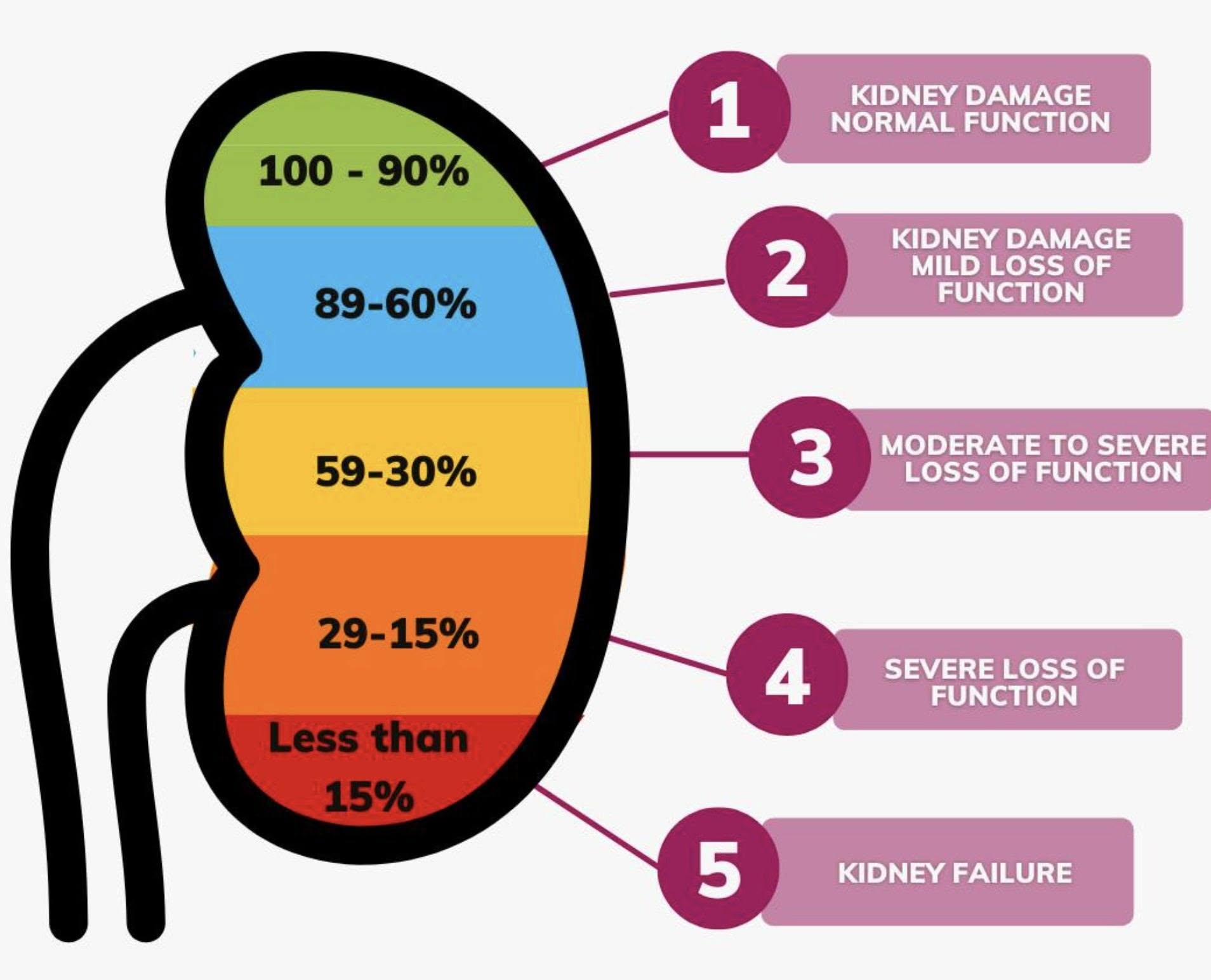
Gokhan argues creatinine and eGFR are imperfect kidney markers and ranks five tests worth tracking, especially for people on many supplements or drugs: cystatin C (very useful, independent of muscle mass), CBC/chemistry/lipids, urine albumin/creatinine ratio, urine protein/creatinine and urinalysis.

Louis shares a randomized, double-blind, placebo-controlled trial in 100 healthy adults aged 18-45 who were unhappy with their sleep. Magnesium L-threonate improved overall cognition, cognitive age, working memory and reaction time, and some subjective but not objective sleep measures. (Louis's post says six months, but the trial and article describe six weeks.)
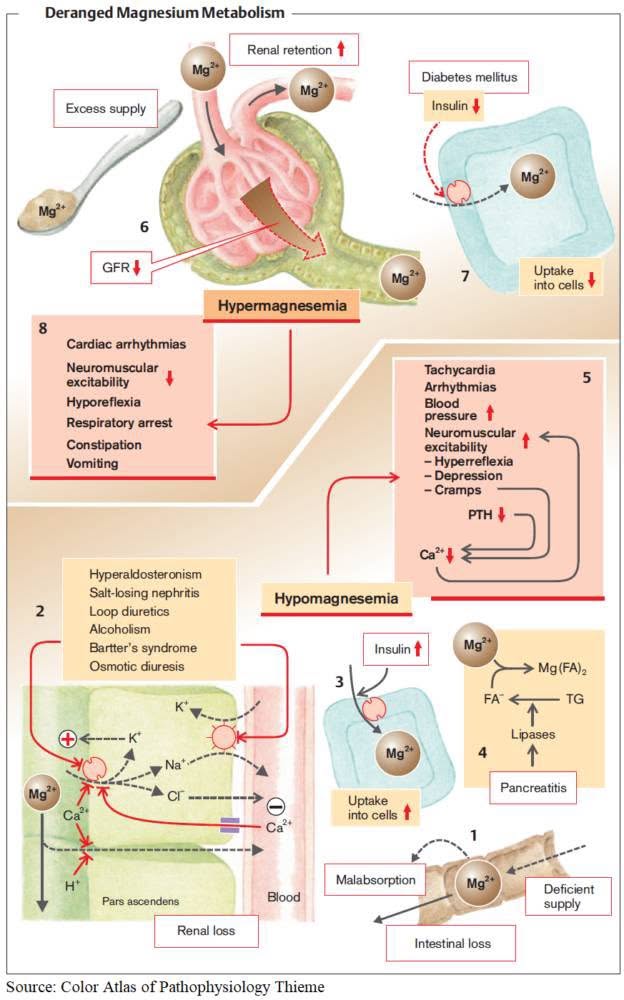
A shared infographic explains how magnesium deficiency can arise from poor intake, malabsorption, PPIs, loop diuretics, alcohol and insulin resistance, and how low magnesium can cause arrhythmias, cramps and tremors.
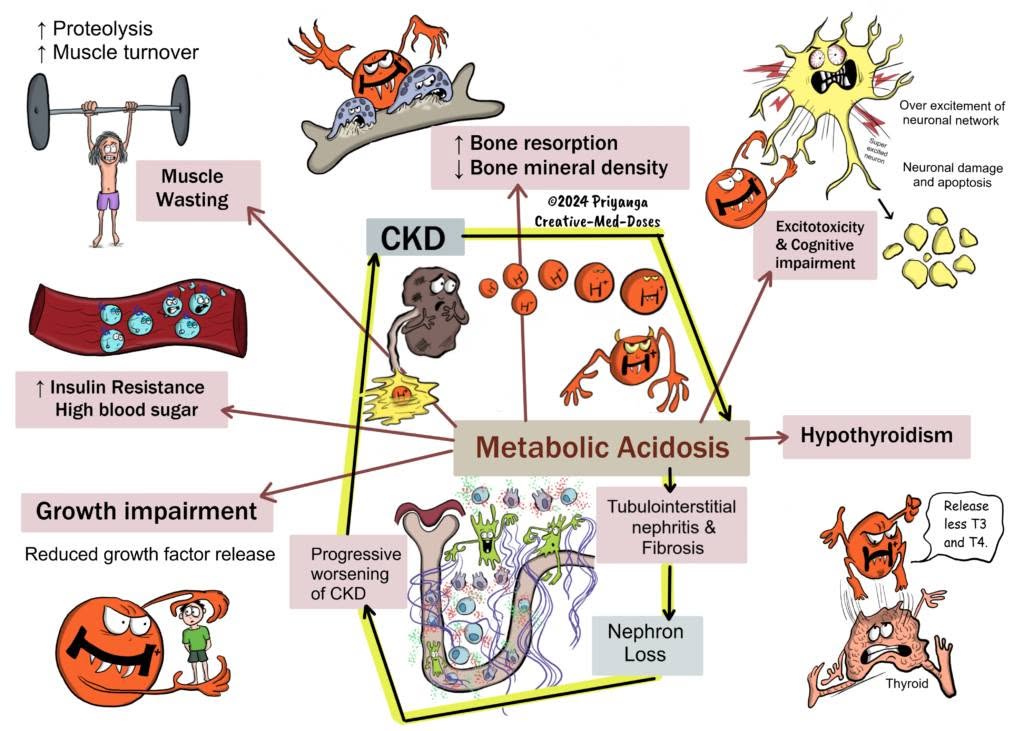
Gokhan says a low or low-normal CO2 on labs suggests mild metabolic acidosis, which he links to bone and muscle loss. He suggests potassium or magnesium citrate and a more fruit, vegetable, nut and legume diet, but cites no studies.
Reposts a list of the supplements Rhonda Patrick takes, including multivitamin, fish oil, vitamin D, K2, ubiquinol, cocoa extract, sulforaphane, berberine and urolithin A, plus evening magnesium and more fish oil. It is a personal regimen with no supporting studies attached, so it is context rather than evidence.
Summarizes a FoundMyFitness episode on magnesium, stressing that many people do not get enough and that deficiency can have wide-ranging health effects. It gives recommended intakes and argues that the RDA is a minimum to avoid deficiency disease.