HD-OPM Archive
Topics › Mediterranean, DASH, MIND & plant-forward diets

2026 ACC Scientific Statement: overall dietary pattern matters most for heart disease

Louis Nervegna · Oct 01, 2026 · ♥ 11 reactions · 0 comments · original Facebook post
Mediterranean, DASH, MIND & plant-forward dietsGuidelines, policy & public healthFats & oils (saturated fat, seed oils, omega-6, olive oil)
AI summary & key facts

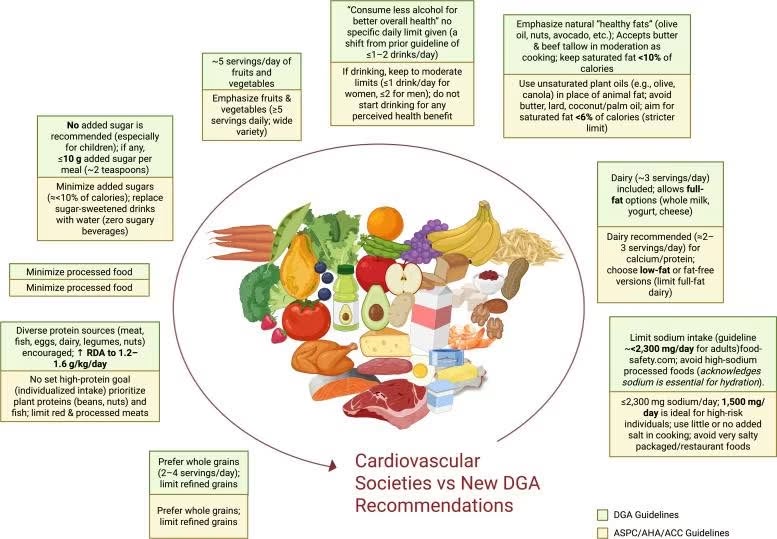
A new American College of Cardiology scientific statement reviews nutrition for preventing and managing cardiovascular disease and stresses overall diet quality over single nutrients. It supports replacing saturated fat with unsaturated fat, more fiber and whole grains, and less sodium, ultra-processed food and sugary drinks. The poster notes it closely matches the group's recommended diet.

A new scientific statement from the American College of Cardiology (ACC) reviews the latest evidence for the role of diet in the prevention and treatment of heart disease.

You can read the full statement here:

Paper · JACC · 2026Food and Health: Nutrition for Prevention and Management of Cardiovascular Disease: 2026 ACC Scientific Statementjacc.org

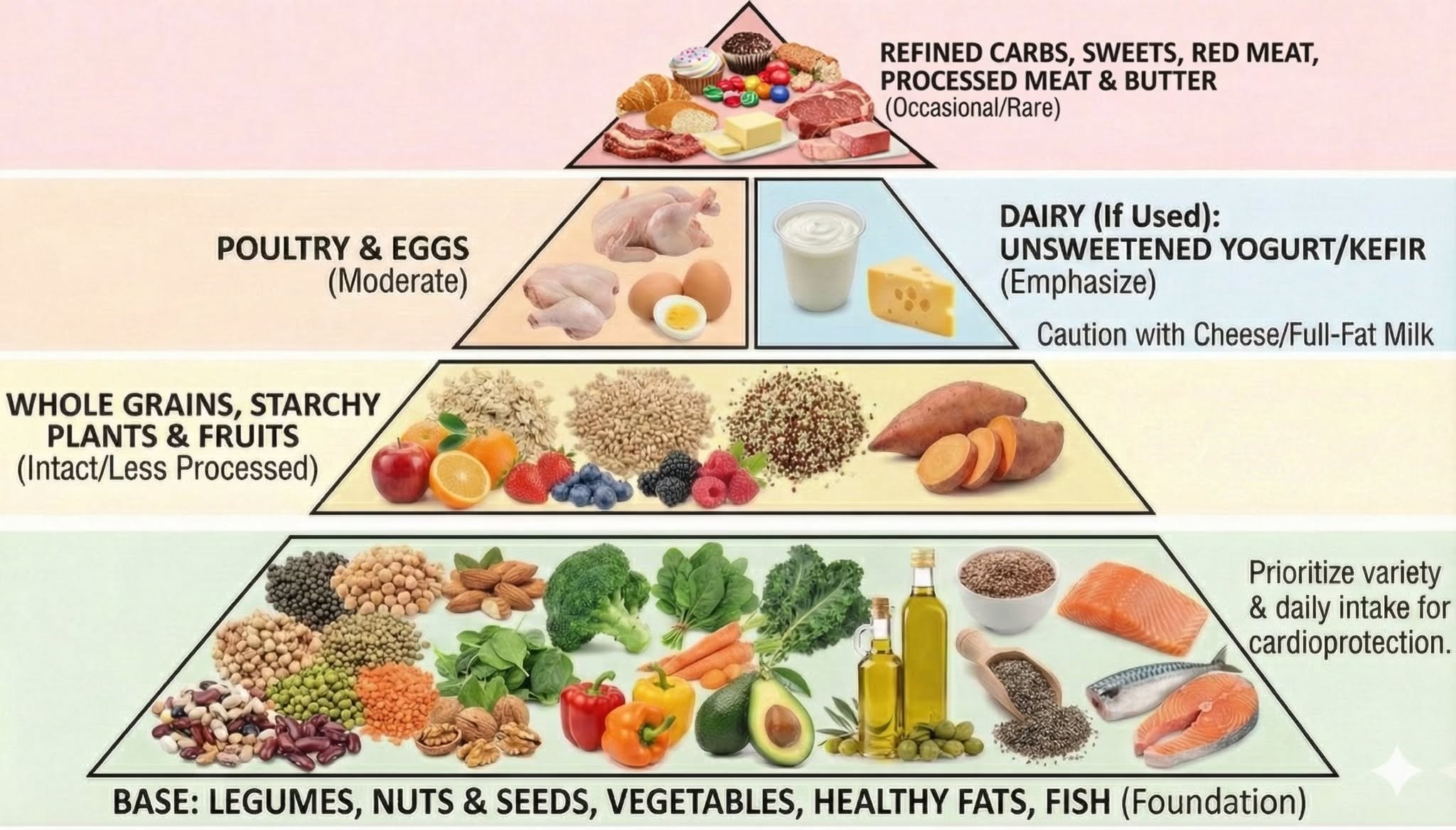
The diet they are recommending is virtually identical to the diet that we recommend in this group. See this post: ↪ The group's food pyramid closely matches the new AHA dietary guidelines.

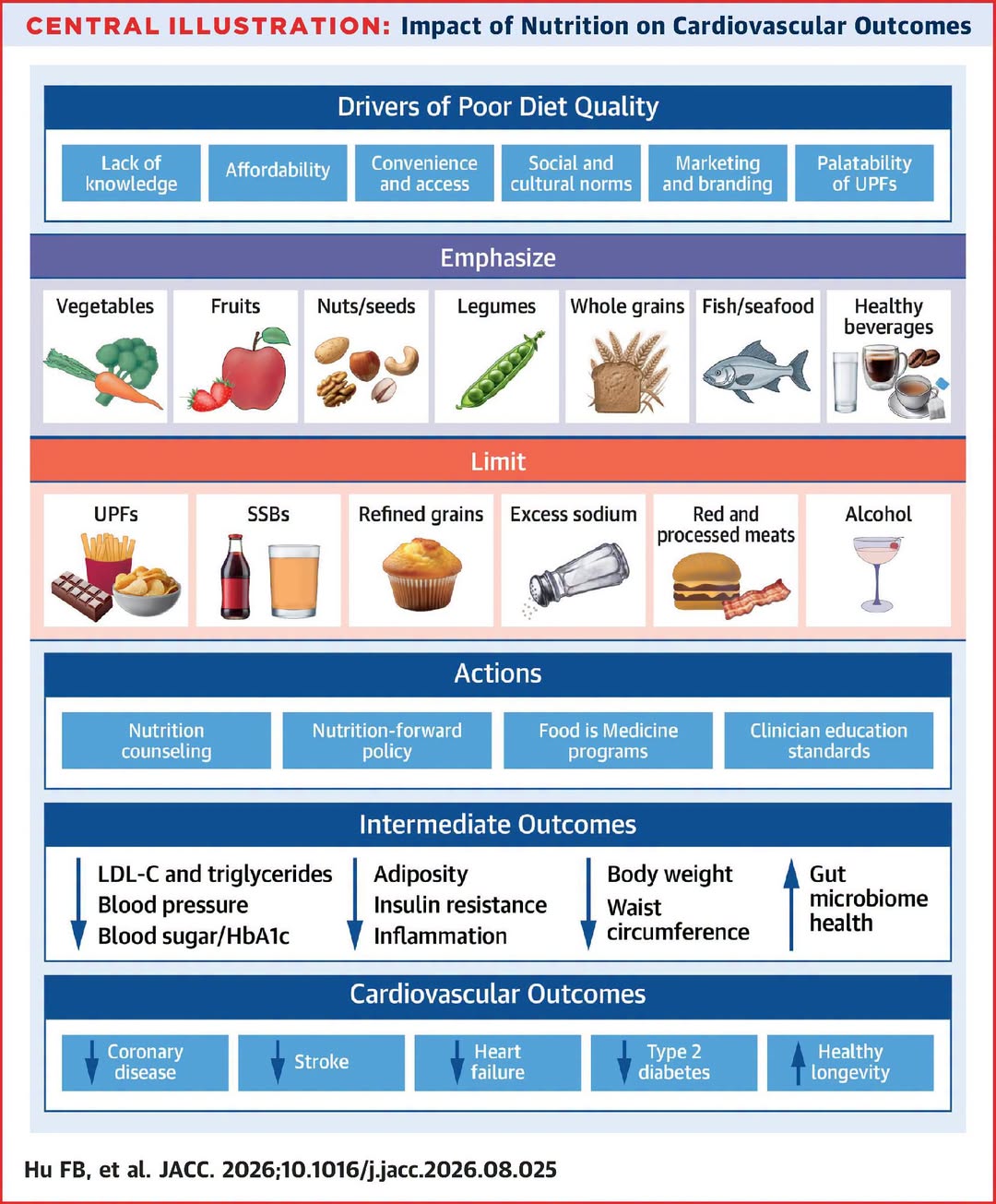
The takeaway from the ACC is simple:

Emphasize

Limit

Quoted:

“Evidence from randomized controlled trials, prospective cohort studies, and mechanistic investigations consistently supports replacing saturated fats with unsaturated fats, increasing consumption of dietary fiber and whole grains, reducing consumption of sodium and ultra-processed foods (particularly sugar-sweetened beverages and processed meats), and greater adherence to healthy dietary patterns to lower cardiovascular risk. Mediterranean, DASH (Dietary Approaches to Stop Hypertension), vegetarian, and other plant-rich dietary patterns demonstrate favorable effects on blood pressure, lipids, glycemic control, and body weight, and are consistently associated with lower rates of cardiovascular disease and mortality.”

“Collectively, current evidence supports dietary patterns centered on minimally processed plant foods while limiting ultra-processed foods, particularly those high in refined starches, added sugars, sodium, or unhealthy fats, and emphasizing healthy sources of fats and proteins to reduce cardiovascular risk and improve population health.”

#accHD #dietaryguidelinesHD #foodpyramidHD

Research cited

A new ACC Scientific Statement challenges a common way of thinking about nutrition and heart health.

Instead of focusing on individual nutrients, foods or the latest dietary trend, the Statement emphasizes that overall dietary quality and long-term eating patterns are what matter most for preventing and managing cardiovascular disease.

The document reviews the latest evidence on nutrition and cardiovascular health, including dietary patterns, ultra-processed foods, food security, Food Is Medicine programs and the growing use of GLP-1 medications.

According to Frank B. Hu, MD, PhD, chair of the writing committee:

"Ultimately, heart-healthy eating is not about focusing on a single nutrient or food or following the latest dietary trend. What matters most is the overall quality of the diet and a consistent pattern of healthy food choices that supports cardiometabolic health and is sustainable over time."

This is an important read for clinicians, care teams and anyone interested in the future of cardiovascular prevention.

Read the full ACC Scientific Statement:

American College of CardiologyACC Scientific Statement Says Overall Diet Quality Key to Maintaining Heart Health - American College of CardiologyA healthy, balanced dietary pattern, rather than one focused on individual nutrients or foods, is key to maintaining heart health, according to a new American College of Cardiology Scientific Statement on Food and Health: Nutrition for Prevention and Management of Cardiovascular Disease.acc.org

.
.
.
#Cardiology #Nutrition #cvPrev #ACCPrev #JACC

May be an image of text
← newer: Stanford: most Americans already meet the revised 1.2-1.6 g/older: Native, unoxidized LDL itself impairs endothelial function, →