HD-OPM Archive
Topics › LDL, ApoB & lipid panel

Native, unoxidized LDL itself impairs endothelial function, not just a 'repair' agent

Louis Nervegna · Oct 01, 2026 · ♥ 8 reactions · 1 comments · original Facebook post
LDL, ApoB & lipid panelBlood vessels, circulation & endotheliumMyths, misinformation & controversies
AI summary & key facts

The post rebuts the claim that LDL is just there to repair damaged arteries. Cell studies cited show native LDL increased superoxide production and eNOS uncoupling in endothelial cells, and in 15 people with familial hypercholesterolemia a single LDL apheresis cut LDL-C about 87% and immediately improved endothelium-dependent dilation.

#endotheliumHD #ldlHD #ldlendotheliumHD #nitricoxideHD

Research cited

MORE MISINFORMATION

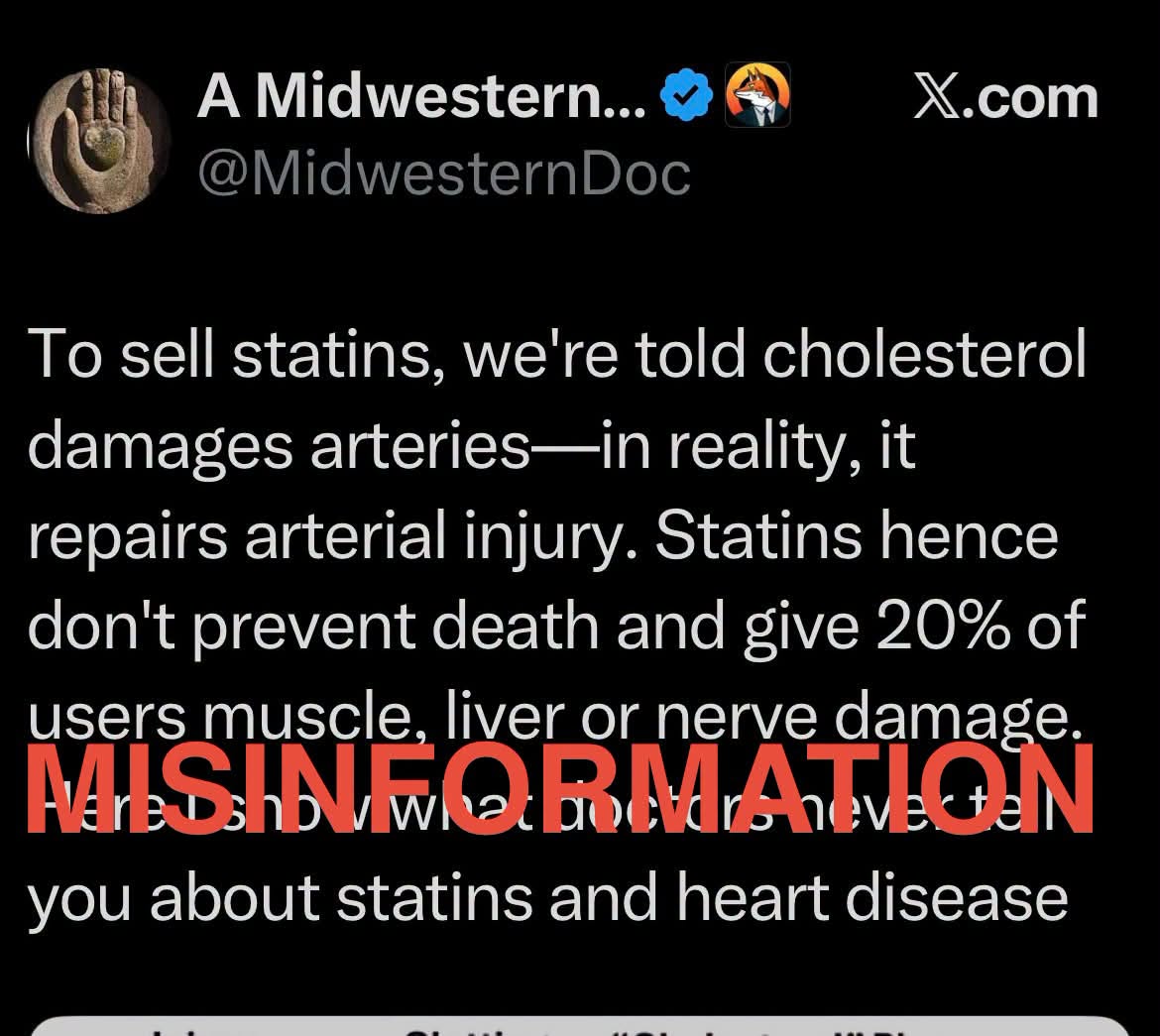
The claim that cholesterol/LDL is simply there to “repair” damaged arteries LITERALLY gets the biology BACKWARD. Even native, unoxidized LDL by itself has been shown to harm the function of the inner blood vessel linings.

In one study, researchers exposed endothelial cells to native LDL and found that it increased superoxide production and interfered with normal nitric oxide signaling by promoting eNOS uncoupling. In plain English: normal LDL, before it is oxidized, can directly disrupt the machinery that helps the endothelium maintain healthy blood-vessel function.

Paper · Free Radic Biol Med · 2002Native low-density lipoprotein induces endothelial nitric oxide synthase dysfunction: role of heat shock protein 90 and caveolin-1.Although native LDL (n-LDL) is well recognized for inducing endothelial cell (EC) dysfunction, the mechanisms remain unclear. One hypothesis is n-LDL increases caveolin-1 (Cav-1), which decreases nitric oxide (NO) production by binding endothelial nitric oxide synthase (eNOS) in an inactive state. Another is n-LDL increases superoxide anion (O(2)(-)), which inactivates *NO. To test these hypotheses, EC were…pubmed.ncbi.nlm.nih.gov

Another study found that native LDL increased endothelial superoxide production more than fourfold through an eNOS-dependent mechanism, with evidence of increased oxidative stress without significant oxidation of the LDL itself. In other words, you don’t have to first turn LDL into oxidized LDL for native LDL to adversely affect endothelial biology.

Paper · Circ Res · 1995Native low-density lipoprotein increases endothelial cell nitric oxide synthase generation of superoxide anion.To examine mechanisms by which native low-density lipoprotein (n-LDL) perturbs endothelial cell (EC) release of superoxide anion (O2-) and nitric oxide (NO), ECs were incubated with n-LDL at 240 mg cholesterol per deciliter for 4 days with media changes every 24 hours. n-LDL increases EC release of O2- by more than fourfold and increases nitrite production by 57%. In the conditioned media from day-4 incubations,…pubmed.ncbi.nlm.nih.gov

And then there’s human evidence. In 15 people with familial hypercholesterolemia, a single LDL-apheresis treatment reduced LDL-C by about 87% and immediately improved endothelium-dependent dilation of both the coronary arteries and coronary microvasculature.

Paper · J Clin Apher · 2004Improvement of endothelium-dependent coronary vasodilation after a single LDL apheresis in patients with hypercholesterolemia.The purpose of this study was to determine whether a single LDL apheresis would improve impaired endothelium-dependent dilation of the coronary artery in patients with hypercholesterolemia. Hypercholesterolemia is associated with impaired endothelial function, and human studies using cholesterol-lowering drugs indicate that endothelial function in the coronary arteries improves with reduction of serum LDL…pubmed.ncbi.nlm.nih.gov

So yes, endothelial injury and inflammation also matter. But the simplistic story that “the artery gets damaged first, then LDL shows up to heal it” isn’t supported by any evidence.

Work on everything involved and don’t buy into the 🐂 💩 narratives out there trying to argue against decades of research from every conceivable angle, all pointing at the same thing.

Your life may depend on it.

May be an image of text
← newer: 2026 ACC Scientific Statement: overall dietary pattern matteolder: Urolithin A improved heart function up to 80% in mouse model →