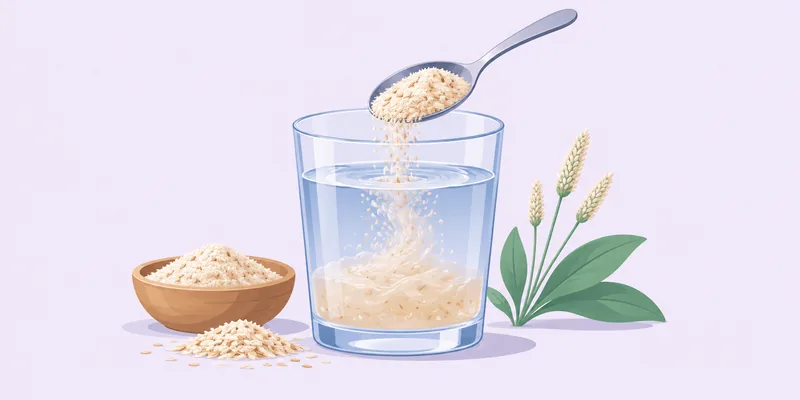
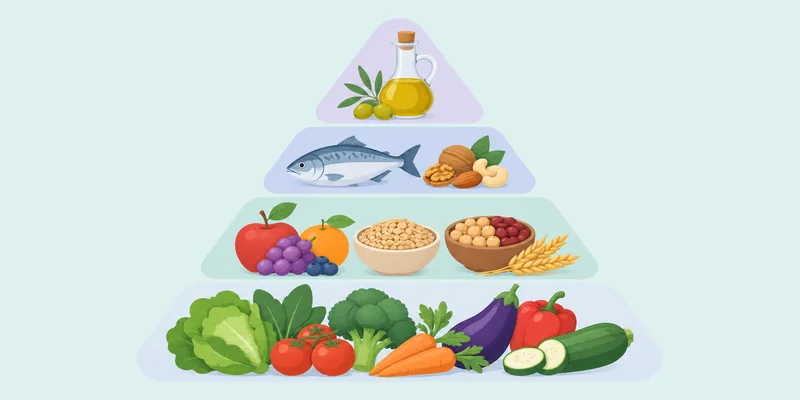
Fiber is the part of plant food that your own digestive enzymes cannot break down, and it matters far more than its reputation as "roughage" suggests. In the group's posts the picture is consistent: people who eat more fiber tend to live longer and have lower rates of heart disease and diabetes, and randomized trials show that adding fiber improves cholesterol, blood sugar and blood pressure.12
But not all fiber is the same. The group's recurring message, especially from admin Louis Nervegna, is that the type of fiber decides what it does. Only fibers that dissolve into a thick gel (psyllium, oat and barley beta-glucan, guar gum) lower LDL cholesterol. Others mainly feed gut bacteria or add bulk.345
How much should you eat? The group's sources point to roughly 25-30 g of fiber a day as the range where most of the measured benefit shows up, delivered mainly by whole grains (especially oats), beans and lentils, fruit, vegetables, nuts and seeds, with psyllium as a targeted add-on for LDL. The sections below explain the evidence behind each of those statements, and where it is weaker than the headlines suggest.267
What fiber is and why the type matters
Beyond "soluble versus insoluble"
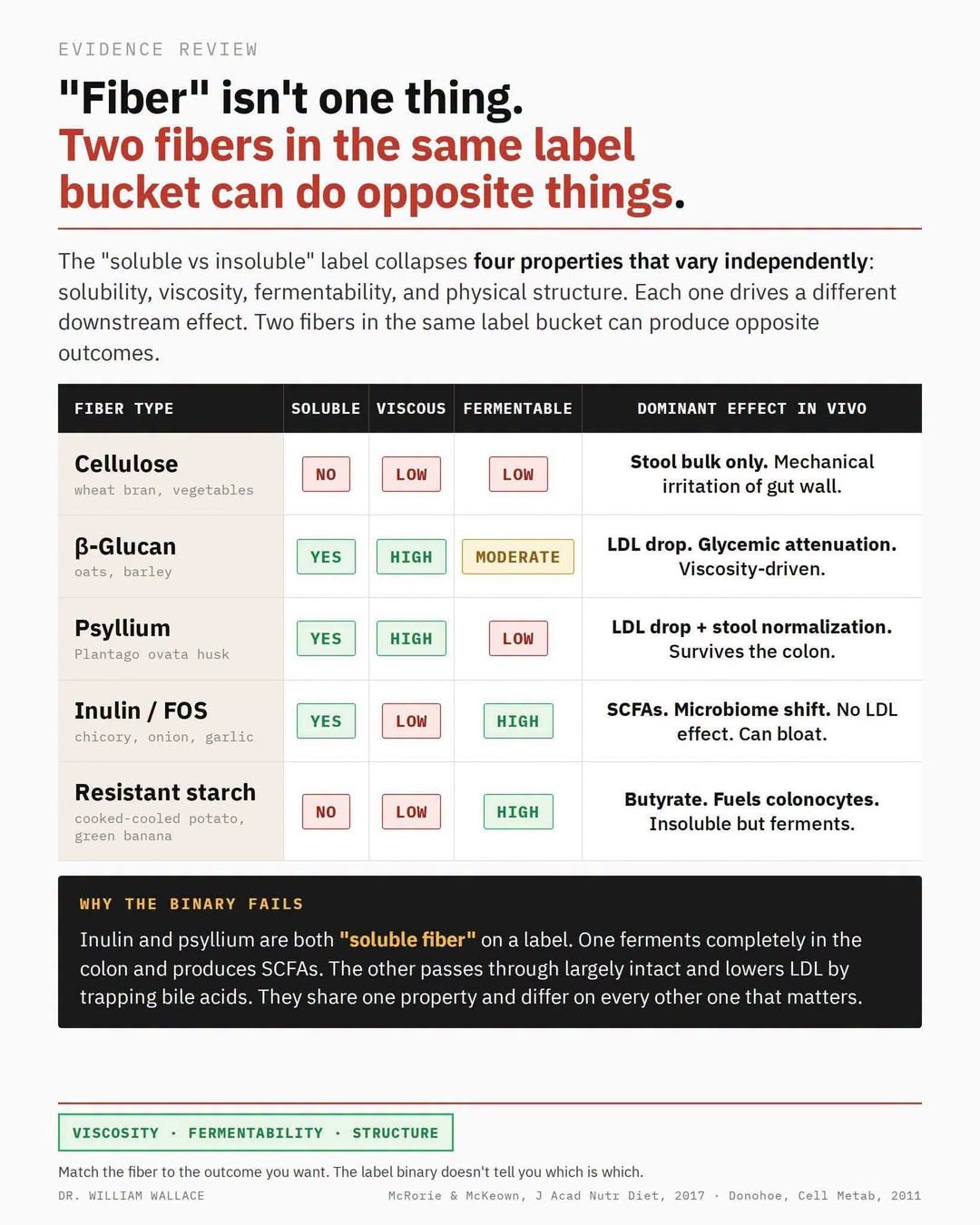
Most people learn that fiber is either soluble or insoluble. A widely shared explainer in the group argues this is one of nutrition's most enduring oversimplifications. Fiber has at least four properties that vary independently: solubility (does it dissolve in water), viscosity (does it form a gel), fermentability (do colon bacteria eat it) and physical structure (is it intact or particulate). Each property drives a different outcome.5
The examples given in that post show why the binary fails:
- Cellulose (wheat bran, vegetables) is insoluble, non-viscous and barely fermented. It bulks stool and speeds transit, with no metabolic effects.5
- Beta-glucan (oats, barley) is soluble, highly viscous and moderately fermented. It lowers LDL by sequestering bile acids, and the FDA-approved oat health claim is built on this property.5
- Psyllium is soluble, highly viscous and poorly fermented. It lowers LDL and normalizes stool, working for both constipation and diarrhea.5
- Inulin and FOS (chicory, onions, garlic) are soluble but non-viscous and highly fermentable. Bifidobacteria use them to produce short-chain fatty acids; the LDL effect is minimal and they can cause bloating.5
Gel, feed and sweep
Louis recommended a Laurie Marbas article that proposes a simpler mental model: think of three roles instead of two labels. Gel fibers such as oats lower cholesterol and steady blood sugar; feed fibers such as beans and onions feed gut bacteria; sweep fibers such as flax and vegetable skins keep things moving. Health comes from all three, not from maximizing one.4
The article opens with a 1978 experiment. Volunteers drank glucose mixed with a thick fiber and their blood sugar barely moved; when the same fiber at the same dose was broken down so it was no longer thick, blood sugar spiked as if the fiber were not there. The only thing that changed was the thickness of the gel.4
How gel-forming fiber lowers LDL
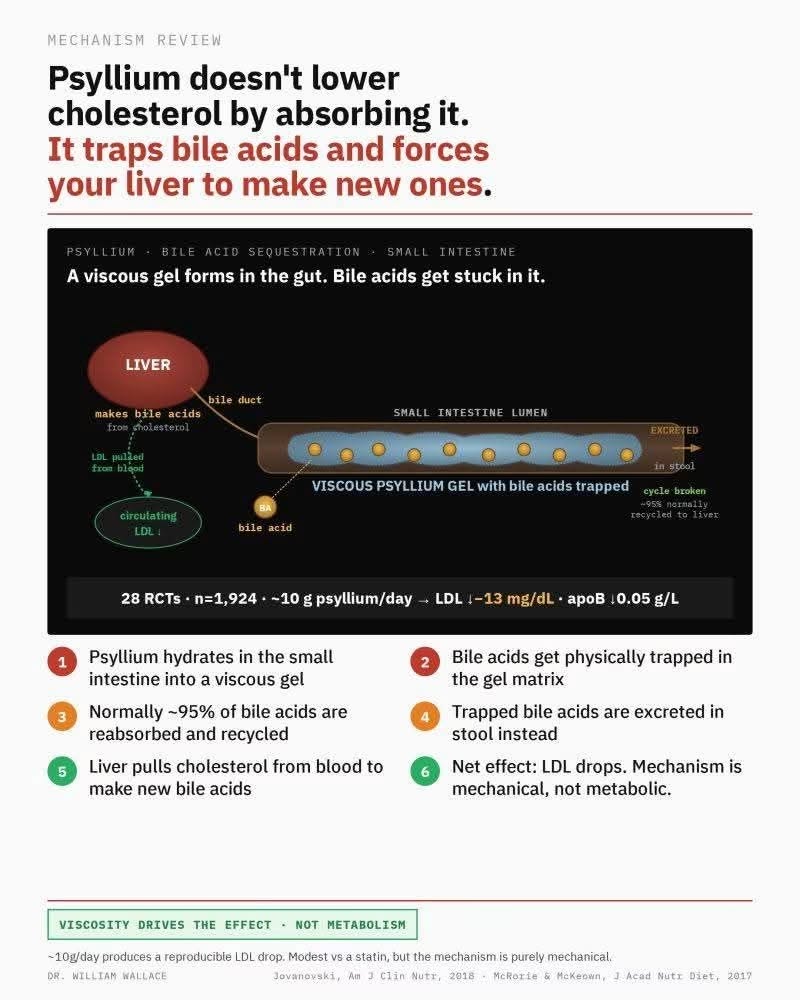
Your liver makes bile acids from cholesterol, and the gut normally recycles about 95% of them. A gel-forming fiber traps bile acids so more leave the body, and to make replacements the liver pulls LDL out of the blood.38
A longer explainer shared by Louis describes the details: psyllium is the seed husk of Plantago ovata; when it hydrates in the small intestine it forms a viscous gel that physically traps bile acids. The liver then upregulates CYP7A1, the rate-limiting enzyme for bile acid synthesis, activates SREBP-2 and increases LDL receptors, so serum LDL falls. It is the same principle used by prescription bile acid sequestrants. The post stresses that the mechanism is mechanical: psyllium does not absorb cholesterol and does not "scrub" the gut, which is why most other soluble fibers do not produce the same effect.811
A pharmacist's quick test, quoted in the group: drop psyllium and inulin in water. Psyllium turns into a thick gel; inulin dissolves clear. If your goal is LDL, buy the one that gels (psyllium, or beta-glucan from oats and barley). Inulin remains a fine prebiotic for gut health.10 Another post adds that inulin-type fibers may lower LDL slightly without a gel, but that evidence is very low certainty.3
What the evidence shows
Psyllium
- A pooled analysis of 28 randomized trials with 1,924 participants (Jovanovski et al., American Journal of Clinical Nutrition, 2018) found a median dose of about 10.2 g psyllium per day lowered LDL by about 13 mg/dL.38
- A 2025 meta-analysis of 41 trials (Gholami and Paknahad, Genes & Nutrition) found a smaller effect of about 9 mg/dL. The two numbers are both quoted in the group, so a reasonable expectation is roughly 9-13 mg/dL.3
- The same 28-trial analysis found apoB (the number of atherogenic particles) fell by about 5 mg/dL.12
- In type 2 diabetes, a 35-trial meta-analysis (Gibb et al., 2015) reported HbA1c lower by 0.97% and fasting glucose lower by 37 mg/dL, with the effect scaling with baseline blood sugar and little effect when glucose is already normal. The author of that quoted post adds a personal anecdote (HbA1c from 5.9 to 5.3 in 8 months), which is not evidence.12
- Louis also states that psyllium husk lowers A1C by about 0.5% and blunts post-meal spikes when taken with meals, though that post cites no source.13
- A pharmacist quoted in the group says adding psyllium to a statin lowered LDL about as much as doubling the statin dose.14
Oats and beta-glucan
Oats are the group's favorite whole grain, and the trial evidence is large.
- A 2022 systematic review and meta-analysis of 74 randomized trials (*European Journal of Nutrition*) compared oats with non-oat controls. Oats lowered total cholesterol by 0.42 mmol/L, LDL-C by 0.29 mmol/L, blood sugar by 0.25 mmol/L, BMI by 0.33 kg/m2, weight by 0.94 kg and waist circumference by 1.06 cm.15
- The apoB result was not statistically significant, but it rested on only 2 studies in unhealthy participants, and the summary notes that the surrounding dietary restriction may have overshadowed oats. When oats were compared with other foods such as wheat, eggs or rice, effects on cholesterol were more modest but apoB, triglycerides and BMI also fell.15
- A small randomized trial in 19 healthy adults (Food & Function, 2025) gave breakfast drinks with 0, 2, 3 or 4 g of oat beta-glucan plus 30 g of glucose. The 4 g dose cut the breakfast glucose peak by 28%, reduced the glucose response to a standard lunch 3.5 hours later by 24%, and raised satiety by up to 49%. The limitations listed are the small size, single-day exposure, liquid format and healthy participants. About three quarters to one cup of oats supplies roughly 4 g of beta-glucan.16
- A FoundMyFitness post says oat-derived beta-glucan lowers LDL by about 5-7% in human studies, often with about 3 g/day of supplemental beta-glucan powder. It also suggests the same bile-acid pathway could help clear PFAS ("forever chemicals"), but that is supported by animal studies and is only a proposed mechanism in humans.17
- A University of Bonn randomized trial in adults with metabolic syndrome (Nature Communications, 2026) had participants eat 300 g/day of rolled oats cooked in water for two calorie-restricted days. LDL fell about 10% versus a calorie-restricted control, and the effect persisted for up to six weeks. It was linked to gut bacteria producing phenolic metabolites such as ferulic acid derivatives; smaller daily oat intakes over six weeks produced weaker effects. It is a single trial in a specific population.18
- In observational research, eating oatmeal two or more times per week was associated with about 21% lower coronary heart disease risk compared with less than once a month. The post notes this cannot prove cause, since oat eaters may differ in other habits, and suggests a reasonable target of 50-75 g of dry oats at least twice a week.19
Whole grains overall
- In the Nurses' Health Studies I and II and the Health Professionals Follow-up Study (average follow-up 25.8 years, *BMC Medicine*, 2022), the highest whole-grain intake was linked to 23% lower coronary heart disease risk, and each serving to 7% lower risk. A daily serving of oatmeal, brown rice or added bran was associated with 16%, 24% and 9% lower risk respectively.20
- A 2026 European Heart Journal meta-analysis of 87 randomized trials found greater whole-grain intake improved LDL and total cholesterol, triglycerides, fasting glucose and systolic blood pressure, and lowered body weight, waist and IL-6. Effects were estimated per extra 48 g/day (dry weight) and were generally largest around 60-100 g/day; certainty varied by outcome and data at higher intakes were sparse.7
- Whole grains appear in nearly every diet pattern the group endorses: the 2026 ACC scientific statement, the 2025 Dietary Guidelines Advisory Committee report, and the Nordic guidelines (a Swedish cohort of over 76,000 adults found 23% lower premature death among the closest followers).212223
- In dietary trials that reversed arterial plaque (Lifestyle Heart, STARS, SCRIP, PREDIMED, CORDIOPREV and DISCO), whole grains and legumes were common themes, and all of the trials limited refined grains and sugary foods.2425
Fiber and mortality
- A WHO-commissioned meta-analysis (Reynolds et al., 2019; 185 prospective studies and 58 trials), as summarized by Gokhan Can, found that people at 25-29 g/day had 15-30% lower all-cause mortality than low consumers and 16-24% lower incidence of coronary heart disease, type 2 diabetes and colorectal cancer, with further benefit for each extra 8 g/day.2
- The same post cites 2025 NHANES data suggesting diminishing returns beyond roughly 30 g/day, and, in adults with metabolic syndrome, a threshold of 22 g/day associated with 20% lower all-cause and 39% lower cardiovascular mortality.2
- In a 2026 cohort of people with hyperlipidemia, more fiber was linked to about 30% lower all-cause and about 40% lower cardiovascular mortality; each additional 10 g/day was associated with 21% and 23% lower risk respectively. The post also cites a broader analysis across over 17 million subjects.6
- In 3,894 US adults with diabetes, the third quartile of fiber intake had a 53% lower relative risk of death than the lowest (HR 0.47), with about 13% of the association statistically mediated by lower systemic inflammation. The post stresses it is observational and does not prove fiber extends life by 53%.26
Show data
| All-cause death | Cardiovascular death | |
|---|---|---|
| Metabolic syndrome, at least 22 g/day (NHANES) | 20% | 39% |
| Hyperlipidemia, more versus less fiber | 30% | 40% |
| Hyperlipidemia, per extra 10 g/day | 21% | 23% |
Legumes and the traditional diet
Louis points out that it is very hard to find a long-lived population that did not eat legumes regularly. A Blue Zones note shared in the group recommends at least half a cup of cooked beans daily and says Blue Zone residents eat at least four times as many beans as Americans on average.27 The traditional Mediterranean diet described in Ancel Keys' 1975 book relied on beans, lentils and chickpeas as inexpensive protein, with whole-grain or minimally processed bread.2829 Louis argues that it was largely a cheap peasant diet of about 90% plant foods with protein mostly from legumes, nuts, seeds and whole grains.30
In large Harvard cohorts, summarized from Walter Willett, plant protein from legumes, nuts and whole grains was the most protective protein source, while processed meat was the worst.3132 In the Adventist Health Study, nuts and beans were linked to as large a reduction in dementia risk as eggs (about 12 almonds or a third of a cup of lentils matched the egg effect).33
Nuances, controversies and common misconceptions
"Oats are the same as eating sugar"
Louis rejects this influencer claim. A Levels glucose-monitor analysis found the average blood sugar spike after a bowl of oats was about 34 mg/dL, in the mild-to-moderate range.34 He notes the beta-glucan in oats blunts blood sugar spikes and continues to do so at later meals, and that oatmeal has a lower insulin index than red meat or whey protein per calorie.1635 That figure is a company analysis rather than a trial.
Intact grains versus flour, and the oat forms
The glycemic index of slow-cook steel-cut oats is 42, rolled oats 55 and instant oats 83, and Louis advises avoiding instant oats.935 His general rule: eat whole grains as intact as possible, for example steel-cut oats instead of instant, or wheat berries instead of crackers made from finely ground flour.36 A year-long randomized trial of three diets, described by Louis, found that a whole-food diet with intact whole grains cleared liver and visceral fat as well as a very low-carb diet, and slightly better than a good-carb diet that included flour-based whole grains.37
The whole grain paradox
Louis notes a paradox: many mechanically processed whole-grain products have a glycemic index only slightly lower than refined versions (a slice of whole wheat bread versus white bread), yet hundreds of studies link whole grains to lower disease risk and refined grains to higher risk. One theory is spermidine, concentrated in wheat germ and removed by refining. He cautions that the evidence for spermidine slowing aging comes from mice and other animals, and that the idea is a plausible hypothesis rather than a proven explanation.38
Continuous glucose monitors and fruit
Louis argues that liver fat, not whole grains or fruit, is the true cause of insulin resistance, so using a CGM to avoid whole grains and fruit can be misleading. He reports his own A1C of 4.7 with liver fat under 1% (a personal example, not trial evidence).39 In the same spirit, a shared response notes that blending fruit does not produce bigger glucose spikes than eating it whole, because the fiber remains in the blend.40 Eating an apple before a rice meal lowered the glucose peak by 14% and the insulin peak by 19% in people with normal tolerance, and the glucose peak by 16.5% in people with impaired tolerance.41 A mouse study suggests inulin fiber may help the gut break down fructose before it reaches the liver, but this has not been tested in humans.42
Observational evidence has limits
Much of the evidence linking fiber to longevity is observational: it can show association but not prove causation. The counterpoint in the group is that associations are consistent across countries, adjusted for lifestyle factors, and backed by randomized trials showing improved glucose, HbA1c, insulin resistance, blood pressure and LDL. The absence of a decades-long mortality trial is not evidence of no benefit.119
Claims that are speculative
- A shared post suggests fiber may reduce absorption of larger microplastics, but it cites no study and says the smallest nano-sized particles can still cross the gut lining.43
- The longevity summary describes butyrate acting on gene regulation; this is a mechanistic argument rather than a measured human outcome.2
Anecdotal survival arguments
Louis has shared video surveys of the ages at death of more than 100 health influencers, noting that those promoting diets high in red and processed meat and low in whole grains, fruit, vegetables and beans did not live long on average. These are informal tallies, not controlled research.444546 He also argues that no long-lived population ate a carbohydrate-free diet, and suggests that anyone eating low carb include low-glycemic carbohydrates such as non-starchy vegetables, legumes and berries; he acknowledges short-term low-carb benefits may exist but long-term effects are unknown.47
What this means for you
This is a summary of what the group's posts say, not personal medical advice. The group's admins recommend discussing changes with your doctor, especially if you take medications.
- Aim for roughly 25-30 g of fiber daily. The observational range linked to benefit is about 25-29 g/day, with diminishing returns reported above about 30 g/day.26
- Make oats a regular breakfast. Choose slow-cook steel-cut oats (GI 42) over instant (GI 83); 50-75 g dry oats at least twice per week is the target quoted from observational studies, and about three quarters to one cup supplies roughly 4 g of beta-glucan.91619
- Eat whole grains as intact as possible, and consider refrigerating cooked grains for 24 hours to convert some starch to resistant starch, which Louis says lowers both glucose and insulin spikes.3637
- Make beans and lentils routine: at least half a cup of cooked beans a day is the Blue Zones target quoted, and legumes appear in every diet pattern the group endorses.212527
- For an LDL-specific boost, consider a gel-forming fiber. Psyllium at about 10 g/day lowered LDL by 9-13 mg/dL in meta-analyses; beta-glucan at about 3 g/day was linked to 5-7% lower LDL. Inulin is fine as a prebiotic but should not be expected to lower LDL.381017
- Separate psyllium from other medications by about 2 hours, with particular care for thyroid drugs and narrow-dosing-window medications, and confirm timing with your pharmacist.14
- Get variety (gel, feed and sweep fibers) rather than maximizing one type.4
- Prefer whole fruit or smoothies that keep the fiber over juice, and limit refined grains, as every plaque-reversal diet trial did.212440
- Pair fiber with the rest of the pattern. The 2026 ACC statement stresses overall dietary quality rather than any single nutrient.21
Frequently asked questions
Do all soluble fibers lower cholesterol?
No. Only gel-forming (viscous) fibers such as psyllium, oat and barley beta-glucan and raw guar gum work through the bile-acid trap. Inulin, FOS and wheat bran do not gel and are not expected to lower LDL meaningfully.3510
How much will psyllium lower my LDL?
Across 28 trials at a median of about 10 g/day, the average LDL reduction was about 13 mg/dL; a 2025 analysis of 41 trials found about 9 mg/dL. Individual results vary, and the group's admins suggest checking with your doctor, particularly if you also take a statin or other medications.3814
Are oats bad for blood sugar?
For most people the evidence shared in the group says no: a Levels analysis found a spike averaging about 34 mg/dL, and trials show beta-glucan blunting glucose and insulin responses, even at the next meal. Steel-cut oats are lower glycemic than instant. People with diabetes or prediabetes who want certainty can discuss monitoring with their doctor.91634
Does the type of whole grain matter?
In the Harvard cohorts, a daily serving of oatmeal, brown rice or added bran was associated with 16%, 24% and 9% lower coronary heart disease risk, and whole grain cereal or bread once a day was also linked to lower risk. The group also favors minimally processed forms.2036
Is the evidence on fiber and longevity proven?
It is largely observational and therefore cannot prove causation, but it is consistent across populations, and randomized trials show improvements in established risk factors.126
Can I get enough fiber on a low-carb diet?
Louis says low carb may bring short-term benefits but that long-term heart effects are speculative; if you eat low carb, he suggests keeping non-starchy vegetables, legumes and low-sugar fruits such as berries in the diet.47