Do intermittent fasting and calorie restriction improve heart health and longevity? The short answer from the group's posts is: probably yes for the risk factors that sit behind heart disease (excess weight, visceral fat, insulin resistance, triglycerides), with the best human evidence coming from weight and metabolic outcomes rather than from heart attacks or lifespan. The dramatic lifespan results come from animals, and the group's admins are explicit that how well they translate to humans is unknown.1
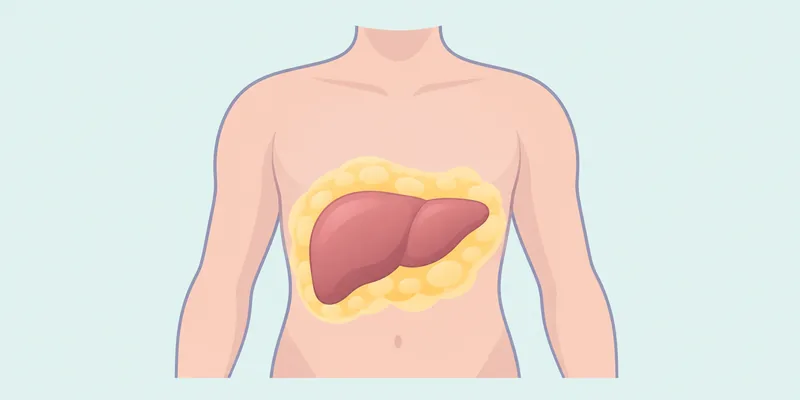
Most of the benefit seems to come from eating fewer calories in total and losing excess fat, especially visceral fat (the fat packed around the organs and in the liver). Louis Nervegna, one of the admins, argues that reducing calories is arguably the most important thing a person can do for their health, and that two meals a day without snacking is one easy way to do it.2 Whether the timing of eating adds anything beyond the calorie reduction is a more open question, and this article lays out what the posts show on both sides.
A note on terms. Calorie restriction (CR) means eating fewer calories every day. Intermittent fasting means alternating eating with fasting, for example the 16:8 pattern (fast 16 hours, eat within 8) or 5:2 (two reduced-calorie days a week). Time-restricted eating (TRE) means keeping all food within a set daily window. A fasting-mimicking diet (FMD) is a periodic low-calorie diet designed to produce some effects of fasting.1
Why fasting and calorie restriction are of interest
Animal lifespan and the biology behind it
In animal models, fasting and calorie restriction extend lifespan and lower the risk of various diseases, with rodent lifespan gains as large as 30-40%.1 Louis notes that calorie restriction extends lifespan in virtually every animal species tested, including mammals.8 He cautions that the rodent protocols are extreme, so they are not a template for people.8
The posts describe several overlapping mechanisms:
- Autophagy. The word means "self-eating": the cell's recycling of damaged components. Louis says excess calories shut it down and that this is one of the main reasons restricting calories extends lifespan in animals.9 He argues that when you fast, the body breaks down damaged tissue first, because it makes sense to consume damaged tissue before healthy tissue.10 This is presented as logic and mechanism, not as a proven human outcome.
- mTOR. A growth-signalling pathway that, when switched down, activates autophagy. Summarizing an interview with the researcher David Sabatini, Louis notes that Sabatini suggests low amino acid or low carbohydrate diets both keep mTOR low, that his best guess is that roughly 18 hours of fasting is enough to inhibit mTORC1 and promote autophagy in humans (in mice it takes only a couple of hours), that autophagy ramps up somewhere between 12 and 18 hours of fasting, and that it works as a dimmer switch rather than an on/off switch. Sabatini stresses that nobody has all the answers.11
- Insulin. Louis argues that chronically high insulin drives aging biology and cancer-related growth pathways, and that fasting and calorie restriction lower insulin; fat is the only macronutrient that does not significantly raise it.12 A post from Luigi Fontana makes the same case: persistent activation of the insulin/IGF-1-AKT-mTOR network is linked to aging biology, and calorie restriction is one of the most powerful ways to improve insulin sensitivity.13
- Ketones and other signals. Fasting is described as the most effective way to generate ketones without eating a ketogenic diet. Louis says any heart benefit of ketones is unproven but plausible.8 Stanford researchers found "BHB-amino acids" that suppress appetite during ketosis, which may explain reduced hunger while fasting (heart relevance indirect).14 An Eric Verdin post in the group describes fasting as a metabolic signal: AMPK up, mTOR down, autophagy and ketones rising (a pattern called hormesis, a mild stress that builds resilience).1
- Visceral fat. One animal study discussed by Louis found that surgically removing visceral fat extended rat lifespan, hinting that much of calorie restriction's benefit may come from losing that fat.15
Taken together, the mechanisms are plausible but largely come from cells and animals. The group frames them as hypotheses.
What the evidence shows in humans
Guideline position
A scientific statement from the European Society of Cardiology (EAPC) on diet and cardiovascular disease, shared by Louis, says that controlling calories to stay in energy balance reduces risk and that a balanced distribution of calories across meals is associated with favourable effects. It also states that fasting (alternate-day, intermittent, time-restricted and periodic) can reduce cardiovascular risk but is often challenging.16
Intermittent fasting over six months
A randomized trial reported in Nature Communications (secondary outcomes, November 2025) followed middle-aged men and women with overweight through 6 months of intermittent fasting. Per Luigi Fontana's summary, body weight fell about 8% and body fat about 16%, non-HDL cholesterol fell about 11%, triglycerides about 23%, and LDL cholesterol also fell. Glucose, insulin resistance, blood pressure, inflammation and carotid intima-media thickness did not change meaningfully. The summary adds that participants largely kept a typical Western diet on non-fasting days, and that fasting is not a substitute for a healthy lifestyle.3
This is a useful reality check. Fasting improved blood fats and body composition but did not, in this trial, move blood pressure or inflammation.
Type 2 diabetes
- 5:2 fasting versus drugs. A Healthline report shared by Louis describes a 16-week trial in people recently diagnosed with type 2 diabetes. Intermittent fasting with meal replacements produced an average loss of 21 pounds, versus 12-13 pounds on metformin or empagliflozin. HbA1c fell 1.9% with fasting, versus 1.6% with metformin and 1.5% with empagliflozin, with additional drops in waist, hips and blood pressure.17
- Remission. In a small randomized trial of 36 people (reported by the Endocrine Society), 47.2% (17 of 36) of the intervention group were in diabetes remission after the 3-month intervention plus a 3-month follow-up, versus 1 of 36 in the control group; 44.4% had sustained remission at 12 months. Mean weight loss was 5.93 kg. Louis notes that more than half of those who remitted had diabetes for over 6 years and suggests this probably reflects a major reduction in liver and pancreas fat.18
- A very low calorie diet. Louis describes Roy Taylor's trial, in which 8 weeks on a roughly 800-calorie meal-replacement diet (people lost around 30 lb) cleared liver and pancreas fat, followed by a Mediterranean diet for maintenance. He says pancreas function regenerated over the following 2 years as long as weight stayed off.19 This is calorie restriction rather than fasting in the strict sense, but it shows the same principle.
Time-restricted eating and blood sugar
A randomized crossover trial presented at the European Association for the Study of Diabetes meeting (lead author Dr. Kelly Bowden Davies) found that an 8-hour eating window significantly improved time spent in the normal glucose range and reduced glucose swings in adults at risk of type 2 diabetes. Benefits appeared within three days. Moving the window earlier or later made no additional difference, and the authors attributed the benefit to the 16-hour fast rather than to the clock time or to a change in calories.4
A small 6-month trial reported at a conference (not yet a journal paper) compared an 8.2-hour eating window with a 12.3-hour window in 47 postmenopausal women on a roughly 500-calorie deficit. Both groups lost about 15 pounds, but only the shorter window improved planning, problem-solving and memory-error measures. Small, preliminary and unpublished, this is a lead rather than an answer.20
Other findings
- A study of 160 people with coronary artery disease, plus blood samples and mice, suggested intermittent fasting may reduce clotting by raising a gut-microbe product called indole-3-propionic acid; the clot-reducing effect was compared to an antiplatelet drug in mice. The summary notes that more research is needed.21
- Louis reads systematic reviews and meta-analyses of Ramadan fasting (daytime fasting for a month) as generally safe and associated with better insulin resistance, metabolic syndrome markers and other cardiovascular risk factors, while adding that this is unsurprising for calorie restriction in a mostly overweight population.22
- Louis notes that GLP-1 drugs act largely as calorie restriction, so the large patient datasets on them give a window into how calorie restriction works in humans. He cites observational links between semaglutide and lower dementia risk (20-46% in type 2 diabetes) and between semaglutide or tirzepatide and lower dementia, stroke and mortality than other diabetes drugs.2324 These are comparisons between drug groups, and "calorie restriction in a pill" is Louis's interpretation.
Breakfast, meal timing and snacking
Is skipping breakfast harmful?
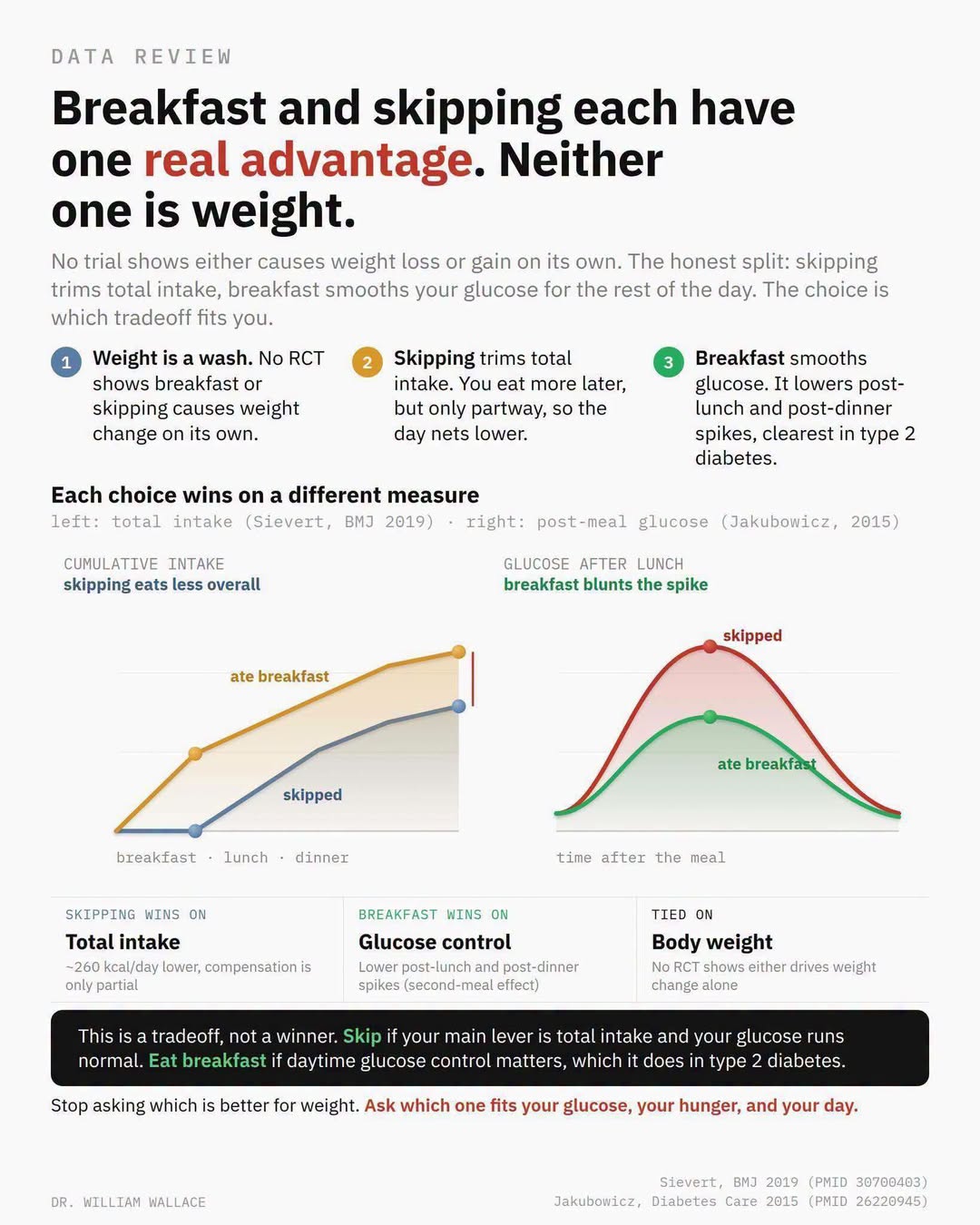
Observational studies link skipping breakfast with weight gain, but a 2019 BMJ systematic review pooling 13 randomized trials found no evidence that eating breakfast helps weight loss or that skipping it causes weight gain. People who skipped breakfast ate about 260 fewer calories per day overall. The possible downside is poorer glycemic control later in the day in people with diabetes or prediabetes.5 The shared write-up says that in a randomized trial in people with type 2 diabetes, skipping breakfast led to higher blood sugar and a weaker insulin response after lunch and dinner.5
On the other hand, a small 6-week crossover trial in type 2 diabetes found that delaying breakfast from about 7 a.m. to mid-morning or midday lowered the 2-hour blood sugar response to that first meal, and a 20-minute walk afterwards added only a little. Louis reads this as showing that morning fasting is acceptable, at least in the short term, even with poor glycemic control.25
These findings are not strictly contradictory, because they measure different things (the response to the first meal versus the response to later meals), but they illustrate why people with diabetes or prediabetes are a special case.
Circadian advice
Louis summarizes advice from circadian researcher Satchin Panda: wait at least two hours after waking before eating, because the pancreas regulates insulin poorly early on, and finish the last large meal at least three hours before sleep, because melatonin starts rising about three hours before bedtime and inhibits insulin secretion. This comes from a podcast clip, not from a trial cited in the post.26
Snacking
Citing a 2023 study of about 23,000 US adults, Louis points out that snacks make up about 25% of daily energy intake. He argues that eliminating between-meal snacking could cut calories by about 25% and sugar by a third for a typical American; that figure is his extrapolation.27
Can fasting reverse plaque? Plausible, but not shown
Louis asks whether fasting can stabilize or reverse arterial plaque and answers "maybe." He proposes autophagy as the mechanism and notes that a clinician in a shared post reports seeing plaque regress with fasting in practice, which is explicitly anecdotal. He also points to the 2010 DIRECT-Carotid trial in Circulation, in which major weight loss (30 lb or more) was associated with regression of carotid atherosclerosis.28 In another post he suggests autophagy may help explain why major weight loss reverses soft plaque, again as a hypothesis.29
The same post mentions a Nature Metabolism study in which 12 people did a 7-day water-only fast with blood proteins tracked daily: little changed for the first two to three days, then around day 3 more than 1,000 proteins shifted, many involved in the extracellular matrix.28 That shows the body changes during a longer fast; it does not show that plaque shrinks.
A clinician's magazine interview shared by Louis (not a peer-reviewed paper) says supervised extended fasting preferentially mobilizes visceral fat.30 A news article he shares says that fat cells shift from conventional lipolysis toward autophagy (lipophagy) as a fast lengthens, which he thinks may explain why fasting clears liver and pancreas fat.31
Nuances, risks and misconceptions
Muscle: what happens when you eat less
Calorie restriction costs muscle as well as fat. Louis argues that most of the loss can be prevented by resistance exercise, with no need to raise protein. He cites more than 70 trials in which high protein added only about 5% extra strength gain over 22 weeks, and a 16-week trial of 82 people with type 2 diabetes. In that trial, fat-free mass changed by -2.7% with diet alone, -1.9% with moderate exercise and -0.2% with high exercise (six days a week).6 Valter Longo is quoted as saying that fasting done correctly need not harm muscle or slow metabolism, though the post gives no numbers.32
Show data
| Body fat lost | Fat-free mass lost | |
|---|---|---|
| Diet alone | 3.5% | 2.7% |
| Diet + moderate exercise (3 times a week) | 6.3% | 1.9% |
| Diet + high exercise (6 times a week) | 8.0% | 0.2% |
An 8-week trial in adults with overweight doing alternate-day fasting found that krill oil (EPA 764 mg and DHA 376 mg per day) preserved fat-free mass (-0.2 kg versus -1.2 kg on placebo) and grip strength despite equal weight loss of about 4.5 kg. It was short, and Louis notes that omega-3 protection of muscle has been accumulating for years.33
Cuervo's group's work in animals and human muscle samples suggests that fasting and resistance exercise raise chaperone-mediated autophagy, which declines with age in muscle; Louis notes that the heart is a muscle too.34
Autophagy is not a switch you flip with one change
A randomized crossover trial (preprint, not yet peer reviewed) in healthy adults found that halving dietary protein from 20% to 10% of calories for four weeks did not significantly change autophagic flux in blood immune cells. Louis concludes that moderate protein restriction alone, without fasting or calorie restriction, does not seem to raise basal autophagy. The caveats are the short duration and the fact that only circulating immune cells were measured.35
The danger of overdoing it
- Thyroid. Louis says prolonged very low carbohydrate diets, especially combined with fasting, intense exercise and other restriction, can suppress thyroid hormones (low T3 and/or T4 with a normal or low TSH), which can mislead doctors who look at TSH alone. He frames mild suppression as resembling healthy calorie restriction and full hypothyroidism as a major risk factor. He suggests gradually adding whole grains, sweet potatoes or fruit to see whether thyroid function recovers. These are his mechanistic opinions without cited studies.736
- Cholesterol. Louis links very lean people on strict keto diets who also fast and train intensely to the "lean mass hyper-responder" pattern of extremely high LDL, and cites a 1999 Journal of Nutrition study in which fasting raised total cholesterol, LDL and apoB in healthy non-obese people. He calls this a hypothesis and warns that restriction can be overdone.3738
- Other downsides. A Nature Reviews Endocrinology review shared by Louis catalogues possible adverse effects of calorie restriction, mostly from rodents: slower wound healing, hunger, cold sensitivity, bone loss, effects on brain size and cognition, reproduction and infection. Human lifespan benefits remain uncertain.39
Does the fast itself matter, or just total calories?
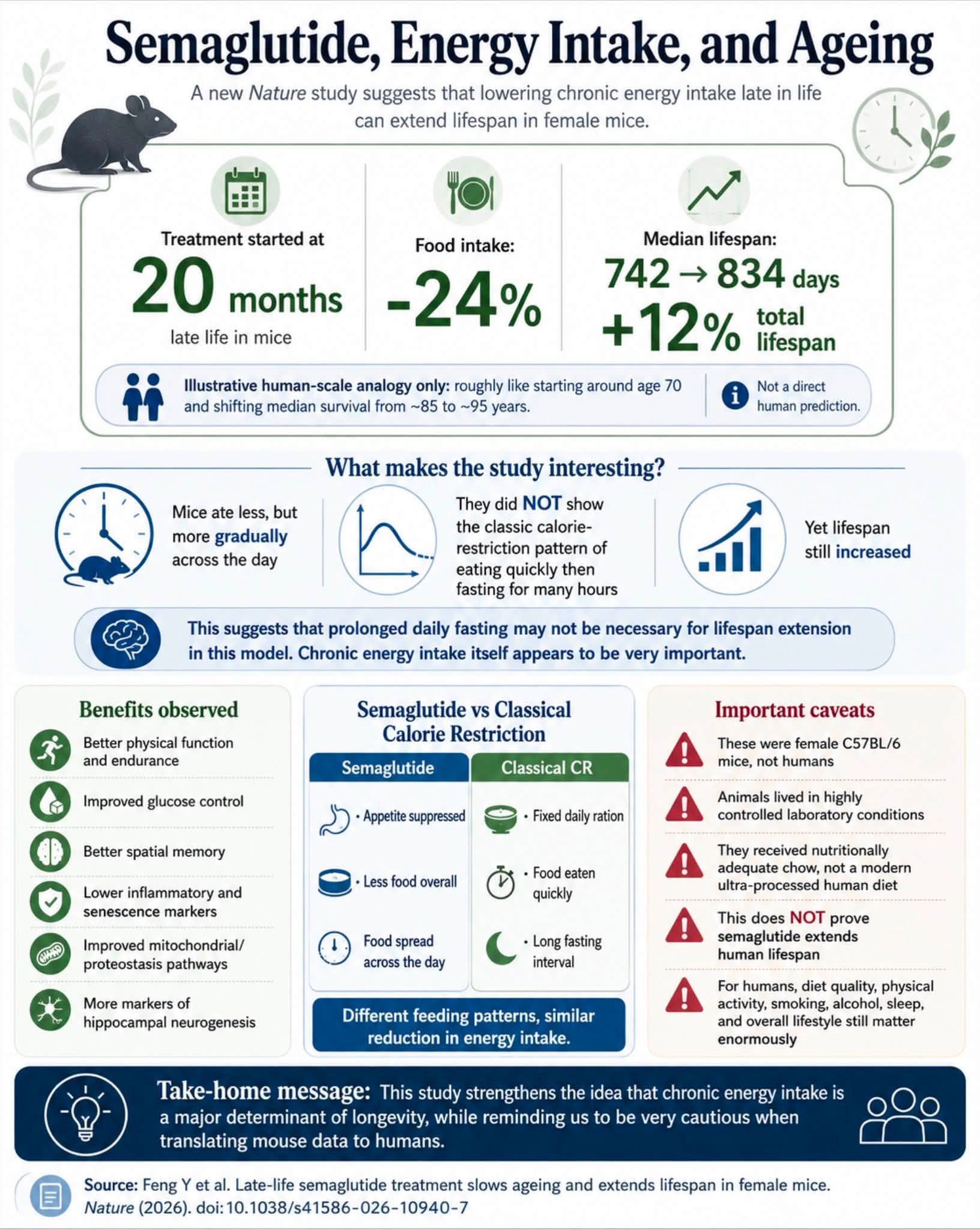
The EASD trial attributed its glucose benefit to the 16-hour fast, not to changes in calorie intake.4 But a mouse study of semaglutide, which Louis shares, found a 12% rise in median lifespan (742 to 834 days) alongside a 24% drop in food intake. The mice ate less but more gradually across the day, which Fontana reads as suggesting that prolonged daily fasting is not necessary and that chronic energy intake matters enormously; the post cautions that this does not mean 10 extra years in humans.40
In the six-month intermittent fasting trial, benefits were largely tied to weight and fat loss.3
Fasting-mimicking diets
A shared post says Valter Longo's fasting-mimicking diet may, in periodic cycles, lower blood sugar, cholesterol, blood pressure and inflammation, and advises involving a healthcare professional. No trial is cited, so treat it as a claim to verify.41
Who should be cautious
The Verdin post lists a history of disordered eating, type 1 diabetes, pregnancy and age-related muscle loss as situations that change the calculus, and advises talking to a physician first.1 People on diabetes medication or insulin are another group for whom the admins' general advice to involve one's doctor applies, given that medication needs can fall as weight comes down.18
What this means for you
- The group's admins recommend discussing any fasting plan with your doctor, particularly if you have diabetes, take medication, are pregnant, have a history of disordered eating or are losing muscle with age.1
- If your goal is weight and visceral fat loss, many routes work; trials of intermittent fasting, 5:2 and very low calorie diets all produced substantial losses.31719
- An 8-hour eating window is a simple option with human evidence for better glucose control, and the position of the window (early or late) did not matter in that trial.4
- Skipping breakfast is not shown to cause weight gain in randomized trials, but if you have diabetes or prediabetes, monitor how your glucose responds.525
- Consider avoiding large meals in the three hours before bed; this is expert advice rather than trial evidence.26
- Pair calorie reduction with resistance exercise to protect muscle.6
- Watch for signs of overdoing it, such as thyroid symptoms or a surprising jump in LDL, and discuss them with your clinician.737
- Do not treat fasting as a replacement for proven treatments or a healthy diet; the trial showing blood-fat benefits also showed no effect on blood pressure or inflammation.3
Frequently asked questions
Will fasting extend my life?
In animals, calorie restriction extends lifespan almost universally, with rodent gains up to 30-40%. In humans this is unproven, and the group's admins say controlled trials are needed.18 The review of calorie restriction downsides also says human lifespan benefits remain uncertain.39
Can fasting lower my cholesterol?
In the 6-month intermittent fasting trial, non-HDL cholesterol fell about 11% and triglycerides about 23%.3 But a 1999 study shared in the group found that one week of fasting raised LDL and apoB in healthy non-obese people, so longer or more extreme fasting may behave differently.38
Is it better to eat early or late in the day?
In the EASD crossover trial, an 8-hour window helped blood sugar whether it was early or late.4 Satchin Panda's advice (delay the first meal two hours after waking and finish dinner three hours before sleep) is expert opinion.26
Will I lose muscle?
Some, if you eat in a calorie deficit without strength training. In the 16-week trial in type 2 diabetes, high-dose exercise combined with calorie restriction essentially preserved fat-free mass.6
Can fasting reverse plaque or diabetes?
For diabetes, small trials reported remission in a large share of participants after intermittent fasting or a very low calorie diet, linked to weight and liver and pancreas fat loss.1819 For plaque, the evidence is plausible and anecdotal, with large weight loss as the better-supported route.28