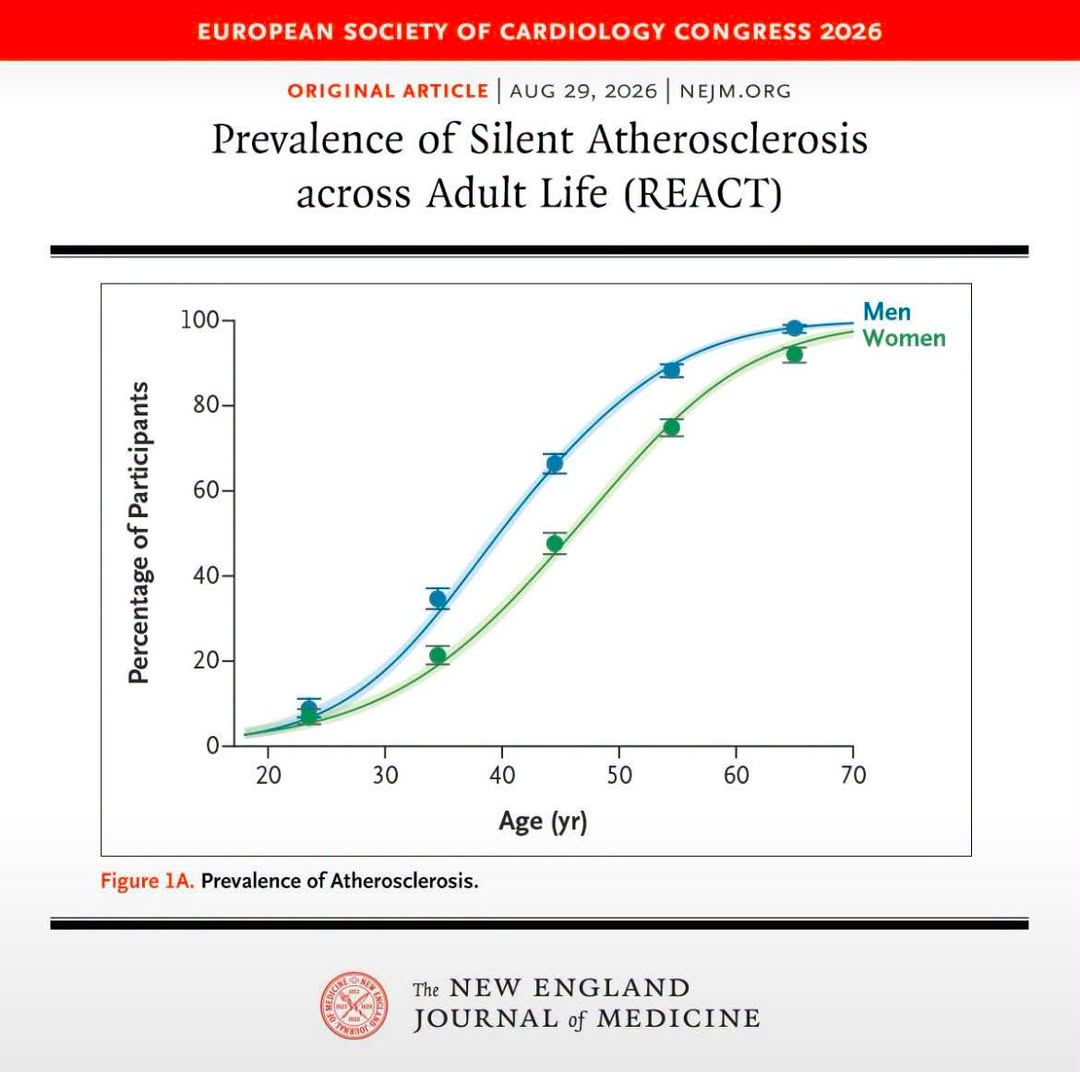
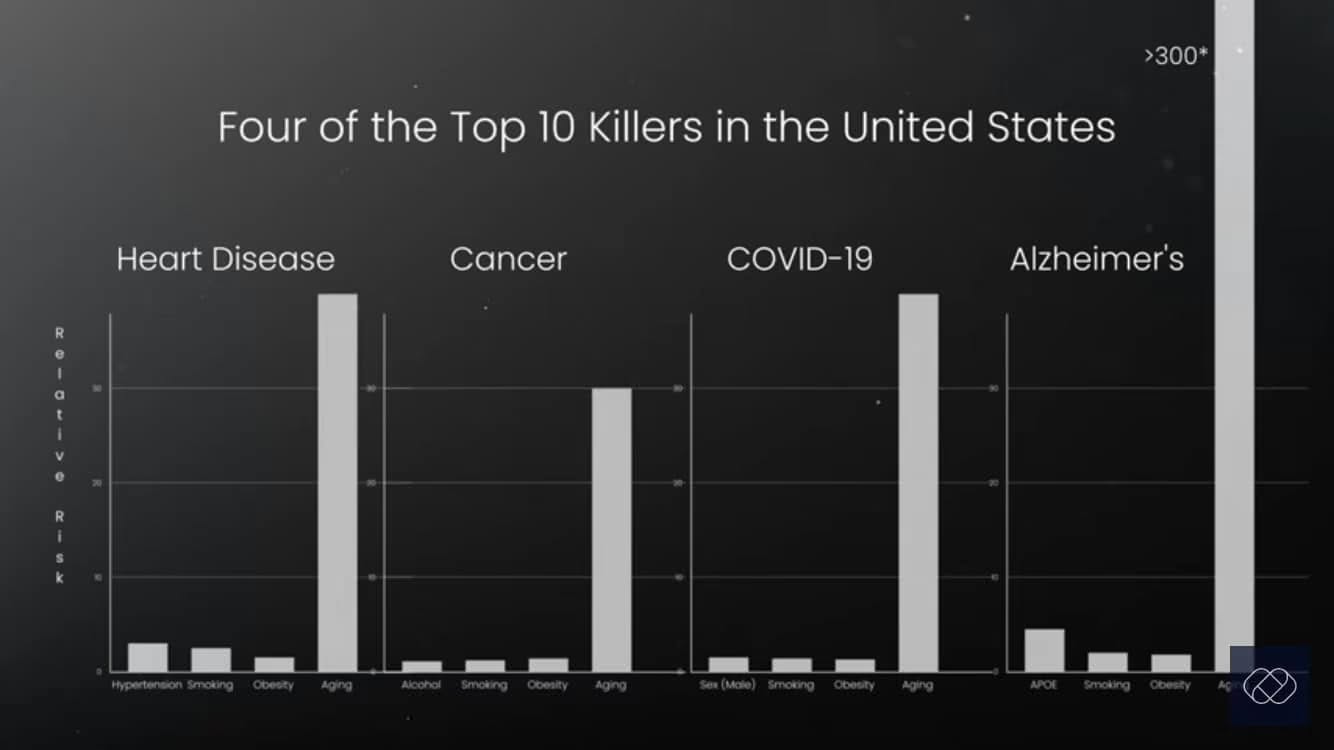
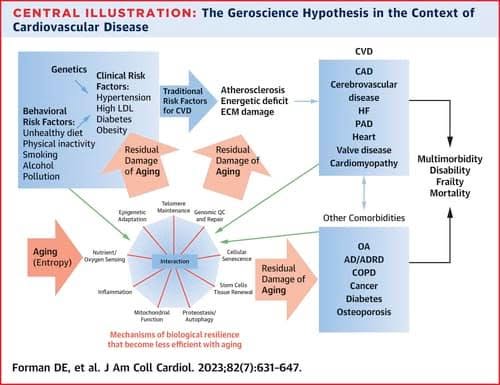
Age is by far the biggest risk factor for heart disease.
Let’s compare it to other major risk factors in a quantitative and rigorous way.
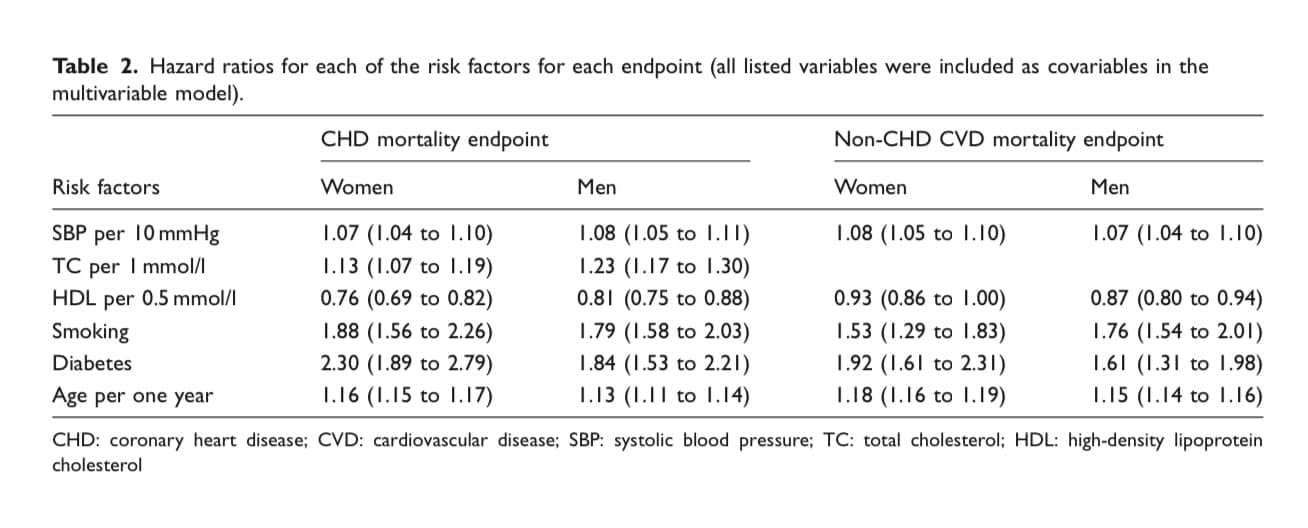
This table of hazard ratios for each of the major CVD risk factors is from a risk calculotor which is popular in Europe (called SCORE O.P.). This calculator risk model applies to people over 65, but similar risk calculators apply to middle age and younger people as well.
The hazard ratio of 1.16 for age in the table tells us that for each year of age above 65, your risk of dying from CVD goes up by 1.16x or 16%. This means that if you are 85 then your risk goes up by (1.16)^20 = 19.5x = 19,500%, compared to the average 65yo.
Simply aging 20 years from 65 to 85 raises your risk of dying from CVD by almost 20 times!
Compare this to other major factors (in the table) :
Having diabetes raises your risk by 2.3x.
Smoking raises risk by 1.88x.
Having a systolic blood pressure 40 mmHg above normal raises risk by (1.07)^4 = 1.31x
Increasing total cholesterol by elevating LDL by 40mg/dL (1 mmol/L) raises risk by 1.13x.
(Note that I used numbers from the table for women, in these calculations. The calculations for men are similar.)
——
The table comes from this paper:
Paper · Eur J Preventive CardiologyEur J Preventive Cardiology articleacademic.oup.com