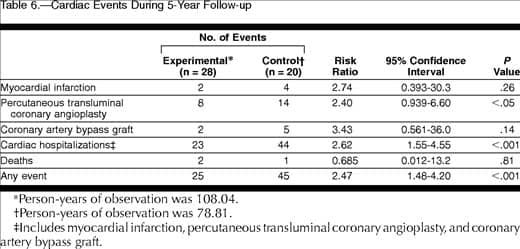
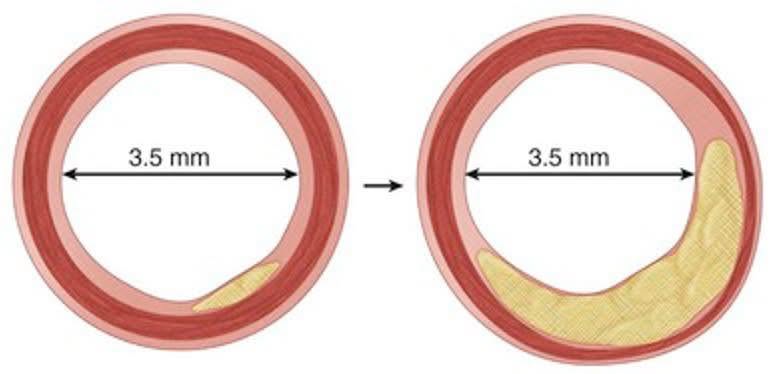
Below are the results of Dean Ornish’s small randomized controlled trial testing a WFPBNO diet verses CVD (published in 1998).
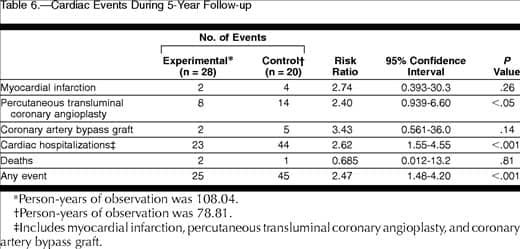
Note that this was a comprehensive lifestyle program that included other positive lifestyle changes besides just diet.
People on the diet and lifestyle program had considerably fewer cardiac events than controls over a 5 year period (p<0.001).
However, the study clearly shows that a WFPBNO diet was NOT a cure for CVD.
Of the 28 people who faithfully stuck with the WFPBNO diet and lifestyle program for 5 years, there were still:
2 heart attacks (myocardial infarction),
8 angioplasties,
2 bypass surgeries,
23 cardiac hospitalizations,
2 deaths!
Some of these numbers are better than controls, but only angioplasties, cardiac hospitalizations, and total events were statistically significant when compared to controls (p<0.05). Heart attacks, bypass surgeries, and deaths were not. In fact, there were 2 deaths in the diet group and only 1 in the control group. This is obviously NOT a cure.
You can read the full published journal paper here:
Paper · JAMAJAMA articlejamanetwork.com chrisjbradshaw.comCan lifestyle changes reverse coronary heart disease Ornish Lancet 1990.pdfchrisjbradshaw.comQuoted from the paper:
“Twenty-five cardiac events occurred in 28 experimental group patients vs 45 events in 20 control group patients during the 5-year follow-up (risk ratio for any event for the control group, 2.47 [95% confidence interval, 1.48-4.20]).”