A heart attack (myocardial infarction) happens when blood flow through a coronary artery is suddenly blocked and part of the heart muscle is starved of oxygen. In the group's framing, most heart attacks are caused by a clot, but the clot does not form out of nowhere. Louis Nervegna argues that clots form when unstable plaque ruptures, and that people with near-zero plaque have near-zero risk of clot-caused heart attacks.1
That makes the story of a heart attack mostly the story of plaque: how fatty deposits build up silently over decades, which kinds are prone to breaking open, what pushes them over the edge on a given morning, and what doctors do afterwards. This summary follows that arc. It is a summary of group discussion and the studies shared there, not medical advice; the group's admins consistently recommend working with a cardiologist, especially for people at high risk.2
From plaque to heart attack
The slow build
An article Louis shared lays out a 12-step biology of atherosclerosis: endothelial dysfunction (the artery lining stops working properly), lipoprotein entry into the artery wall, retention there, chemical modification of the trapped particles, activation of innate immunity, foam cell formation, smooth muscle cells building a cap, formation of a necrotic (dead-tissue) core, an adaptive immune response, plaque growth with new small vessels, calcification, then plaque rupture or erosion and finally thrombus (clot) formation.9
Rupture, erosion and calcified nodules
Louis summarized a 2022 JAMA review of acute coronary syndromes this way for heart attacks caused by acute thrombosis:3
- about 64% come from rupture of soft, lipid-rich plaque;
- about 25% come from gradual erosion of soft plaque, where blood touching exposed tissue triggers clotting;
- only about 5% involve calcified nodules, where dense pieces of calcium break through the inner wall and tear the covering.
By his tally, around 95% of these events therefore involve soft rather than calcified plaque.3 This tally and its interpretation are Louis's reading of the review.
Why a "mild" plaque can still cause a heart attack
Gokhan Can summarized a 2019 JACC review that challenges the old idea that most heart attacks come from sudden rupture of mild, non-obstructive plaques seen on earlier angiograms.7 According to the summary:
- In patients who had thrombectomy after a heart attack, the culprit lesions averaged more than 60% stenosis, and postmortem studies found 70% of ruptured plaques had more than 75% narrowing.7
- In PROSPECT, lesions responsible for events had grown from 32% to 65% stenosis before the event, and interim enlargement quadrupled the likelihood of a cardiac event. A registry showed non-culprit lesions progressing from 42% to 84%.7
- On CT angiography, eventful lesions had larger total plaque volume (135 versus 58 mm3) and much larger necrotic cores (20 versus 1 mm3); high-risk plaques that progressed carried a 28-fold higher likelihood of an acute coronary event.7
In other words, the plaque that ruptures may have looked mild on an earlier scan because it was in a rapid growth phase, not because mild plaques are inherently dangerous. The review's authors argue for imaging subclinical disease and treating it aggressively; in the summary, progression stops at LDL below 70 mg/dL and regression generally needs lower, around 60 mg/dL or below.7
Show data
| Earlier scan | Before the event | |
|---|---|---|
| PROSPECT: lesions that caused events | 32% | 65% |
| Registry: non-culprit lesions that progressed | 42% | 84% |
Show data
| Lesions that caused events | Other lesions | |
|---|---|---|
| Total plaque volume | 135 | 58 |
| Necrotic core volume | 20 | 1 |
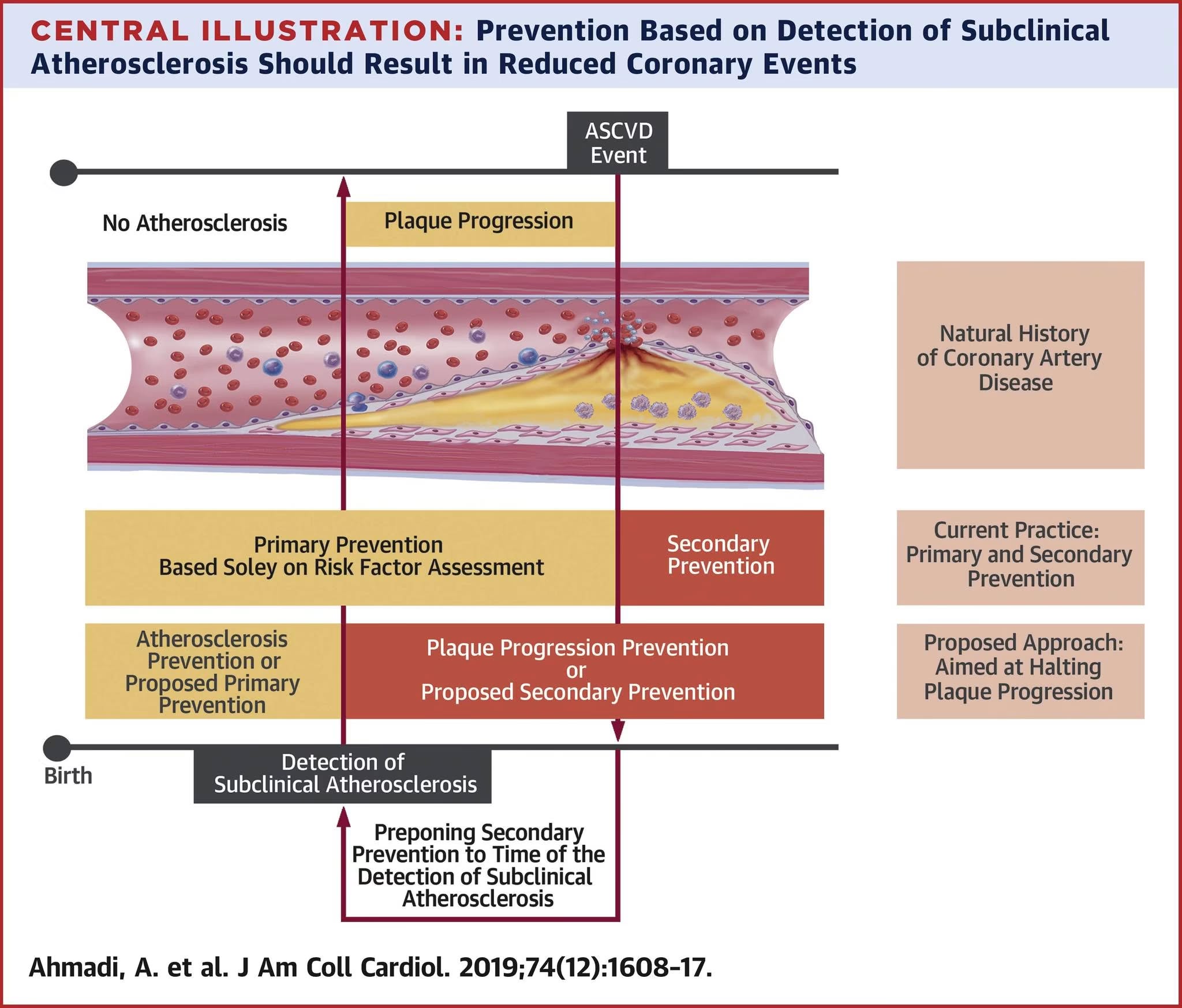
Real-life stories in the group illustrate how silent this can be. A fit runner collapsed mid-race with an undiagnosed 50-60% blockage in the left anterior descending ("widowmaker") artery, with atrial fibrillation rather than exercise as the trigger; the article also notes collateral vessels can mask blockages.10 A lean 35-year-old with a calcium score of 0 but an LDL of 372 mg/dL had a massive heart attack, which Louis notes shows a zero calcium score does not exclude soft plaque.11
What sets off the clot
Plaque is the necessary ingredient, but several triggers show up repeatedly in the posts.
Time of day and exertion
Louis explains that heart attacks peak in the early morning after waking, when cortisol surges, blood vessels tighten and blood pressure spikes.12 He suggests that taking blood pressure medication, aspirin and statins at bedtime can be a good idea for this reason (worth discussing with a doctor), and in another post he noted that most cholesterol is made during sleep.1213 He later added a caveat from a commenter: taking blood pressure medication at night can increase the risk of defecation syncope-related cardiac arrest, mostly a concern in frail or elderly people.12 No studies are cited for the timing advice.13
Heavy exertion can also tip the balance. An American Heart Association patient story that Louis shared describes a fit, healthy-eating man who had a heart attack after 40 minutes of shoveling heavy snow; doctors thought a piece of plaque had broken off.14 Another story describes a 39-year-old regular marathon runner who kept exercising through chest tightness, illustrating that exercise does not rule out a heart attack.15
Infections and inflammation
Louis shared an AHA review of 155 studies finding that people were 4 times as likely to have a heart attack in the month after laboratory-confirmed influenza, and 3 times as likely in the 14 weeks after COVID, with risk staying elevated for a year. The proposed mechanisms are prolonged inflammation and an increased tendency to clot.4 Chronic infections also raised long-term risk: 60% higher heart attack risk with HIV, 27% with hepatitis C and 12% with shingles.4 Other posts report that severe first-wave COVID was linked to about double the heart attack and stroke risk for up to three years16, and that long COVID is associated with more venous and arterial clots.17
Show data
| Heart attack | Stroke | |
|---|---|---|
| HIV | 60% | 45% |
| Hepatitis C | 27% | 23% |
| Shingles | 12% | 18% |
A possible link between germs in the plaque itself was reported in a 2025 Journal of the American Heart Association study. It found oral-type bacteria, specifically viridans-group streptococci, in about 42% of coronary plaque samples, forming protective biofilms that may sit dormant until a trigger such as a viral infection awakens them, causing inflammation that ruptures the fibrous cap and leads to a clot.1819 Tampere University researchers describe the same idea and note that it needs further validation.2021 The news report's takeaway is that good oral hygiene may matter; this is an emerging hypothesis, not established practice.21
Substances, drugs and clotting biology
Several shared studies relate specific exposures to heart attack risk. Each is an association, and some posts give few details:
- Anabolic steroid users had about 3 times the heart attack risk in an 11-year comparison of 1,189 users with 59,450 controls.2223
- Cannabis users were reported to have about 6 times the heart attack risk in a large retrospective study, while a meta-analysis linked it to a 50% higher risk (details not provided in the post).24
- The highest blood levels of xylitol were linked to a 57% higher cardiovascular event risk across 17,700 participants.25
- Long-term proton pump inhibitor use was linked to about a 20% higher heart attack risk, as reported in a news item.26
On the biology side, a 2024 Cell paper found that with age, stem cells make platelets through a direct pathway that produces hyper-reactive platelets more prone to thrombosis.27 Louis also shared an explanation of clonal hematopoiesis (CHIP), age-related mutations in blood stem cells that were associated with a 54% higher chance of dying within a decade and with doubled heart attack risk.28 And a Nature feature describes lipoprotein(a), which carries about six times LDL's risk particle for particle, possibly because it impairs clot breakdown.29
Not every heart attack is from plaque
A Mayo Clinic study shared by Louis reported that more than half of heart attacks in women under 65 had nontraditional causes such as spontaneous coronary artery dissection (SCAD) and embolism.30 The plaque story above describes the most common pattern, not every case.
Warning signs and what to do
The posts do not offer a symptom checklist, but several patient stories describe what an event can feel like: intense chest pressure14, chest tightness that got worse with exertion and difficulty swallowing15, and fatigue as an early sign in a marathon runner who had a heart attack at 48.31 Gokhan described a friend who had a heart attack at 48 and needed emergency bypass surgery after ignoring a prescribed statin.32
Practical points the group raised:
- "Cough CPR" is a myth. Sharing an AHA piece debunking it, Louis says the right response is to chew and swallow a full-strength aspirin, call 911 and unlock the door in case you pass out.8
- A cardiac arrest (the heart stops) is not the same as a heart attack. Most heart attacks do not cause cardiac arrest, but when they do they are usually deadly; about 90% of out-of-hospital cardiac arrests are fatal.633
- Treatment has improved greatly: under 10% of heart attacks now result in death, versus up to half decades ago.6
- Louis suggests people with heart disease ask their doctor about temporary baby aspirin when they have an infection such as COVID. He notes this is his suggestion rather than something proven in trials.434
After a heart attack
The first weeks
Louis explains that patients are put on atorvastatin 80 mg once stabilized. In PROVE IT-TIMI 22, the 30-day composite of death, heart attack or rehospitalization was 3.0% with atorvastatin 80 mg versus 4.2% with pravastatin 40 mg (hazard ratio 0.72).35 He attributes the quick benefit mainly to pleiotropic effects such as anti-inflammatory and plaque-stabilizing actions, though the post notes some argue LDL lowering itself contributes.353637
The Johns Hopkins L-arginine trial is a caution in the other direction: in 153 heart attack survivors taking 3 g three times daily, six deaths occurred on arginine and none on placebo, and the trial stopped at six months.38 Louis speculates, without evidence, that citrulline might carry a similar concern.38
Procedures and recovery
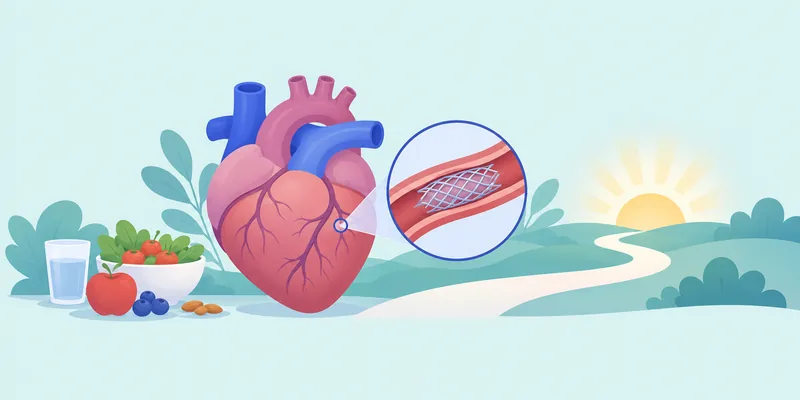
The stories in the group mention stents, a heart pump, a pacemaker/defibrillator and bypass surgery as treatments after heart attacks.14153239 One analysis noted that angiograms taken right after a heart attack show a mixture of plaque, fresh clot and vessel spasm, so later improvement partly reflects natural healing and clot dissolution rather than the effect of diet alone.40
A newer finding shared by Louis reports that human heart muscle cells do divide after a heart attack, though regeneration is limited and does not prevent scarring or heart failure.41
Trials after a heart attack
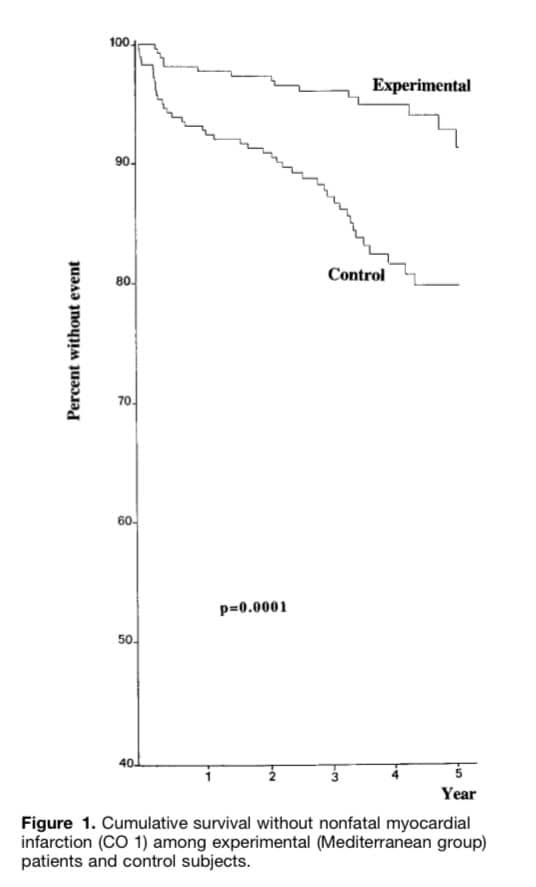
- The Lyon Diet Heart Study randomized over 600 heart attack survivors to a Mediterranean-style or AHA diet. After a mean of 27 months, cardiac death plus non-fatal heart attack had a risk ratio of 0.27, with Louis stating 73% fewer events and 70% fewer total deaths.4243 The comparison with drugs is his opinion.43
- In Dean Ornish's small 1998 trial, 28 intervention patients had 25 cardiac events versus 45 in 20 controls over five years. Even those who adhered still had 2 heart attacks, 8 angioplasties, 2 bypasses and 2 deaths, and only angioplasties, hospitalizations and total events differed significantly, so Louis calls it not a cure.4445
- A lifelong vegan who had a heart attack at 70 needing two stents attributed it partly to rising weight and higher-than-ideal LDL; Louis uses it to say healthy plant-based diets lower but do not eliminate risk.39
- TARGET-D (630 adults with acute coronary syndrome) found tailored vitamin D dosing did not significantly reduce the main composite, though heart attack risk was 52% lower; the authors say it needs validation to rule out data mining.46
- A large JAMA trial of the traditional Chinese medicine tongxinluo was reported to reduce heart attacks, deaths and complications for at least a year after a first heart attack, but the post gives no effect sizes.47
- A review of 884 supplement trials found omega-3 lowered heart attack risk (RR 0.85) and that vitamins C, D, E and selenium had no effect on cardiovascular disease.48
- SURPASS-CVOT in 13,299 adults with type 2 diabetes and heart disease found tirzepatide noninferior to dulaglutide (MACE 12.2% versus 13.1%, HR 0.92), without formally reaching superiority.49
Preventing the first one
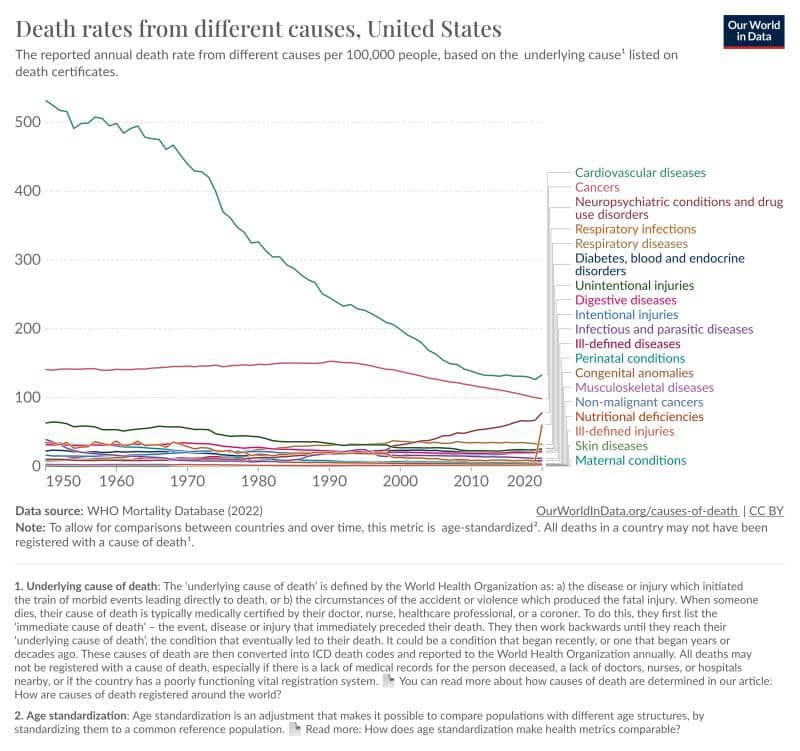
Louis cites a study of over 9 million South Korean adults plus thousands of US adults in which over 99% of those who had a first heart attack, stroke or heart failure had at least one nonoptimal blood pressure, cholesterol, blood sugar or tobacco measure beforehand, and hypertension was the most common.5 He also points out that US heart disease deaths fell about 70% since the 1950s, mainly because of fewer heart attacks and strokes.50
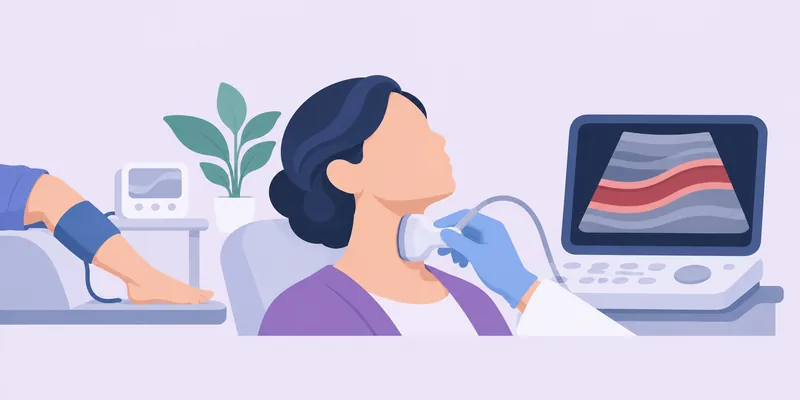
Gokhan's summary of SCOT-HEART (4,146 patients with stable chest pain) found coronary CT angiography guidance lowered coronary death or nonfatal heart attack to 2.3% from 3.9% at five years, mainly by directing aspirin and statins to people with plaque; the result applies to chest-pain patients only.51 Louis also notes the AHA PREVENT risk calculator is for people without known disease and underestimates risk for those with significant atherosclerosis.52 Lifestyle posts cite nuts, with regular eaters showing 30-50% lower risk in large cohorts53, exercise that reduced coronary plaque burden, especially combined with LDL below 70 mg/dL54, and vaccination (a shingles vaccine cohort showed 28% fewer heart attack hospitalizations).55 Louis argues that studies finding saturated fat harmless usually compare it with the standard Western diet rather than with healthy foods.56 In a back-of-envelope calculation he says universal statin use could halve heart attacks and strokes yet add only days to average lifespan over five years.57
Nuances and disagreements
- Mild versus obstructive plaque. A plaque that looks mild can still cause an event, but the JACC review argues such plaques usually go through a phase of rapid growth first, so one early scan may understate the risk.710
- Diet is not a cure. Louis stresses this using Ornish, a lifelong vegan and Esselstyn's angiogram.394045 He nonetheless praises Lyon as unmatched.43 The Lyon figures are from one trial, with a Mediterranean group and an AHA diet group, and the comparison with drugs is opinion.
- Alcohol. A PREDIMED follow-up linked mild-to-moderate wine to a hazard ratio of 0.5 for cardiovascular outcomes, but Louis stresses it is only "possible" and alcohol's role is debated.58
- Infection hypothesis. The biofilm work is early and flagged as needing validation.20
What this means for you
- Silent plaque can exist with no symptoms and even with a calcium score of zero; it may be worth discussing imaging and LDL targets with your doctor rather than relying on feeling healthy.1011
- Over 99% of first events in one large study followed at least one nonoptimal blood pressure, cholesterol, glucose or tobacco measure, so these are worth knowing and controlling.5
- Louis advises that in a suspected heart attack you chew full-strength aspirin and call emergency services rather than relying on coughing.8
- If you have heart disease, ask your doctor about medication timing and about aspirin during infections.1234
- After an event, add natural approaches to cardiologist-directed treatment rather than replacing it.2
- Be cautious with supplements after a heart attack, such as L-arginine.38
Frequently asked questions
Is a heart attack the same as cardiac arrest?
No. A cardiac arrest is when the heart completely stops; most heart attacks do not cause one, but if one happens outside hospital about 90% are fatal.633
Can a heart attack happen with a calcium score of zero?
Yes. A 35-year-old with a score of 0 had a massive heart attack, and Louis notes a zero score does not exclude soft plaque.11
What type of plaque is most likely to cause a heart attack?
In the JAMA review summary, about 64% of thrombotic heart attacks come from rupture of soft lipid-rich plaque and 25% from erosion of soft plaque.3
Why do heart attacks happen in the morning?
Louis attributes it to the cortisol surge, vessel tightening and blood pressure spike after waking.12
Can infections trigger a heart attack?
In the AHA review, heart attack risk was 4 times higher in the month after confirmed influenza and 3 times higher in the 14 weeks after COVID.4
How common are fatal heart attacks now?
Under 10% of heart attacks now result in death.6