A heart attack, a stent or a bypass operation fixes an emergency or a blockage, but it does not remove the underlying disease. The arteries still contain plaque, the risk factors that built it are usually still present, and the chance of another event is higher than in someone who has never had one. "Secondary prevention" is the name for everything done afterwards to lower that risk: medicines, cholesterol and blood pressure control, diet, exercise and avoiding things known to do harm.
The group's posts do not contain a complete clinical protocol, and they are not a substitute for your own cardiology team. What they do contain is a consistent theme from the admins. Louis Nervegna's first rule for anyone at high risk is to find a good cardiologist and follow that care, doing any natural or alternative approaches in addition to it rather than in place of it.6 Within that frame, the strongest evidence collected in the group concerns three things: high-intensity statin treatment and very low LDL, a Mediterranean-style diet, and avoiding a few specific harms.
This summary is organized around those themes. Where a post is an opinion of an admin, it is attributed as such, and where the group's material has gaps (for example, cardiac rehabilitation programs or details of antiplatelet drug combinations are not discussed in depth), that is said plainly.
What a heart attack actually is
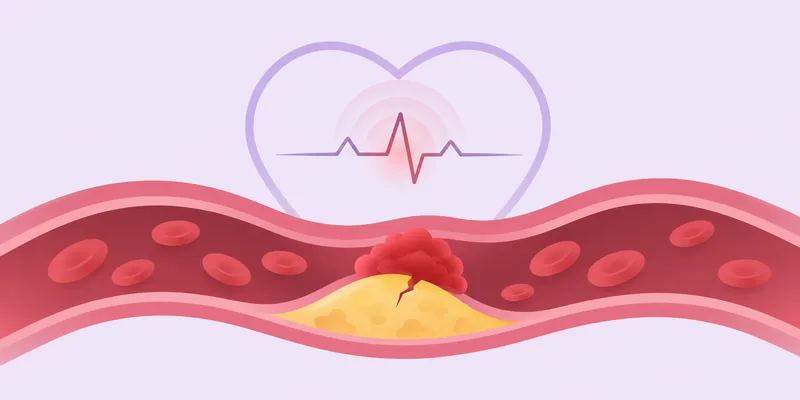
Most heart attacks are caused by a blood clot forming on a plaque in a coronary artery. Louis argues that clots do not appear out of nowhere in clean arteries: they form when an unstable plaque ruptures, which is why people with near-zero plaque have near-zero risk of clot-caused heart attacks.8
A post summarizing a 2022 JAMA review on acute coronary syndromes (ACS, the umbrella term for heart attack and unstable angina) says that about 64% of heart attacks caused by acute thrombosis come from rupture of soft, lipid-rich plaque and another 25% from erosion of soft plaque, while only about 5% involve calcified nodules.9 Louis draws the conclusion that the plaque type behind most heart attacks is the type that statins and other lipid-lowering drugs have been shown to stabilize and reverse.9
Coronary disease also usually builds silently. An explainer shared by Gokhan Can describes four stages, from soft plaque that can begin in childhood or young adulthood, through calcification and narrowing, to ischemia (too little blood flow, which may cause angina or be silent) and finally overt disease with heart attacks, arrhythmias or heart failure.10
A 2019 JACC review summarized by Gokhan adds that "mild" plaques often progress rapidly before they rupture. In the PROSPECT study, the lesions that later caused events had grown from about 32% to 65% stenosis before the event, and interim enlargement quadrupled the likelihood of an event.7 The same review reports that plaque progression stops at LDL below about 70 mg/dL and that regression generally requires lower, below about 60 mg/dL.7
Two reminders from the group about the event itself: Louis advises chewing and swallowing a full-strength aspirin and calling emergency services, and unlocking the door in case you pass out. He also shared an American Heart Association piece debunking "cough CPR" as a way to self-treat a heart attack.11 Stories of fit people with heart attacks, such as a 39-year-old marathon runner who kept exercising through chest tightness, are shared to make the point that exercise does not rule out a heart attack and symptoms should not be ignored.12 Another post notes that fatigue was an early sign for a marathon runner who had a heart attack at 48.13 A healthy, fit man also had a heart attack after 40 minutes of heavy snow shoveling; doctors suspected a piece of plaque breaking off.14
In hospital: the high-dose statin
Louis explains that people are put on atorvastatin 80 mg immediately after a heart attack, once stabilized, and that this has been standard care for many years.1 The key trial is PROVE IT-TIMI 22, quoted in the post: the 30-day composite of death, heart attack or rehospitalization occurred in 3.0% of patients receiving atorvastatin 80 mg versus 4.2% receiving pravastatin 40 mg (HR 0.72, 95% CI 0.52 to 0.99, p = 0.046).1 In stable patients the rates were 9.6% versus 13.1% (HR 0.72, p = 0.003).1 The authors concluded that intensive statin therapy early after ACS reduces clinical events at 30 days, consistent with greater early pleiotropic effects.1
Show data
| Atorvastatin 80 mg | Pravastatin 40 mg | |
|---|---|---|
| First 30 days | 3.0% | 4.2% |
| Stable patients | 9.6% | 13.1% |
"Pleiotropic" effects are actions beyond lowering LDL, such as reducing inflammation and stabilizing plaque and the lining of the artery. Louis suggests the speed of the benefit (in about 14 days) likely has little to do with LDL itself and that statins work best here if they are lipophilic, like atorvastatin, and at the maximum prescribed dose.15 He also notes the counter-argument: some researchers think the pleiotropic effects are partly due to lower LDL, since LDL is itself inflammatory once it gets into the artery wall and oxidizes.1 Louis's practical advice is not to fight with hospital staff over the 80 mg dose and to save any questions until after you are out of immediate danger.1 He has reposted this message for new members.16
LDL after the event: how low?
Statins are among the most strongly supported treatments in the group's posts. Louis shares a graph of all 25 statin randomized trials through 2016 that had a significant effect on cardiovascular outcomes (excluding trials shorter than 6 months or with fewer than 50 events). On average, an LDL reduction of about 75 mg/dL cut heart attack and stroke risk by about 40% versus placebo.17 Eighteen of those 25 trials were secondary prevention (people who already had cardiovascular disease), and the primary-prevention trials actually showed even larger relative reductions.1718 He adds that since 2016 more trials have corroborated the finding.17
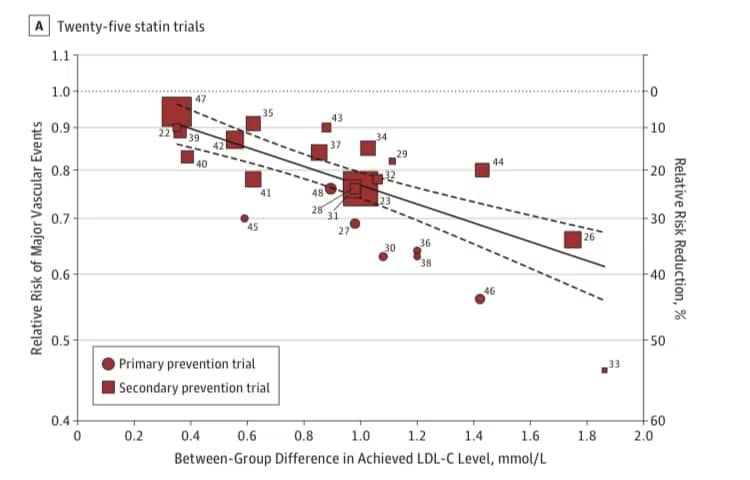
For people who have already had an ACS, Gokhan shared a European Heart Journal viewpoint on combination lipid-lowering: the earlier and lower the LDL goes after ACS, the better, with continued improvement down to about 30 mg/dL.2 This is consistent with the JACC review noting progression stops under about 70 mg/dL and regression typically needs lower.7 For unit conversion, 40 mg/dL of LDL is about 1 mmol/L.17
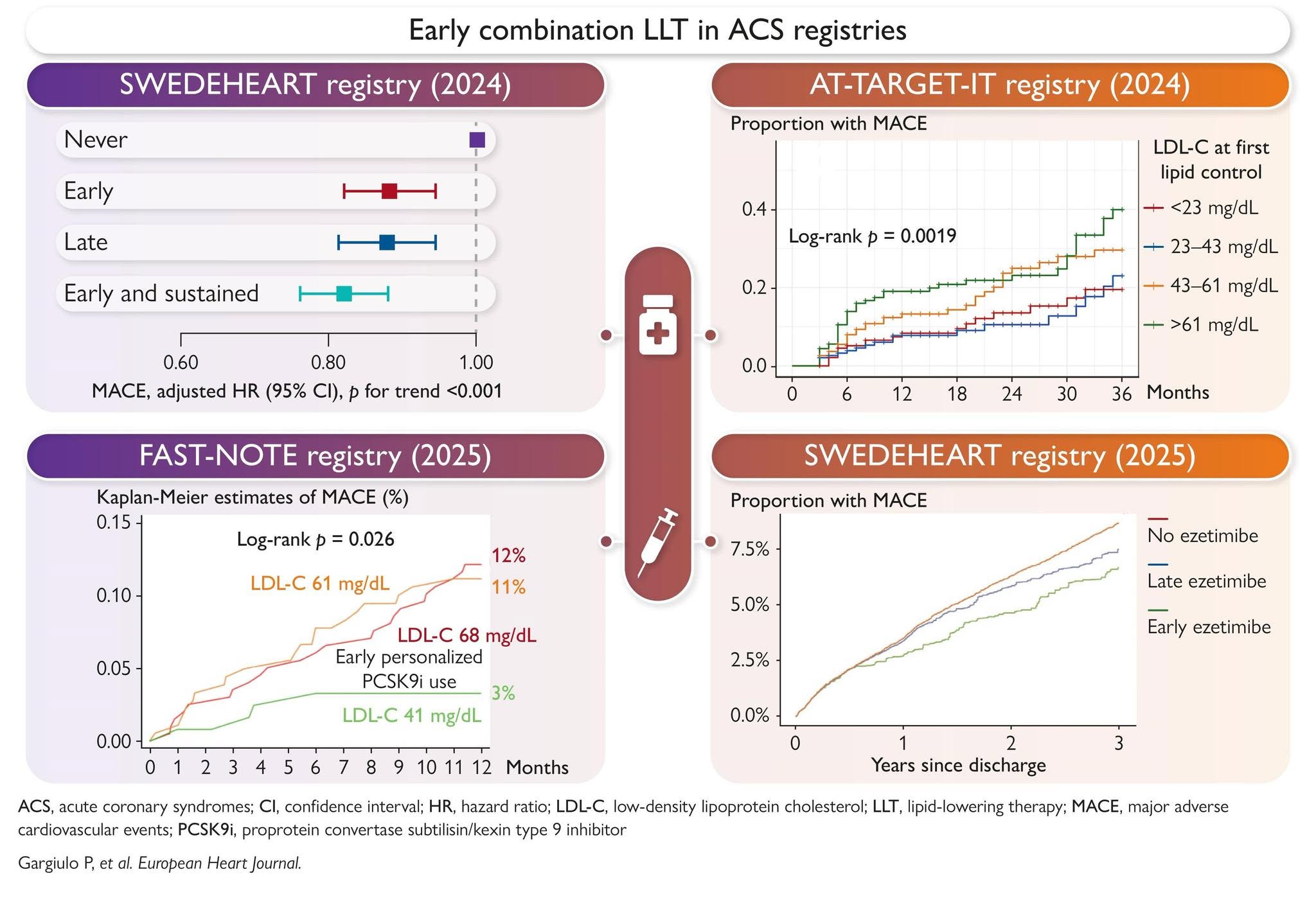
In a personal post, Gokhan describes a friend who had a heart attack at 48 and needed emergency bypass surgery after ignoring a prescribed statin, which made him reconsider his own LDL of 70 mg/dL and consider adding low-dose ezetimibe to approach 50 mg/dL with his cardiologist's support.19 This is an individual decision rather than a recommendation, but it illustrates how the group's admins think about targets.
A related risk marker discussed in the group is a thickened Achilles tendon (at least 8 mm in men and 7.5 mm in women). In a 2026 Circulation Journal study of people after a stent, three-year major adverse cardiovascular events were 28.4% with thickening versus 17.9% without, and thickening was more common after ACS (24.3%) than in chronic coronary syndrome (13.7%).20 The post describes it as a possible reflection of cumulative LDL exposure and stresses that the finding is an association, not proof of causation.20
Inflammation
A 2025 American College of Cardiology scientific statement, summarized by Gokhan, concludes that the link between inflammation and atherosclerotic disease is now clinically actionable, and recommends universal hsCRP (a blood marker of inflammation) testing in both primary and secondary prevention alongside cholesterol.21 It names hsCRP as the most practical validated marker, with IL-6 and fibrinogen also predictive.21
Diet after a heart attack
The most cited diet trial in the group is the Lyon Diet Heart Study, which randomized more than 600 heart attack survivors (recruited 1988 to 1992) to either a traditional Mediterranean-style diet or an American Heart Association diet.22 After a mean of 27 months, cardiac deaths were 16 in the control group versus 3 in the Mediterranean group, non-fatal heart attacks 17 versus 5, and the combined risk ratio was 0.27 (95% CI 0.12 to 0.59).2223 Overall deaths were 20 versus 8 (adjusted risk ratio 0.30, 95% CI 0.11 to 0.82), and the trial was stopped early for ethical reasons.3 Louis summarizes these as about 73% fewer heart attacks and cardiovascular deaths and about 70% fewer deaths from any cause.22
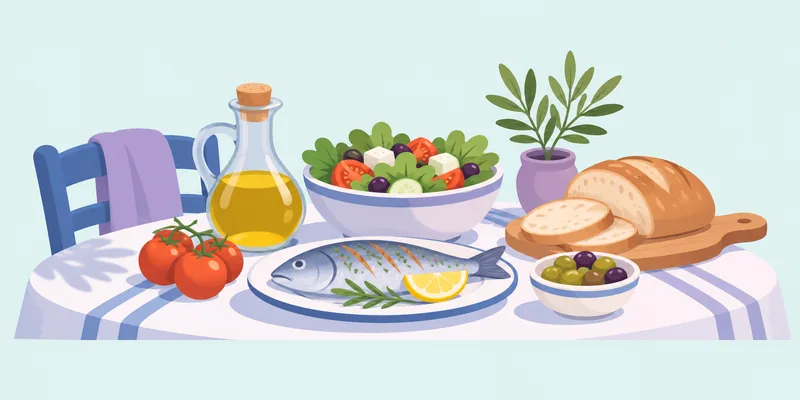
The diet was not low-fat. It was rich in extra virgin olive oil, regular olive oil, canola oil, nuts, seeds and fatty fish; very low in butter, cream and red meat; emphasized fruits, vegetables, legumes, whole grains and seafood; allowed poultry and some low-fat yogurt and cheese; and encouraged mild to moderate red wine.3 A trans-fat-free canola margarine fortified with the omega-3 fat ALA replaced butter.24
Louis argues this is the largest reduction in total mortality ever reported in a cardiovascular prevention trial and roughly twice the benefit seen in statin secondary prevention trials.24 That comparison is his own reading and a strong claim. The trial followed patients for only about 2.5 years on average and was stopped early, which readers may want to weigh.3
Plant-based diets are not a guaranteed cure
The group is balanced on this point. In Dean Ornish's small trial (1998 follow-up), 25 cardiac events occurred in 28 intervention patients versus 45 events in 20 controls over 5 years (risk ratio 2.47, 95% CI 1.48 to 4.20).5 But among the 28 who adhered for 5 years there were still 2 heart attacks, 8 angioplasties, 2 bypass surgeries, 23 cardiac hospitalizations and 2 deaths; only angioplasties, hospitalizations and total events were significantly different from controls, and the program was a comprehensive lifestyle package, not diet alone.525 Louis reposted this after the sudden death of a prominent plant-based advocate, saying the diet is not a magic cure.25
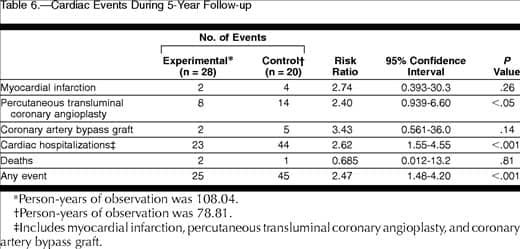
Likewise, a commentary by a former president of the Vegetarian Society (Singapore), who had a heart attack at 70 after 43 years of vegetarian and vegan eating, mentions rising weight and an LDL higher than it should have been. Louis says healthy vegan diets reduce risk but are not a magic cure.26 And Louis critiques Caldwell Esselstyn's famous "cure" angiogram, noting the baseline image was taken right after a heart attack and showed thrombus and vasospasm, so the later artery opening partly reflects natural healing. He also notes the patient lived nearly three decades after a heart attack at 44.27
Nuts, olive oil and other foods
A PREDIMED sub-study described by Louis found that 30 g per day of nuts (15 g walnuts, 7.5 g hazelnuts, 7.5 g almonds) was linked to carotid plaque regression (-0.084 mm versus +0.052 mm in controls, P = 0.024), a 30% reduction in major cardiovascular events and about 50% lower stroke risk in the nut group.28 Cohort data in the group, including the Adventist Health Study (48% lower fatal coronary heart disease with nuts more than four times a week), point the same way.29 Harvard's summary describes a consistent 30% to 50% lower risk of heart attack, sudden cardiac death or cardiovascular disease with regular nut eating.30 Note these cohort findings are associations in general populations, not specifically in heart attack survivors.
Louis also favors yogurt, citing consistent long-term epidemiology and its inclusion in Lyon, PREDIMED and CORDIOPREV, over processed whey protein supplements, which lack long-term data.31
Wine and alcohol
A PREDIMED follow-up using urinary tartaric acid as a wine biomarker found mild-to-moderate wine drinkers had a hazard ratio of 0.5 for cardiovascular outcomes over 9 years. Louis stresses causation is not proven and that alcohol's role is actively debated in cardiology.32
Exercise
A review shared by Louis states that regular moderate-to-high intensity exercise reduces coronary plaque burden in people with coronary artery disease, with HIIT and moderate continuous training both associated with regression. Combining exercise with LDL control below 70 mg/dL gives additive benefit, especially after ACS or stenting.33 The same post says extremely high volumes may increase calcification, though typically in a more stable form.33 Louis argues elsewhere that exercise and statins both help stabilize existing soft plaque by calcifying it.34 This is his interpretation.
Supplements and other things to be careful with
Arginine (and possibly citrulline)
The clearest supplement warning in the group is about L-arginine. In a Johns Hopkins randomized trial of 153 heart attack survivors given 3 g of arginine three times a day or placebo, the trial was stopped at 6 months after 6 deaths on arginine and none on placebo.4 The researchers had expected the opposite. Louis speculates the concern might extend to citrulline, because the body converts it to arginine, and labels this speculation.435
Vitamin D: promising but unproven
TARGET-D enrolled 630 adults with ACS (average age 63) and adjusted vitamin D doses every three months to reach 40 to 80 ng/mL; nearly 52% needed more than 5,000 IU daily.36 The primary composite (death, heart failure hospitalization or stroke) was not significantly reduced, although heart attack risk was about 52% lower, and the authors call for validation to rule out data mining.36 A shared summary gave second heart attacks as 3.8% versus 7.9%.37
Selenium plus CoQ10, and tongxinluo
Louis highlights a trial in older adults in which selenium plus CoQ10 for four years cut cardiovascular mortality by more than half, with persistent benefit at follow-up; he acknowledges the study's limitations and suggests about 200 mcg of selenium (two Brazil nuts) for people already taking CoQ10.38 The trial was not in heart attack survivors specifically. A JAMA trial of the traditional Chinese medicine tongxinluo after a first heart attack was reported to reduce heart attacks, deaths and major complications for at least a year, but the post gives no effect sizes.39
Cannabis, steroids, PPIs
The group also flags harm signals. A Medscape item reports six-fold heart attack risk in cannabis users in a large retrospective study, and a meta-analysis linked cannabis to a 50% higher risk, though details are not given.40 A Circulation cohort of 1,189 anabolic steroid users found about 3x heart attack risk and 8.9x cardiomyopathy risk versus 59,450 controls.41 A news report links long-term proton pump inhibitor use to a 20% higher heart attack risk, again without study details.42
Stents, bypass and what comes next
Procedures open a blockage; they do not treat the disease everywhere else. Joel Kahn's share, reposted by Louis, says three new studies suggest there is no rush for bypass or stents versus optimal medical therapy in stable coronary disease, with hashtags pointing to ISCHEMIA-EXTEND and COURAGE, but no numbers are given.43 This concerns stable disease, not an acute heart attack, where emergency treatment is a different situation.
On stent technique, two NEJM trials reported that intravascular ultrasound (IVUS) guidance did not beat angiography alone: IVUS-CHIP showed 13.9% versus 11.1% events (HR 1.25) and OPTIMAL in left main PCI 33.7% versus 30.9% (HR 1.11).44
Show data
| IVUS-guided | Angiography alone | |
|---|---|---|
| IVUS-CHIP | 13.9% | 11.1% |
| OPTIMAL (left main PCI) | 33.7% | 30.9% |
Louis also shared the news that NIH and Emory researchers performed the first coronary bypass without cutting the chest wall.45
The Esselstyn and Ornish discussions above, and the story of a person who needed bypass at 48 after ignoring a statin, are a reminder that treating the artery is not the same as treating the cause.1927 People after a stent may be given aspirin, as Louis's short video note lists.46 Louis also argues that for people with plenty of plaque, aspirin is proven to lower heart attack and stroke risk in large trials, whereas for people with little or no plaque the bleeding risk outweighs the benefit.8
Louis also suggests timing: since most heart attacks occur early in the morning after waking, he thinks it can be reasonable to take blood pressure medication, aspirin and statins at bedtime. He corrects himself that bedtime blood pressure medication could raise the risk of defecation syncope in frail or elderly people, so this is an individual question for a doctor.47
Other factors in the group's posts
- Blood pressure, cholesterol, blood sugar and tobacco: a study of over 9 million South Korean adults and thousands of US adults found over 99% of people with a first heart attack, stroke or heart failure had at least one nonoptimal value, and over 93% had hypertension.48
- Salt substitute: in the SSaSS trial of 15,249 stroke survivors, a potassium-enriched salt substitute reduced recurrent stroke by 14% and death by 12%, with no increase in hyperkalemia. Louis uses a 50/50 sodium chloride and potassium chloride blend.4950 This trial was in stroke survivors, not heart attack survivors.
- Flu vaccination: Gokhan describes association studies showing lower all-cause mortality, with the post flagging observational limits.51
- Diabetes: Louis shared the FDA approval of tirzepatide to lower heart attack and stroke risk in type 2 diabetes, based on SURPASS-CVOT (MACE 12.2% versus 13.1% against dulaglutide, HR 0.92).52
- Centenarian myths: Louis argues higher LDL in centenarians reflects survivorship bias, not a benefit of high LDL.53
What this means for you
- Take the in-hospital high-dose statin seriously. The admins' view is that atorvastatin 80 mg after an ACS is standard care for good reasons and benefits appear within weeks.115
- Ask your doctor what LDL target is right for you. The group's sources point to progression stopping under about 70 mg/dL and further benefit toward about 30 mg/dL after ACS.27
- Use natural approaches in addition to, not instead of, cardiology care, and talk to your cardiologist before reducing any medicine.6
- A Mediterranean-style pattern with olive oil, nuts, fish and vegetables has the strongest secondary prevention trial in the group (Lyon), but plant-based diets are not a cure either.35
- Be cautious with supplements: avoid arginine after a heart attack, and discuss vitamin D dosing and others with your doctor.436
- Keep blood pressure, blood sugar and tobacco in check, since nearly every first event involves at least one of them.48
- Keep exercising in a structured way, and do not ignore new symptoms.1233
Frequently asked questions
Why am I put on a very high statin dose right after a heart attack?
In PROVE IT-TIMI 22, atorvastatin 80 mg reduced 30-day death, repeat heart attack and rehospitalization compared with a lower-potency statin (3.0% versus 4.2%).1
Does a stent or bypass cure the disease?
No. Gokhan's explainer describes coronary disease as a long process affecting the arteries over decades, and Gokhan notes that a friend who needed bypass at 48 had been prescribed a statin and was not taking it.1019
Is a vegan or plant-based diet enough to prevent another event?
The Ornish trial shows lifestyle programs can reduce events, but adherent patients still had heart attacks, procedures and deaths.5
Is there a supplement that prevents a second heart attack?
The TARGET-D vitamin D trial did not significantly reduce its primary outcome, though heart attacks were lower, and the authors call for validation.36 L-arginine is the one supplement with a specific warning after a heart attack.4
Should I take medicines at bedtime?
Louis suggests it can make sense because heart attacks cluster in the morning, but he notes bedtime blood pressure medication may raise a different risk in frail or elderly people, so ask your doctor.47