AI summary & key facts
Follow-up to the longevity post, summarizing (via a ChatGPT summary by Pankaj Kapahi) the diet Ancel and Margaret Keys described in their 1975 book. It emphasizes vegetables, legumes, whole grains, nuts, extra virgin olive oil as the main fat, fish, limited red meat and modest dairy, herbs instead of salt, fruit for dessert and wine in moderation. The Keys also stressed activity and shared meals. Louis also notes the 7 Countries scientists' longevity (3 of 18 reached 100).
- Extra virgin olive oil as primary fat, replacing butter
- Red meat sparingly; prefer poultry; regular fatty fish
- Whole-grain bread, herbs and spices over salt, fruit for dessert
- Wine in moderation (about 1-2 glasses/day)
- 3 of 18 scientists in the 7 Countries research group lived to 100 per Louis; odds by chance about 1 in 10 billion
This is a followup to the post below.
The details of the diet they were eating that ultimately got them to age 100 was explained in a famous book written in the 1970’s.
(See comments for a link to the book.)
Pankaj Kapahi generated the following condensed summary of the book using ChatGPT:
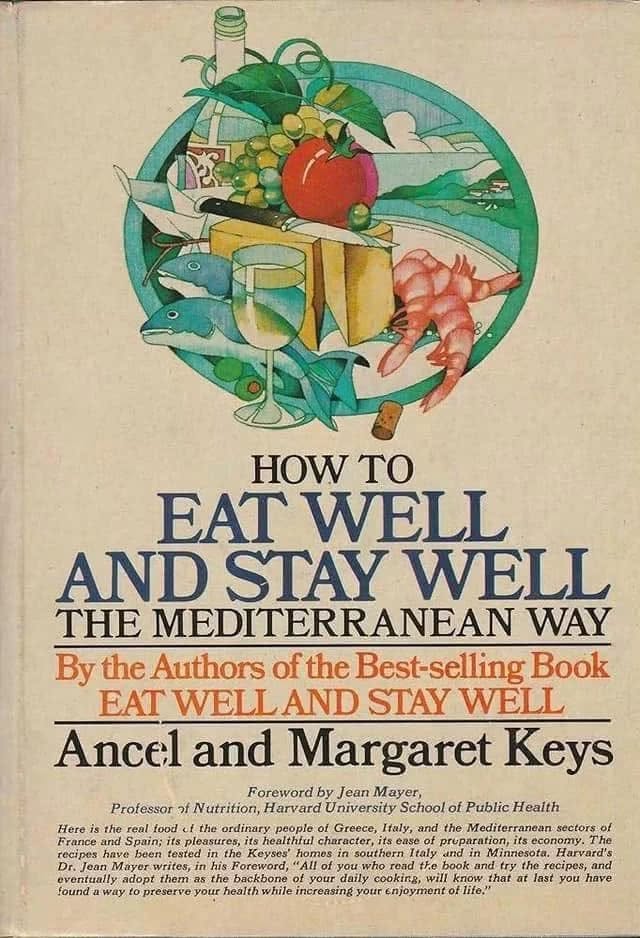
Ancel and Margaret Keys were pioneers in popularizing the Mediterranean diet through their research and their book How to Eat Well and Stay Well the Mediterranean Way (1975). Their recommendations are based on their observations of the eating habits of people in countries like Greece and Italy during the 1950s and 1960s. Here’s what they emphasized:
Core Recommendations:
- Abundance of Plant-Based Foods:
- Emphasize vegetables, fruits, whole grains, legumes, nuts, and seeds as dietary staples.
- Use fresh, seasonal produce whenever possible.
- Olive Oil as the Primary Fat:
- Use extra virgin olive oil as the main source of fat for cooking and dressings, replacing butter or other fats.
- Moderate Consumption of Dairy:
- Include small amounts of cheese and yogurt, preferably made from sheep or goat’s milk.
- Limited Red Meat:
- Consume red meat sparingly and focus on lean cuts.
- Prefer poultry or rabbit over beef or pork.
- Regular Consumption of Fish and Seafood:
- Incorporate fatty fish, such as sardines, anchovies, and mackerel, which are rich in omega-3 fatty acids.
- Legumes as a Protein Source:
- Rely on beans, lentils, and chickpeas as inexpensive and nutrient-dense sources of protein.
- Bread and Grains:
- Choose whole-grain or minimally processed bread, avoiding refined flours.
- Herbs and Spices Over Salt:
- Season food with fresh herbs, garlic, and spices for flavor instead of relying on salt.
- Fresh Fruit for Dessert:
- Replace sugary desserts with fresh or dried fruits.
- Wine in Moderation:
- Enjoy wine, particularly red wine, in moderation and usually with meals. (Typically 1-2 glasses per day, depending on gender and health considerations.)
- Active Lifestyle:
- Combine healthy eating with regular physical activity and a socially connected lifestyle.
The Mediterranean diet, as promoted by the Keys, isn’t just about specific foods—it reflects a holistic approach to eating, focusing on portion control, shared meals, and savoring food as part of a balanced and fulfilling lifestyle.
facebook.com/share/v/15UojnbG5t
This is the most remarkable case of extreme longevity that I have ever heard of.
The math on this is astonishing (see comments).
——
The traditional Mediterranean diet was originally popularized in the USA during the 1970’s.
This was a result of the famous “7 countries study” which first discovered that groups of people following this diet were living considerably longer with much lower rates of heart disease than in the United States.
Once learning this, the scientists working on the 7 countries study all personally switched to a traditional Mediterranean diet themselves. They were highly motivated and followed the diet religiously for the rest of their lives.
As a result, 3 out of the total 18 scientists in this research group lived to the age of 100. The most famous of these 18 was Ancel Keys who made it to a few days short of 101. His wife also followed the diet religiously and lived to 98.
The odds of 3 out of 18 people (all men born in the early 1900’s) living to 100 by pure chance is about 1 in 10 billion.
Historically, only about 1 in 10,000 people living in the USA have ever made it to age 100.
The details of exactly the diet that they were eating can be found in this post:
↪ Ancel Keys' 1975 Mediterranean diet book: plants, olive oil, fish, little red meat
See the comments for my explanation of the math that shows odds of 1 in 10 billion.
#ancelkeysHD #mediterraneanHD #agingHD #longevityHD #centenariansHD